
The Renaissance
154 resources created by 150 users
This Renaissance unit page on GoConqr gathers community-made mind maps, flashcards, quizzes, notes, slides and flowcharts, from humanism and Italian city-states to the Northern Renaissance and the Reformation. It's built for school students revising the topic, and for teachers after ready-made material. There are over 1,000 resources here, including more than 60 quizzes, over 600 mind maps and over 250 flashcards, with some aimed at AP European History and GCSE History. Pick a mind map, then test yourself with a quiz.
Top The Renaissance resources
-
Mind map Renaissance Renaissance Mind Map - Hanli Seon
-
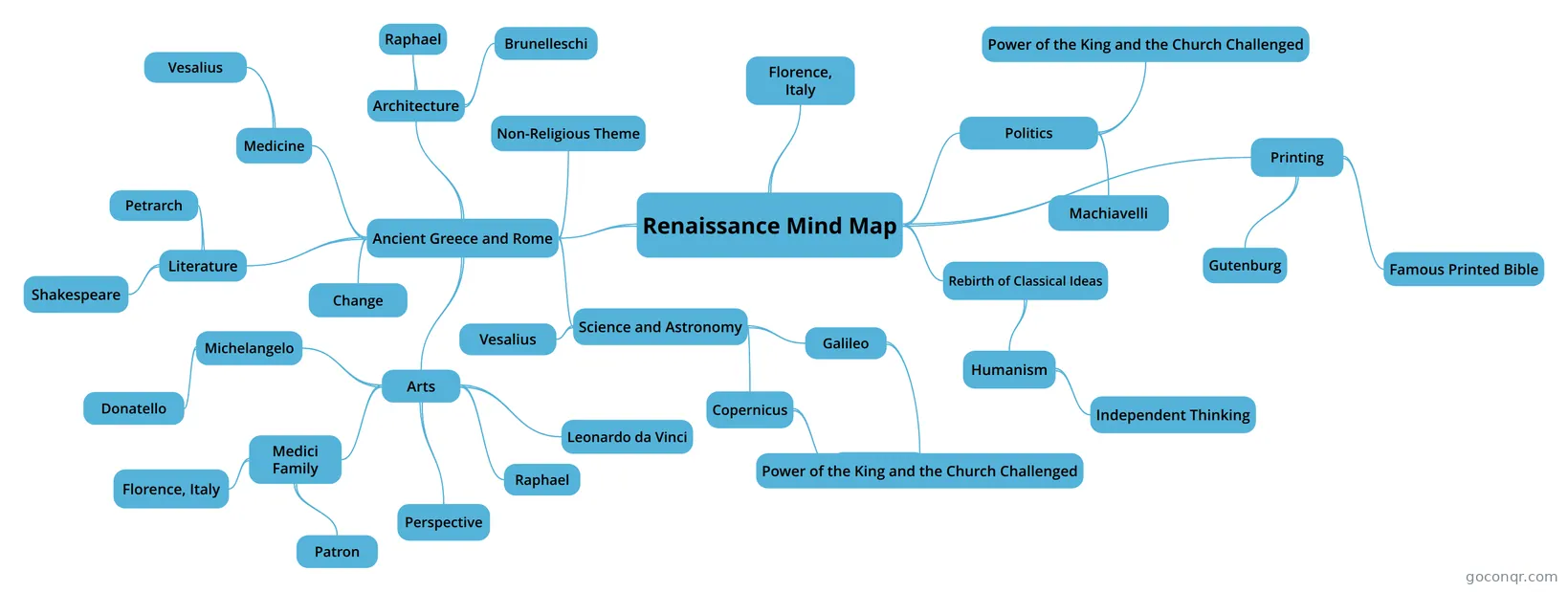 Mind map Renaissance Mind Map By Patrick Yu
-
89 cardsHistory 1101 How did Renaissance men feel about the old Greek and Roman writers?
-
91 cardsSocial Studies 8 Renaissance Deck When did the renaissance occur?
-
Mind map Renaissance BY: BRITNEY
-
Mind map Renaissance Renaissance Mind Map
-
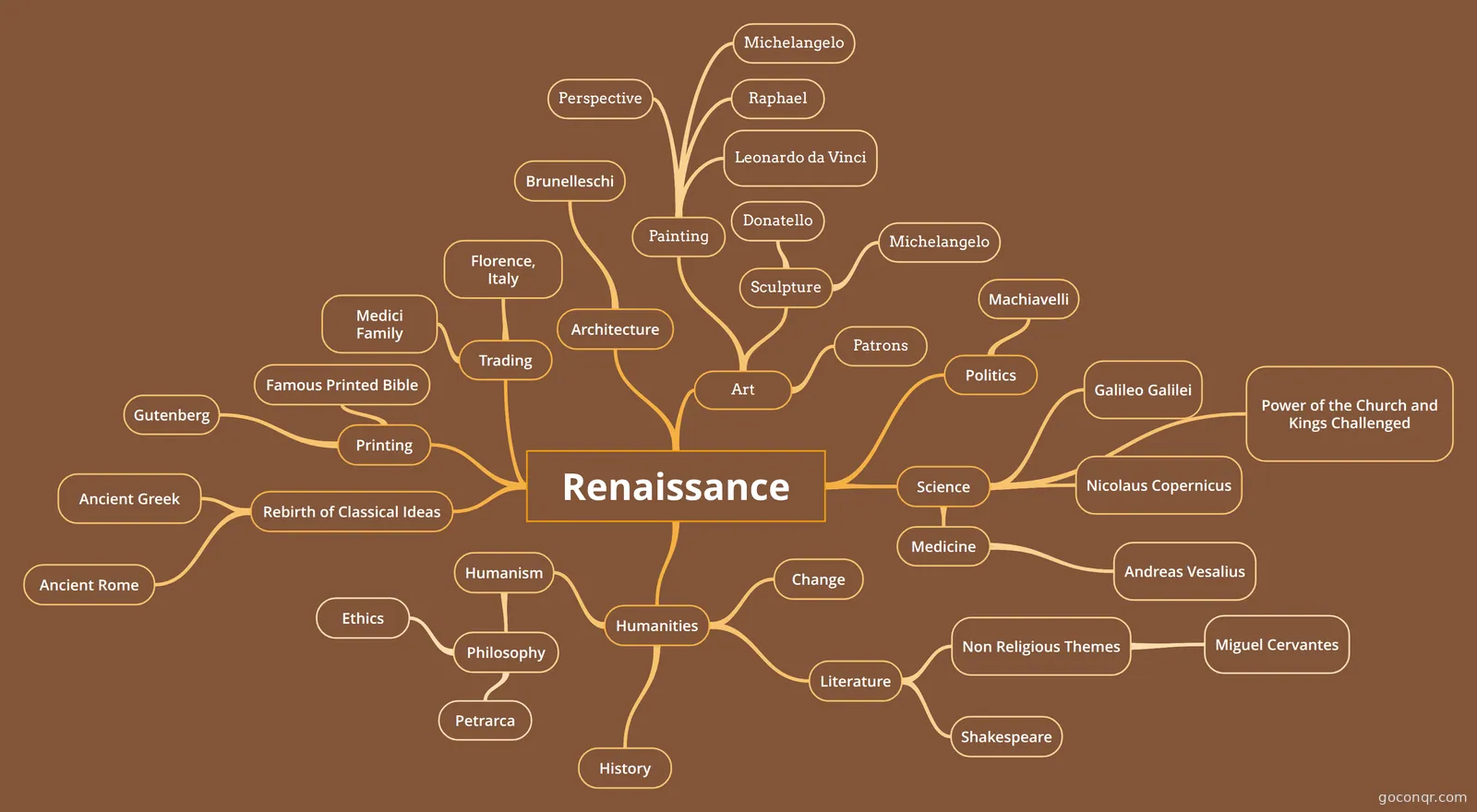 Mind map Renaissance Summative Assessment
-
32 cardsChp 15 - Renaissance and Reformation "rebirth"; following the Middle Ages, a movement that centered on the revival of interest in the classical ...
Quizzes
See all 17 quizzes-
11 questionshistory What language did the monks write in during the renaissance period?
-
74 questionsMidterms Study Guide With Quests Which of the following has the most important influence on culture?
-
28 questionsThe Renaissance He used art to criticize intolerance and cruelity
-
24 questionsThe Renaissance He used art to criticize intolerance and cruelity
-
8 questionsAP Euro Practice Questions Humanist scholars broke with the medieval scholarly tradition
-
14 questionsWorld History Midterm Review II All the following were causes of the Reformation EXCEPT
-
29 questionsSOCIAL 8 FOR CHAPTER 2 R What is the term for the rural area surrounding a city-state?
-
19 questionsWorld History Midterm Review III Identify where each of the following items went during the Triangular Trade.
Mind maps
See all 93 mind maps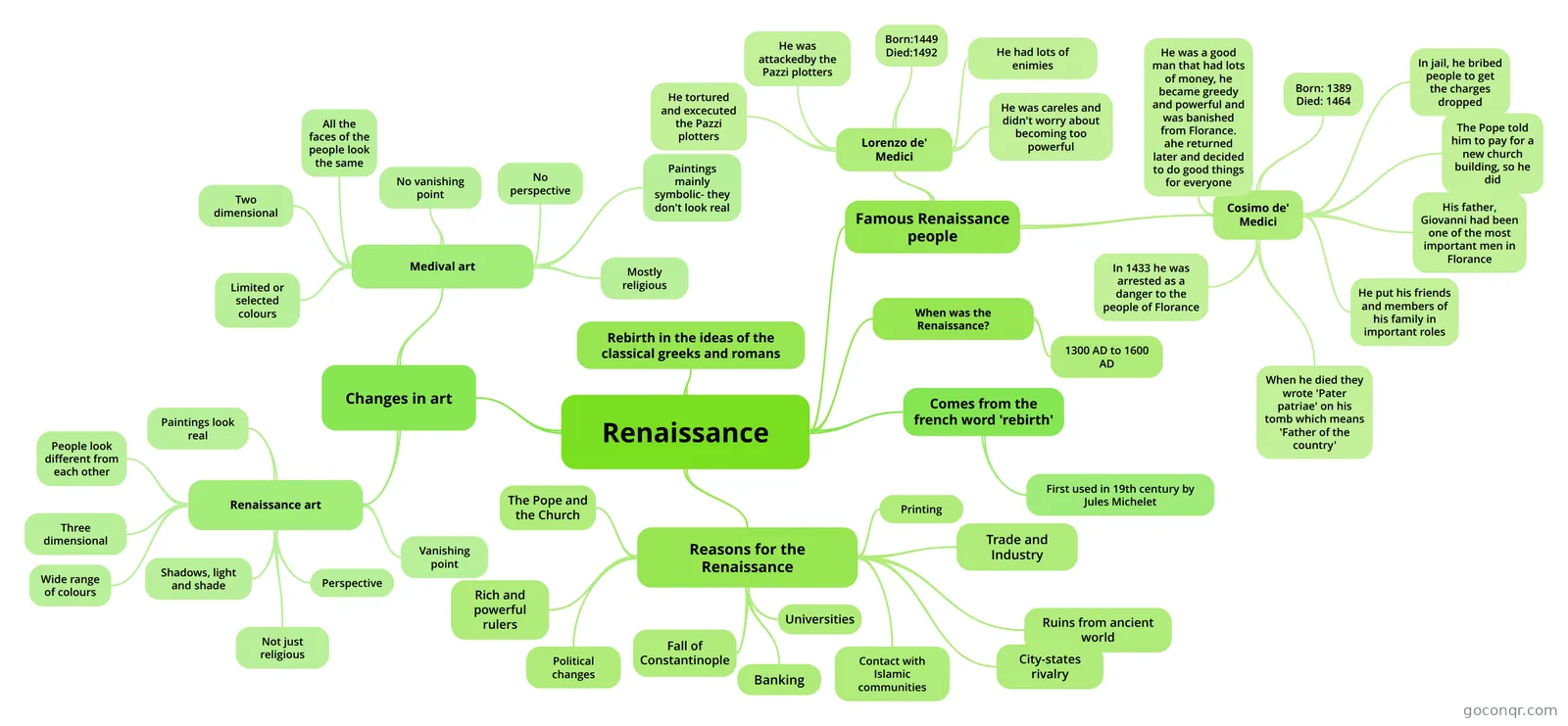
Flashcards
See all 40 flashcards-
89 cardsHistory 1101 How did Renaissance men feel about the old Greek and Roman writers?
-
91 cardsSocial Studies 8 Renaissance Deck When did the renaissance occur?
-
32 cardsChp 15 - Renaissance and Reformation "rebirth"; following the Middle Ages, a movement that centered on the revival of interest in the classical ...
-
49 cardsSocial Flashcards - Vocabulary - Chapters 1, 2 ,3 CHAPTER 1 What were the factors that shaped the Renaissance Worldveiw?
-
12 cardsSocial Studies Chapter 2 Vocabulary
-
7 cardsHistory - The Renaissance Some irish words used.
-
14 cards9th Grade History Midterm Review What Is the Renaissance?
-
118 cardsGrade 6 Social Science October cycle test becoming good historians
Notes
-
Global History Regents Review Notes (Italian Renaissance) Humanism Focus on world-y subjects than on rel. issues Humanist scholars were pious
-
Francesco Petrarch Francesco PetrarchBy Katrien ClintbergIntroduction Francesco Petrarch was a famous author, scholar and one of the earliest humanists who lived during the 14th century. He is often referred to as ‘The Father of Humanis...
-
The Renaissance The Renaissance ("re-birth") was a cultural movement that spanned the 14th to 17th centuries beginning in Florence, Italy in the late Middle Ages and then spreading to the rest of Europe.1) Education - became more imp...
-
The Italian Renaissance During the Middle Ages, much of the progress of the western world had fallen into sharp decline as cities, libraries, instructions and the rest of European society fell to outside invader...
More History topics
About The Renaissance
GoConqr OriginalWhat this unit covers
The listed resources follow the Renaissance from its roots to its effects. The first Renaissance mind maps explain the word as rebirth, the revival of classical Greek and Roman ideas, and the shifts in art, from medieval styles to new techniques such as perspective. They name Leonardo da Vinci, Michelangelo, Raphael and Donatello, and place the story in Florence and Italy, with patrons such as the Medici family.
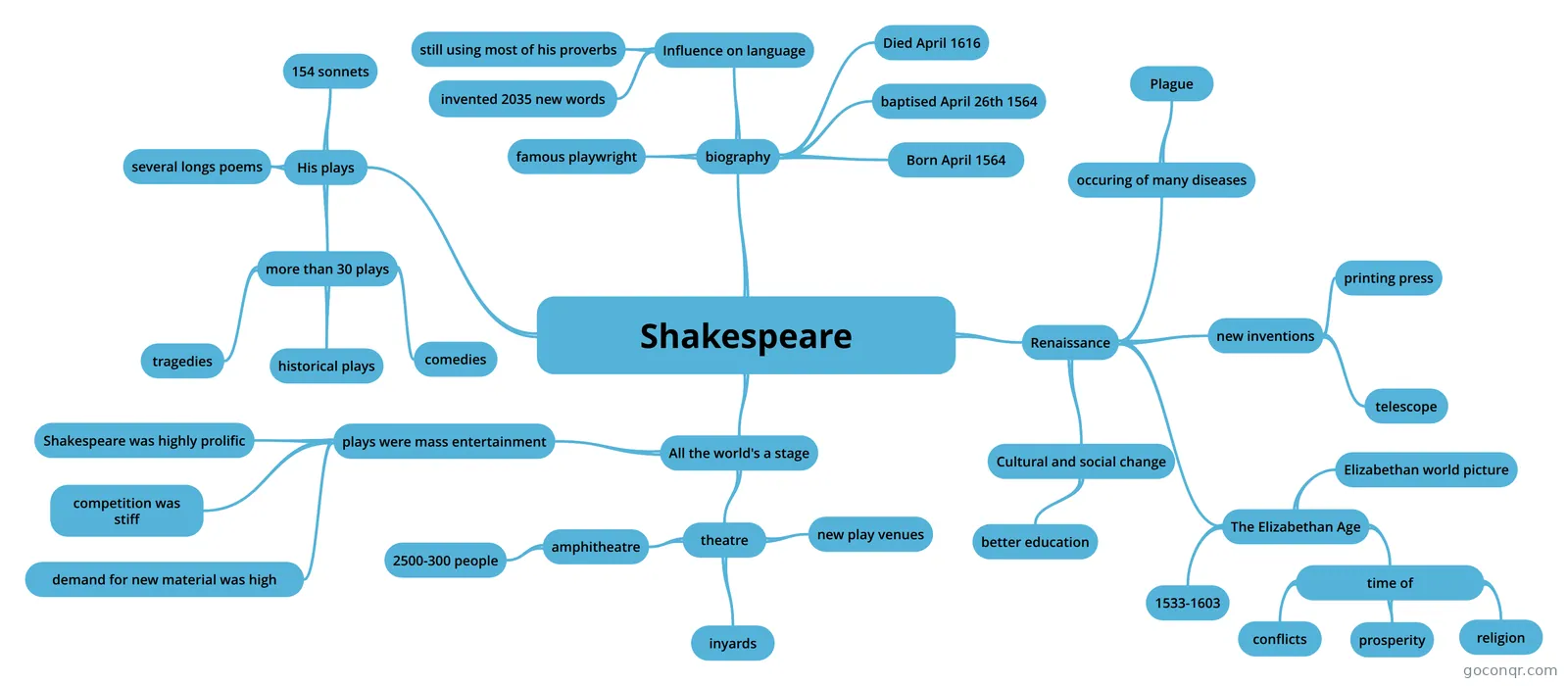
Other resources widen the picture: humanism and Petrarch, Machiavelli, Erasmus and Thomas More, printing, science, medicine and the Reformation. The Shakespeare mind map links the period to new inventions, the plague and cultural change.
Where to start
- Open the first mind map called Renaissance for a quick overview of the big ideas.
- Read the Global History Regents Review Notes on the Italian Renaissance to see how humanism is explained.
- Learn key terms with the Renaissance vocab flashcards.
- Add the maps on why the Renaissance started in Italy and on the Northern Renaissance.
Using quizzes and maps together
Look at a map first, then close it and take a quiz such as The Renaissance or Renaissance & Reformation. Note the questions you miss, go back to the matching map branch, and try again. For exam practice, the AP Euro Practice Questions and AP European History Midterm quizzes are there, alongside flashcard decks like AP European History- Unit 1. The flowcharts, including Renaissance cause and effect and humanism, help with essay planning.
Where it sits
This unit belongs to the strand The Early Modern World in the subject History. It sits well alongside the Reformation material, which several resources here pair with the Renaissance.
Choose one resource, work through it, then make your own map or flashcards to fill any gaps.
Frequently asked questions
Which resource should I open first?
Start with the first mind map called Renaissance. It covers the rebirth of classical ideas, the arts, Leonardo da Vinci, Michelangelo, Florence, humanism, patrons and printing in one view. After that, move to the vocab flashcards or a quiz to check what stuck.
What do the mind maps cover?
There are over 600 of them. They cover the meaning of the word rebirth, changes in art, humanism, key figures such as Petrarch, Machiavelli and Erasmus, why Italy came first, the Northern Renaissance, the rise of Venice and the effects of the period.
Which exams do the resources suit?
The listed resources mention AP European History, AP World History, GCSE History and Junior Certificate History. Most of the material is for school students, so it suits secondary-level revision. Check the title and contents of each resource to see if it matches your course.
Are the resources free to use?
Yes. Every resource listed here is free to open, study and take, with no account needed. They were made by GoConqr users, not by GoConqr itself. A free account also saves your quiz scores and lets you make your own quizzes, mind maps, flashcards and notes.
Can teachers use these resources?
Yes. Teachers can pick from ready-made slide sets such as Italian Renaissance, flowcharts, notes and over 60 quizzes, including the Medici test. They can be used as starter overviews, vocabulary practice or review before a test.
What if I can't find a topic I need?
Look at related resources on the Reformation, humanism or the Northern Renaissance, as they often cover neighbouring ideas. If something is still missing, you can build your own mind map, flashcards or quiz on the subject.