
Flashcards
Chap 12 - Language Development
Cards in this deck (34)
- 1LanguageGoverned by Meaning and Structructure
- Vocabulary
- Grammar
- Syntax - 2The competence of language- To understand language & produce it, children have to be competent with all its component
Components:
- Phoneme
- Morpheme
- Pragmatic rules of language - 3PhonemeThe smallest unit of SOUND making up language
- 4MorphemeIs MADE UP of one or more PHONEMES and is the smallest unit of MEANING in language
- 5Pragmatic rules of languageA set of rules that DICTATES how language is used to communicate; An understanding of pragmatics is often ESSENTIAL to UNDERSTAND what the speaker means
- 6Goldfield & Reznick (1990)- After born - infant crying
- 1 - 8 months - laughing & cooing
- 8 months - babbling - make vowel sounds combining with consonants
- 10 months - able to babble word-like sounds
- 12 months - may use 1 or 2 words
- 18 months - likely to be able to repertoire 10 words
- After - rapid increase in vocabs learned
- 24 months - vocab of 300 words - 7HolophraseUsing a single word, often in a combination with a gesture, to express more complex idea
- 8Telegraphic SpeechAn early style of language, resembling the efficient use of language in telegrams, in which children use few words to get their point across
eg. "Sky drinking water." - 9It seems that not until age...8 or 9 do children have a good comprehension of passive sentences - "John was hit by Mary"
- Prior to this age, children hearing this sentence often have difficulty identifying whether it was John or Mary who did the hitting - 10Noble, Rowland, & Pine (2011)- Showed that from the age of 2 years old - children have an UNDERSTANDING of RULES of grammar
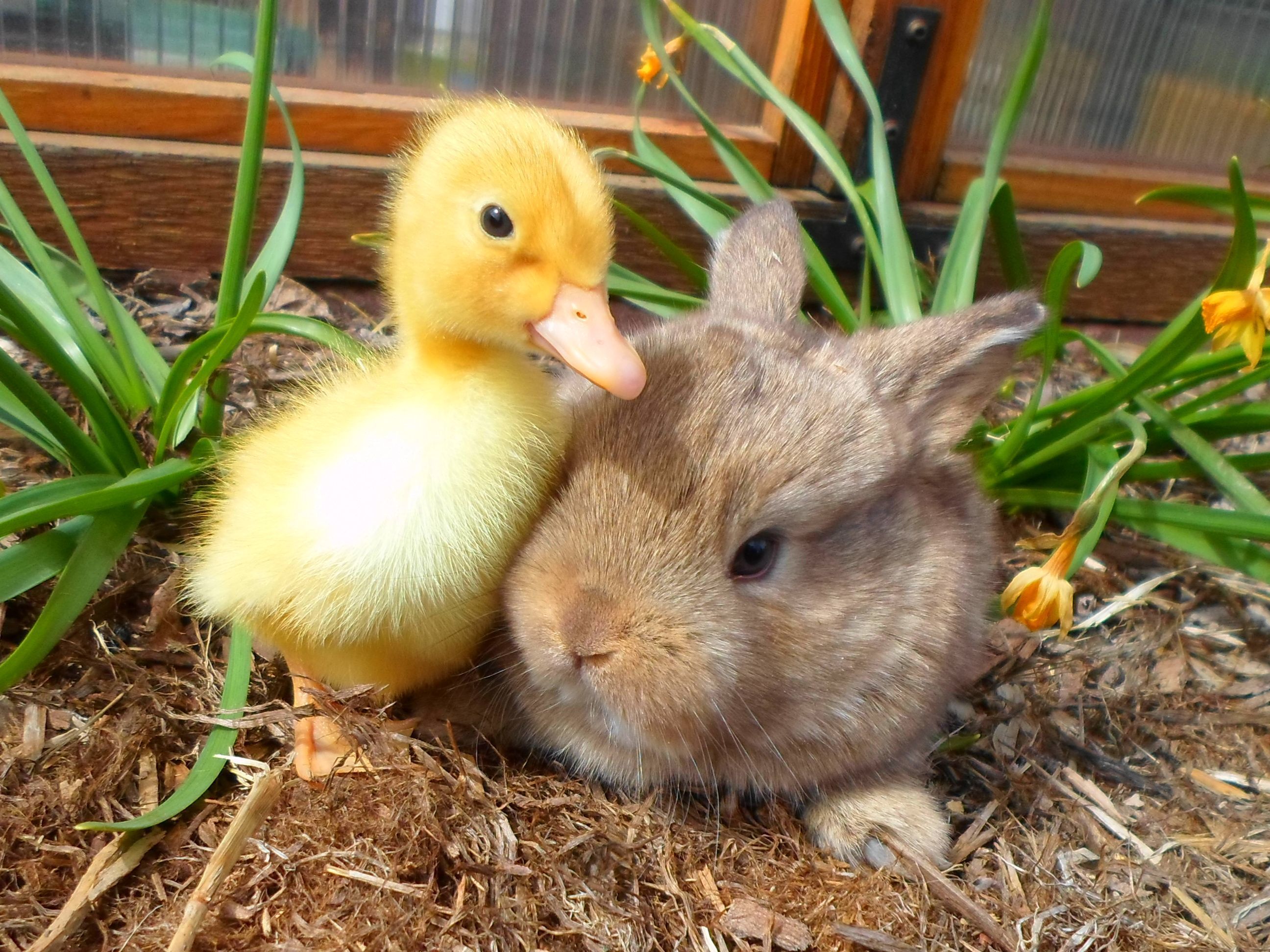
- Children were presented with cartoon pictures of a duck and a rabbit
Cond. 1) Picture of the duck acting on the rabbit (eg. the duck lifts the rabbit's leg)
Cond. 2) Picture of the duck and the rabbit acting independently
- Children heard sentences with made-up words whilst they looked at the pictures
(eg. "The duck is glorping the rabbit.")
- By using a made up word - help investigate whether young children use the rules of grammar to help them with learning words - 11Noble, Rowland, & Pine (2011) - Findings- 2 year old children pointed at the CORRECT picture when played the sentence with the made-up word - demonstrating that they COULD USE the RULES OF GRAMMAR to LEARN the MEANING of NOVEL words
- Even though 2 year olds do not usually put 2 words together in sentences and do not express the use of grammar in the language they produce - CAN USE grammar to learn meaning - 12B.F. Skinner (1957)View learning language through reinforcements
- 13Colunga & Yoshida (2010)- From about 18 months - infants equipped to trace the mother's gaze and pinpoint the object of her attention
- Learning fundamentals DEPENDS on attention in children and adults alike - 14Baldwin- Introduced a novel toy to infants and asked the mothers to use a nonsense word like "wug" while looking at a different novel object
- Infants were asked to point at "wug"
- Two objects in front of the infant - the novel object presented by Baldwin and the novel object called "wug"
- The infants reliably pointed to the object the mother had looked at in preference to the one they had been playing with
- Toward the end of infancy, children are able & disposed to secure a state of JOINT ATTENTION with others - 15Joint AttentionThe process of intentionally sharing the experience of observing an object or event through the use of pointing gestures or following gaze
- 16Join attention supports the infant's...early vocabulary developments such that infants associate the uttered word with the object of the mother's attention rather than the object of their own attention
- 17Some evidence of animals understanding Joint Attention- Povinelli & Eddy (1996) - suggests that chimpanzees are capable of joint attention - may allow them to understand human language in some contexts (Savage-Rumbaugh et al, 1993)
- No evidence yet in suggesting that chimpanzees are capable of producing language - 18Children's understanding of the meaning of words...is NOT FIXATED but changes with development
- 19OverextensionUsing a word in a broader context than is appropriate
- Children aged 2 years seem to be overinclusive in their use of nouns
Eg. Fish - swims and lay eggs, but when they see dolphins, they call it a fish even though its a mammal - 20Chomsky (1959)- Language - INNATE
- Uses a universal grammar
Suggests that there are 2 levels of language:
1) Surface structure
2) Deep structure
- Argues that babies are equipped with Language Acquisition Device (LAD) - innate, can translate one grammar form into another
eg. Changing a sentence from active to passive
- John hit a ball - A ball was hit by John - 21Surface structureThe specific grammatical feature of a specific language
- 22Deep structureAn innate grammatical structuring of language that is both universal among humans and is unique to humans as a species
- 23Language Acquisition Device (LAD)An INNATE device for acquiring language
- 24Goldin-Meadow & Mylander (1990)- Studied a group of children ages approximately 3 years who were born deaf, and received no language tuition of any kind - whether oral or gesture
- Found that children were willing to attempt gestures shows that they were born with an inclination to communicate
Conclusion:
- Children are born with an appetite for communication and that they know via their genes that communication is formed from patterns of units of meaning - 25Sign languageCombination of gestural codes making "words" according to rules of grammar to form "sentences"
- Contains phonology, morphology, semantics, syntax, & pragmatics just like spoken language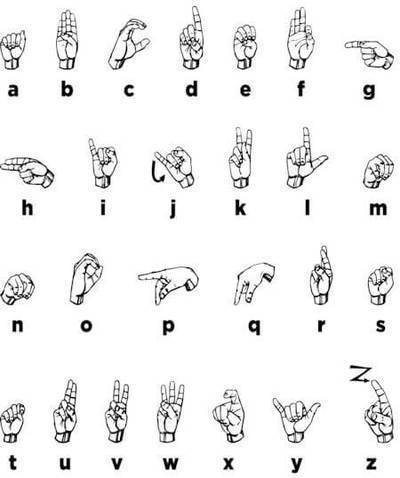
- 26ConnectionismThe idea that cognitive processes can be explained as a result of the interplay between several simple interconnected units
- 27OvergeneralizationAt one stage in language development, children apply the rule for forming the past tense inappropriately to irregular words
- 28Infant-directed TalkA special style of speech used when talking to infants
- 29Cooper & Aslin (1990)When the infant-directed talk is established to infants, it indicates to them that they have a social partner who is attuned to their needs and it is beneficial for them to pay attention and form a bond with that person
- Infant, prefer to listen to infant-directed speech - important for social function - 30Language Acquisition Support System (LASS)Stresses the contribution of the home environment & culture in children's language learning (Bruner, 1983)
- 31Usage-based language theoryThe idea that there is no specific cognitive module for language learning, but that children learn both vocabulary & rules of language through using it in trying to communicate with others
- 32Tomasello (2003)Claimes that children learn the rules of language from using language
- Stresses the role of Theory of Mind in language development - 33Frank & Tenebaum (2011)- Children can learn the rules of language by generalising more abstract rules from the words they are exposed to
- Claims that we do not need to invoke a dual process of language learning, but that language is a sociocognitive skill like mant others and is learned in the same way - 34Summary- Language development - Reinforcement - argued that it is INNATE
- Environment plays a role in language development in babies
- Language is developed through maturation
Information
- Description
- undergraduate Developmental psychology Flashcards on Chap 12 - Language Development, created by Izati Saim on 20/01/2022.
- Created by
- Izati Saim
- Views
- 0
- Rating