
Flashcards
Cells
Cards in this deck (16)
- 1Building Blocks of Life: Cells
- 21. Who made the first microscope and how?Zacharias Jansson (1585-1632), a Dutch spectacle maker.
Around 1590 he was experimenting with lens and put 2 lenses inside a tube, in which objects appeared much larger when he looked through it.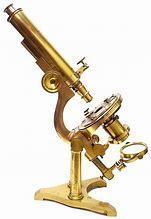
- 32. What is the "Cell Theory"?It explains the relationship between cells and living things.
~All living things are made up of 1 or more cells.
~Cells are the basic building blocks of all living things.
~New cells are produced when existing cells divide into 2.
- 43. What are 'organelles'?The smaller parts of a cell. Found in the cytoplasm and have a variety of important functions to keep the cell alive.
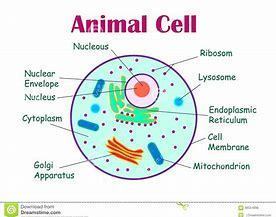
- 54. What are the organelles that are too small to be seen without a light microscope called?~Mitochondria--the powerhouses of the cell that release energy from food.
~Lysosomes--the garbage disposal units that get rid of wastes from the cell.
~Endoplasmic Reticulum--forms pathways that allow materials to move quickly and easily through the cells. - 65. What are ribosomes?Structures that produce proteins.
- 76. What does an animal cell consist of?Nucleus: controls all activities of the cell.
Cytoplasm: a watery jell-like mixture that contains smaller parts where the work takes place.
Vacuole: contains wastes or chemicals that are being moved around in the cell.
Cell membrane: the 'skin' that holds the cell together. - 87. What are chloroplasts?An organelle within the cell where photosynthesis takes place.
- 98. What is Photosynthesis?The process used by plants to make food from water and carbon dioxide using energy from the Sun.
- 109. What are 'Unicellular Organisms'?Living things made up of only one cell.
- 1110. What are protists and where can they be found?A group of unicellular organisms.
Often found in ponds and soil. - 1211. What should you do, for your health's sake, if you are in the bush using untreated water?Boil it before you drink it.
- 1312. How do unicellular organisms reproduce?By dividing into two to produce two new identical cells. This process is called 'mitosis'
- 1413. How many cells are in your body and what do they do?About 50 trillion. They come in different shapes and sizes, each with their own special job to do.
- 1514. Name the scientist who first saw bacteria.Antonie van Leeuwenhoek (1632-1723). He was also the first person to observe and describe human red blood cells.
- 1615. How is mitosis also important for repair?Cells in multicellular organisms often wear out/are damaged and need to be replaced, so the damage is repaired by mitosis producing new cells.
Information
- Description
- Year 8 Sciences Flashcards on Cells, created by Jannat Abbas on 04/02/2019.
- Created by
- Jannat Abbas
- Views
- 20
- Rating