
Flashcards
AQA GCSE biology - triple (2019)
Cards in this deck (72)
- 1CELL BIOLOGYTopic 1
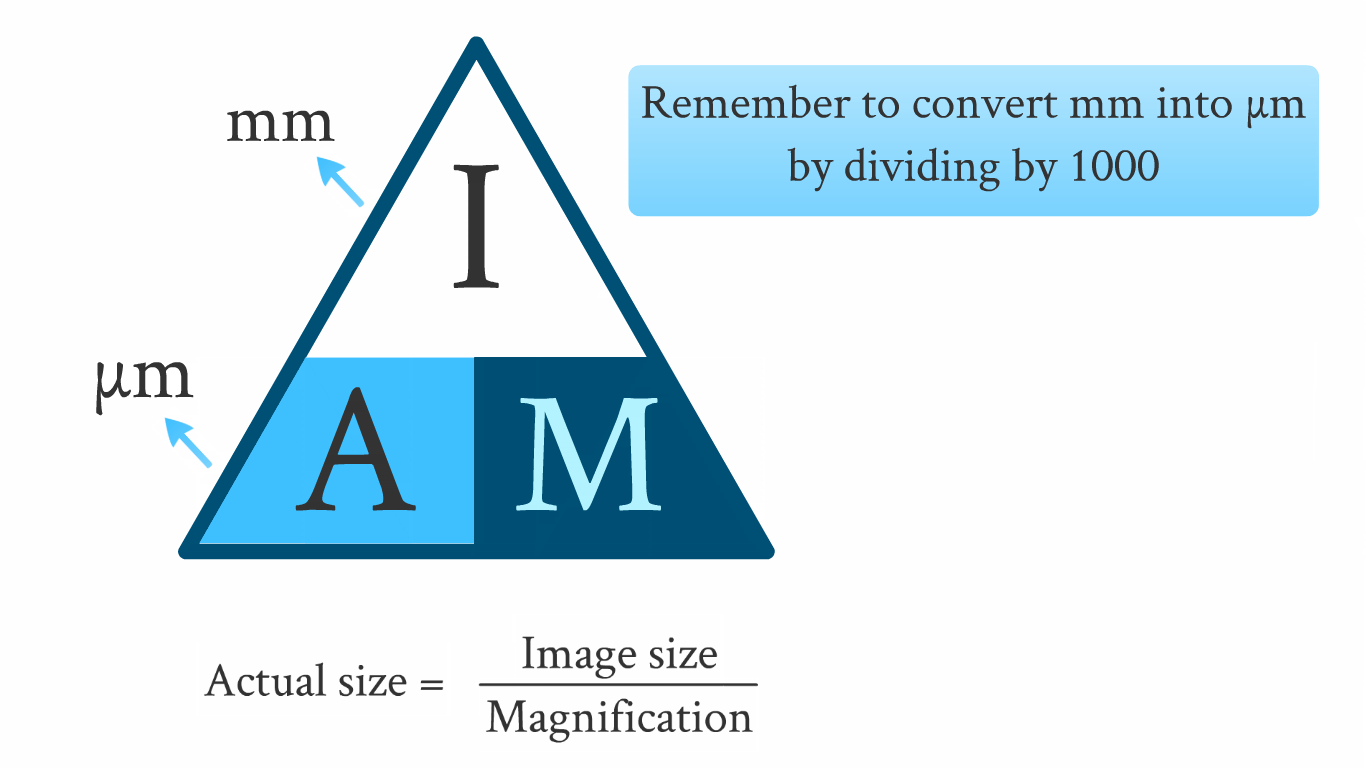
- 2What is the calculation for magnification?
- 3Name one use of embryonic stem cells.Any from....
- To form any cell that may be needed that will match a recipient's DNA
- To fight diseases in patients
- To replace faulty cells (i.e make insulin producing cells) - 4Outline the process of mitosis.The genetic material (chromosome pairs) are replicated, gradually the new material splits off into a new nucleus, the nuclei push apart from each other and eventually the cell splits into two identical daughter cells.
- 5What is the difference between prokaryotic and eukaryotic cells?PROKARYOTIC CELLS - do not have nuclei nor mitochondria, may have features of plant or animal cells, but is not, may contain plasmids (eg. bacterial cells).
EUKARYOTIC CELLS - contain nuclei, have mitochondria (eg. plant and animal cells). - 6What is cell size measured in (and what does one unit of it equate to in metres)?Micrometres (μm)
-- equal to 1×10^−6 m or one millionth of a metre -- - 7Give one example of a specialised cell - and at least one way it is specialised/ adapted to fit its purpose.ROOT HAIR CELL - large surface area to absorb maximal amounts of water
SPERM CELL - tail to swim, lots of mitochondria, half the genetic material
MUSCLE CELL - Can contract to bring about movement, long and stretchy, lots of mitochondria
(Any other suitable response) - 8How is DNA stored in bacterial cells?- Bacterial cells are prokaryotes.
- Some genetic material is stored in plasmids (loops of DNA)
- Other DNA is loose, like spaghetti, within the cell - 9What can adult stem cells form?Specific cells such as blood cells when the body needs to replace cells
- 10What substance is used to grow bacteria colonies for inspection or data collection?Agar jelly
- 11Name one cell that uses active transportRoot hair cells - they may already have a high concentration of water or ions, but must gain more in order to supply the plant.
- 12Outline what's meant by osmosisThe diffusion of water along a concentration gradient ( from high to low concentration) through a PARTIALLY PERMEABLE MEMBRANE
- 13Describe active transportThe transfer of particles against a concentration gradient (low to high concentration) which requires the use of energy.z
- 14ORGANISATIONTopic 2
- 15Which subcellular structure converts oxygen and glucose into useful energy and other products?Mitochondria
- 16What are two things that bacterial and plant cells have in common?- cell walls
- ribosomes
- some bacteria may have vacuoles - 17Give some properties of arteries- Thick, muscular walls
- Only travel in one direction - AWAY from the heart
- Carry oxygenated blood from the heart and lungs around the body - 18Put these in order from smallest to largest: Organ system; Cell; Organism; Tissue; OrganCell-Tissue-Organ-Organ system-Organism
- 19Give some properties of veins- Carry deoxygenated blood back to the heart
- Thin walls (thinner than arteries)
- Have valves which maintain a single direction of blood flow - 20What is meristem tissue/ cells?Areas of cells/ cells in plants that can divide to form necessary parts of a plant.
(Essentially plant stem cells) - 21Give some properties of capillaries.- Walls that are 1 cell thick
- Allows substances produced in cells to pass into the blood to be carried around the body
- Allows the transfer of oxygen and other required substances from the blood into the cells. - 22Where on an enzyme does a substrate fit to be broken down?the Active Site
- 23What is transported in the xylem?Water and minerals from the roots, the xylem also provides a lot of structure for the plant
- 24What is transported in the phloem?Dissolved food materials ( NOTE: the movement of dissolved sugars from the leaves to the rest of the plant is called TRANSLOCATION)
- 25Name 3 types of tissue in an animalEpithelial, muscular, glandular
- 26What is blood made of - and what 3 components are suspended within it?Plasma, the liquid that carries red blood cells, white blood cells and platelets.
- 27INFECTION AND RESPONSETopic 3
- 28What do antitoxins do?Neutralise specific toxins
- 29What are the 4 causes of disease/ infection?Bacterial, Virus, Fungal, Protist
- 30Describe the immune system's fighting of disease through the use of antibodies.A white blood cell produces new antibodies which connect with the antigens to disable them by locking on to the antibody. These are then remembered so that if the white blood cell comes into contact with the same antigen it will be able to attack it.
- 31Describe phagocytosisThe process of a white blood cell expanding and engulfing a threatening cell, like a bacterial cell, killing the cell - and thus stopping it from being a danger to the body.
- 32Name one disease that may affect a plant (bonus if you can name the type of infection).Tobacco Mosaic Virus - viral disease
Rose Black Spot - fungal disease - 33BIOENERGETICSTopic 4
- 34Why do humans breathe heavily after exerciseTo repay the oxygen debt that is formed while respiring anaerobically during exercise as they can't get enough oxygen into their lungs.
- 35Give the two equations for anaerobic respiration.Glucose --> Lactic acid
Glucose --> Ethanol + Carbon dioxide - 36What is the equation for aerobic respiration?Glucose + oxygen --> Carbon dioxide + water
C6H12O2 + 6O2 --> 6CO2 + 6H2O - 37What is metabolism?The sum of all the chemical reactions that are occurring in the body
- 38What is the equation for photosynthesis?6CO2 + 6H2O --> C6H12O6 + 6O2
Carbon dioxide + Water ---light--> Glucose + Oxygen - 39Name at least 2 limiting factors of photosynthesis.- Light availability
- Temperature
- Carbon dioxide concentration - 40HOMEOSTASIS AND RESPONSETopic 5
- 41On what day in the menstrual cycle is the egg released? What hormone stimulated this?Day 14 - the egg is released by Lutenising Hormone (LH) which is produced in the pituitary gland
- 42What does progesterone do and where is it produced?Progesterone maintains the uterus lining, when the progesterone levels fall, the lining breaks down and the cycle starts again. Also prevents the production of LH and FSH.
It is produced in the ovaries - 43Order the following for a reflex response: motor neurone; stimulus; sensory neurone; relay neurone; receptor; effector cellStimulus -> Receptor -> Sensory neurone -> Relay neurone -> Motor neurone -> Effector cell
- 44What separates two neurones?Gaps which electrical pulses pass over, these are called synapses
- 45What is the purpose of the iris?To control the size of the pupil - ensuring that the right amount of light is able to reach the receptor for the best sight
- 46What is the purpose of the retina?It contains the receptor cells that respond to the light, colour and brightness by sending impulses with the information regarding the inputs to the brain.
- 47Give the purpose of the scleraprotects and provides structure for the eye
- 48What are the scientific terms for long and shot sightedness?Long - Hyperopia/ Hypermetropia (can't see close things)
Short - Myopia (can't see things that are farther away) - 49What does oestrogen do and where is it produced?Stimulates the regrowth of the uterus lining after the period, and the production of LH. Inhibits/ stops the production of FSH
- 50What does FSH do and where is it produced?Causes the egg to mature in the ovaries, and stimulates the release of oestrogen from the ovaries.
It is produced in the pituitary gland. - 51What is the purpose of the ciliary muscles?Control the shape of the lens, which changes the way light refracts to the retina.
- 52What does the cerebellum do?Controls balance and movement
- 53Give an example of something homeostasis controls.- The amount of sweat you produce
- Blood glucose levels - 54What function does the medulla serve?To control unconscious activities like breathing and maintaining a steady and good heart rate.
- 55INHERITANCE, VARIATION AND EVOLUTIONTopic 6
- 56Where are genes found?In chromosomes, within the nucleus of a cell.
- 57Describe what is meant by a gene.A small section/ unit of DNA within a chromosome that control or determine (parts of) a person's inherited traits/ characteristics.
- 58How many pairs of chromosomes does the average human body cell have in its nucleus?23
- 59What i the scientific term for a sex cell?gamete
- 60Name a disorder caused by 2 recessive allelesCystic fibrosis
- 61How are dominant alleles represented?Capital letters
- 62Define meiosisThe splitting of cells to produce gametes with half the genetic information for a person
- 63What are the 4 possible results (punnet square) of 2 parents whose gametes are aa and Aa?A a
a Aa aa
a Aa aa
50% chance of either result (dominant trait or recessive trait) - 64What is one argument for and one argument against embryonic stem cell use?FOR - can remove the issue of rejection of organs in transplants
- can replace damaged cells
- can be used to cure diseases
AGAINST - involves producing and killing an embryo (anti-abortionists)
- Ethical and religious views - 65Give some advantages and some disadvantages of asexual reproduction?ADV. - doesn't require a partner
- Enables fast spread of a species
- Not necessarily dependent on 'seasons'
DIS. - Same vulnerabilities
- close vicinity to each other causes extra competition
- May be particularly vulnerable to one predator or disease - 66What is a change in DNA structure called?A mutation.
- 67EcologyTopic 7
- 68Name some biotic factors that act on an ecosystem- predators ( if existing predators reproduce more )
- new predators
- competition
- new pathogens
- Availability of prey / food - 69Name some abiotic factors that may affect an ecosystem- moisture level
- light intensity
- temperature
- carbon dioxide levels (plants)
- wind intensity and direction
- oxygen levels (aquatic animals)
- soil pH and mineral content - 70Name some adaptations an animal living in polar regions may undergo- Lots of body fat / blubber
- White fur
- May hibernate
(any other acceptable adaptations) - 71Name 2 ways to measure distribution in an area- Quadrats
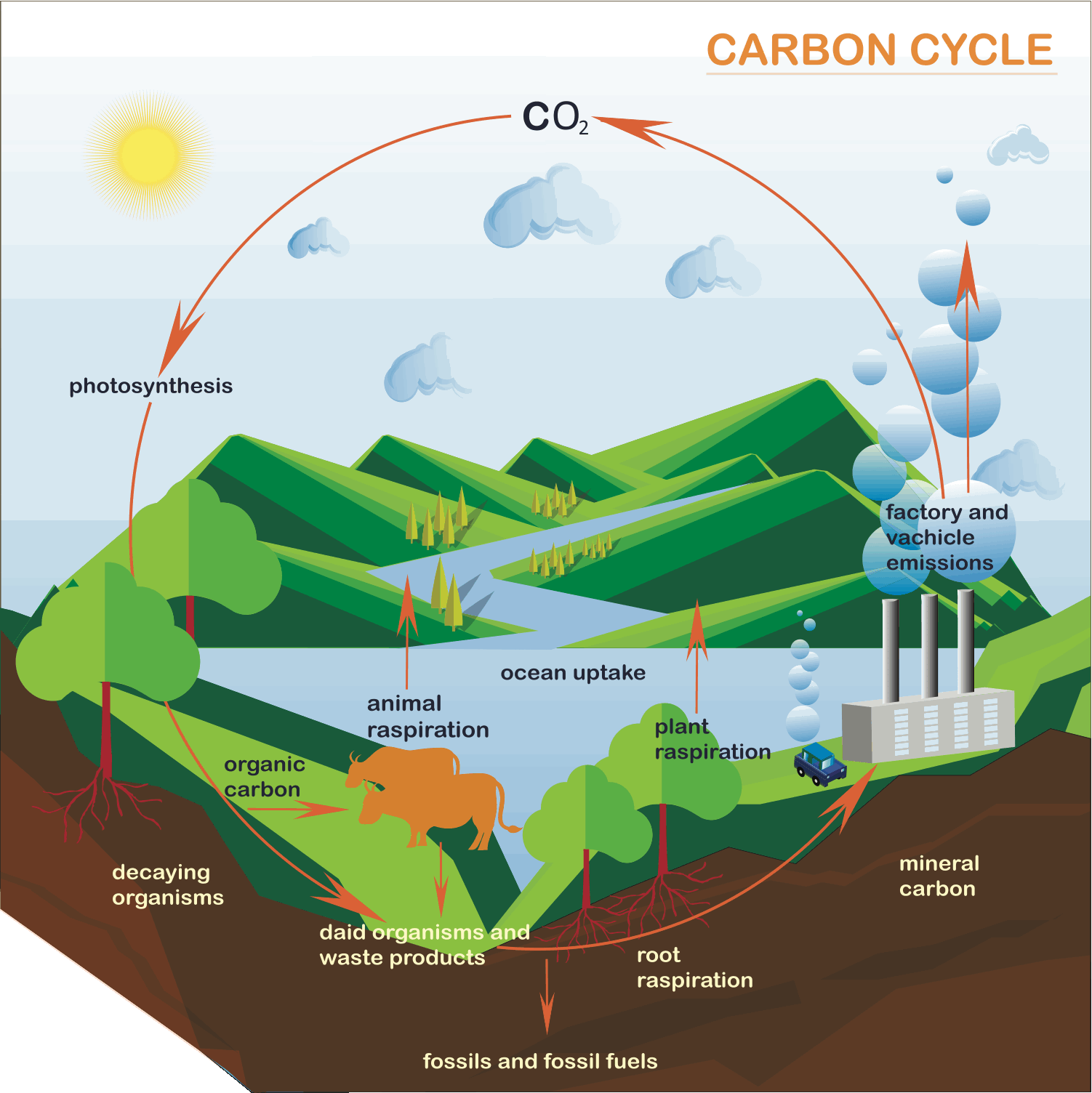
- Transects - 72Describe the carbon cycleSomething that encompasses this
<<<--------------
Information
- Description
- A set of flashcards covering all topics on the new AQA GCSE Biology course.
- Created by
- Alexandra Anderson
- Views
- 157
- Tags
- Rating