
Mind map
Social Learning Theory
Map content
Social Learning Theory
Main Assumptions
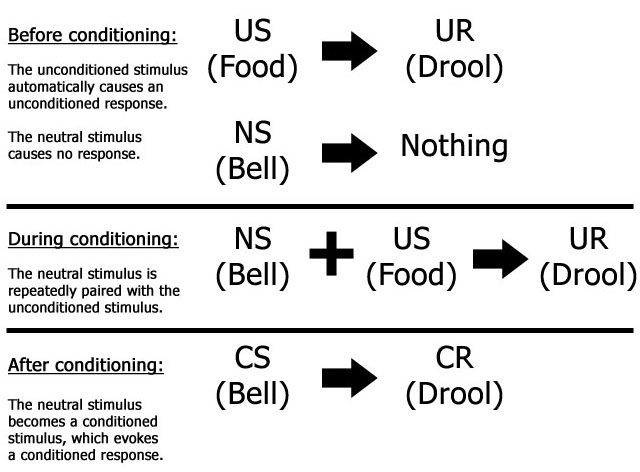
- Unlike the behavioural approach SLT states learning also happens indirectly.
- Albert Bandura proposed SLT as a development of the behavioural approach as he argued that conditioning also could not account fro all human learning.
- All behaviour is learnt through the observation and imitation of others within a social context.
Main Ideas
- Modeling - Behaving in a certain way that is similar to that of a role model.
- Vicarious Reinforcement - An individual observes the behaviour of others and indirectly learns. The learner may imitate the behaviour but usually only after the behaviour is seen to be reinforced not punished.
- Bobo Doll Study - Group A watched an adult behave aggressively toward the doll and be praised, Group B watched an adult act aggressively awards the doll but they were punished and Group C saw nothing happen to the adult. The groups of children were then given there own doll to play with, group A showed the most aggression toward the doll, group C showed Aggression towards the doll but not as much as group A and group B showed the least aggression toward the doll. This study Shows how vicarious reinforcement works as the children who saw the behaviour reinforced were more likely to repeat the behaviour they had seen,
- Identification - Imitating the behaviour of a role model as they identify with them as they see something of themselves e.g gender, hobbies etc.
Evaluation
- Strengths
- Real Life Application - Explains curtail norms an difference between cultures as people observe they behaviour around them and imitate that behaviour, also explains how children learn gender identity roles as they observe the behaviour they see, this is useful as it shows how children in particular can be taught more effectively.
- Experimental Support - Bobo Doll study, shows that people, specifically children do observe and imitate the behaviour of t=others. also supports that children look up to role models as the person they watch was an adult and therefore the children were more award of what the adult was doing as they aspire to be older.
- Acknowledges The Importance Of Cognitive Factors - Mediation processes and their role in the learning of new behaviours, important in understanding behaviour and how humans learn to behave the way they do.
- Weaknesses
- Over Reliance On Lab Evidence - Experiments carried out in an artificial environment, although it is unlikely the children in the bobo doll study showed any demand characteristics it is still a possibility which could result in problems arising in other studies that use adults.
- Ethics Compromised in Some Experiments - During the bobo doll study children were intentionally exposed to aggressive behaviour this could alter their behaviour permanently especially for group A which could effect them in latter life causing problems as they were taught that aggressive behaviour was a good thing from this experiment.
- Underestimates Biological Factors - Bobo Doll study boys showed more aggression that girls which is most likely is because they have more testosterone however this is not referenced to or mentioned during the bobo doll study which suggests is was not considered an could have influenced the results.
- Strengths
Meditational Processes
- Cognitive factors that influence learning, they determine whether a new response is acquired in the learning process.
- 1. Attention, the extent to which a behaviour is noticed.
- 2. Retention, how well that behaviour is remembered.
- 3. Motor Reproduction, the ability to preform the behaviour.
- 4. Motivation, the will to preform the behaviour.
Images and files in the map

Information
- Description
- A-Level Psychology (Approaches) Mind Map on Social Learning Theory, created by Emmie Westley on 25/10/2016.
- Created by
- Emmie Westley
- Views
- 0
- History
-
- Created by Emmie Westley · Oct 25, 2016
- Copied by Emmie Westley · Oct 25, 2016
- Rating
More on Social and observational learning