
Notes
The Agricultural Revolution
Content of the notes (1)
Page 1
THE AGRICULTURAL REVOLUTION
OVERVIEW
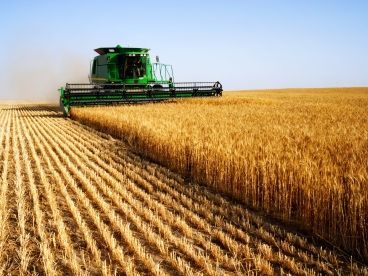
In 15,000 years, we went from hunter gather communities to larger agrarian societies to modern society as we know it, with all of its seemingly amazing inventions like airplanes and 99cent hamburgers. To make a hamburger, you need to domesticate, breed and slaughter cattle for the meat. Then you need to package it and store it; followed by transporting it to a large population center. In addition, you need to grow wheat and refine it; to make it edible. You also need to get cheese from cows; store it and then transport it. Not only that, but you also need to grow tomatoes, lettuce and other vegetables. Seems like a lot of work!
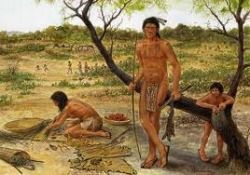
Hunter Gather Society
Hunter gatherers mainly collected fruit, nuts, roots, and when possible, some meat. Apparently fishing was very popular back then, as almost all hunter gatherer groups lived near water sources.
Agrarian Society
It appears that the cultivation of crops and the formation of larger, agriculturally-based population centers were done independently to each other.
PROS
- Controllable food supply, which helped to ensure that people wouldn't starve
- Created a food surplus, which allowed to creation of cities and the division of labor
- Farming was possible in almost all areas
CONS
- To keep feeding an increasing population, you had to radically change the natural environment
- Farming is very hard work, which perhaps acted as an incentive to enslave other people and make them do the work. Prime example would be the colonial south, which has heavily agriculturally based. The colonial north was industrially-based and didn't have slaves.
Herder Society
This is an alternative to the hunter gatherer way of life and the agrarian way of life. Herders effectively domesticated animals and then took them with them, whenever they went. One benefit of being a herder is that the domesticated animals provided milk, meat, leather and wool. A drawback would be that you had to move around ALOT. Overall, it appears that this alternative was not very widespread or popular because there are only a few animals that are worth domesticating. Examples include sheep, cattle, chickens.
Historians POV
Some historians argue that the advent of farming is what enabled human civilization to become what it is today. It created a food surplus, which was HUGE; it enabled populations to increase and for the diversification of labour, which catalyzed technologically improvements. However, other historians argue that the advent of farming lead to a lot of terrible problems, like patriarchy, discrimination, wars, and even famine.
Information
- Description
- This episode of the crash course world history series deals with agricultural revolution.
- Created by
- 2015jtw · Oct 2015
- Updated
- Jan 19, 2017
- Views
- 98
- Tags
- Rating