
Consumer Behaviour flowcharts
34 flowcharts by 27 users
This GoConqr page gathers Consumer Behaviour flowcharts on purchase decisions, motivation and attitudes. They are for university students and professional candidates reviewing these topics, and teachers seeking material for lessons. There are over 10 flowcharts, mostly at university level, with some for school students. Pick a flowchart to explore.
Select topic
- Consumer behaviour models and theories6
- Factors influencing consumer behaviour64
- Consumer types and market segmentation20
- Consumer motivation, personality and self-concept33
- Consumer perception and neuromarketing35
- Consumer learning and memory14
- Consumer attitudes and persuasion39
- Cultural influences on consumer behaviour36
- Social influences on consumer behaviour15
- Consumer decision-making process153
- Online and in-store shopping40
- Diffusion of innovation6
- Ethical consumption7
- Consumer behaviour and marketing strategy18
Flowcharts
-
Untitled
-
Untitled
-
Untitled
-
Chapter 4 BB
-
Chapter 2
-
consumer behavior
-
5 Step Consumer Decision Making Process
-
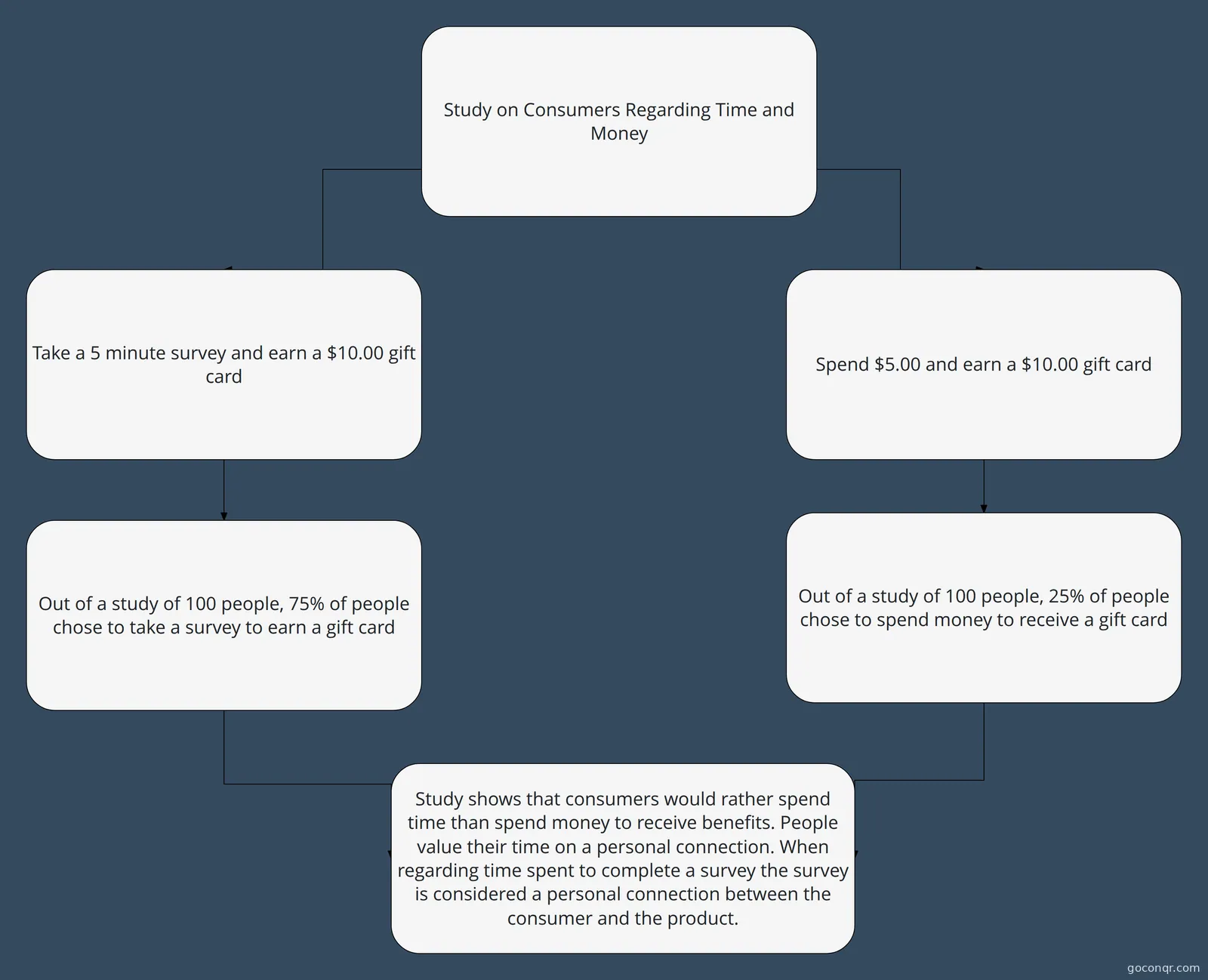 94. People may care about time more than they care about money
-
Untitled
-
tarea cuali
-
Untitled
-
sdvDSV
-
Untitled
-
productos devueltos
-
Untitled
-
Untitled
-
Untitled
-
Untitled
-
Untitled
-
Untitled
-
94. People May Care About Time More Than They Care About Money
-
Producto COnsumer Behaviour
-
Untitled
-
Untitled
-
HOE model
-
Untitled
-
Untitled
-
Untitled
-
Untitled
-
Proceso de compras
-
Means value end chain
-
Untitled
-
Untitled
-
Consumer Decision Making Process
More Consumer Behaviour resources
About consumer behaviour flowcharts
GoConqr OriginalWhat consumer behaviour flowcharts cover
The flowcharts show different ways to organise consumer behaviour topics. One follows a five-step decision-making process, from problem recognition and information search to purchase and the post-purchase process. Another connects motivation with needs, goals and perceived risk. Means value end chain uses examples including coffee beans to link attributes, consequences and values.
How to use a flowchart
Start with the five-step decision-making flowchart if you want a sequence to follow. Read through each stage, then try to recall the order without looking. Return to the chart to check where information search and evaluation fit.
For a different view, look at HOE model, which moves from awareness and knowledge towards purchase. If you want to check your recall or revisit a topic in another format, the unit page also has quizzes, mind maps and flashcards. Choose a flowchart and follow its connections at your own pace.
Frequently asked questions
Which flowchart is a useful starting point?
The five-step decision-making flowchart is a useful place to start if you want to review a sequence. It sets out problem recognition, information search, evaluation, product choice and the post-purchase process. You can follow the stages in order, then return to any step you want to revisit.
Are these flowcharts free to use?
Yes. Every flowchart listed here is free to open and study, with no account needed. A free account also lets you save quiz scores and make your own quizzes, mind maps, flashcards and notes. The resources on this page were made by GoConqr users, rather than by GoConqr.
What do the flowcharts cover besides purchase decisions?
The collection also includes a flowchart connecting motivation with needs, goals and perceived risk. The HOE model shows stages from awareness and knowledge to purchase. Means value end chain uses examples to connect product attributes with functional and psychological consequences and values.