
Founding Documents and the US Constitution
794 resources created by 664 users
This Founding Documents and the US Constitution page on GoConqr gathers community-made mind maps, flashcards, quizzes, flowcharts and notes, from the Articles of Confederation and the Great Compromise to the Declaration of Independence and the Bill of Rights. It's built for school students revising a topic and teachers after ready-made material. There are over 700 resources here, including more than 30 quizzes and over 400 mind maps, mostly at secondary level. Pick a map to begin, then test yourself with a quiz.
Select topic
- Origins of American Democracy32
- Enlightenment and the American Founding16
- Declaration of Independence61
- Articles of Confederation63
- Constitutional Convention and Compromises72
- Constitutional Structure and Principles28
- Ratification and the Federalists15
- Bill of Rights67
- Constitutional Amendments18
- Declaration of Independence and Bill of Rights294
Top Founding Documents and the US Constitution resources
-
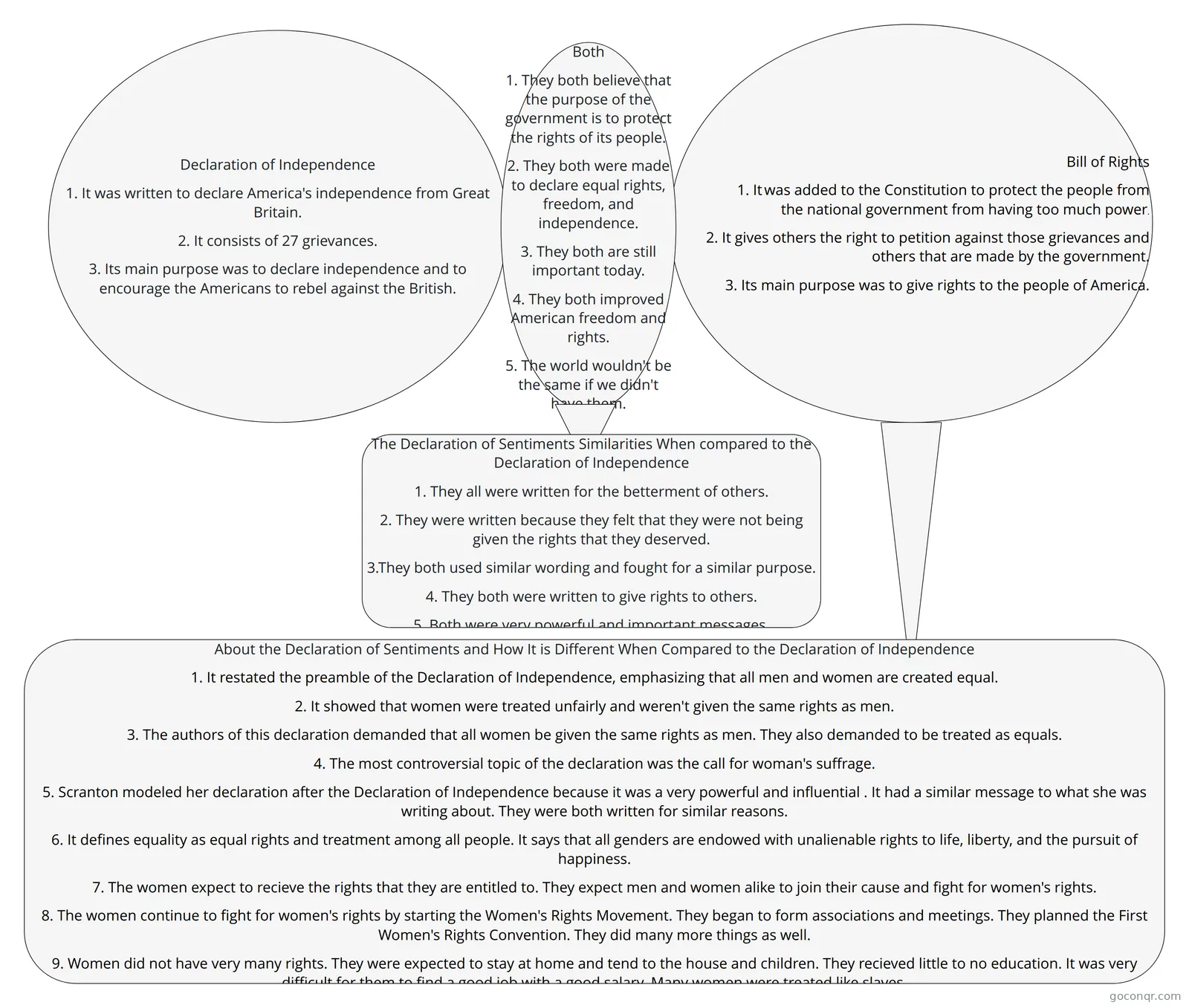 Flowchart The Declaration of Independence, The Bill of Rights, and The Declaration of Sentiments. A diagram of the Declaration of Independence, the Bill of Rights, and the Declaration of Sentiments.
-
 Mind map Declaration of Independence This concept map shows the connections between The Bill of Rights, The Declaration of Independence, and The...
-
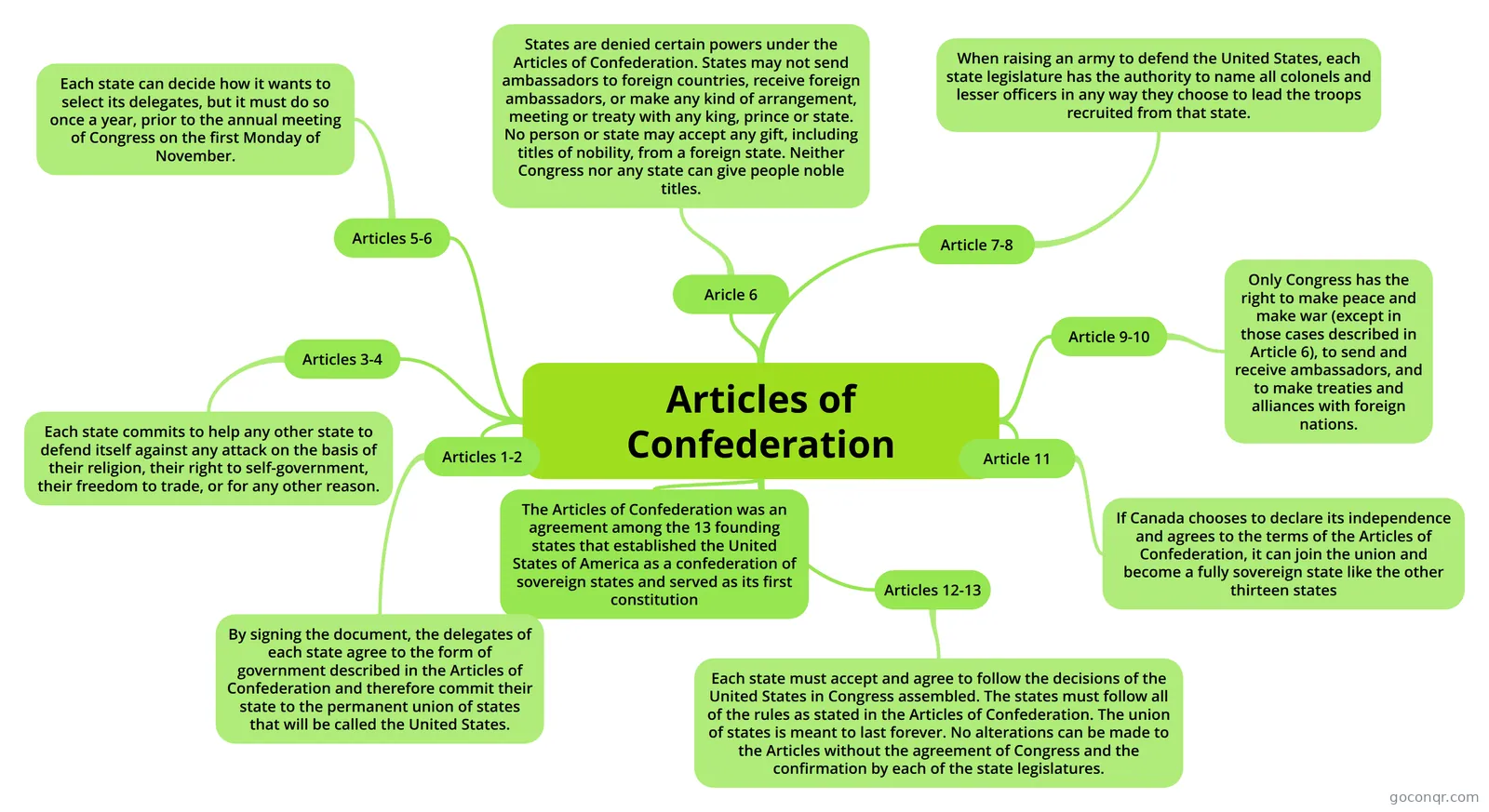 Mind map Articles of Confederation
-
 Flowchart The Declaration of Independence and the Bill of Rights DE History 201 Unit 2 - Week 6 | Assignment 2 The Declaration of Independence and the Bill of Rights Concep...
-
13 cardsCh. 2 Roots of Democracy Ch. 2 Vocabulary
-
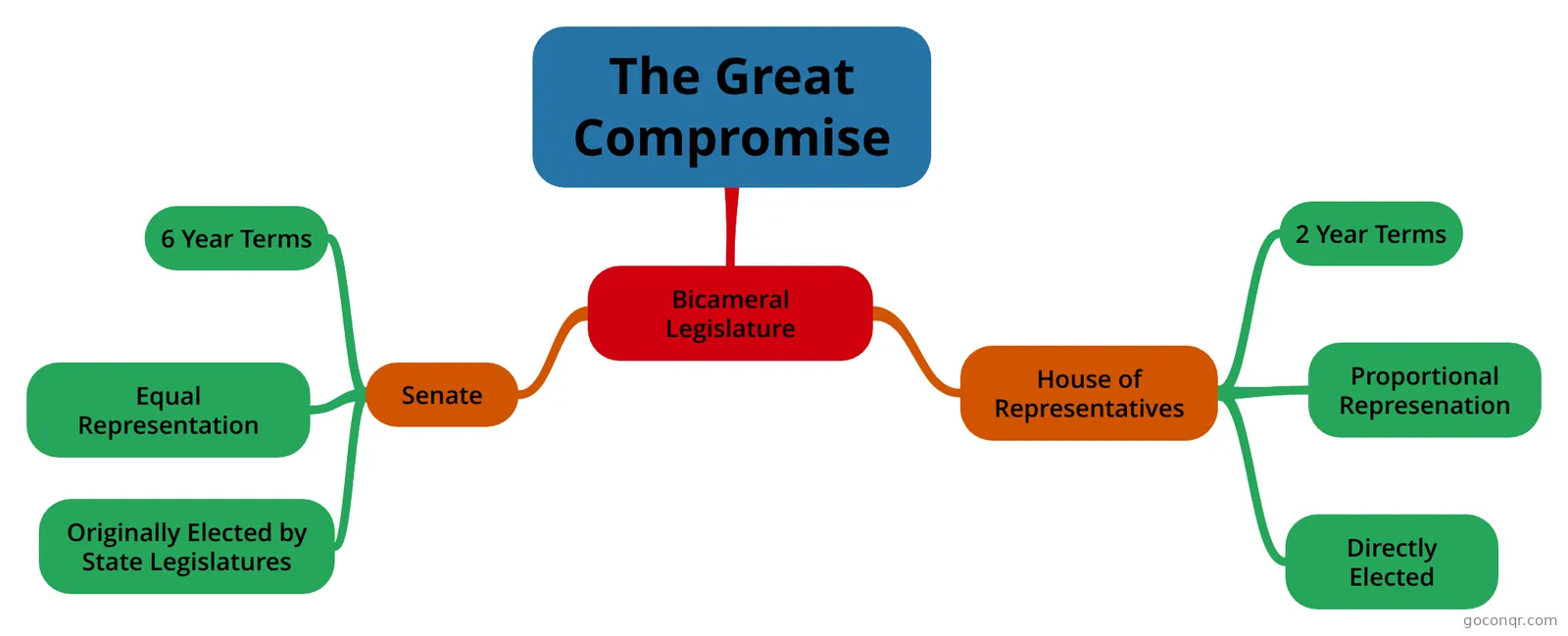 Mind map The Great Compromise The Great Compromise dealt with the very divisive issue of how many votes each state would get in Congress....
-
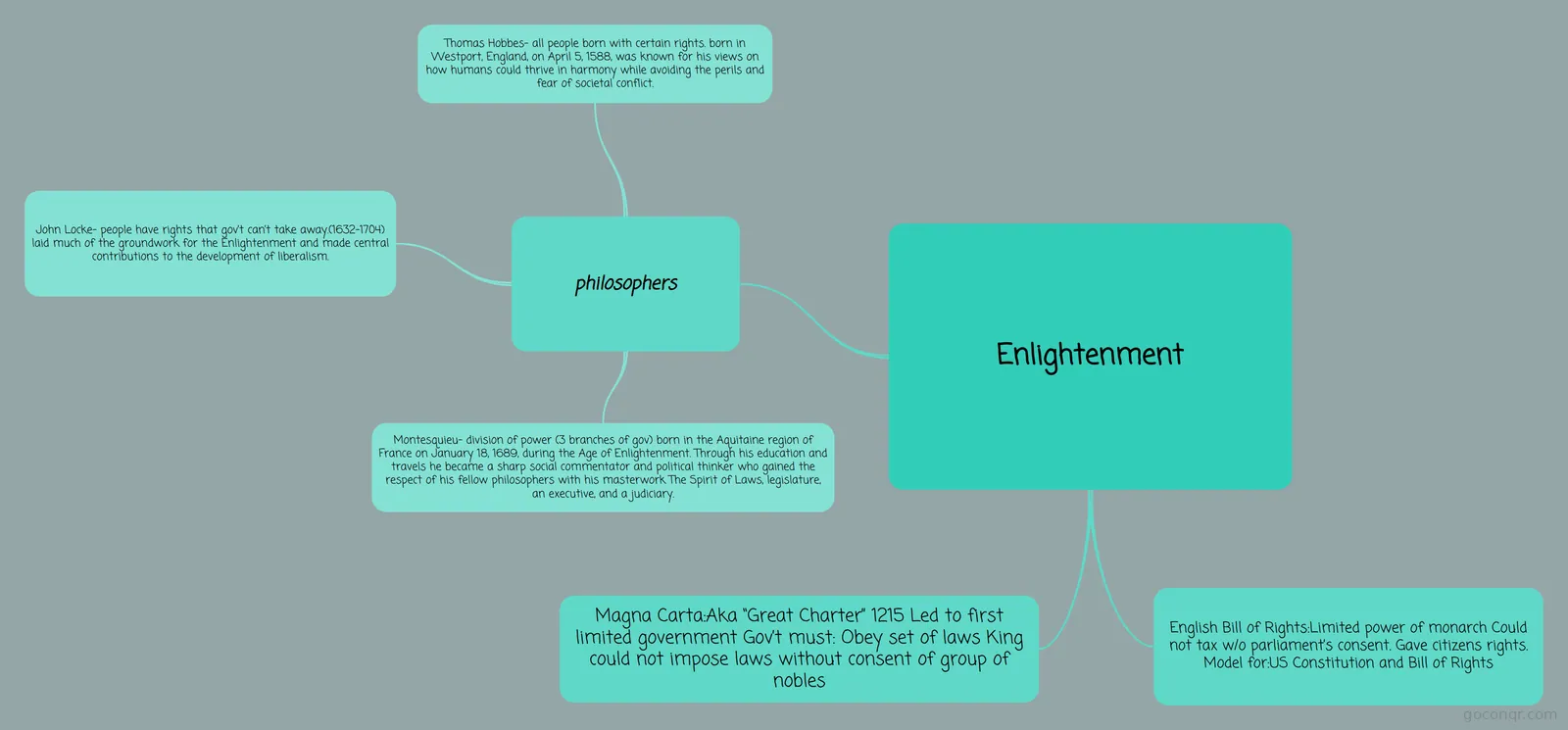 Mind map Enlightenment Enlightenment, philosopher
-
13 cardsFounding Documents When was the Magna Carta made ?
Quizzes
See all 38 quizzes-
115 questionsAmerican Heritage Second Midterm All of the following are reasons that the Founders did not include a bill of rights in the Constitution EXC...
-
22 questionsHistory Exam #3 Northern Delegates at the Philadelphia Convention avoided using the word slave in the Constitution because ...
-
52 questionsUntitled
-
30 questionsArticles of Confederation
-
30 questionsDeclaration of Independence to Constitution Which was not a freedom of British subjects that the Founding Fathers wanted to bring to America?
-
22 questionsExpansion and Conventions Practice Test Which items were included in the Land Ordinance of 1785? Select ALL THAT APPLY (3)
-
15 questionsUS Constitution
-
26 questionsHistory chapter 5 which law gave a plan for surveying the land?
Mind maps
See all 500 mind maps-
Declaration of Independence This concept map shows the connections between The Bill of Rights, The Declaration of Independence, and The...
-
Articles of Confederation
-
The Great Compromise The Great Compromise dealt with the very divisive issue of how many votes each state would get in Congress....
-
Enlightenment Enlightenment, philosopher
-
 Antifederalists vs. Federalists
-
Ch. 10, The Bill of Rights
-
The Declaration of Independence versus the Bill of Rights versus the Declaration of Sentiments
-
Declaration of Independence to Bill of Rights (Declarations of Sentiments included)
Flashcards
See all 193 flashcards-
13 cardsCh. 2 Roots of Democracy Ch. 2 Vocabulary
-
13 cardsFounding Documents When was the Magna Carta made ?
-
80 cardsHISTORY EXAM UNIT 2 with what did framers of state constitutions concern themselves in regards to gov. power?
-
70 cardsChapter 8 History Test Which Plan benefitted larger sates
-
29 cardsSToRY FLaSHcaRD Flash Cards
-
32 cardschapter 2 vocabulary world history chapter 2 vocabulary
-
28 cardsUnit 3 study guide 8th grade US history The articles of confederation
-
55 cardsConstitution_History Study Guide rule of the people;
Flowcharts
See all 51 flowcharts-
The Declaration of Independence, The Bill of Rights, and The Declaration of Sentiments. A diagram of the Declaration of Independence, the Bill of Rights, and the Declaration of Sentiments.
-
The Declaration of Independence and the Bill of Rights DE History 201 Unit 2 - Week 6 | Assignment 2 The Declaration of Independence and the Bill of Rights Concep...
-
Unit 3: Week 10: Assignment 1
-
Vincent, Week 10 Assignment 1 The relationship between The Declaration of Independence, The Bill of Rights, and The Declaration of Sentim...
-
Unit 3 week 10
-
Chapter 5:Articles of Confederation
-
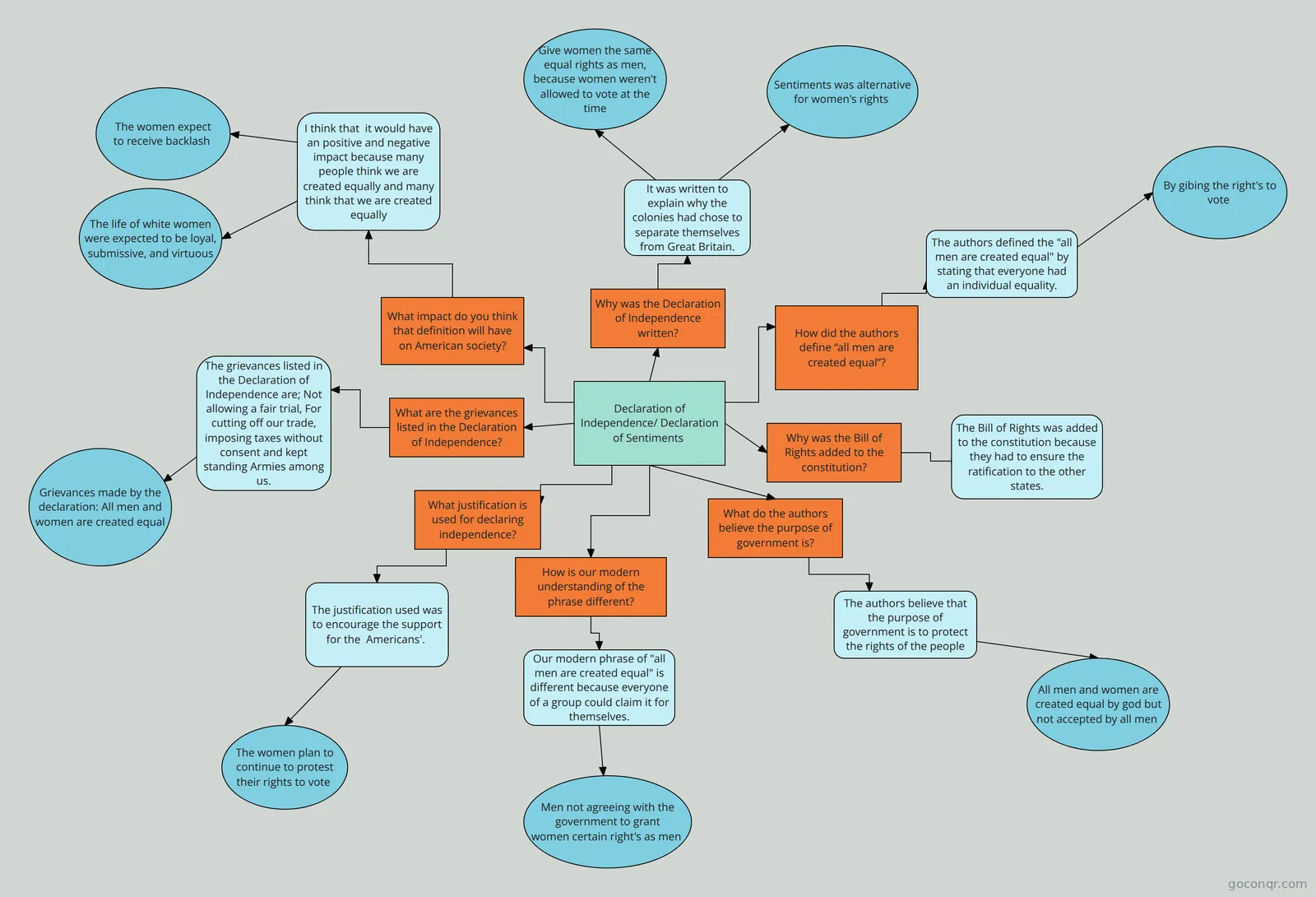 Declaration of Independence/ Declaration of Sentiments The Declaration of Independence and The Bill of Rights are connected by the stated what or why questions pr...
-
Week 10 Assignment 1 Concept Map D'Angelo WIlliams Concept Map
Notes
-
Class Notes Separation of Church and State Constitution The most important legal document in the United States It is what gives us our rights It is a contract between the people and the government It is a supreme document It is n...
-
Le Republique et La Revolution A More Perfect Union ACC pts Flaw &...
-
U.S Constitution Review U.S Constitution Review and Added Notes 1. Explain the system of checks and balances established by the Constitution- What is "checks and balances"? What is it designed to do? Give an example. ~Checks and Balances are...
-
US History Chapter 6: Citizenship and the Constitution. Terms to know:Federal System: a system that divided powers between the states and the federal government.Republic: a state in which supreme power is held by the people and their elected representatives.Impeach: to vot...
-
Reading 15 - The Second Amendment was ratified to preserve slavery The real reason the Second Amendment was ratified, and why it says “State” instead of “Country” (the Framers knew the difference – see the 10th Amendment), was to preserve the slave patrol militias in the southern sta...
-
Bill of Rights - created from Mind Map 1. Rights to freedom of speech, press, and religion. 2. Right to bear arms. 3. Prevents the government from forcing homeowners to allow soldiers to stay in their home
-
Untitled The framers set up a procedure for ratification that called for each state to hold a special convention. The voters would elect the delegates to the convention, who would then vote to accept or reject the Constitution...
-
John Jay JOHN JAY One of the Founding Fathers of the United States, John Jay is known as a writer of The Federalist Papers and for being the nation's first chief justice.
Slides
Topics in Founding Documents and the US Constitution
More History topics
About Founding Documents and the US Constitution
GoConqr OriginalWhat the resources cover
The unit follows the story from early ideas about government to the written Constitution. The mind map Enlightenment sets out the philosophers and the Magna Carta, which led to the first limited government. Flashcard decks such as Ch. 2 Roots of Democracy and Founding Documents cover terms like social contract, separation of powers and the Mayflower Compact.
The Articles of Confederation and the Convention
Many maps look at the Articles of Confederation, the agreement among the 13 founding states that served as the first constitution. Several versions are listed, so you can compare how different students laid out the same topic. The Great Compromise map covers the Senate and House of Representatives, with equal and proportional representation, two-year and six-year terms and a bicameral legislature. Antifederalists vs. Federalists names key figures on each side, and there are maps on the Constitutional Convention and the Philadelphia Convention.
Declaration, Bill of Rights and Sentiments
A large group of flowcharts and maps compares the Declaration of Independence with the Bill of Rights and the Declaration of Sentiments. The flowchart on those three documents notes that the Declaration of Independence lists 27 grievances. The map Declaration of Independence links some of the ten Bill of Rights laws to those grievances.
A sensible order
- Start with Enlightenment for the background ideas.
- Move to Articles of Confederation, then The Great Compromise.
- Read Antifederalists vs. Federalists and the Declaration and Bill of Rights comparisons.
- Finish with flashcards for vocabulary and a quiz such as Constitution Quiz or Articles of Confederation.
Use maps to see how ideas connect, then use a quiz to check what you can recall. Anything you miss tells you which map to reopen. Some resources mention AP US History and A-level Politics, so they may suit those courses too.
Where it fits
This unit sits in the Americas strand of History. When you're ready, choose one map, take one quiz and see what sticks.
Frequently asked questions
Which resource should I open first?
Try the Enlightenment mind map for the background ideas, then the Articles of Confederation maps. After that, The Great Compromise shows how the Constitution settled representation. If you prefer to test yourself first, Constitution Quiz is a quick way to see what you already know.
What do the mind maps cover?
They cover the Articles of Confederation, the Great Compromise, Federalists and Antifederalists, the Constitutional Convention and the Philadelphia Convention. Many others compare the Declaration of Independence, the Bill of Rights and the Declaration of Sentiments. Several maps cover the same topic, so you can pick the layout that suits you.
Are the resources free to use?
Yes. Every resource listed here is free to open, study and take, with no account needed. They were made by GoConqr users, not by GoConqr itself. A free account also saves your quiz scores and lets you make your own quizzes, maps, flashcards and notes.
Which levels and exams do they suit?
Most of the resources are at secondary level, so they suit school students and the teachers who work with them. Some mention AP US History and A-level Politics. Check each resource against your own course, since the community made them and they vary in depth.
Are there flashcards for vocabulary?
Yes. There are many flashcard decks, including Founding Documents, Bill Of Rights and Roots of American Democracy, plus numbered chapter vocabulary decks. Ch. 2 Roots of Democracy covers terms such as social contract, separation of powers and John Locke.
What if I can't find the topic I need?
Browse the other maps, flowcharts and notes here, since many cover the same documents in different words. If something is still missing, you can make your own mind map, flashcards or quiz with a free account and keep it for your next revision session.