
Lower Limb mind maps
176 mind maps by 100 users · Page 1 of 5
This Lower Limb page gathers mind maps on bones, joints, muscles and nerves. It is for university students studying anatomy and teachers looking for ready-made material. There are over 170 mind maps from more than 90 users, with resources mainly at university level. Choose a map to begin.
Select topic
- Bones of the Lower Limb27
- Muscles of the Lower Limb38
- Hip Joint19
- Hip and Gluteal Muscles20
- Thigh Anatomy and Muscles53
- Femoral Triangle and Adductor Canal11
- Knee Joint43
- Leg Anatomy and Muscles30
- Ankle and Foot Anatomy54
- Blood Vessels of the Lower Limb9
- Nerves of the Lower Limb8
- Lower Limb Disorders and Leg Swelling17
Mind maps
-
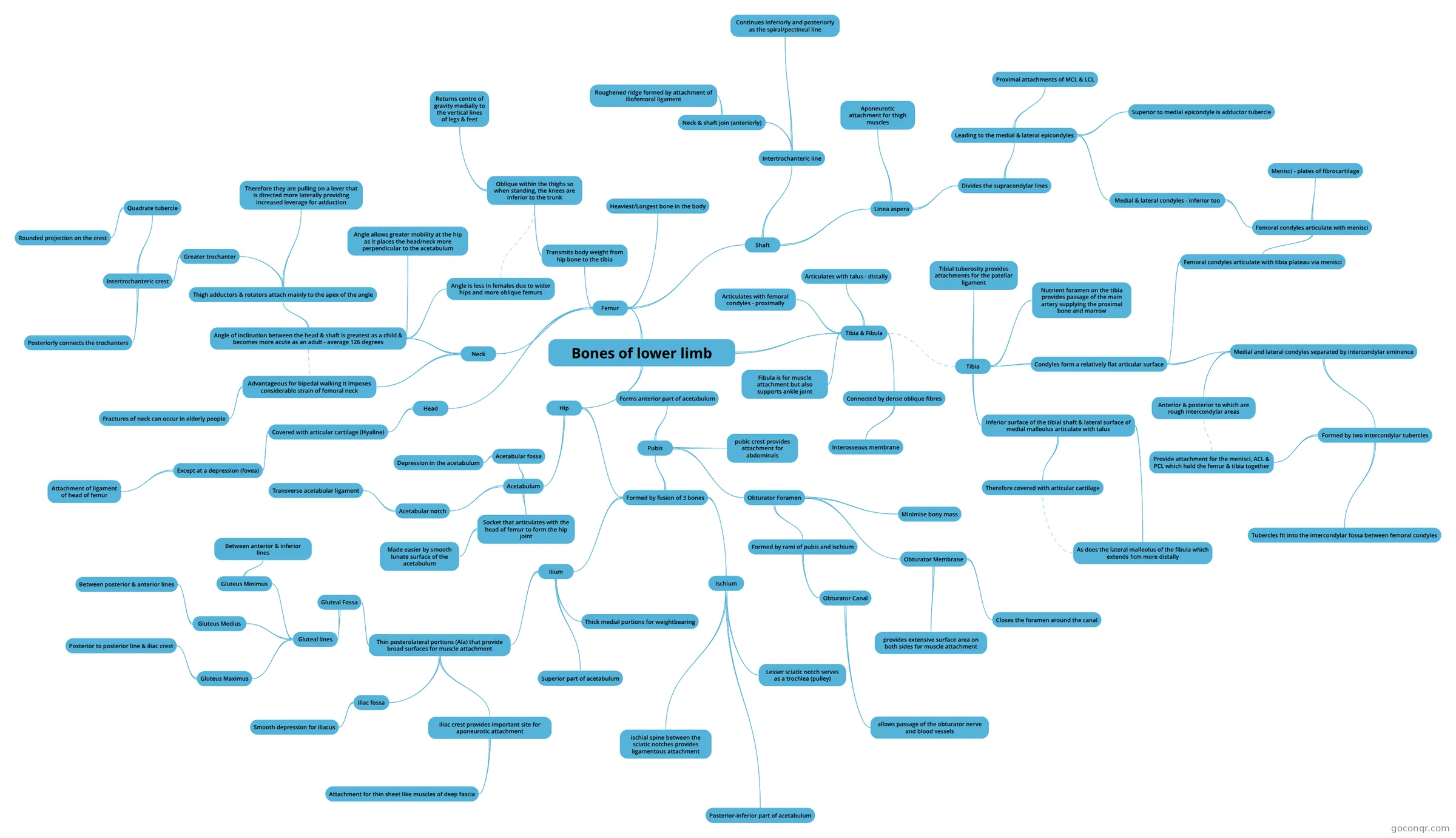 Bones of lower limb
-
VENOUS DRAINAGE OF THE LOWER LIMBS
-
Muscles of the Leg and Foot
-
Anatomy of the knee
-
Anatomy of the thigh
-
Janice’s Painful Knee
-
Lower Leg
-
Muscles of Lower Extremity
-
Hip Joint
-
Tecnologias no Contexto da Educação
-
Thigh Muscles
-
Thigh and Knee
-
Ahmad Can't Run
-
bone tumors
-
Lower Appendage
-
Bone Tumors
-
Knee Joint
-
Anatomy Lower body
-
Janice’s Painful Knee
-
knee joint
-
Janice’s Painful Knee
-
Swelling in the Leg
-
Swelling in the Leg
-
Fatimah's Soft Bones
-
The Lumbar and Sacral Plexuses and Nerves of the Lower Limb
-
The lower limb
-
Knee
-
1213 Week 15 P
-
A swelling in the leg
-
A swelling in the leg
-
 Gluteal region, posterior thigh and popliteal fossa (bones and landmarks) Mind Map on Gluteal region, posterior thigh and popliteal fossa, created by Thin Kyi Phyu Naing on 03/27/2017.
-
Posterior of the Leg
-
The Foot
-
Janice’s Painful Knee
-
Ankle & Foot/Duchenne Muscular Dystrophy
-
"A Swelling In The Leg"
-
Ahmed Cannot Run
-
Swelling in the leg
-
Janice’s Painful Knee
-
COXOFEMORAL
More Lower Limb resources
About lower limb mind maps
GoConqr OriginalUsing Lower Limb mind maps
Mind maps on this page organise anatomy into branches. Muscles of Lower Extremity groups muscles by region, from the hip to the foot. Nerve Supply of Lower Limbs follows nerves including the sciatic, tibial and fibular nerves.
For a regional starting point, try Lower Leg. Its branches group muscles into anterior, posterior and lateral compartments, giving you a way to review one area at a time.
Plan a review
Read a branch, then cover it and recall the names it contains. Reopen the map to check what you missed. Move to Anatomy of the knee when you want to review a joint, including its menisci and ligaments.
When you want to test recall rather than follow a map, switch to a quiz on the unit page. Flashcards offer another way to revisit individual details. Pick a region and explore its branches.
Frequently asked questions
Which mind map could I start with?
Lower Leg is a useful starting point if you want to focus on one region. It groups muscles by anterior, posterior and lateral compartments. You can read one branch at a time, then check whether you remember the names before moving on.
What do the mind maps cover?
The maps cover bones, joints, muscles, nerves and venous drainage. For example, Hip Joint includes the articulation and capsule, while Anatomy of the knee includes menisci and ligaments. Other maps focus on areas such as the thigh, leg and foot.
Are these mind maps free to use?
Yes. Every resource listed on this page is free to open and study without an account. The maps were made by GoConqr users, rather than by GoConqr. A free account also lets you make your own mind maps and other study resources.