
Phlebotomy and Laboratory Diagnostics
154 resources created by 113 users
This Phlebotomy and Laboratory Diagnostics page on GoConqr gathers community-made quizzes, mind maps, flashcards and notes, from blood collection tubes and order of draw to urinalysis strips, lab values and arterial blood gases. It's built for university students and professional candidates practising venipuncture steps and lab values, and for teachers after ready-made material. There are over 150 resources here, including more than 50 quizzes, more than 60 flashcards and over 30 mind maps. Pick a tube deck or a quiz, then make your own.
Top Phlebotomy and Laboratory Diagnostics resources
-
25 cardsLabs NCLEX Na K Ca Mg Cl Phosphate Albumin
-
75 questionspractice test Which of the following BEST describes a referential montage?
-
142 questionsNCCT Phlebotomy Tech Review Quiz What is the most important venipuncture step?
-
79 questionsMA Chapter 33 Michelle Villers, CMA (AAMA), supervises the office laboratory. She is getting ready to run an FBG on a blo...
-
47 questionsMA Chapter 29 Jennifer Keyes, an 18-year-old woman, comes to the office with a painful sore throat, extreme fatigue, feve...
-
191 cardsImportant Terms and Abbreviations Important Terms and Abbreviations found when working in the Phlebotomy field
-
50 questionsPhlebotomy Chapter 1-4 What is phlebotomy?
-
5 cardsYellow Topped Tube: Sterile The information needed to know when dealing with yellow-topped test tubes
Quizzes
See all 54 quizzes-
75 questionspractice test Which of the following BEST describes a referential montage?
-
142 questionsNCCT Phlebotomy Tech Review Quiz What is the most important venipuncture step?
-
79 questionsMA Chapter 33 Michelle Villers, CMA (AAMA), supervises the office laboratory. She is getting ready to run an FBG on a blo...
-
47 questionsMA Chapter 29 Jennifer Keyes, an 18-year-old woman, comes to the office with a painful sore throat, extreme fatigue, feve...
-
50 questionsPhlebotomy Chapter 1-4 What is phlebotomy?
-
111 questionsCertification Prep_2 What is the first step in the blood collection procedure
-
53 questionsCertification Prep_Phlebotomy1 POC (Point of Care) testing requires quality control to ensure accuracy of the results
-
73 questionsUntitled According to the RECOMMENDED guidelines, respiratory effort should be recorded with:
Mind maps
See all 31 mind maps-
Uro-dip® 10e
-
Combur10 Test COBAS
-
DIAGNOSTIC PROCEDURE: CHEST X-RAY & OTHER LABORATORIES TEST MODULE 11: DIAGNOSTIC PROCEDURES (CHEST X-RAY $ OTHER LABORATORIES TEST)
-
Urine Strip
-
Urinalysis Reagent Strips (Urine) Package Insert
-
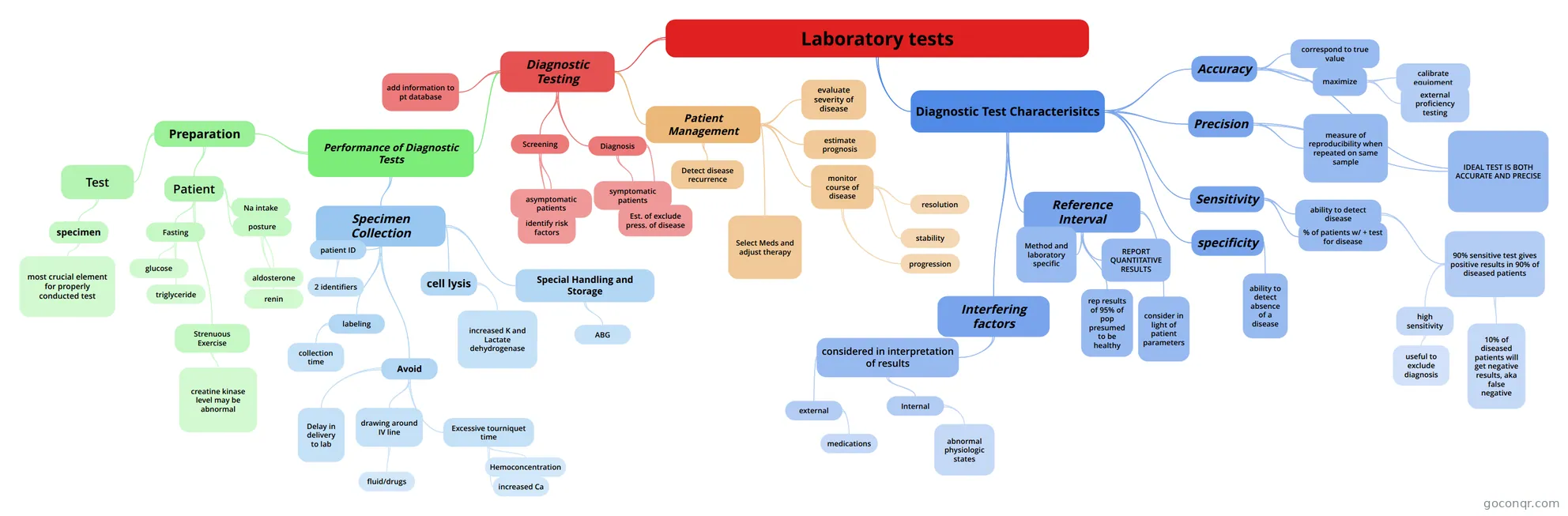 Laboratory tests 4/21/14 Lab tests ppt
-
Lab Values
-
POCT SPECIMEN COLLECTING
Flashcards
See all 66 flashcards-
25 cardsLabs NCLEX Na K Ca Mg Cl Phosphate Albumin
-
191 cardsImportant Terms and Abbreviations Important Terms and Abbreviations found when working in the Phlebotomy field
-
5 cardsYellow Topped Tube: Sterile The information needed to know when dealing with yellow-topped test tubes
-
5 cardsLavender Topped tube Specifications involving Lavender Topped Tubes
-
23 cardsNORMAL LAB VALUES normal arterial blood pH
-
98 cardsch 28 workbook
-
48 cardsdiagnostic testing LPN's Role in Specimen collection
-
80 cardsUrinaylsis Four methods of Urine Collection
Flowcharts
Notes
-
Order of Draw Order of Draw: 1. Microbiology 2. Blue 3. Red 4. Orange 5. Light Green 6. Dark Green 7. Purple 8. Grey 9. Yellow Microbiology Blood Cultures Blue Sodium Citrate Red None Orange SST Light Green
-
Specimen collection procedures - created from Mind Map Identification-make sure correct patient Equipment-needles/tubes working order Technique- follow CLSI guidelines
Topics in Phlebotomy and Laboratory Diagnostics
More Nursing topics
About Phlebotomy and Laboratory Diagnostics
GoConqr OriginalWhat the resources cover
This unit sits in the Pharmacology and Therapeutic Interventions strand of Nursing. It follows the path of a specimen: preparing the patient, collecting the blood, choosing the tube, and reading the result.
- Collection: quizzes on venipuncture procedures, special phlebotomy procedures, patient and specimen requirements, and a flowchart called Sample gathering.
- Tubes and order of draw: flashcards on the Yellow Topped Tube (with its SPS additive for blood cultures) and the Lavender Topped tube (EDTA, used for a complete blood count), plus a mind map and a quiz on order of draw.
- Lab values: many flashcard decks, including Labs NCLEX, NORMAL LAB VALUES and ATI Lab Values & Vital Signs.
- Urinalysis: mind maps built around reagent strip package inserts and colour charts.
Where to start
Begin with the quiz Phlebotomy Chapter 1-4. It opens with the basics, including the Greek roots of the word phlebotomy. Then move to the NCCT Phlebotomy Tech Review Quiz, which asks about the most important venipuncture step, time-dependent tests and the most commonly used vein.
Next, learn the tubes. Work through the tube decks, then check yourself with a quiz on order of draw.
Using quizzes and maps together
Read a mind map first, such as Blood Collection Tubes or Order of Draw, to see how the ideas connect. Then take a quiz on the same topic and note what you missed. Return to the map for those gaps only.
For lab values, use the flashcards for recall. The Labs NCLEX deck links electrolytes to symptoms, such as signs of low or high levels, which suits nursing candidates preparing for the NCLEX. Single-test maps on hematocrit, serum potassium, blood glucose and CBC help with detail.
For teachers
The mix of quizzes and decks gives you ready-made material for a skills session or a revision class. Check each resource against your own course before setting it.
Next step
Choose one tube deck and one quiz today, then add your own notes where the listed resources leave a gap.
Frequently asked questions
Which resource should I open first?
Start with the quiz Phlebotomy Chapter 1-4, which covers what phlebotomy is and its key terms. After that, the NCCT Phlebotomy Tech Review Quiz tests venipuncture steps, time-dependent tests and common veins. Once those feel comfortable, move on to the tube flashcards and the order of draw material.
What do the mind maps cover?
The mind maps cover blood collection tubes, order of draw, specimen collection modules, and single tests such as hematocrit, serum potassium, blood glucose and CBC. A large group also covers urinalysis, built around reagent strip package inserts and colour charts for strips such as Combur and Uro-dip.
Are the resources free to use?
Yes. Every resource listed here is free to open, study and take, with no account needed. They were made by GoConqr users, not by GoConqr itself. A free account also saves your quiz scores and lets you create your own quizzes, mind maps, flashcards and notes.
Is there anything for NCLEX preparation?
The flashcard deck Labs NCLEX covers electrolytes such as sodium, potassium, calcium and magnesium, with the symptoms linked to low and high levels. Other lab value decks, including ATI Lab Values & Vital Signs and Normal Lab Values, give more practice on reference ranges.
Who are these resources for?
They suit university students and professional candidates practising collection technique, tube choice and lab values. Most of the material leans towards professional study. Teachers can use the quizzes, decks and maps as ready-made material for classes or revision sessions.
What if I can't find the topic I need?
Try the related decks and maps first, since lab values, tubes and urinalysis appear in several formats. If a gap remains, you can make your own quiz, mind map, flashcards or notes. Community members have built most of what is here, so your own material can fill gaps too.