
Health Assessment
458 resources created by 274 users
This Health Assessment page on GoConqr gathers community-made quizzes, mind maps, flashcards and notes, from the Glasgow Coma Scale and levels of consciousness to head-to-toe checks, vital signs and wound evaluation. It's built for university students and professional candidates practising assessment skills, plus teachers after ready-made material. There are over 450 resources here, including more than 80 quizzes, over 250 mind maps and more than 80 flashcards, with NCLEX mentioned in some of them. Pick a topic, try a quiz to find your gaps, then make your own revision sets.
Select topic
- Health History and Patient Interview21
- Physical Examination Techniques29
- General Survey, Vital Signs and Pain29
- Nutritional and Functional Assessment12
- Mental Status Assessment13
- Skin, Hair and Nails Assessment15
- Head, Neck, Eyes, Ears, Nose and Throat Assessment26
- Breast and Axilla Assessment6
- Respiratory Assessment13
- Cardiovascular and Peripheral Vascular Assessment30
- Abdominal and Gastrointestinal Assessment17
- Genitourinary and Rectal Assessment9
- Musculoskeletal and Neurological Assessment21
- Assessment Across the Lifespan6
Top Health Assessment resources
-
50 questionsN125 Exam 2 A nurse is using SBAR to hand off information to the next nurse. The nurse reports pertinent medical histor...
-
105 questionsMA Chapter 20 Spencer Tatem has come to the office complaining of intense pain in his left arm. When he was inline skatin...
-
119 cardsN112 Quiz #2 What are symptoms of DVT?
-
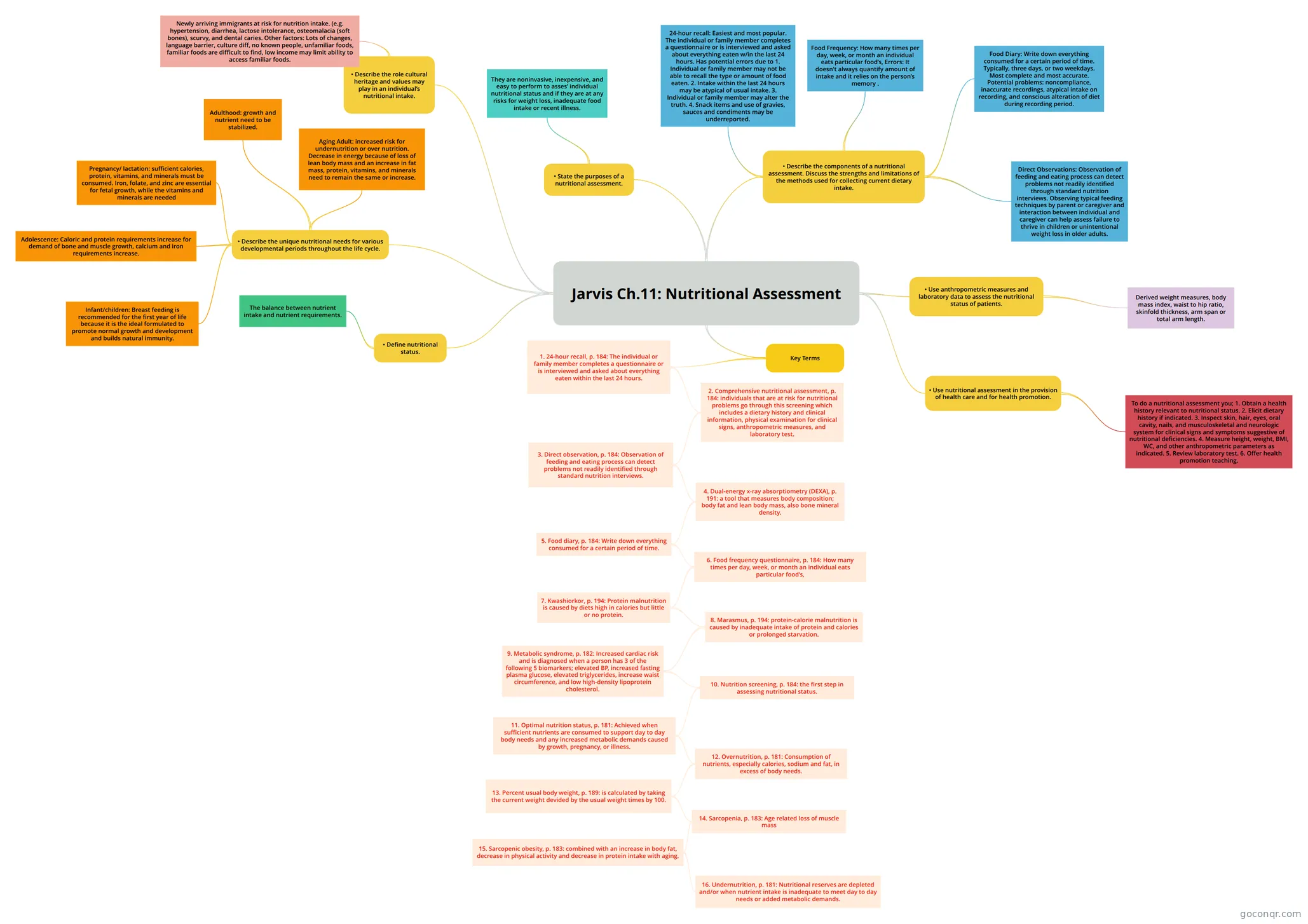 Mind map Jarvis Ch.11: Nutritional Assessment Week 9
-
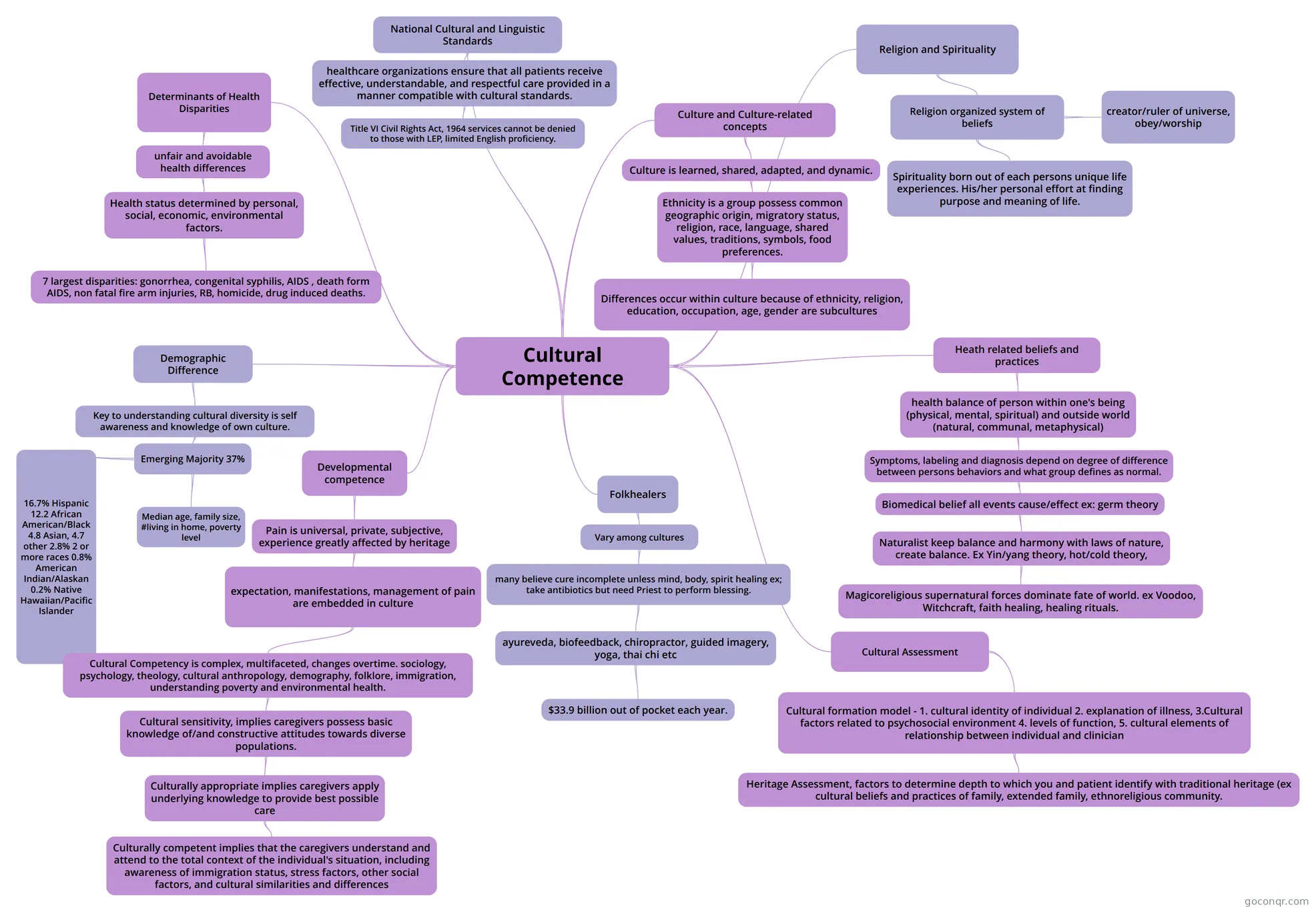 Mind map Cultural Competence Jarvis Chapter 2
-
9 questionsGlasgow Coma Scale I might add practice cases, at some point...
-
6 questionsLevels of Consciousness Your pt is drowsy and easily falls asleep, if not stimulated. Their movements are likely to be slow and com...
-
 Mind map WPQRSTU
Quizzes
See all 85 quizzes-
50 questionsN125 Exam 2 A nurse is using SBAR to hand off information to the next nurse. The nurse reports pertinent medical histor...
-
105 questionsMA Chapter 20 Spencer Tatem has come to the office complaining of intense pain in his left arm. When he was inline skatin...
-
9 questionsGlasgow Coma Scale I might add practice cases, at some point...
-
6 questionsLevels of Consciousness Your pt is drowsy and easily falls asleep, if not stimulated. Their movements are likely to be slow and com...
-
10 questionsQT Measurements Which of the following shows the measure points for the QT interval?
-
164 questionsExam 3 Part 1 A client complains of difficulty breathing. The nurse auscultates wheezing in the anterior bilateral upper ...
-
200 questionsExam 2 Part 1 One of the skin's functions is to produce Vitamin D
-
86 questionsHealth Assessment Exam 1 Evidence-Based Practice Assessment Cultural Competence The Interview Health History Assessment techniques V...
Mind maps
See all 261 mind maps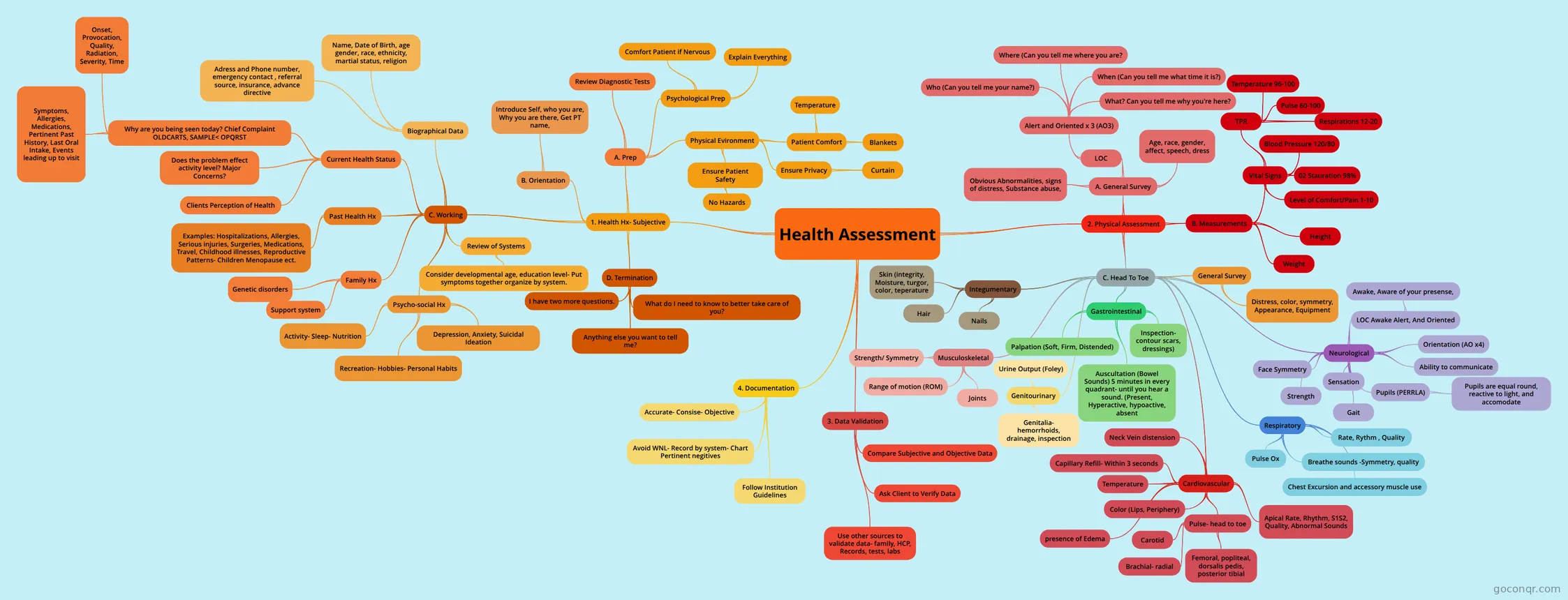
Flashcards
See all 88 flashcards-
119 cardsN112 Quiz #2 What are symptoms of DVT?
-
247 cardsJarvis Health Assessment Skin, Hair, and Nails
-
106 cardsCardiovascular and Peripheral Vascular Assessment The cardiovascular system is composed of the:
-
52 cardsVital Signs 4 classic vital signs
-
49 cardsVital Signs The Vital Signs
-
32 cardsChapter 25: Health Assessment: Vocabulary Unit VI: Actions Basic to Nursing Care Chapter 25: Health Assessment
-
66 cardsJarvis Heart and Neck Vessels Carotid Sinus Hypersensitivity
-
133 cardsN112 #1 What is the most common cause of blindness in the elderly?
Flowcharts
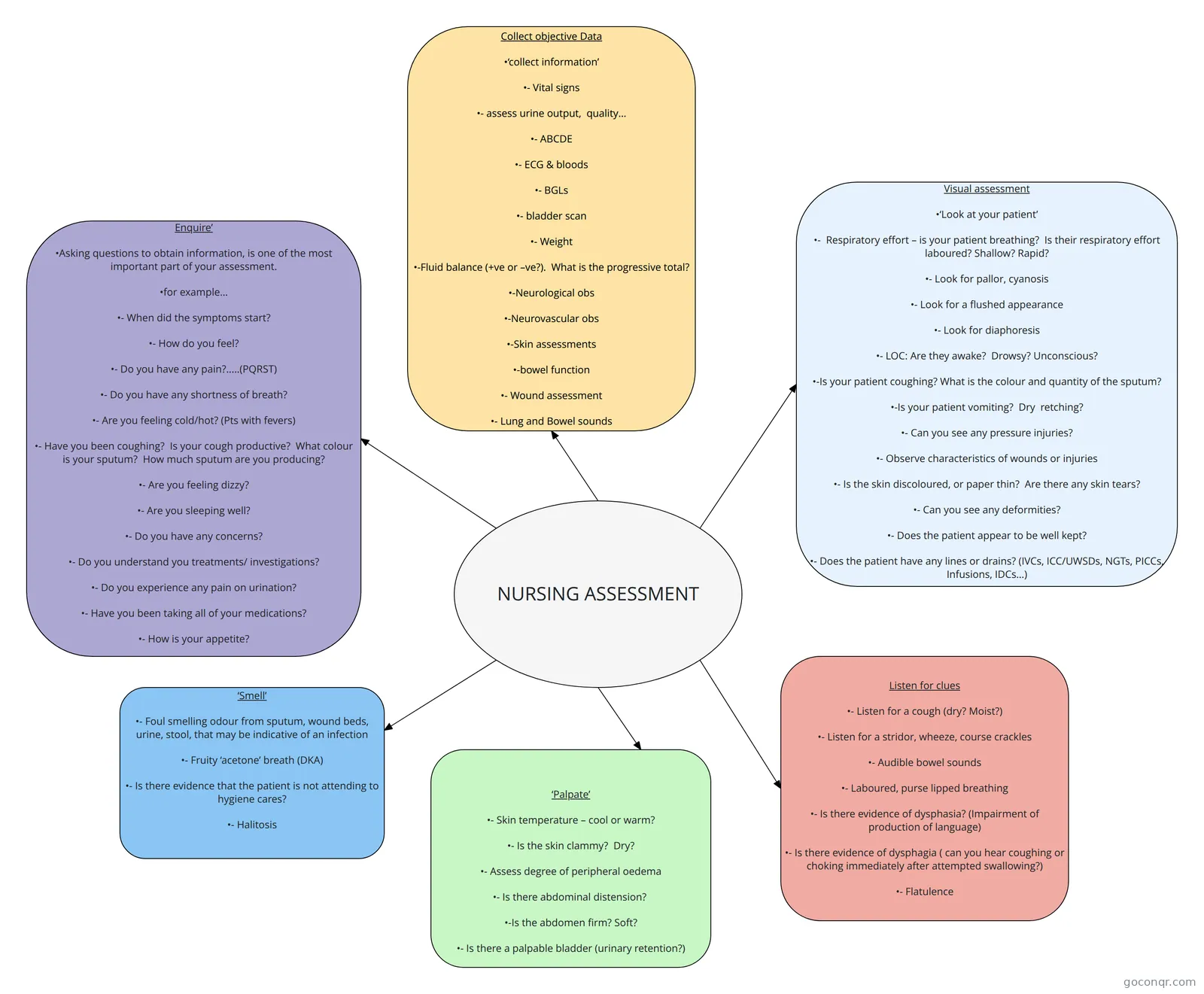
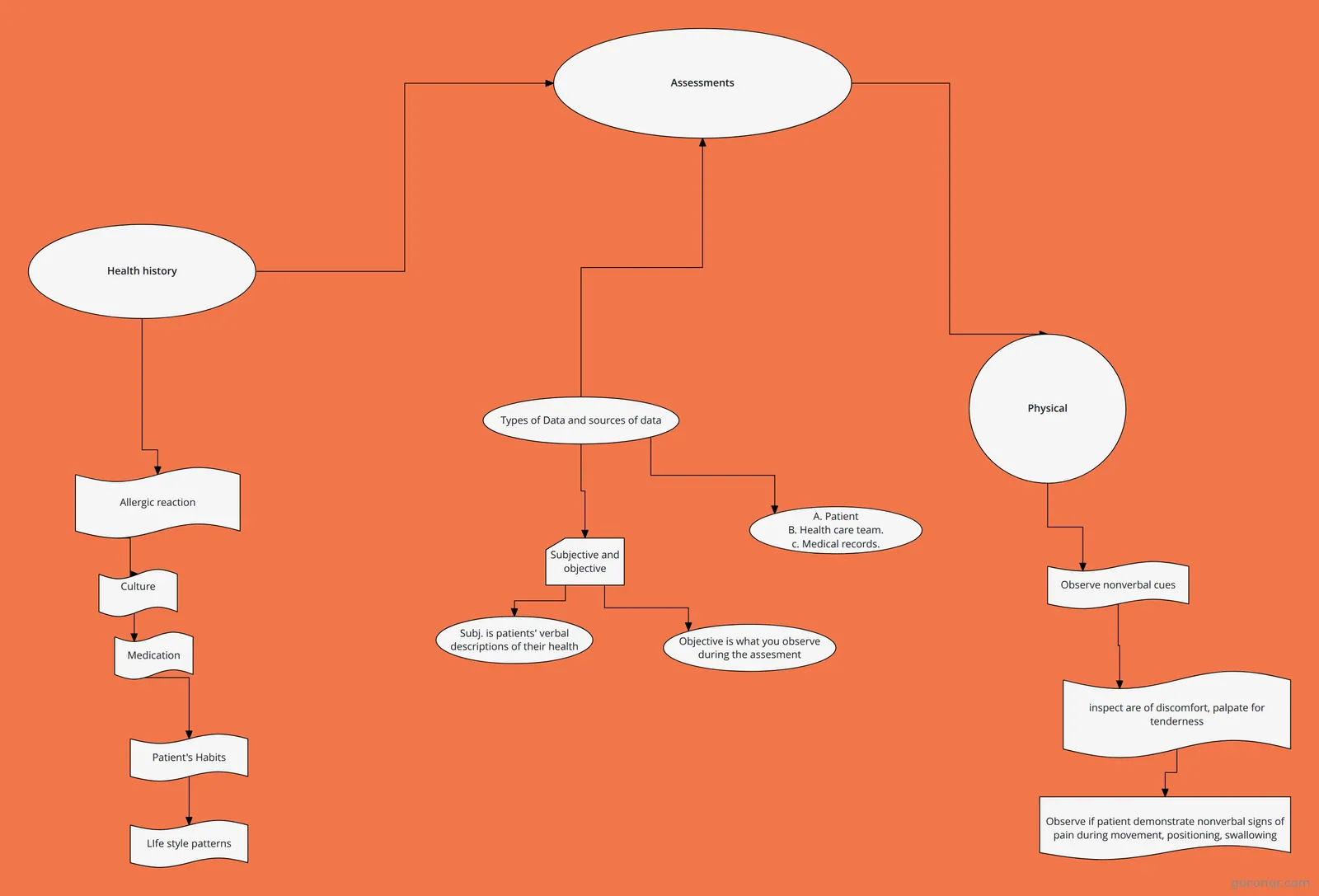
Notes
See all 17 notes-
Chapter 8: Assessment Techniques and the Clinical Setting *Physical examination requires you to develop technical skills and a knowledge base. -technical skills are the tools to gather data. -knowledge base: you need to know what to look for. *Skills...
-
head to toe assessment why do we do an assessment?- baseline for how the client is progressing- 5 steps (A Delicious PIE) 1. assessment- gather data 2. diagnosis - analyze info and draw conclusions 3. planning - goals and interventions 4. i...
-
Patient Assessment Written Exam 1 Examination Techniques (4):1. Inspection2. Palpation3. Percussion4. Auscultation Inspection:The process of concentrated watching.What do you do?- Starts from when you first see pt until they le...
-
Chapter 6: Substance Use Assessment Alcohol Use and Abuse* In 2008, slightly more than half of Americans ages 12 and older reported being alcohol drinkers. * Alcohol is the more used and abused psychoactive drug.* Alcohol is involved in 40% of the ...
-
Chapter 5: Mental Status Assessment Mental Status*a person's emotional (feeling) and cognitive (knowing) function.* is relative and ongoing, strikes a balance. -traumatic life event tips balance, causing transient dysfunction (...
-
Chapter 4: The Complete Health History ENTIRELY SUBJECTIVE!!*affirm what the person is doing right -for well person, used to assess his or her lifestyle -for ill person, includes a detailed and chronologic record of the health ...
-
Nose, Mouth, Throat, Sinuses Assessment Glands' location: parotid - below and in front of the ears submandibular - in the lower jaw sublingual - under the tongue Inspection of Mouth: - observe lip consistency and color - les...
-
Head to Toe - created from Mind Map Bracelet Vital signs m.jhkjhlg Neuromuscular
Slides
Topics in Health Assessment
More Nursing topics
About Health Assessment
GoConqr OriginalWhat this unit covers
The resources here follow the order of a real assessment. They start with interviewing and the health history, move through the general survey and vital signs, and then work body system by system. Many were written alongside Jarvis chapters, and several are built around OSCE-style practice.
- Neurological checks: the Glasgow Coma Scale quiz and the Levels of Consciousness quiz.
- Pain and symptoms: the WPQRSTU mind map, which breaks pain questions into where, provoke, quality and more.
- Nutrition and culture: the Cultural Competence mind map and the Jarvis Ch.11: Nutritional Assessment mind map.
Where to start
Begin with the interview and history material, such as the notes titled Chapter 3: Interviewing and Chapter 4: The Complete Health History. Then open the Vital Signs flashcards and the Head to Toe mind map, so you have a full sequence in your head before you go into detail.
Using quizzes and maps together
Read a mind map first to see how a topic fits together. Then take a quiz on the same area and note what you missed. The Glasgow Coma Scale quiz uses fill-in-the-blank scoring, which suits recall. The SBAR question in the N125 Exam 2 quiz tests handover, and the QT Measurements quiz looks at heart monitoring. Flashcards such as N112 Quiz #2 cover abdominal order and pulse sites, so they are good for short sessions.
Where it sits
Health Assessment belongs to the Fundamentals of Nursing Care strand in Nursing. Most of what is listed is university level, with a smaller share aimed at professional candidates, and some resources mention NCLEX. Teachers can use the exam-style quizzes and notes as ready-made material for class.
Pick one body system today, open a quiz, and see which gaps appear.
Frequently asked questions
Which resource should I open first?
Start with the notes on interviewing and the complete health history, then the Head to Toe mind map. They give you the order of an assessment. After that, try the Glasgow Coma Scale quiz for a quick check on neurological scoring.
What do the mind maps cover?
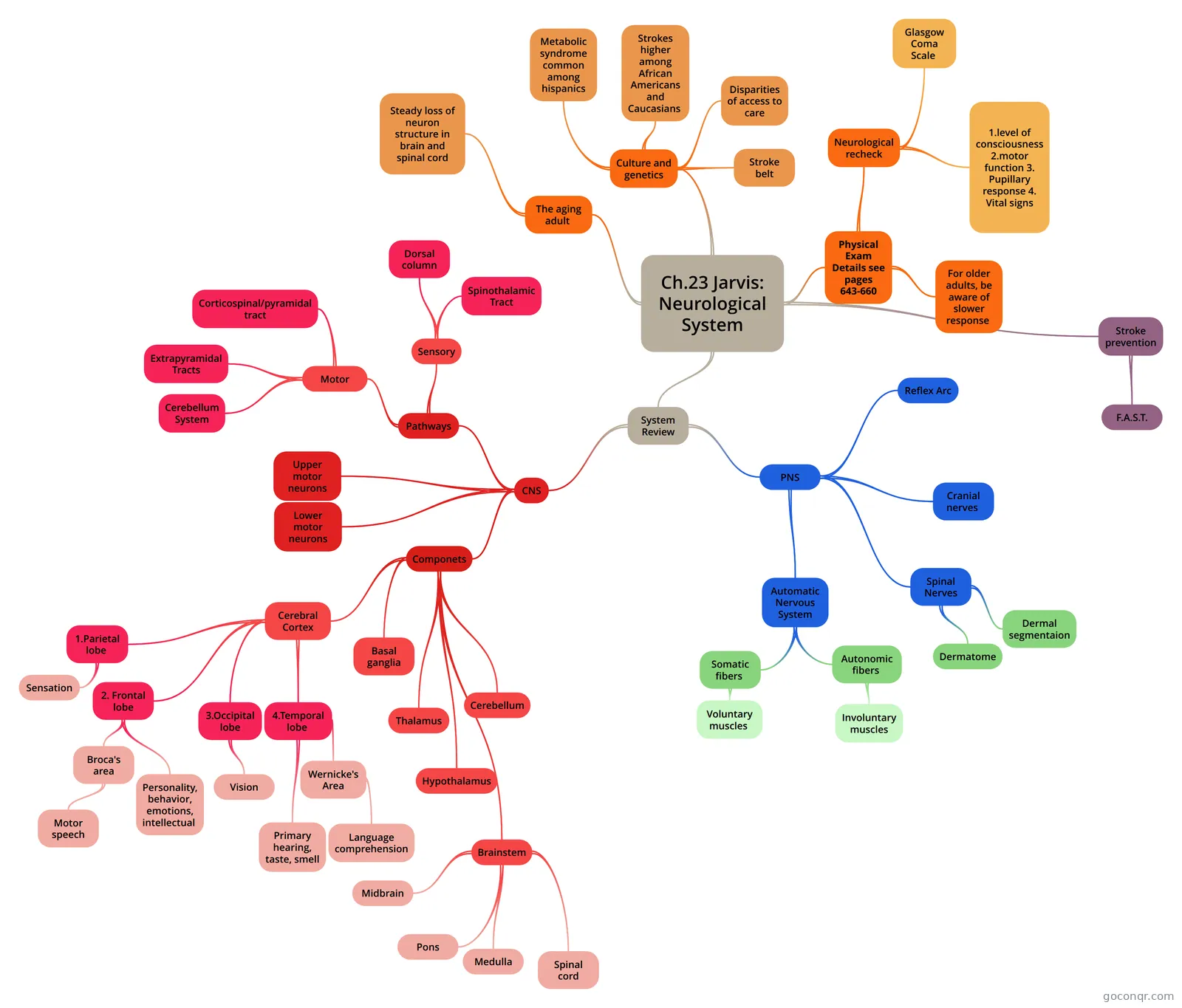
Over 250 mind maps cover topics such as cultural competence, nutritional assessment, pain, neurological assessment, the general survey, respiratory assessment and functional health patterns. Some are built around patient case examples, which helps when you practise putting findings together.
Are the resources free to use?
Yes. Every resource on this page is free to open, study and take, with no account needed. A free account also saves your quiz scores and lets you make your own quizzes, mind maps, flashcards and notes.
Which levels and exams do they suit?
Most resources are at university level, with a smaller share for professional candidates. Some mention NCLEX. Teachers can also use the quizzes and notes as ready-made material for lessons or revision tasks.
Who made these resources?
They were made by GoConqr users, not by GoConqr itself. More than 270 contributors have added material, so the style and chapter references vary. Check a resource against your own course texts and notes.
What if I cannot find my topic?
Look under related titles first. Body systems appear as quizzes, flashcards and notes, such as Musculoskeletal, Breast, Eye and Abdomen and GI. If your topic is still missing, you can build your own mind map or flashcard set.