
Types of Research and Research Approaches
7 resources created by 5 users
This Types of Research and Research Approaches page on GoConqr gathers community-made mind maps, flashcards, flowcharts, notes and a quiz, from quantitative and qualitative research to mixed methods, action research and participatory action research. It's built for university students comparing approaches and teachers after ready-made material. There are over 90 resources here, including more than 70 mind maps, made by over 80 contributors. Open a map to see the approaches side by side, then make your own flashcards.
Top Types of Research and Research Approaches resources
-
Mind map Quantitative and Qualitative Research Deber teacher my friend - UCI
-
Mind map PROJECTIVE RESEARCH
-
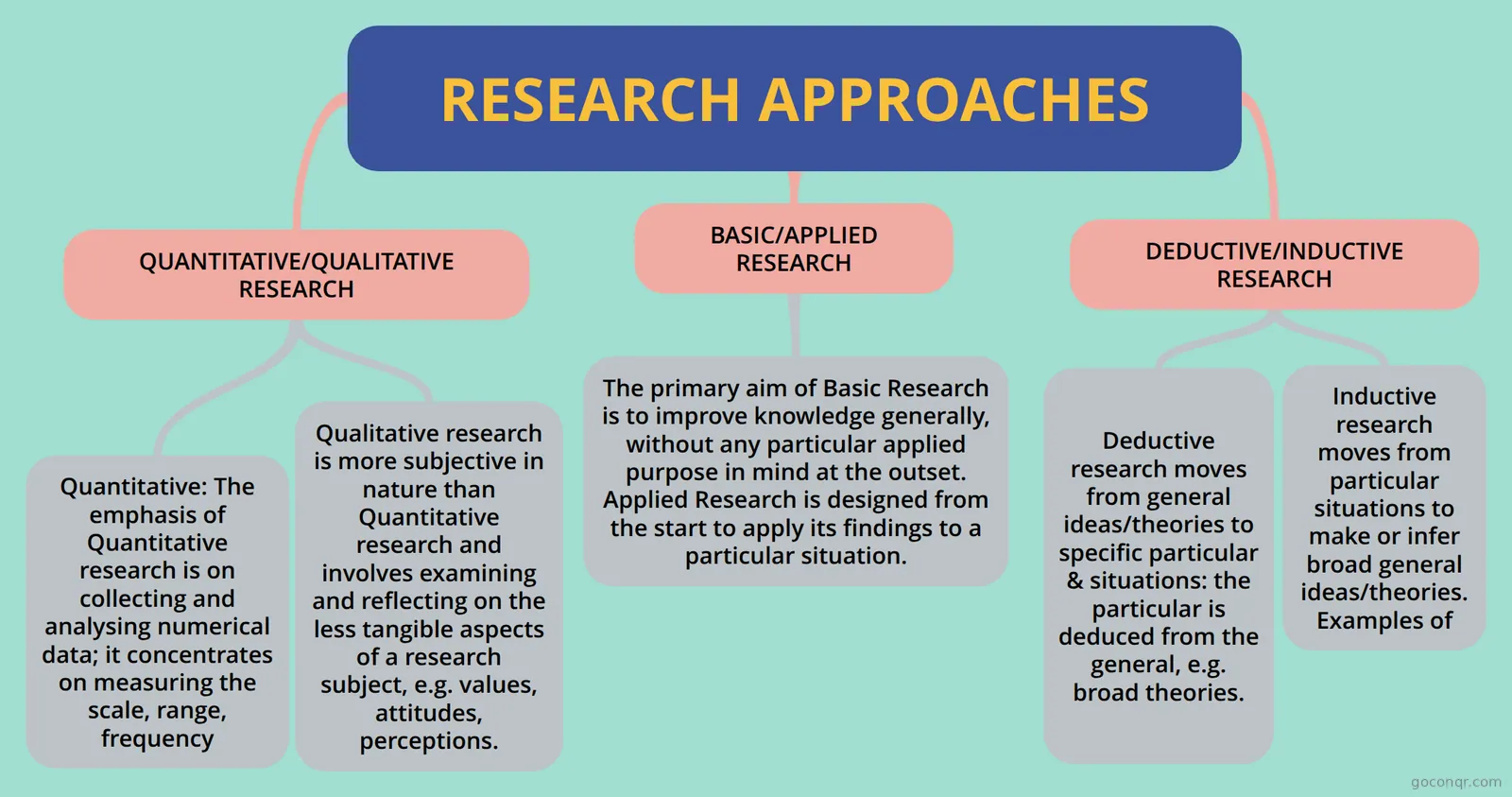 Mind map RESEARCH APPROACHES job
-
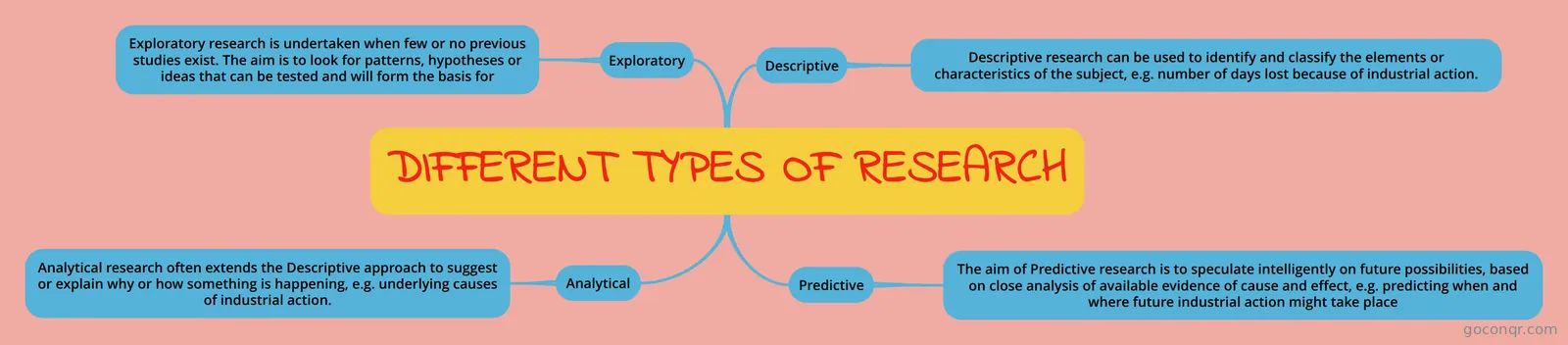 Mind map DIFFERENT TYPES OF RESEARCH job
-
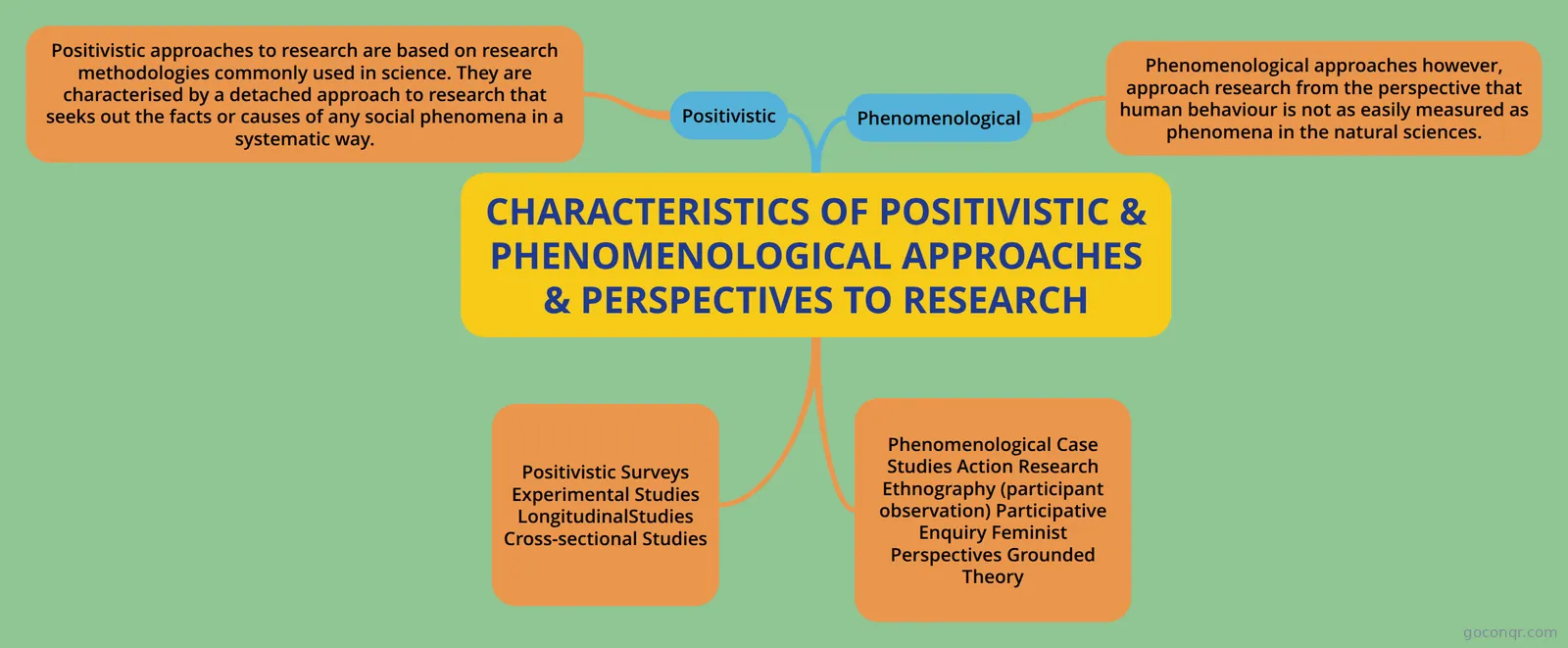 Mind map CHARACTERISTICS OF POSITIVISTIC & PHENOMENOLOGICAL APPROACHES & PERSPECTIVES TO RESEARCH job
-
Mind map DESCRIPTIVE RESEARCH Mapa metal
Mind maps
Flowcharts
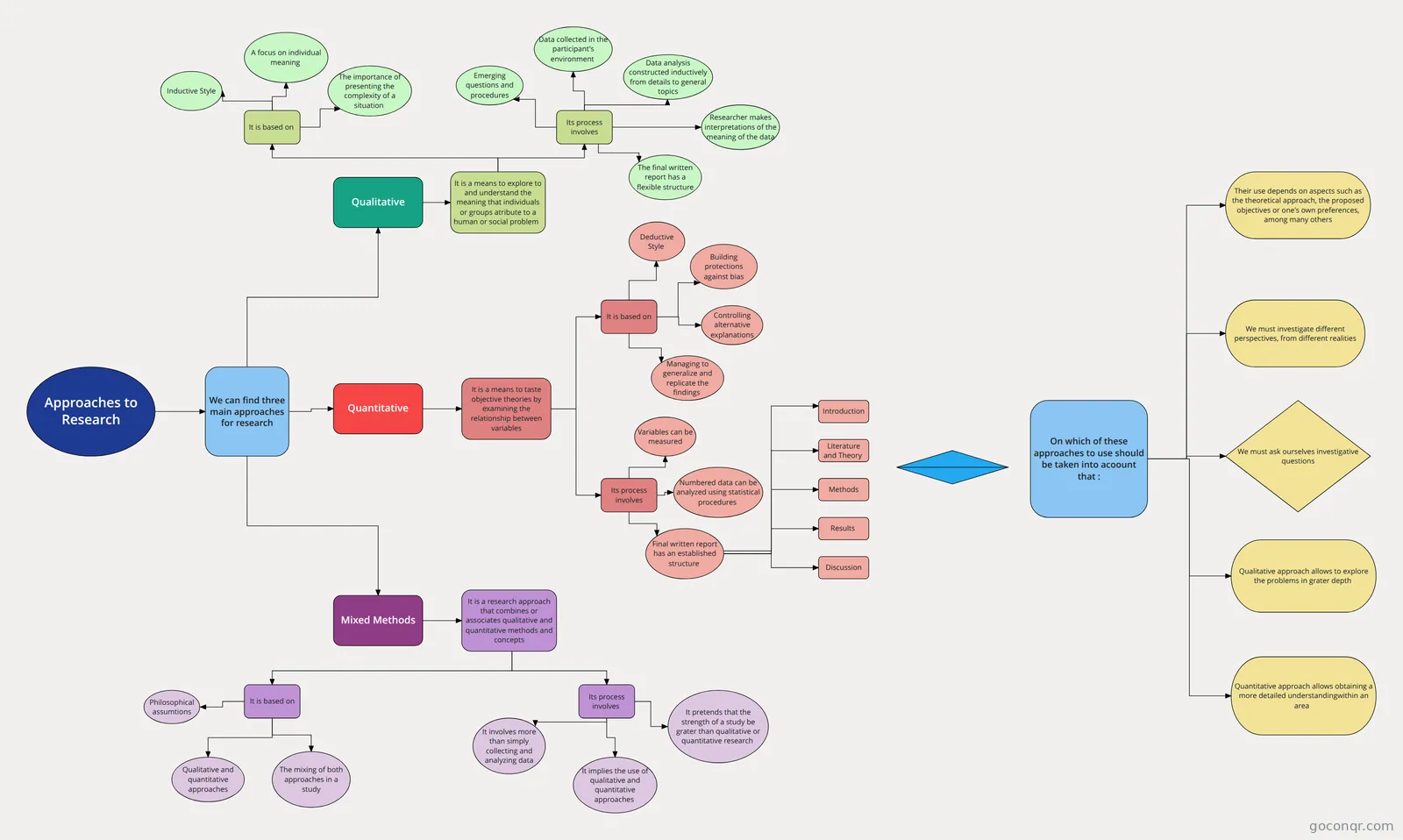
More Research methods and academic skills topics
About Types of Research and Research Approaches
GoConqr OriginalWhat this unit covers
The unit is about how research is organised and why researchers choose one approach over another. Most resources are mind maps, with flashcards, flowcharts, notes and one quiz alongside them.
The core theme is the split between quantitative and qualitative research, plus mixed methods. In the map called RESEARCH APPROACHES, quantitative research is about collecting and analysing numerical data and measuring scale and range. Other maps link qualitative work to meaning and experience, and quantitative work to positivism.
Beyond the big three
Several maps go further. Four Alternative Research Approaches sets out logical theoretical research, pragmatic mixed methods, quantitative experimental research, qualitative observational research and advocacy or participatory action. Another map covers experimental research, naturalistic inquiry and action research in instructional language settings. There are also maps on exploratory, explanatory and projective research, and several on participatory action research.
Where to start
- Begin with The Three Approaches to Research or Approaches to research to get the main split clear.
- Move to the maps on quantitative and qualitative differences, and the flowchart Quantitative and Qualitative research.
- Look at the philosophical and paradigm maps to see how positivism and interpretivism shape each approach.
- Finish with action research, participatory action research and the exploratory, explanatory and projective maps.
Using quizzes, maps and flashcards together
Read a map first, then cover it and try to rebuild the main branches from memory. The flashcard decks, such as Types of research and Research types, suit quick recall of definitions. Then try the quiz on selecting your research approach to see which distinctions are still shaky, and go back to the relevant map.
Where it sits
This unit belongs to the Foundations of Research strand in Research methods and academic skills. It is a good base before you look at specific methods and designs.
Pick a map that matches what you are studying today, then try the quiz when you are ready.
Frequently asked questions
Which resource should I open first?
Start with one of the maps called The Three Approaches to Research or Approaches to research. They set out qualitative, quantitative and mixed methods in a few branches, which gives you the frame for the rest of the unit. The flowchart Approaches to Research covers the same ground in a different layout.
What do the mind maps cover?
They cover quantitative and qualitative research, mixed methods, philosophical paradigms such as positivism and interpretivism, and the advantages of the quantitative approach. Others look at action research, participatory action research, and exploratory, explanatory and projective research. Some are aimed at education and language settings.
Is there a quiz on this page?
Yes. There is one quiz, Lecture #2 - Selecting your research approach. It fits after you have read a few maps, because it asks you to choose between approaches. If a question catches you out, go back to the matching map and review that branch.
Are the resources free to use?
Yes. Every resource listed here is free to open, study and take, with no account needed. They were made by GoConqr users, not by GoConqr itself. A free account also saves your quiz scores and lets you make your own quizzes, mind maps, flashcards and notes.
Who is this unit for?
It suits university students who need to compare research approaches, and teachers looking for ready-made material to share. Almost all the resources are at university level, so they work best for people studying research methods and academic skills.
What if the topic I need is missing?
Look through the related maps first, since the same idea often appears under a different title, such as types of research or research approaches. If you still cannot find it, you can make your own map, flashcards or notes and use them for revision.