
Research Skills and Information Literacy
232 resources created by 209 users
This Research Skills and Information Literacy page on GoConqr gathers community-made flashcards, mind maps, quizzes and notes, from types of sources and search strategies to evaluating sources, citing and bibliographic management. It's built for university students filling gaps, school students revising a topic, and teachers after ready-made material. There are over 220 resources here, including more than 20 quizzes and over 140 mind maps, so you can move from basic searching to database work. Try a quiz to find your gaps, then build your own maps.
Select topic
Top Research Skills and Information Literacy resources
-
54 cardsInformation Literacy (Penn Foster) Techniques and resources for developing strong research skills and for the formulation of effective questio...
-
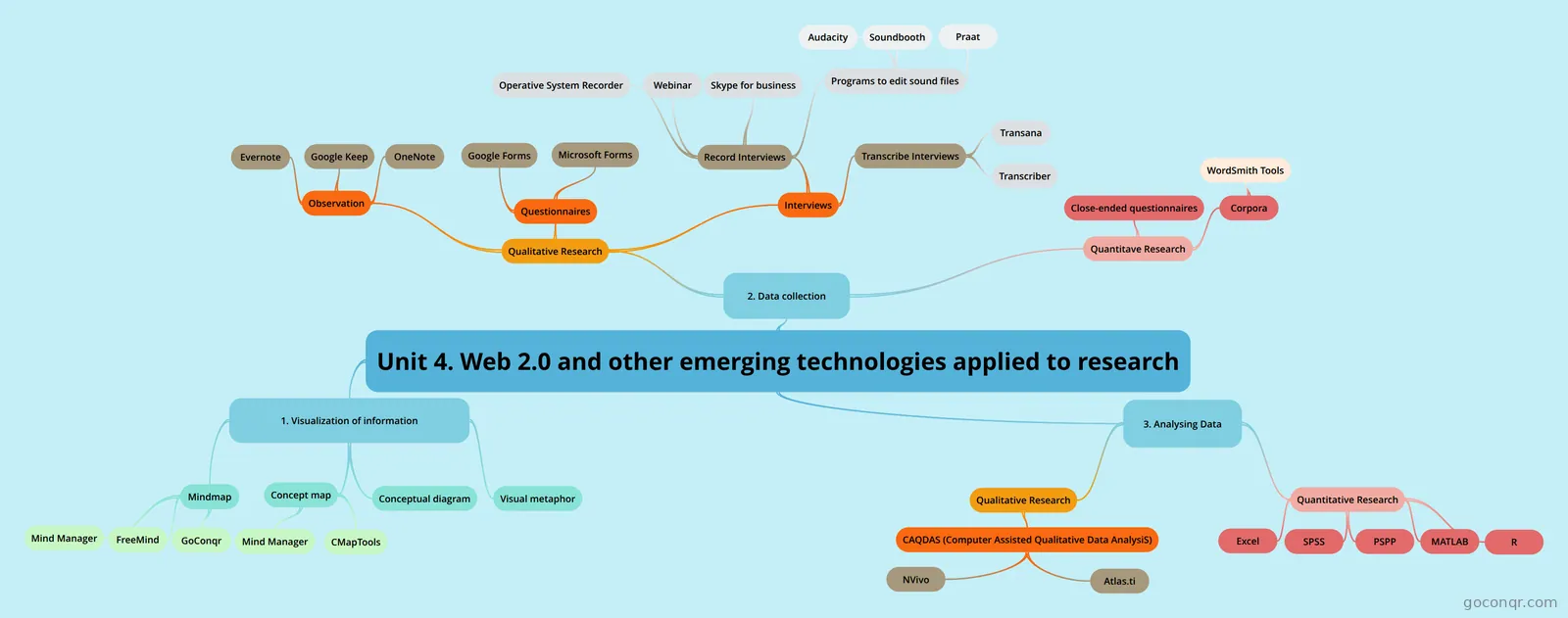 Mind map Unit 4. Web 2.0 and other emerging technologies applied to research
-
200 questionsStudying from previous exams 1 A bibliographic database could be described as...
-
9 questionsSearch Strategies Quiz Which of these search entries would yield the best results for: CONCEPT 1: parent involvement or parent par...
-
8 questionsReading citations quiz What is the title of the journal in the following citation: Brent, Edward, and Curtis Atkisson. "Accounting...
-
26 cardsscientific planning year 10
-
18 cardsIRL Session 1 Data-Information-Knowledge what is learning? when does data become meaningful? data=? information=? learning=?
-
18 cardsIRL Session 5 Academia & communication
Quizzes
See all 29 quizzes-
200 questionsStudying from previous exams 1 A bibliographic database could be described as...
-
9 questionsSearch Strategies Quiz Which of these search entries would yield the best results for: CONCEPT 1: parent involvement or parent par...
-
8 questionsReading citations quiz What is the title of the journal in the following citation: Brent, Edward, and Curtis Atkisson. "Accounting...
-
6 questionsUnit 1 - Review Which one of the following options is the most important database dealing with Education?
-
10 questionsOnline Research: Quiz 2 This is our second quiz related to the our podcast "Online Research".
-
5 questionsInformation Literacy Quiz Where would you find the answers to the following questions about this website:
-
15 questionsText Feature: Primary Resources Determine if the source would be a Primary Source or not. A play showing how Benjamin Franklin flew a kite ...
-
14 questionsUnit 2. Bibliographic Management Applications Importing or exporting a bibliographic reference in a direct way means:
Mind maps
See all 149 mind maps-
Unit 4. Web 2.0 and other emerging technologies applied to research
-
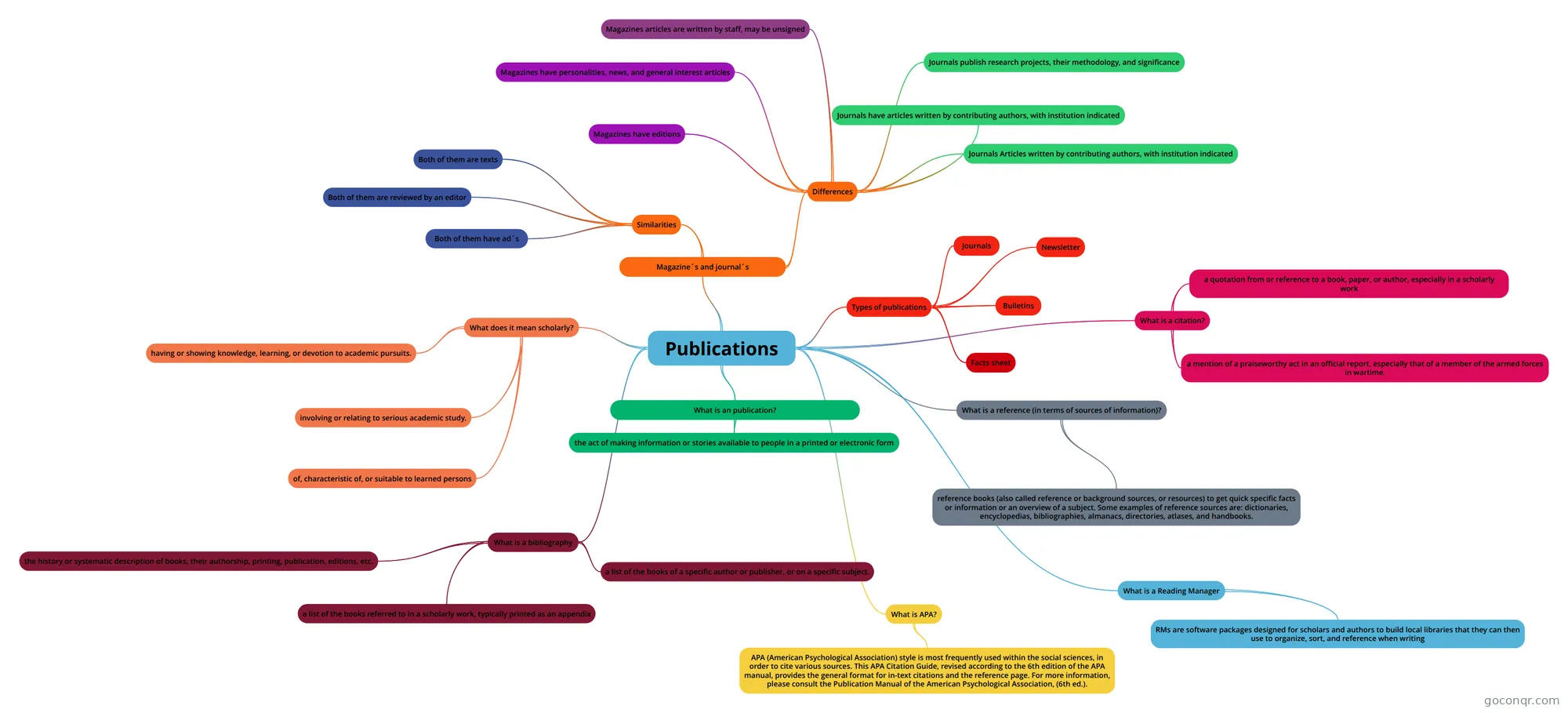 Publications KKK
-
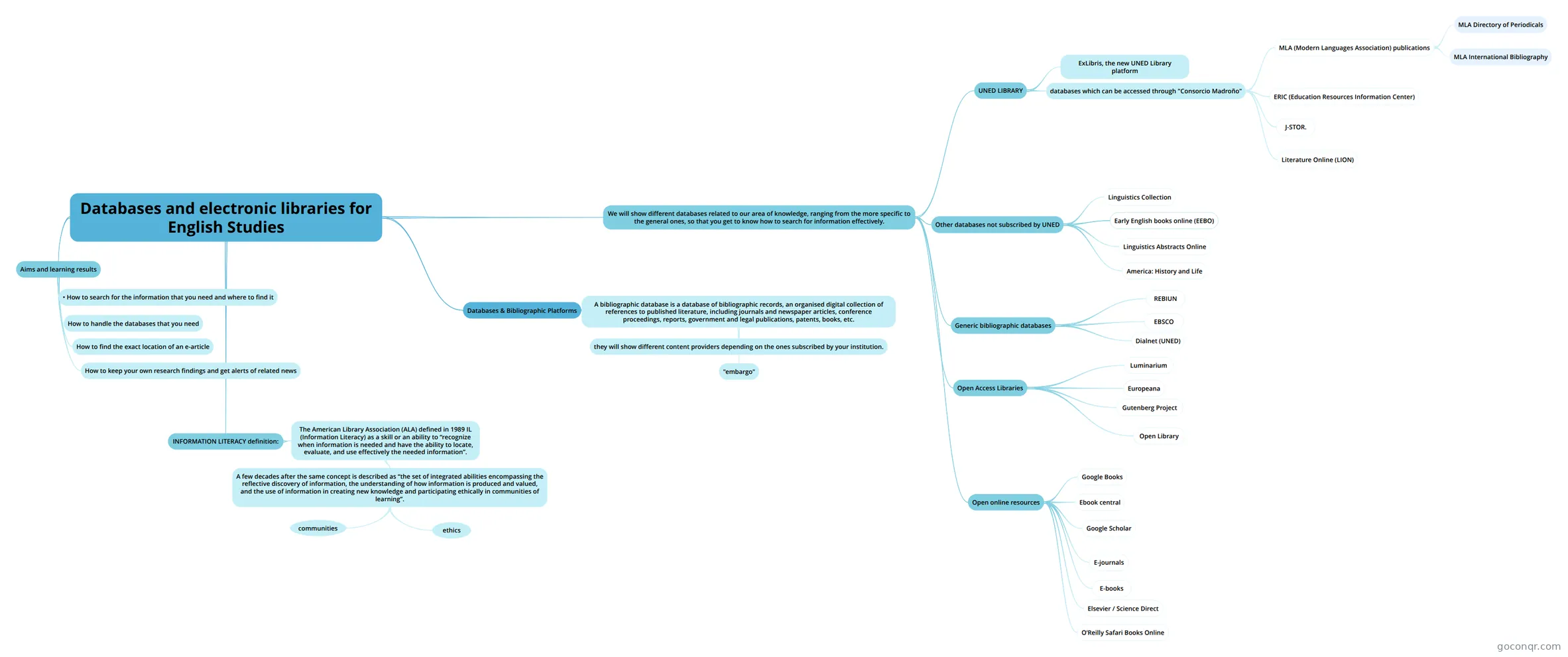 Databases and electronic libraries for English Studies INTENTO DE RECAPITULAR LAS DIFERENTES BASES DATOS. U1 APLICACIONES TIC
-
 Ethics in the Use of Information Ethics in the use of information Eliane Axelle Hernández Osorio
-
Unit 1 My first mental map
Flashcards
See all 32 flashcards-
54 cardsInformation Literacy (Penn Foster) Techniques and resources for developing strong research skills and for the formulation of effective questio...
-
26 cardsscientific planning year 10
-
18 cardsIRL Session 1 Data-Information-Knowledge what is learning? when does data become meaningful? data=? information=? learning=?
-
18 cardsIRL Session 5 Academia & communication
-
8 cardsResearch: Citing Sources and Academic Honesty How does information you’d find on an academic website differ from information you’d find on a personal web...
-
11 cardsresearch skills handout 5 what is ANCOVA used for
-
23 cardsInfo Literacy Sec 3 14 Flasshcards
-
18 cards1.1 and 1.2 yr 10 what do all research investigations require you to do.....
Topics in Research Skills and Information Literacy
More Research methods and academic skills topics
About Research Skills and Information Literacy
GoConqr OriginalWhat this unit covers
The resources here follow the research process from first question to finished reference list. Several mind maps set out the basics: Type of Info Sources separates published work, unpublished work, government publications, newspapers, journals, monographs and human sources. The Big6 walks through six questions, starting with what you want to know and ending with how you process and judge the information.
Where to start
Begin with the flashcard deck Information Literacy (Penn Foster), which asks about the purpose of an information literacy course and the types of resources used in research. Then open the notes on using search engines, databases and libraries to find reliable sources. They explain the difference between a browser and a search engine, which is a handy foundation.
Judging and citing sources
Next, move to evaluation. The Evaluating Sources mind map lists currency, point of view, authority, accuracy and relevancy. The Source's selection notes ask four questions to put to any source. For citing, try the flashcard deck Research: Citing Sources and Academic Honesty, which compares academic and personal websites.
Using quizzes and maps together
- Read a mind map such as Evaluating Sources to see the whole topic.
- Take a quiz, for example Search Strategies Quiz or Reading citations quiz.
- Note what you missed and go back to the matching map or flashcards.
- Try Information Literacy Quiz again after a day or two.
University students may also like the maps on bibliographic management, PubMed and Web of Science. School students will find the four stages of research for a junior division and other beginner notes.
Where this unit fits
This unit sits in the strand Study Skills, Sources and Literature, within Research methods and academic skills. It covers the finding, judging and citing that other research topics build on. Pick one resource today, then make your own flashcards from what you learn.
Frequently asked questions
Which resource should I open first?
Start with the flashcard deck Information Literacy (Penn Foster). It covers the purpose of an information literacy course, types of research resources and the skills such a course teaches. After that, the Type of Info Sources mind map gives a clear overview of where information comes from.
What do the mind maps on this page cover?
There are over 140 of them. They cover types of sources, the Big6 process, evaluating sources, primary and secondary sources, bibliographic management, PubMed, Web of Science and Google scholar. Others look at reading a paper and running a simple literature search.
Are the resources free to use?
Yes. Every resource listed here is free to open, study and take, with no account needed. They were made by GoConqr users, not by GoConqr. A free account also saves your quiz scores and lets you make your own quizzes, mind maps, flashcards and notes.
Who are these resources for?
Most suit university students, with a large share for school students, and a small number are general. Teachers can use them as ready-made material for lessons on searching, evaluating and citing sources. Learners practise finding reliable sources, judging them and referencing them.
Which quizzes can I use to test myself?
There are more than 20 quizzes. Good starting points are Search Strategies Quiz, Reading citations quiz, Information Literacy Quiz and Credibility. Others test scholarly versus popular sources, primary and secondary sources, and bibliographic management applications.
What if I can't find the topic I need?
Try a nearby resource first, such as the maps on finding sources or literature searches. If the topic is still missing, you can make your own mind map, flashcards or notes with a free account, and use the existing resources as a model.