
The Research Process, Problem and Proposal
549 resources created by 501 users
This page on GoConqr gathers community-made mind maps, flashcards, quizzes, flowcharts, notes and slides on The Research Process, Problem and Proposal, from problem statements and knowledge gaps to research questions and proposal formats. It's built for university students and professional candidates practising how to frame and plan a study, and for teachers after ready-made material. There are over 500 resources here, including more than 15 quizzes and over 400 mind maps, mostly at university level. Pick a starting map, then test yourself.
Select topic
- Steps of the Research Process67
- Choosing a Research Topic24
- Research Problem and Problem Statement55
- Research Questions11
- Literature Review and Research Sources28
- Theoretical and Conceptual Frameworks7
- Research Objectives and Justification8
- Research Hypotheses8
- Research Design and Methods21
- Research Planning and Proposals34
Top The Research Process, Problem and Proposal resources
-
Mind map MA Research Project
-
Mind map Research
-
Mind map Health Research Methodology
-
126 cardsMREP What steps are involved in the research process ? (7)
-
136 questionsEnglish special for IITU 3 course 1. Which of these refers to quantitative type of research?
-
9 questionsResearch
-
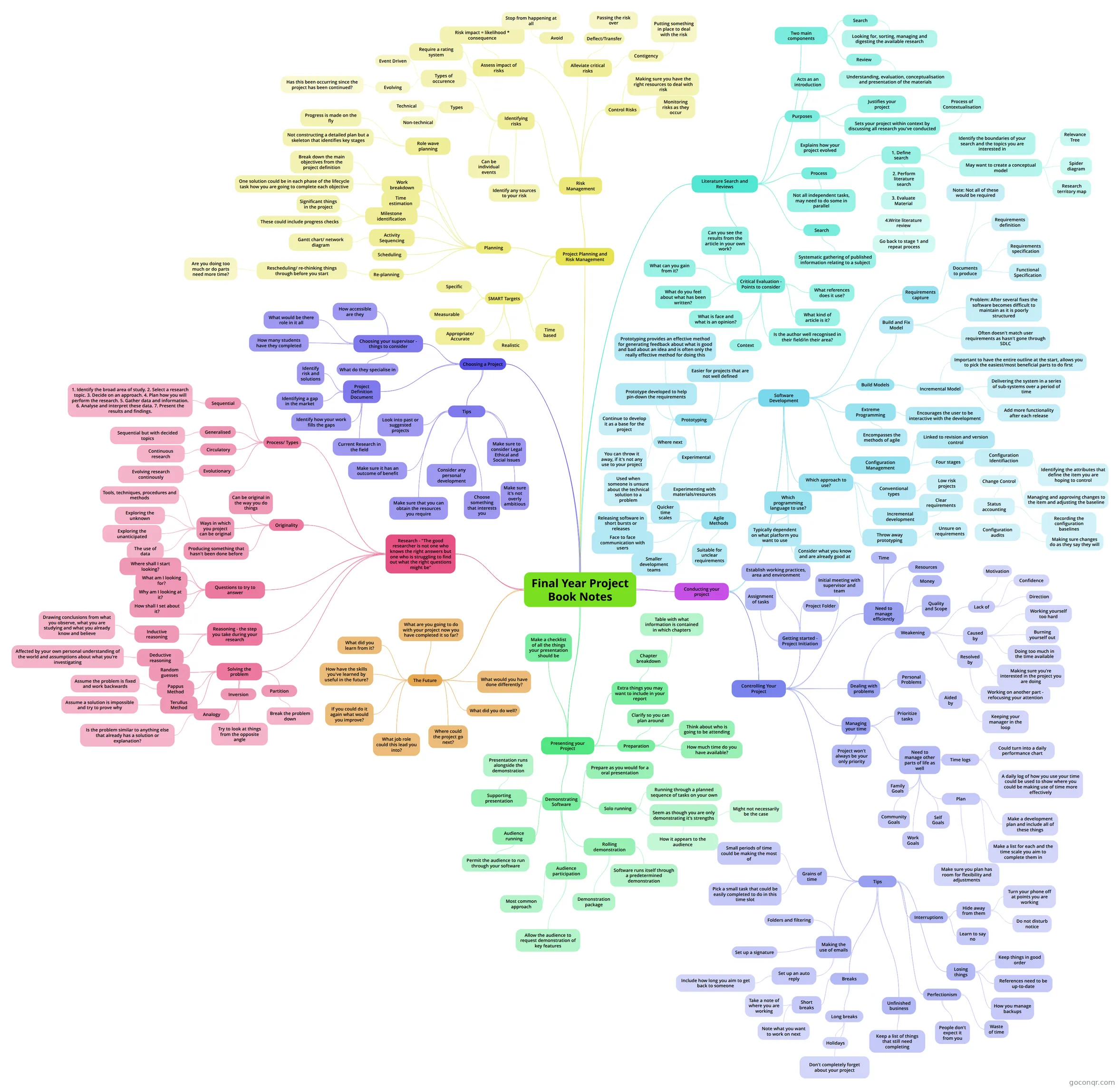 Mind map Final Year Project Book Notes Notes from a document about planning projects more aimed at computing and information students
-
Mind map THE RESEARCH PROCESS
Quizzes
See all 16 quizzes-
136 questionsEnglish special for IITU 3 course 1. Which of these refers to quantitative type of research?
-
9 questionsResearch
-
29 questionsResearch practice What are one of the major purposes of a literature review for a nurse who is interested in doing a research...
-
44 questionsWeek 2 Research is a .......... process involving a number of steps
-
20 questionsChapter 2: Concepts & Research Process Which one outlines the correct stages in business research process?
-
18 questionsPractical Research 1 Summative Test
-
15 questionsBRT - Chapter 3 A problem is any situation where a gap exists between the actual and the desired ideal states.
-
5 questionsChoosing a Research Topic and Question Do the economies that result from a trash burning plant outweigh or not outweigh its environmental impact?
Mind maps
See all 434 mind maps-
MA Research Project
-
Research
-
Health Research Methodology
-
Final Year Project Book Notes Notes from a document about planning projects more aimed at computing and information students
-
THE RESEARCH PROCESS
-
Professional Research
-
Quantitative steps and challenges
-
Research report: Cigarette use among male and female grade 8 – 10 students of different ethnicity in South African schools
Flashcards
See all 25 flashcards-
126 cardsMREP What steps are involved in the research process ? (7)
-
13 cardsIntroduction-to-Research-Planning-Questions-Presentation-and-Report-Results Introduction to Research Planning, Questions, Presentation, and Report Results
-
36 cardsSocial Research Methods Social Science Research
-
34 cardsThe Research Process What is research?
-
15 cardsIntroduction to Research Planning, Questions, Presentation, and Report Results Defining the Research Objectives
-
26 cards209 Chapter 6 Definitions The process of finding relevant research reports, critically appraising the studies, and synthesizing the s...
-
16 cards5 Formulating a proposal & literature review Formulating suitable research questions
-
23 cardsAGEE 642, Chapter 3, Class 2 Notes August 29 Three important sources for research problems are:
Flowcharts
See all 51 flowcharts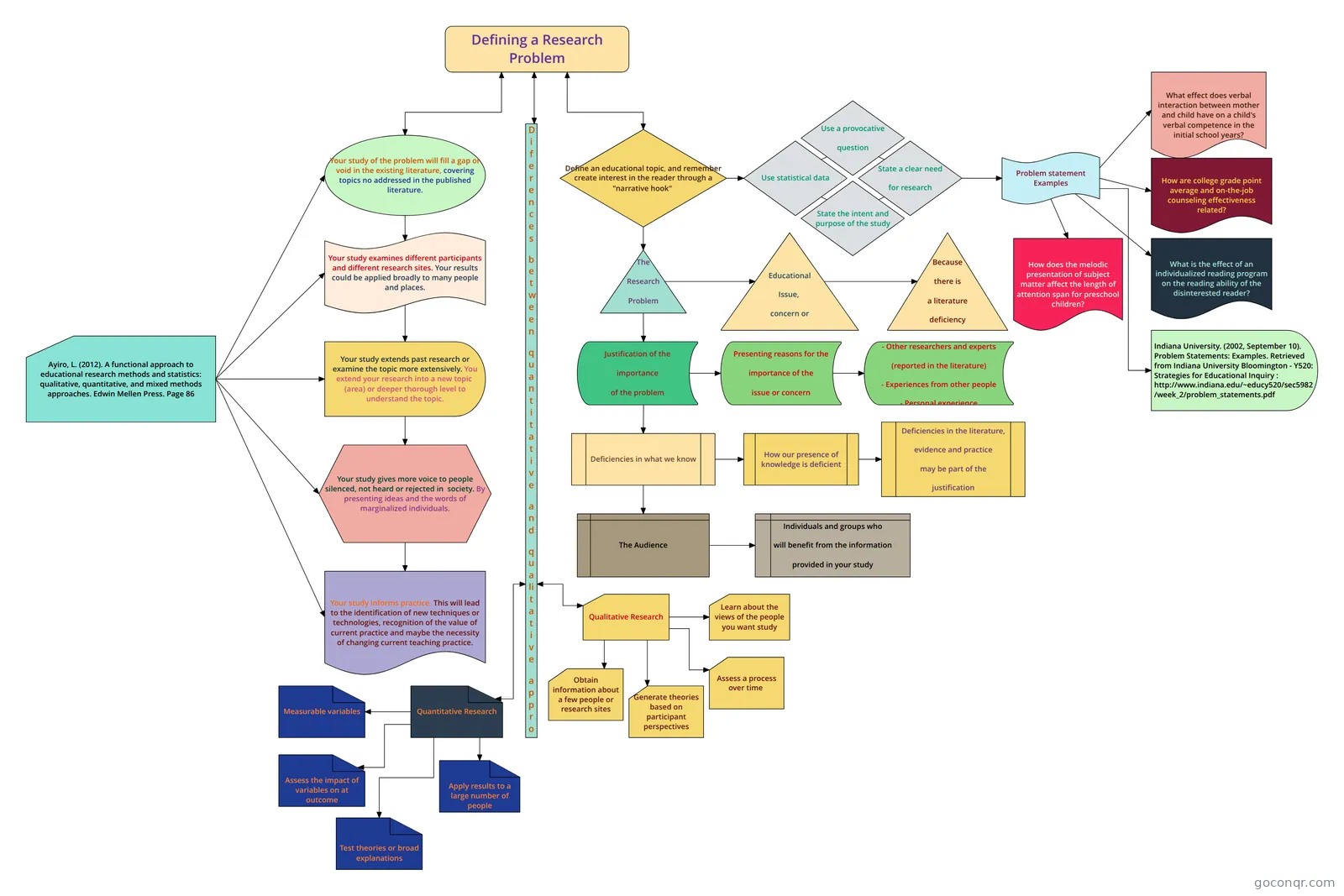
Notes
See all 16 notes-
Research Methodology (AAHR03) - Overview Name the 8 characteristics of Research (Leedy Pg 2) Research starts with a question or problem Research requires clearly defined/articulated goal Research usually breaks the main problem up into smaller more manageabl...
-
1. Problem Statement and Literature Review Professional Mountain Guides belonging to the Association of Canadian Mountain Guides (ACMG) form an exclusive occupational group within the adventure tourism industry. This research project intends to provide an inti...
-
Readings for Introduction Readings - Book: Doing Research In the Real World pages 1 - 7Author: Gray, David. E 2014Notes -Chapter - objectives;-Describe why research in the real world is of increasing importance- explain the nature of theories ...
-
Tourism Projects Session 5: The conceptual Framework & Literature Review Outline Sessions 1 - 4 Created a Sketch Plan; The research proposal- access academic materials/library resources for your research topic- understand key research terms theoretical paradigms and philosophical underpinn...
-
Week 1/Day 1 Lecture: Science, social science, and research process A. What is science? · Origins of the word “science” o From Latin § Scientia, which means “knowledge” § Scire, which means “to know” o From Greek, the science of k...
-
Overview of Scientific Method Broad View of Various Stages of The Research Process: Finding a topic Reviewing the literature Refining the research Question Generating a Hypothesis Designing & Conducting a Study Analyzing the data Conclusions Resul...
-
Research - created from Mind Map Find a topic that interests you Consider your rhetorical Situation narrow your topic
-
Week 3-4 SUBJECT MATTER OF THE INQUIRY OR RESEARCH A topic is researchable if the knowledge and information about it are supported by evidence that is observab...
Slides
Topics in The Research Process, Problem and Proposal
More Research methods and academic skills topics
About The Research Process, Problem and Proposal
GoConqr OriginalWhat the resources cover
The unit follows a study from first idea to written proposal. The notes titled Research Methodology (AAHR03) - Overview begin with the characteristics of research: it starts with a question or problem, needs a clearly defined goal, and usually breaks the main problem into smaller parts. Several mind maps then walk through the stages, such as Stages in research, which runs from topic idea and pre-search to defining a question or hypothesis, drafting and proofreading.
Problems, questions and proposals
The MA Research Project mind map is a good example of how a proposal is built. It sets out a problem statement, a knowledge gap, context, a conceptual framework and evidence or logic, then a purpose statement and questions. Slide sets on writing a purpose statement and on writing research questions go deeper on those steps. There are also several flowcharts on defining a research problem and writing a problem statement, and a flowchart for planning an EPQ, which suits school students only in passing.
For worked examples, look at the notes that open with a problem statement and literature review about professional mountain guides, or the dissertation proposal mind map on urban agriculture in the UK.
Where to start and in what order
- Read the overview notes, then open Research Process or Stages in research to see the whole sequence.
- Move to the problem-focused maps and flowcharts to practise narrowing a topic into a problem.
- Study the proposal maps and slide sets to see how purpose and questions fit together.
- Finish with a quiz, such as Choosing a Research Topic and Question or Quiz 1: The Research Process.
Using quizzes and maps together
Read a map first, then try a quiz without looking. Any question you miss points you back to a particular stage or map. Flashcard decks on the research problem and the steps of research are handy for quick recall of terms.
Where it fits
This unit sits in the Planning and Designing Research strand of Research methods and academic skills. Teachers can pick a map or deck to set as shared reading. Choose one resource today and see what you can explain from memory.
Frequently asked questions
Which resource should I open first?
Start with the notes titled Research Methodology (AAHR03) - Overview, which set out the characteristics of research. Then open the Research Process mind map to see the stages in order. Once the sequence is clear, move on to the problem and proposal resources.
What do the mind maps cover?
They cover the stages of research, from topic idea to drafting, and the parts of a proposal, including problem statement, knowledge gap, context, conceptual framework, purpose statement and questions. Some are worked examples, such as the urban agriculture dissertation proposal.
Are there quizzes to check my understanding?
Yes, there are more than 15 quizzes. Examples include Choosing a Research Topic and Question, Quiz 1: The Research Process, and Chapter 2: Concepts & Research Process. Use them after reading a map to see which stages you still need to revisit.
Who are these resources for?
They are mainly for university students and professional candidates learning to plan a study and write a proposal. Teachers can use them as ready-made material. The resources were made by GoConqr users, so style and depth vary from one to the next.
Do I need an account to use them?
No. Every resource listed here is free to open, study and take without an account. A free account is only needed if you want to save quiz scores or make your own quizzes, mind maps, flashcards and notes.
Is there anything on exams?
Only lightly. A flowchart for planning an EPQ is listed, and some resources mention SACE. Most of the material is aimed at university-level study, so check that a resource matches your course before relying on it.