
Flashcards
Science Semester Test
Cards in this deck (39)
- 1central nervous systemThe brain and spinal cord make up the CNS. Acts as control centre receiving messages from all parts of the body. Examines information received then sends out messages to tell the body what to do
- 2peripheral nervous systemthe PNS is made up of sensory receptors and nerves, these continuously inform the CNS of changing conditions and transmits the decisions made by the CNS back to effector organs
- 3brain structure explanationBillions of neurons and one hundred million synapses that are arranged in specific circuits called neuron networks.
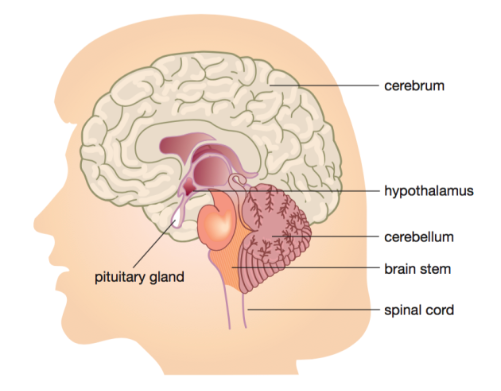
- 4brain structure diagram
- 5brain structure main partsThe cerebellum controls complex muscular movements. The medulla (lower part of the brainstem) controls vital activities like breathing and heartbeat. Cerebrum makes up 90% of brain volume. Divided into left and right hemispheres responsible for complex thoughts and voluntary movement
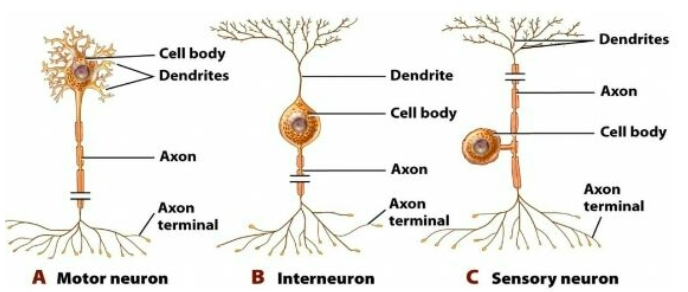
- 6neuronsmessages are passed through the nervous system by neurons. Specialised cells that transmit and receive messages in the form of electrical pulses. Usual features of cell plus specialised parts. Grouped in bundles called nerves.
- 7different types of neuronsmotor neurons - transfer messages from the CNS to effectors (muscles and glands). Connector or interneurons - transmit messages between neurons in the CNS. Sensory neurons - specialised receptors sensitive to a particular stimulus such as heat, pressure or light.
- 8parts of a neuron
- 9neurotransmission1. when nerve impulses reach the axon terminal a chemical called a neurotransmitter is released into the space between the neurons called synapse 2. the NT carries the messages from the axon of one neuron to the dendrite of the next neuron 3. NT binds to receptor sites on the other side
- 10synapsesslow imulses along a nerve but needed because connecting neurons would be like one switch for every light. Allow impulses to be directed to the right place.
- 11receptorsthermoreceptors - temperature
mechanoreceptors - touch, pressure, sound, motion
chemoreceptors - particular chemicals in nose and tastebuds
photoreceptors - light in eyes
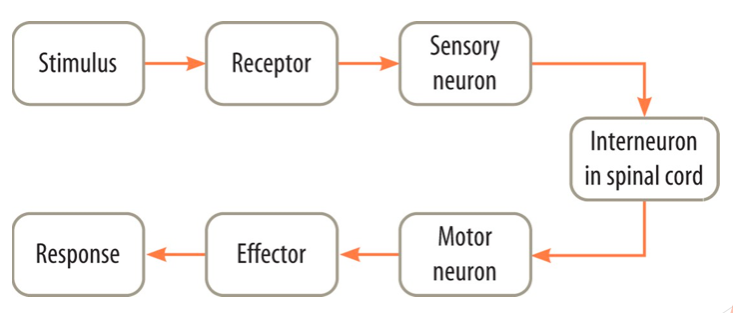
pain receptors - chemicals released by damaged cells - 12stimulus response modelhelps us control the internal environment
stimulus - receptor, specialised cell or group of nerve endings that respond to sensory stimuli - effectors, muscle gland or organ - response, behavior that results from an external or internal stimulus - 13the reflex arc
- 14hormonesa hormone is a chemical message used in the body by the endocrine system. Co-ordinates organs. Hormones produced by glands.
- 15hormone controlstravel slower than nerve impulses but have a longer lasting effect. excreted by glands and travel in the blood. Stabilise body's internal envoronment. Hormones control growth, sugar levels, mood, metabolism
- 16glandspineal, pituitary, thyroid, thymus, andreal glands, pancreas, ovary, testis
- 17insulin controlthe brain senses high blood sugar - pancreas produces insulin - glucose stored in the liver as glycogen - low blood sugar sensed by the brain - pancreas produces glucagon - liver releases stored glycagon as glucose into blood
- 18endocrine vs nervous systemhormones travel through the blood, last much longer than neurotransmitted ones, Can be widespread or localised. Made of amido acids or steroids. Increase or decrease to maintain homeostasis. Use glands to emit hormones.
- 19homeostasisbalance between all parts of the body. Negative feedback counter acting a response. Positive feedback intensifies response.
- 20first line of defenseprotects/prevents infection e.g. skin mucus
- 21second line of defensefights infection. Inflammation, fever help whit blood cels fight infection with higher temperature
- 22third line of defensetargets specific pathogens. Antibodies bind to pathogens then make clones of themselves. Remembers infection and develops immunity. Takes time.
- 23structure of the earthlithosphere made up of crust and uppermost mantle - divided into tectonic plates it moves around on top of the asthenosphere - it is plastic
- 24layers of the earthcrust - continental crust granite thicker less dense, oceanic crust basalt less thick denser
mantle - 80% earth's volume, plastic, up to 3000˚C
outer core - liquid, iron and nickel, 5000˚C inner core - iron and nickel, 6000˚C because of high pressure it's solid - 25continental driftAll continents were once connected and have since drifted apart. Evidence - continental shelves fit together, matching rock types and mt. ranges across continents, fossils across continents
- 26sea floor spreadingtectonic plates float on aesthenosphere (upper mantle) and move due to gravity and convection. New crust formed at mid-ocean ridges spreading continents. Magnetic striping. The further away rocks are from mid-ocean ridge the older they are.
- 27subductiondense crust collides with less dense crust pushing it down into the mantle
- 283 main drivers of tectonic platesSlab pull - (major driver), gravity of subducting plate pulls plate down
ridge push - push from new crust at ridges pushes plates
asthenosphere convection - Convection currents push magma upward spreading centres to create new crust, subducting lithosphere is pushed back into mantle - 29divergent boundariesplates move apart, new crust is formed in the middle from magma - constructive. Forms ridges and min ocean ridges. Volcanos not earthquakes.
- 30convergent boundarieswhen one plate dives under another destroying crust - destructive. Forms trenches. Volcanos and earthquakes.
- 31transform boundariesplates move alongside and scrape each other. Neither creating or destroying crust. Can't always see a falut line at transform margin. Earthquakes not volcanos.
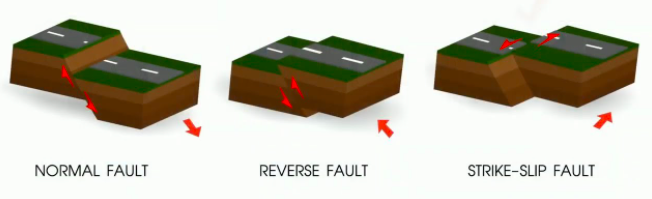
- 32types of faults
- 33earthquakesvibrations caused by rock breakig under stress. Focus underground epicentre on land. Occur at plate boundries or, because of stress, in the middle of plates
- 34earthquake wavesP waves - compression, push-pull. Travel fastest, come first
S waves - sheer, side to side. come second
Surface waves - roll along surface, up and down. most destructive, lose energy quickest, can't travel far
triangulation - difference in p & s time determines epicentre - 35volcanosa volcano is an opening in the earth's crust which during an eruption ejects lava ash and hot gasses.
Active - dormant, not erupted but will - extinct - 36shield volcanolava low in silica, low viscosity, can flow long distances. Over time causes gently sloping volcano
- 37stratovolcanoon subduction zones, more viscous lava with higher silica content. Forms lava dome over vent creating steeper slope
- 38caldera volcanolarge bowl shaped depression. Forms after explosive eruption of magma
- 39hot spot volcanoon mantle hot spots. Old hot spot volcanos smaller