
Mind map
Target Audience
Map content
Target Audience
Demographics
- demographic information is used in media marketing to classify an audience into age, gender, race and other catergories
- some of these classes overlap and aren't suitable for the target audience. For example, pensioners aren't going to enjoy the same thing as students to
- demographics are broken into bands depending on job and status which is broken down in letter codes
- Letter Code A- higher management, bankers, lawyers, doctors, etc...
- Letter Code B - middle management, teachers, creative and media (graphic designers)
- Letter Code C1 - supervisory of clerical, junior managerial, administrative or professional
- Letter Code C2 - skilled manual workers
- Letter Code D - semi skilled and unskilled manual workers
- Letter Code E - unemployed students, pensioners, casual workers
- Letter Code D - semi skilled and unskilled manual workers
- Letter Code C2 - skilled manual workers
- Letter Code C1 - supervisory of clerical, junior managerial, administrative or professional
- Letter Code B - middle management, teachers, creative and media (graphic designers)
- Letter Code A- higher management, bankers, lawyers, doctors, etc...
- demographiccs usually consider gender, age, job and income, education, geographical location and religion
- demographic information is used in media marketing to classify an audience into age, gender, race and other catergories
Psychographics
- psychographic segmentation divides the market into groups based on social class, lifestyle and personality characteristics.
- It is based on the assumption that the types of products and brands someone purchases will reflect their characteristics and patterns of living
- Mainstreamers - seek security. They tend to be domestic, conformist, conventional, sentimental - they favour value for money, family and brands
- Aspirers - seek status. Materialistic, acquisitive, orientated to image and appearance, persona and fashion. Typically younger people
- Succeeders - seek control. Strong goals, confidence, work ethic and organisation. Typically higher management and professionals
- Resigned - seeks survival. Rigid and authoriatiarian values. Interested in the past and tradition. Typically older people
- Explorers - seeks discovery. Energy, individualism and experience. Values difference and adventure. Typically a younger demographic (students)
- Strugglers - seeks escape. Alienated and disorganised. Few resources beyond physical skills. Tend to buy alcohol, junk food and lottery tickets. Typically lower demographics
- Reformers - seeks englightenment. Freedom of restrictions and personal growth. Social awareness and independent judgement. Ant-materialistic but aware of good taste.
- Strugglers - seeks escape. Alienated and disorganised. Few resources beyond physical skills. Tend to buy alcohol, junk food and lottery tickets. Typically lower demographics
- Explorers - seeks discovery. Energy, individualism and experience. Values difference and adventure. Typically a younger demographic (students)
- Resigned - seeks survival. Rigid and authoriatiarian values. Interested in the past and tradition. Typically older people
- Succeeders - seek control. Strong goals, confidence, work ethic and organisation. Typically higher management and professionals
- Aspirers - seek status. Materialistic, acquisitive, orientated to image and appearance, persona and fashion. Typically younger people
GEARS
- Gender
- Ethnicity
- Age
- Region, Nationality
- Socio-economic group
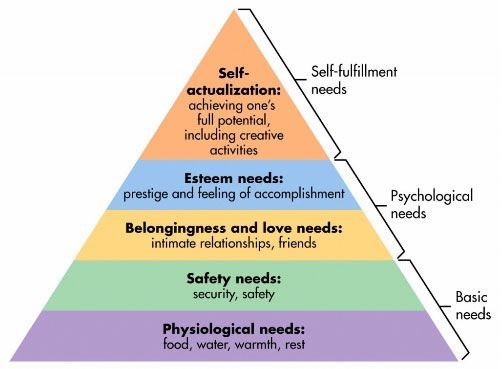
Maslow's hierachary of needs is a motivational theory in psychology comprising a five tier model of human needs, often depicted ashierarchical levels within a pyramid. Maslow wanted to understand what motivates people. He believed that people possess a set of motivation systems unrelated to rewards or unconscious desires.
Images and files in the map
Information
- Description
- GCSE Media Studies Mind Map on Target Audience, created by caitlin mitchell on 15/12/2016.
- Created by
- caitlin mitchell
- Views
- 2
- Rating