
Mind map
Second Language Acquisition Processes & Theories
Map content
Second Language Acquisition Processes & Theories
Universal Grammar
- Theorists
- *Noam Chomsky
- Richard Montague, Lydia White, Steven Pinker
- *Noam Chomsky
- Description
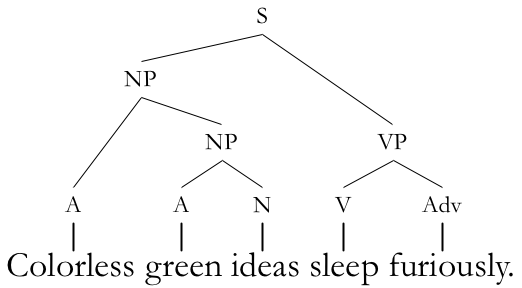
- All languages share universal rules & principles
- e.g. a distinction between nouns and verbs
- Humans are hard-wired for language development
- "Language Acquisition Device" (LAD) UG provides a "metaphor for the human linguistic potential" (Razfar)
- Each language has unique rules & systems for rule application
- There are a finite number of grammatical structures possible.
- We can generate completely new language structures
- "Poverty of Stimulus"
- All languages share universal rules & principles
- Theorists
Monitor Model
- Theorists
- Henry Krashen
- Description
- 1. Natural Order Hypothesis
- "Rules of language acquired in predictable order"
- 2. Acquisition/Learning Hypothesis
- "Acquisition is using language for real communication"
- "Learning is knowing about language"
- 3. Monitor Hypothesis
- "conscious learning... is used as a monitor or editor"
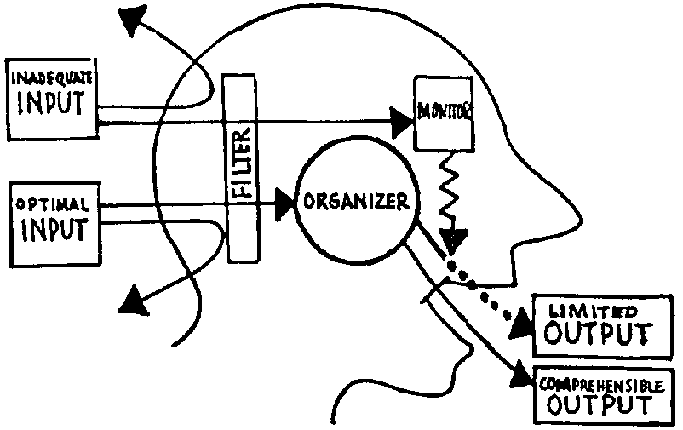
- 4. Input Hypothesis
- "we acquire language by receiving comprehensible input"
- 5. Affective Filter Hypothesis
- "mental blocks/affective filters prevent input comprehensibility"
- Summary of Monitor Model
- Language instruction just slightly above the student's comprehensible input is useful.
- Speaking cannot be taught directly; it is a result of internalizing comprehensible input.
- 1. Natural Order Hypothesis
- Theorists
Automaticity
- Theorists
- John R. Anderson
- Robert DeKeyser
- Description
- Complex cognitive skills follow acquisition pattern
- Graduated process of procedurization
- Repeated practice leads to automaticity
- Automaticity is performing skill without conscious control
- Increasingly efficient process
- Progression from "controlled" processes to "automatic" ones
- Research continues to support
- e.g. recent Degner, et al. study of affective connotations
- Humans have limited capacity for complex skills
- Processing sub-components involved in a skill requires more attention resources.
- Complex cognitive skills follow acquisition pattern
- Theorists
Sociocultural Theory
- Theorists
- Lev Vygotsky
- James P. Lantolf
- Lev Vygotsky
- Description
- Sociocultural
- According to Vygotsky and later theorists, the idea that human minds function according to participation and accommodation of cultural and mediation integrated into social activities
- Internalization
- The process whereby language and other social artifacts become part of a person's mental and psychological processes
- Regulation (self, other, or object regulation)
- Stages of focus where words focus on certain aspects or areas of an individual's environment to shape biological realities into cultural concepts
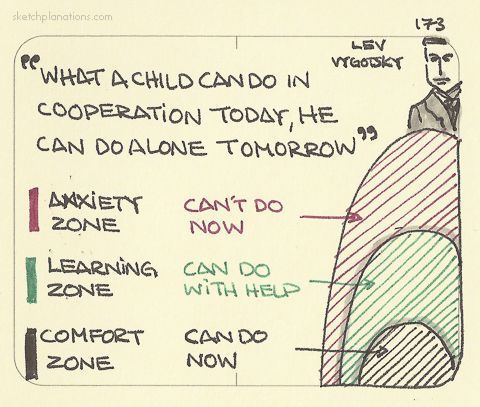
- Zone of Proximal Development
- Difference between what someone can do alone and what someone can do with mediation
- Mediation
- A psychological theory that argues that humans use higher-level cultural tools such as language, literacy, and logic in a conscious effort to control the biologically-endowed mental processes of the brain
- Imitation
- Cognitive activity with the goal of forming conscious psychological development
- Sociocultural
- Theorists
Competition Model
- Theorists
- Elizabeth Bates
- Brian MacWhinney
- Elizabeth Bates
- Description
- Language acquisition
- Sentence Processing
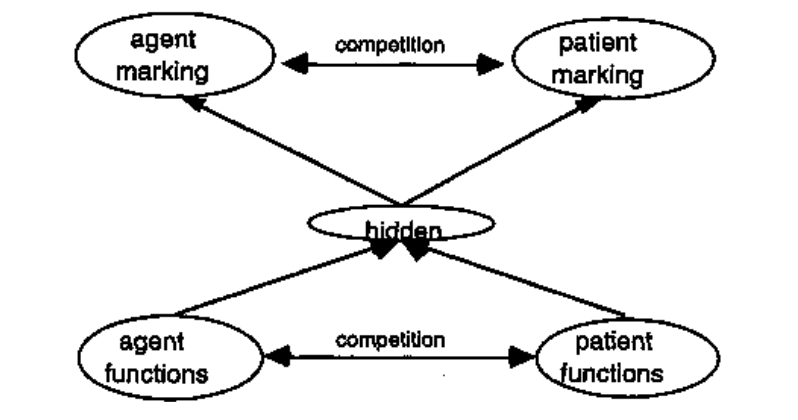
- Individuals use linguistic cues to get meaning from language, rather than relying on linguistic universals.
- Interpretation and communication
- When aquiring an L2, learners sometimes receive competing cues and must decide with cue(s) is more relevant for determine meaning.
- Universal Meaning
- Theorists
Images and files in the map
Information
- Description
- Second Language Acquisition Processes and Theories
- Created by
- rachann21
- Views
- 328
- Tags
- Rating