
Ancient and Imperial China
129 resources created by 118 users
This Ancient and Imperial China page on GoConqr gathers community-made quizzes, mind maps, flashcards and notes, from the Shang dynasty and the Warring States Period to the Tang and Song golden ages, the Ming Empire and the Chinese Civil War. It's built for school students revising a topic and teachers after ready-made material. There are over 800 resources here, including more than 120 quizzes and over 500 mind maps, and most are pitched at secondary level. Pick a dynasty, try a quiz, then see what you remember.
Top Ancient and Imperial China resources
-
38 cardsChina History Flash Cards -Mao Zedong and Propaganda
-
19 questionsTCI History Alive - Chapter 20 - The Shang Dynasty The Shang dynasty was one of China's most recent dynasties.
-
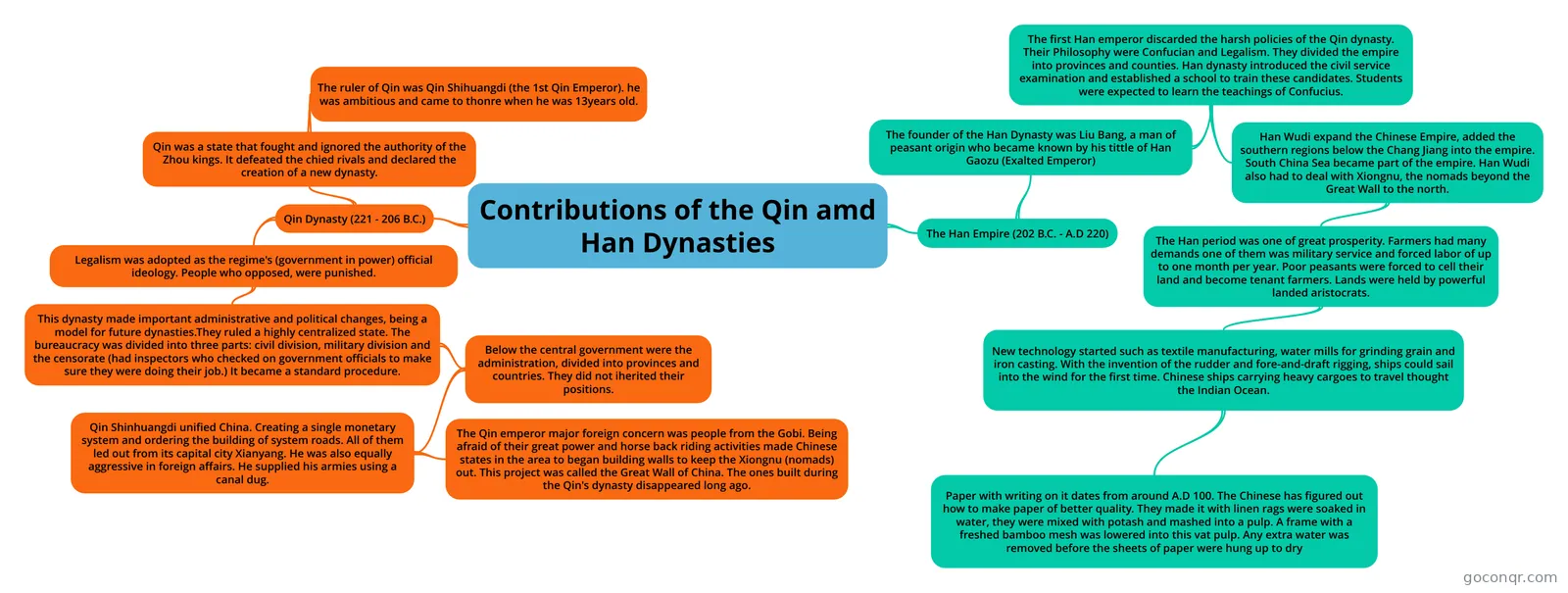 Mind map Contributions of the Qin amd Han Dynasties
-
21 cardsAncient China - Unit 5 Shi Huangdi and the Qin Dynasty
-
14 questionsChina - Cultural Revolution In what year did the Cultural Revolution begin?
-
 Mind map Chinese civil war 1946 - 1949
-
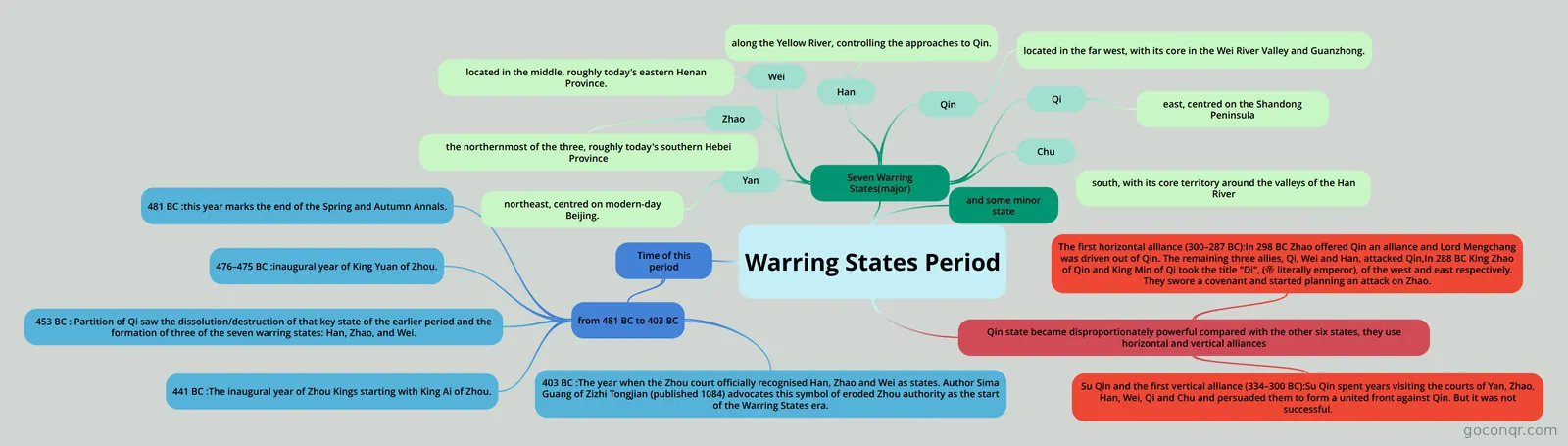 Mind map Warring States Period History Work
-
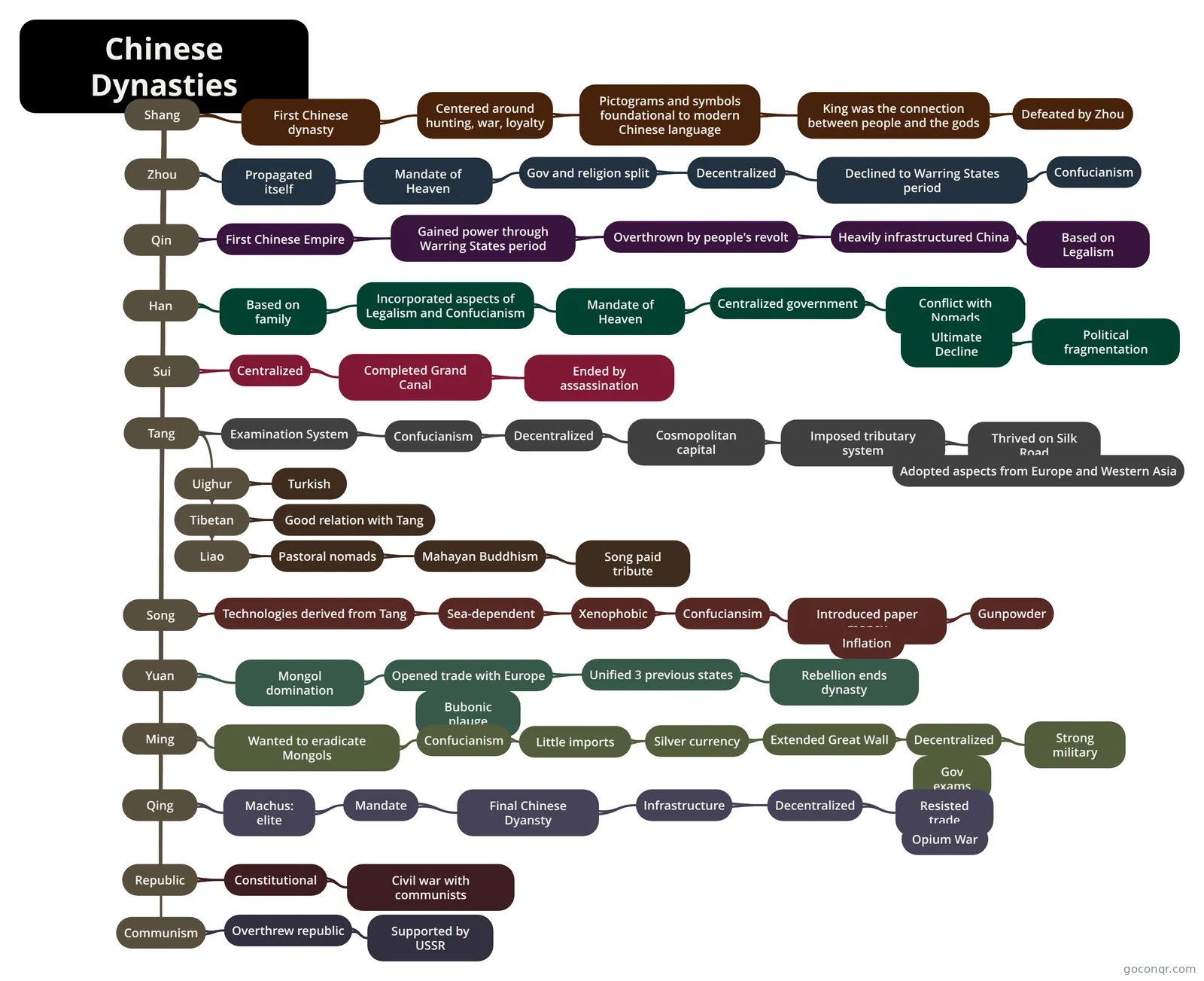 Mind map Chinese Dynasties Quick synopsis of the Chinese dynasties
Quizzes
See all 37 quizzes-
19 questionsTCI History Alive - Chapter 20 - The Shang Dynasty The Shang dynasty was one of China's most recent dynasties.
-
14 questionsChina - Cultural Revolution In what year did the Cultural Revolution begin?
-
26 questionsNATHAN AND NATAN QUIZ Where did China's early farmers settle?
-
15 questionsChinese Discoveries and Inventions, Chapter 17 TCI Med. World and Beyond quiz using flash card set
-
31 questionsChina: Unit Test Pictures or drawings that represent words or ideas
-
16 questionsAncient Civs Chapter 19-20 Test Which clan brought an end to the Shang Dynasty?
-
13 questionsAncient China Which dynasty created the Dynastic Cycle?
-
10 questionsLily's 7 Purple Ancient China Quiz What were the 3 main religions in Ancient China?
Mind maps
See all 41 mind maps-
Contributions of the Qin amd Han Dynasties
-
Chinese civil war 1946 - 1949
-
Warring States Period History Work
-
Chinese Dynasties Quick synopsis of the Chinese dynasties
-
The Long March (1934-35) da
-
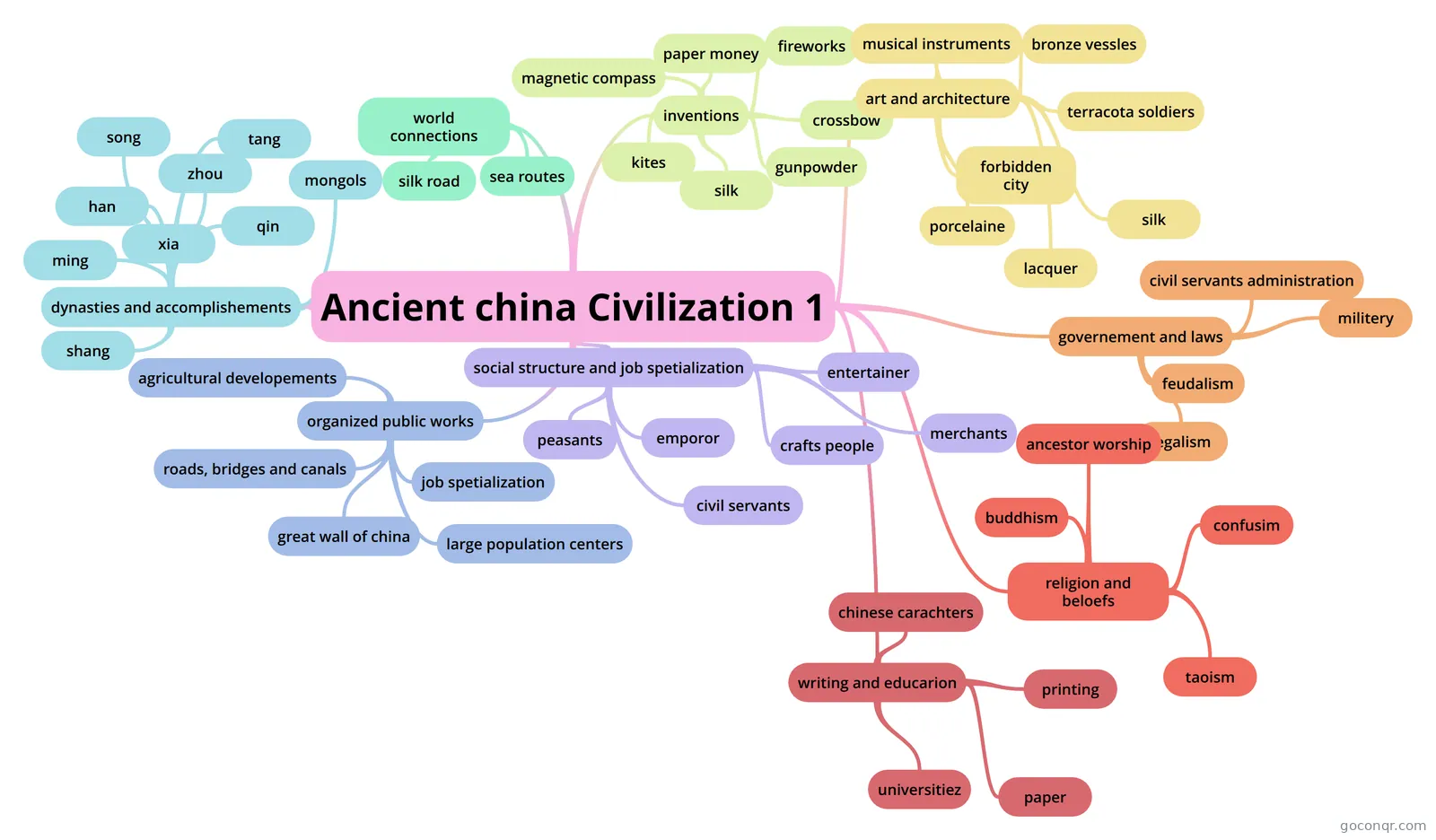 Ancient china Civilization 1
-
 Tang and Song Dynasties Golden Ages in China This is a mind map for the Tang and song Dynasties
-
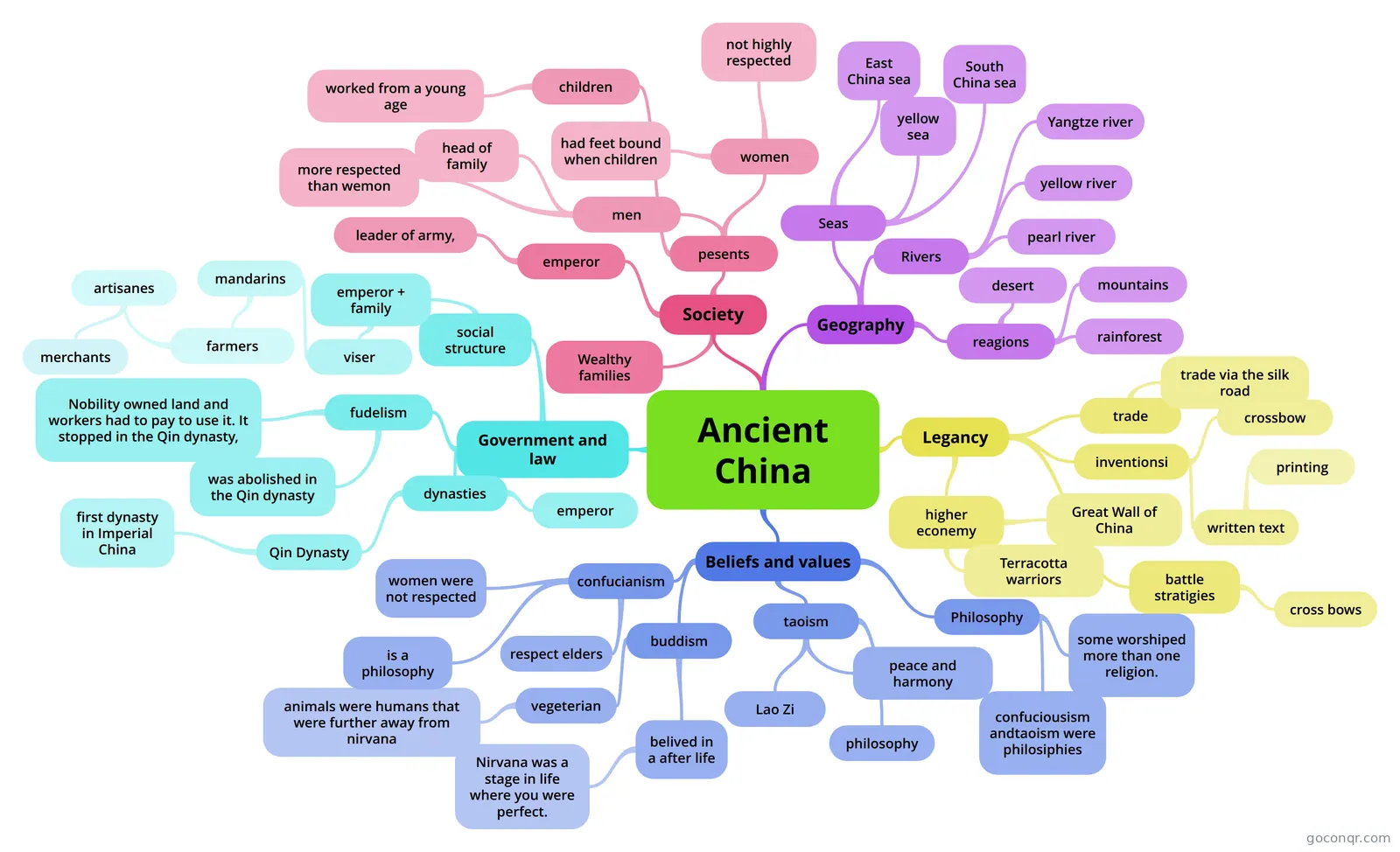 Ancient China
Flashcards
See all 40 flashcards-
38 cardsChina History Flash Cards -Mao Zedong and Propaganda
-
21 cardsAncient China - Unit 5 Shi Huangdi and the Qin Dynasty
-
4 cardsWorld History Ch. 12.1 Tang and Song China Vocabulary from "World History: Patterns of Interaction"
-
10 cardsCHN2101 Quizz (5%)
-
10 cardsTang and Song flash cards Who was the First Emperor of the Tang Dynasty?
-
14 cardsThe Mystical Orient: Opium Trade CHINESE OPIUM TRADE: How did Chinese opium trade originate?
-
22 cardsYonis Abdi - Year 7 BG Flashcards - Emperor Shi Huangdi
-
14 cardsAncient China Flashcards The Mandate of Heaven - What does this term mean?
Notes
-
The Tang and Song Dynasties The Song controlled less territory than the Tang and faced the constant threat of an invasion from the north. http://althistory.wikia.com/wiki/File:Song-Dynasty-Map.jpg Chinese women were forced to bind their feet dur...
-
Chapter 12 Sec. 2 (The Mongol & Ming Empires) The Mongols Mongols are stereotyped as complete and total ruthless barbarians Mongols did, in fact, use intense methods of fighting and techniques Mongols, however, were impressive rulers who accepted many religions, ...
-
Tang and Song Dynasties (Ch. 12 Sec. 1) The Tang and Song Dynasties By: Carmen Carselle The Tang and Song Dynasties were the two Golden Ages of China. Much advancement occurred during the time period of these two dynasties. Both the Tang and Song dynasties ...
-
Ancient China Review Himalayas - The Himalaya Mountains in the southwest of China helps isolate from other countries.- This isolation allowed China to develop its own culture without influence from other civilizations. Huang He River - Ma...
-
World History: Tang and Song Dynasties https://www.youtube.com/watch?v=51dLMpNziAo Tang and Song Dynasties Achievements of the Song Dynasty
-
Tang and Song Dynasties Tang and Song Dynasties Background of China before the Tang Dynasty Han dynasty collapsed in 220 A.D China remained divided for nearly 400 years. Dynasties rose and fell Last dynasty before the Tang was the Sui dynast...
-
Tang and Song Dynasty Tang and the Song Dynasties Foot BindingFoot binding is where the toes of young girls were broken and strapped the the ball of the foot. The purpose of this was to obtain the goal of tiny feet, preferably three inches...
-
12:1 The Spread of Civilization in East and Southeast Asia The Spread of Civilization of East and southeast Asia consisted of two golden ages. These golden ages were the Tang and Song Dynasty. These dynasties developed soc...
Slides
More History topics
About Ancient and Imperial China
GoConqr OriginalWhat the resources cover
The unit runs from early Chinese civilisation to the twentieth century. The mind maps carry much of the load: Chinese Dynasties sets out the Shang as the first dynasty, with pictograms and symbols that underpin the modern Chinese language. Ancient china Civilization 1 looks at social structure and job specialisation, from the emperor and civil servants to peasants, crafts people and merchants. Further maps cover the Qin, Han and Sui dynasties, the Warring States Period and Chinese Philosophies.
Later dynasties and modern China
The Tang and Song dynasties have the most material. The mind map Tang and Song Dynasties Golden Ages in China gives the dates and the Confucian values behind them. The flashcard deck Important Terms and Ideas in the Tang and Song Dynasties covers terms such as tributary state, land reform, gentry, dowry and pagoda. The Ming Dynasty mind map follows Zhu Yuanzhang and Zheng He. For the twentieth century, try The Long March (1934-35) and Chinese civil war 1946 - 1949.
Where to start
- Open a broad mind map such as Chinese Dynasties to get the order of events.
- Take the quiz TCI History Alive - Chapter 20 - The Shang Dynasty to check the earliest period.
- Move on to the Tang and Song notes and flashcards.
- Finish with China - Cultural Revolution for the modern period.
Using quizzes and maps together
Read a map first, then close it and take a quiz on the same dynasty. Any question you miss tells you which branch to reread. Flashcard decks work well for vocabulary, and the notes give a fuller account. Some resources mention exams such as AP World History and GCSE History, so teachers can pick material that suits their class.
Where it fits
This unit sits in the Foundations and the Ancient World strand of History. Choose one dynasty today and work through its map, deck and quiz.
Frequently asked questions
Which quiz should I try first?
A good opening is TCI History Alive - Chapter 20 - The Shang Dynasty, which deals with one of China's earliest dynasties. For later periods, China - Cultural Revolution tests the twentieth century. Read a mind map on the same topic first, then see how many questions you can answer.
What do the mind maps cover?
There are over 500 mind maps. They range from Ancient China, the Qin and Han dynasties and the Warring States Period to the Tang and Song dynasties, the Ming Dynasty, The Long March (1934-35) and the Chinese civil war. They suit quick revision and planning.
Are the resources free to use?
Yes. Every resource listed here is free to open, study and take, with no account needed. A free account also saves your quiz scores and lets you make your own quizzes, mind maps, flashcards and notes.
Which levels and exams do these resources suit?
Most of the resources are made for secondary level, so they suit school students and the teachers who plan lessons for them. Some mention AP World History and GCSE History. Check each resource's content against your own course before relying on it.
Who made these resources?
They were made by GoConqr users, not by GoConqr itself. That means style and depth vary from one resource to the next. Comparing a mind map with a set of notes on the same dynasty is a good way to spot anything one of them leaves out.
What if I can't find my topic?
Try a nearby dynasty or a broader resource such as Chinese Dynasties, which gives the overall sequence. The Tang and Song dynasties have many notes and flashcard decks. You can also build your own mind map or flashcards for the gap.