
Data Warehousing and OLAP
104 resources created by 87 users
This Data Warehousing and OLAP page on GoConqr gathers community-made mind maps, quizzes, flashcards and notes, from data warehouse characteristics and dimensional modelling to ETL design and OLAP operations. It's built for university students and professional candidates practising the topic, and for teachers after ready-made material. There are over 90 resources here, including more than 20 quizzes and over 60 mind maps, with a Microsoft 70-463 set for exam preparation. Pick a mind map to get your bearings, then try a quiz to find your gaps.
Top Data Warehousing and OLAP resources
-
86 questions70-463 Reporting from a Star schema is simpler than reporting from a normalized online transactional processing (O...
-
114 questionsModule 11: Advanced Big Data Architecture Operational Data Store (ODS)
-
Mind map Data Warehousing and Mining Revision mind map for Data Warehousing and Mining.
-
15 questionsOLAP / Data Warehousing Which of the following is a characteristic of an OLAP?
-
Mind map Designing and Developing the ETL System
-
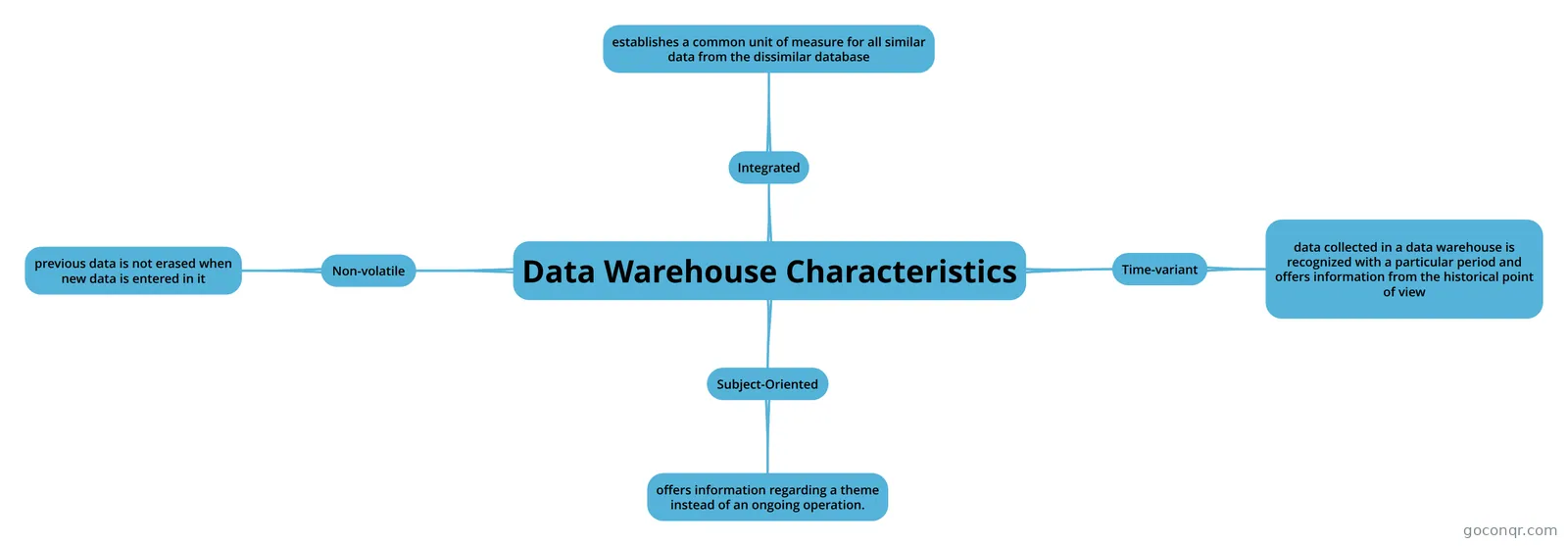 Mind map Data Warehouse Characteristics
-
63 cardsData Warehouse Final Inmon advocated building the data warehouse piece by piece as needed True or False
-
68 questionsExam 2 Dirty data is erroneous or flawed data. The complete removal of dirty data from a source is impractical or ...
Quizzes
See all 22 quizzes-
86 questions70-463 Reporting from a Star schema is simpler than reporting from a normalized online transactional processing (O...
-
114 questionsModule 11: Advanced Big Data Architecture Operational Data Store (ODS)
-
15 questionsOLAP / Data Warehousing Which of the following is a characteristic of an OLAP?
-
68 questionsExam 2 Dirty data is erroneous or flawed data. The complete removal of dirty data from a source is impractical or ...
Mind maps
See all 69 mind maps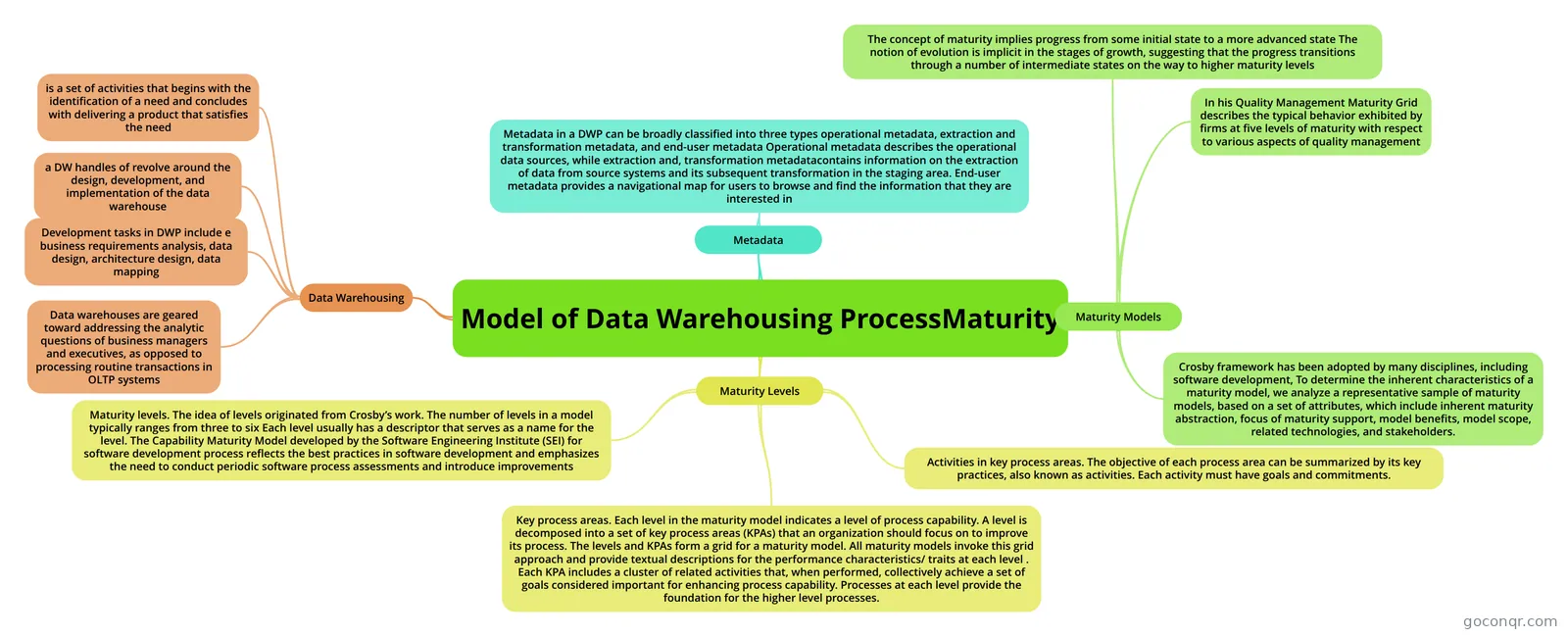
Flashcards
More Databases and data science topics
About Data Warehousing and OLAP
GoConqr OriginalWhat this unit covers
The page brings together material on what a data warehouse is, how it is designed and how it is queried. The mind map Data Warehouse Characteristics sets out the core ideas: subject-oriented, integrated, time-variant and non-volatile. Data Warehousing and Mining weighs up the benefits, such as competitive advantage and potential for high ROI, against costs like high initial spend and long development time.
Where to start
Begin with the mind maps, because they give you the vocabulary first. A sensible order is:
- Data Warehouse Characteristics, for the basic definitions.
- Dimensional Modeling Primer and the maps on moving from E-R models to dimensional models.
- Designing and Developing the ETL System, which walks through drawing the high-level plan and choosing an ETL tool.
- The OLAP operations mind map.
There are also several maps on data warehousing process maturity, which look at the activities from identifying a need to operating a data store.
Using quizzes and maps together
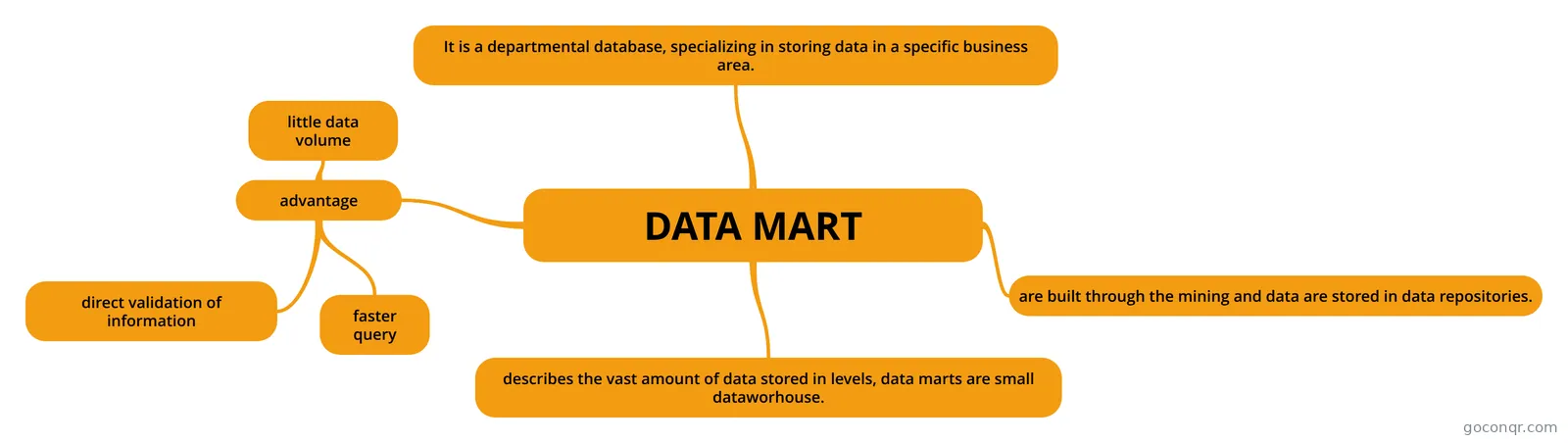
Read a map, then test yourself straight away. The quiz OLAP / Data Warehousing asks what characterises OLAP and how its interface features were borrowed from earlier data analysis tools. Note which questions you miss, go back to the matching map and re-read that branch. Flashcard decks such as Data Warehouse and OLAP and DATA MART suit quick checks of terms, including true-or-false items on operational systems and data marts.
Exam practice
If you are working towards Microsoft 70-463, the quizzes titled SQL Server Data Warehouse (70-463) and Microsoft 70-463 Practice Questions 4 are good places to go. One 70-463 quiz asks why reporting from a star schema is simpler than reporting from a normalised OLTP schema, which ties neatly back to the dimensional modelling maps.
Where it fits
This unit sits in the Data Warehousing and Business Intelligence strand of Databases and data science. Teachers can use the maps as ready-made starting points for lessons. When you are ready, pick one map, take a quiz on it and see what is left to revise.
Frequently asked questions
Which resource should I open first?
Start with the mind map Data Warehouse Characteristics. It covers the four defining features, subject-oriented, integrated, time-variant and non-volatile, which later material builds on. After that, move to the dimensional modelling maps and then try the OLAP / Data Warehousing quiz to see what has stuck.
Is there material for Microsoft 70-463?
Yes. The page lists several quizzes that mention Microsoft 70-463, including SQL Server Data Warehouse (70-463) and Microsoft 70-463 Practice Questions 4. One asks about the reasons for simpler reporting from a star schema compared with a normalised OLTP schema.
What do the ETL mind maps cover?
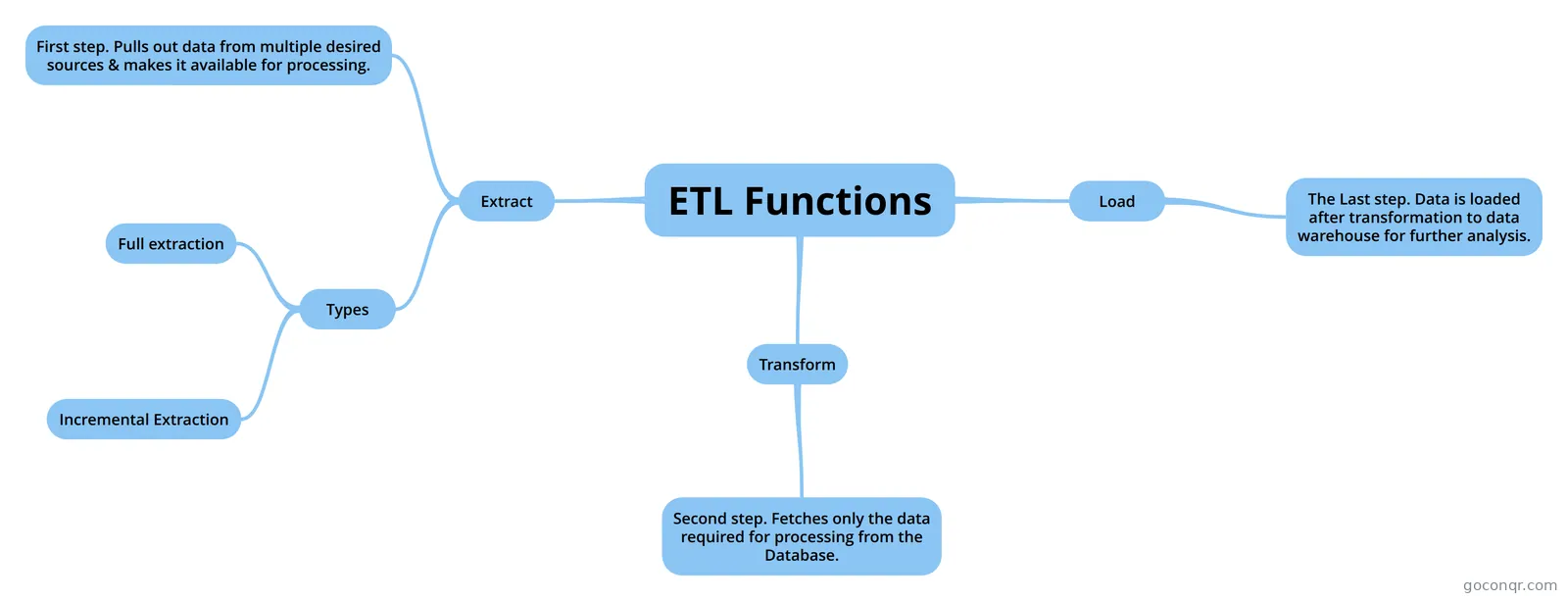
Designing and Developing the ETL System starts with drawing a high-level plan, then choosing an ETL tool. It notes benefits such as the self-documentation that comes from a graphical tool, and the advanced transformations that tools offer. There are also separate maps called ETL Functions.
Are the resources free, and who made them?
Every resource here is free to open, study and take, with no account needed. They were made by GoConqr users rather than by GoConqr itself. A free account also saves your quiz scores and lets you make your own quizzes, maps, flashcards and notes.
Who is this page suited to?
It suits university students and professional candidates who are practising data warehousing and OLAP, as well as teachers looking for ready-made maps, quizzes and flashcards. Most of the material is at university level, with a smaller share aimed at professional study.
What if I cannot find a topic I need?
Try the related titles first, as many maps cover similar ground under different names, such as Dimensional Model and Dimensional Models. If something is still missing, you can make your own mind map, flashcards or quiz on it and use it alongside the listed material.