
Database Design and Entity-Relationship Modeling
52 resources created by 37 users
This Database Design and Entity-Relationship Modeling page on GoConqr gathers community-made quizzes, mind maps, flashcards, notes and flowcharts, from ER diagrams and enhanced ERDs to normalisation and mapping a model into SQL. It's built for university students practising design and normalisation, and for teachers after ready-made material, with school students dipping in now and then. There are over 230 resources here, including more than 50 quizzes, over 90 mind maps and more than 50 flashcard decks. Try a quiz to find your gaps, then revise with the maps.
Top Database Design and Entity-Relationship Modeling resources
-
74 questionsChapter 7 Which graphically characterize(s) data processes and flows through a business system?
-
61 questionsCHAPTER 9: DATABASE DESIGN 1. Systems analysis establishes the need for an information system and its extent
-
37 questionsStudy Guide Chapter 5 & 6
-
31 questionsChapter 5 Multiple Choice
-
40 questionsChapter 4 (Multiple Choice CIS 3365)
-
47 cardsCIS 3050 Database Analysis and Design Exam 1
-
30 questionsChapter 2 (Multiple Choice) CIS 3365
-
23 cardsER DIAGRAM Focus on Chen Notation
Quizzes
See all 22 quizzes-
74 questionsChapter 7 Which graphically characterize(s) data processes and flows through a business system?
-
61 questionsCHAPTER 9: DATABASE DESIGN 1. Systems analysis establishes the need for an information system and its extent
-
37 questionsStudy Guide Chapter 5 & 6
-
31 questionsChapter 5 Multiple Choice
-
40 questionsChapter 4 (Multiple Choice CIS 3365)
-
30 questionsChapter 2 (Multiple Choice) CIS 3365
-
33 questionsChapter 6 (True/False) 1. Normalization works through a series of stages called normal forms.
-
30 questionsChapter 4 (True/False) 1) An ERM is dependent on the database type.
Mind maps
-
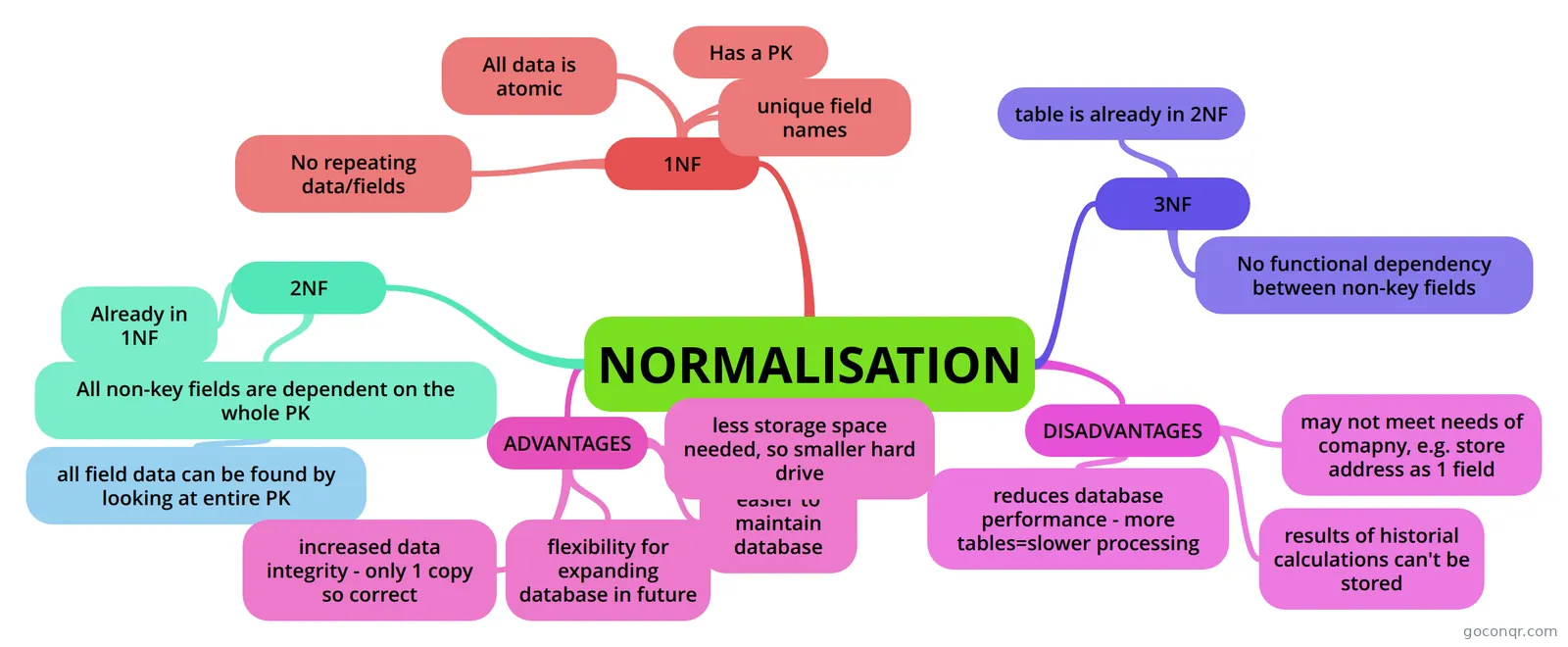 NORMALISATION
-
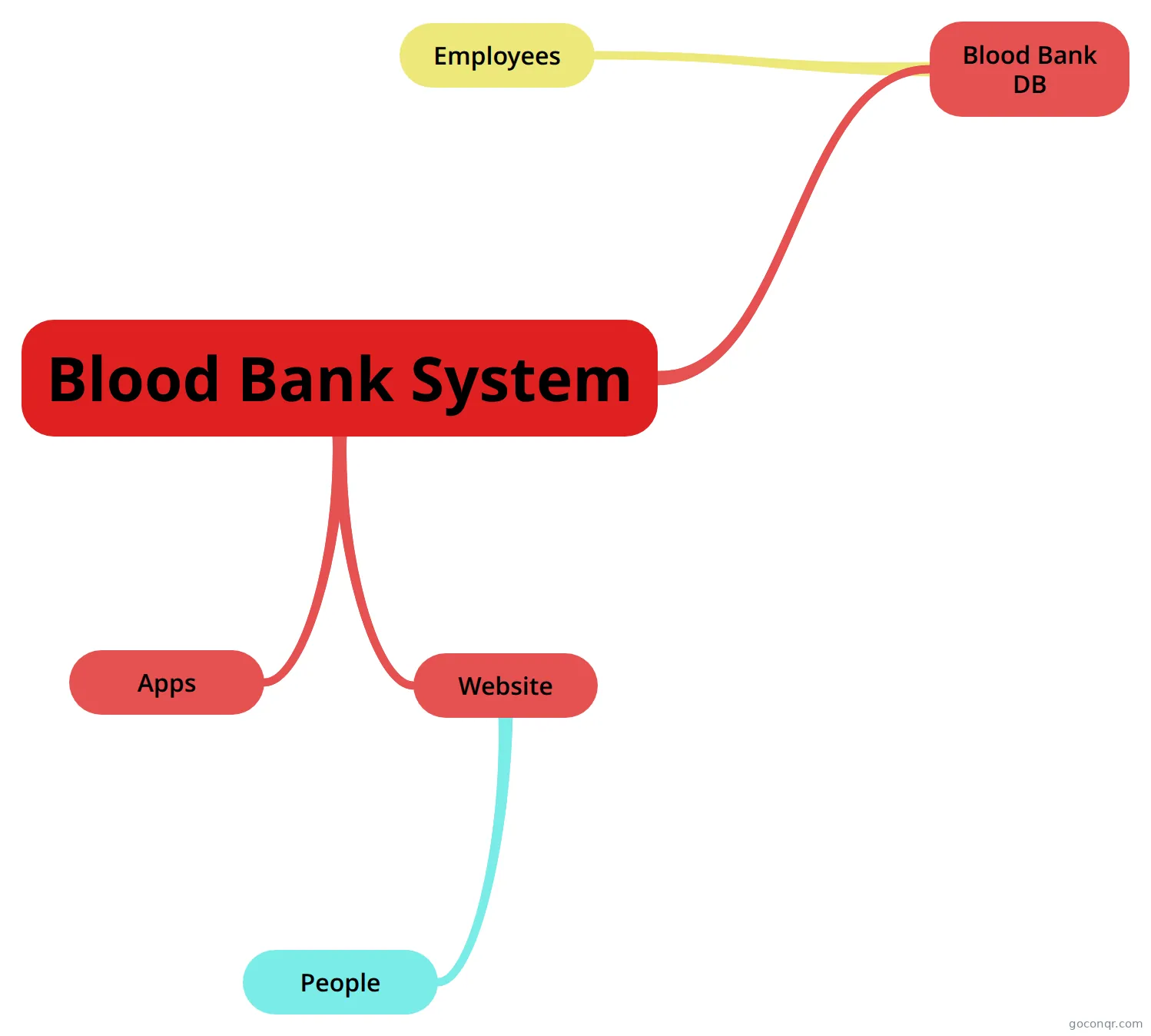 Blood Bank System
-
Databases Mind Map on Databases, created by Elizabeth VanDen5306 on 15/05/2016.
-
Domain 4 - Creating a Database (What to Consider) Be sure to read the pages attached to the nodes
-
2. Model the data Tips: Use COUNTROWS instead of DISTINCTCOUNT (with a key as parameter) to count the number of items in a fa...
-
Database Desing ingles
-
Database Schema Understanding SQL
Flashcards
See all 21 flashcards-
47 cardsCIS 3050 Database Analysis and Design Exam 1
-
23 cardsER DIAGRAM Focus on Chen Notation
-
17 cardsChapter 5 Key Terms Flashcards for Chapter 5: Data Modeling
-
17 cardsChapter 3 Key Terms Chapter 3 key terms
-
10 cardsRelational Database Concepts
-
17 cardsBus 342 Chapter 3 Key Term Vocab for my accounting class.
-
35 cardsDatabases Topic 6 Physical Database Design
-
34 cardsDatabases Topic 4 Conceptual Database Design
Flowcharts
Notes
More Databases and data science topics
About Database Design and Entity-Relationship Modeling
GoConqr OriginalWhat this page covers
The resources follow the usual path of a database design course. They start with data models and entity-relationship diagrams, move on to extended models with subtypes and supertypes, then cover normalisation, and finish with turning a design into a relational schema or SQL.
Where to start
Begin with the quiz Chapter 2 (True/False), which asks what a data model is and what an implementation-ready model needs. Next, try Chapter 4 (Multiple Choice CIS 3365), which tests how an ERD shows the database as the end user sees it, and notation questions about the Chen style. Then CHAPTER 9: DATABASE DESIGN looks at systems analysis and the wider process of database development.
Extended models and normalisation
For subtypes and supertypes, use Chapter 5 (True/False) and Chapter 5 Multiple Choice. They cover common and unique characteristics and the extended entity relationship model. The flashcard deck CIS 3050 Database Analysis and Design Exam 1 adds terms such as attribute inheritance, total and partial specialisation, and the disjoint and overlap rules.
For normalisation, the NORMALISATION mind map sets out 1NF, 2NF and 3NF, with advantages and disadvantages. Follow it with Chapter 6 (True/False), which checks that normalisation works through a series of normal forms. The notes Data Normalisation Basics and How to normalise logical data models give a slower walk-through.
Using quizzes and maps together
- Read a mind map first to see the whole shape of a topic.
- Take the matching quiz without looking back.
- Note the questions you missed and return to the map for those branches.
- Turn tricky terms into flashcards and test yourself again.
Teachers can set a quiz as a quick check, or use the flowcharts, such as Hospital Relationship Entity Diagram, as worked examples.
Where it sits
This unit belongs to the Relational Model and Database Design strand of Databases and data science. Open one resource that matches what you are studying this week, then make your own flashcards from what you find hard.
Frequently asked questions
Which resource should I open first?
Start with the quiz Chapter 2 (True/False). It covers what a data model is and what makes one ready for implementation. After that, move to Chapter 4 (Multiple Choice CIS 3365) for questions on ERDs and notation, then pick the topic you find hardest.
What do the mind maps on this page cover?
They cover entity-relationship modelling, enhanced ERDs, ERD relationships, normalisation and its normal forms, the database life cycle, and mapping an E-R model into the relational model. There is also a map on transforming a conceptual data model to SQL.
Are the resources free to use?
Yes. Every resource listed here is free to open, study and take, with no account needed. They were made by GoConqr users rather than by GoConqr itself, so styles and course references vary from one resource to the next.
Who are these resources for?
They are mostly for university students working on database design, ER diagrams and normalisation. Teachers can use them as ready-made quizzes, maps and examples. A few suit school students meeting databases for the first time.
Can I save my quiz scores or make my own material?
A free account saves your quiz scores and lets you make your own quizzes, mind maps, flashcards and notes. That is handy for building a deck from the key terms in the chapter decks, or a map of your own ER diagram.
What if the topic I need is not listed?
Try a nearby resource first. The normalisation, ER model and relational mapping items overlap a good deal, so a related map or deck may cover it. You can also create your own notes or flashcards on the missing topic.