
Data Analytics and Analysis
165 resources created by 153 users
This Data Analytics and Analysis page on GoConqr gathers community-made mind maps, quizzes, flashcards, flowcharts and notes, from the stages of data analysis and data quality to business analytics, big data and web analytics. It's built for university students and professional candidates working on analysis skills, and for teachers after ready-made material. There are more than 160 resources here, including over 100 mind maps, 15 quizzes and 13 flashcard decks. Pick a topic, try a quiz to spot your gaps, then make your own set.
Top Data Analytics and Analysis resources
-
59 questionsdata analytics final Which one is not part of OLAP?
-
18 cardsCOM302 Web Analytics Topic 2 Why is "Big Data" only a general term? (1)
-
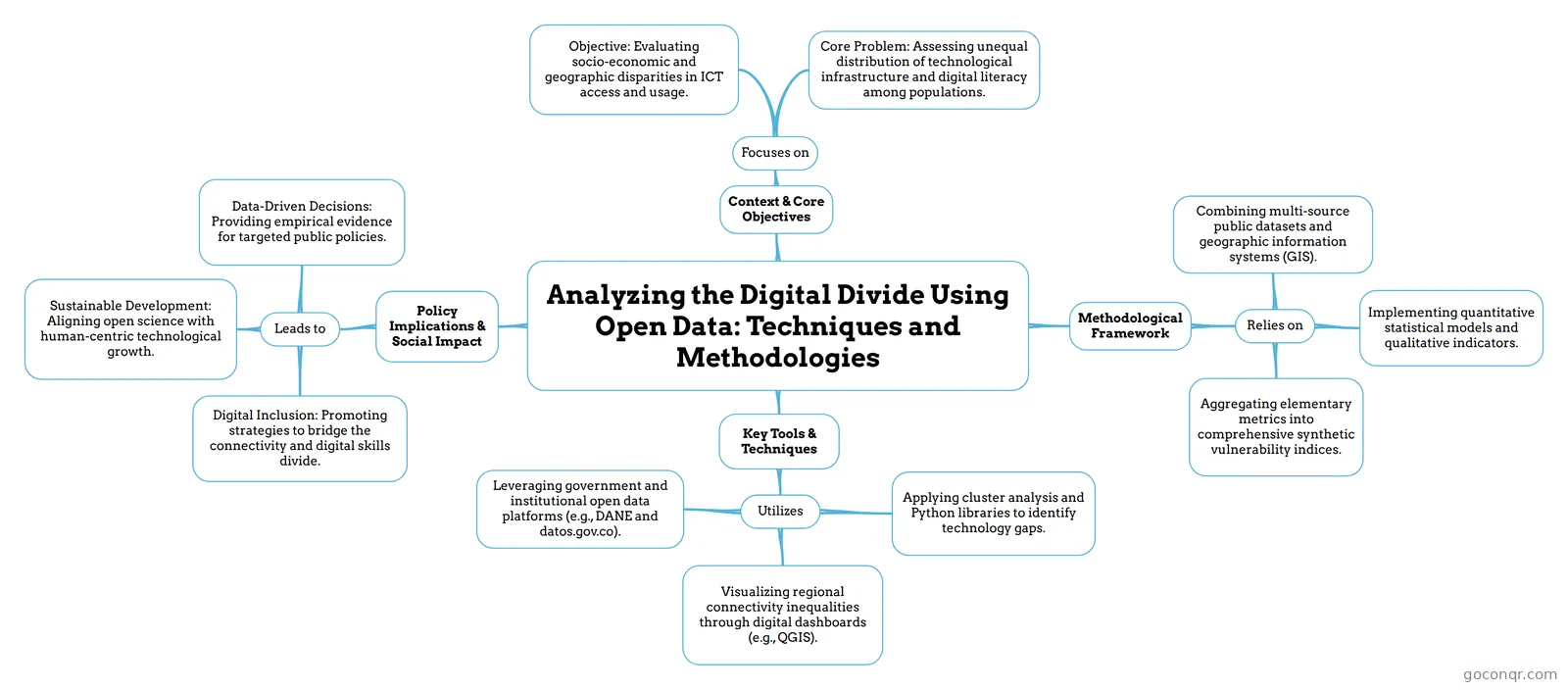 Mind map Analyzing the Digital Divide Using Open Data: Techniques and Methodologies
-
25 cardsIntroduction to Analytics Modeling Week1 of ISYE 6501
-
18 cardsChapter 1 Key Terms PSC - Data Analytics - Chapter 1: Key Terms
-
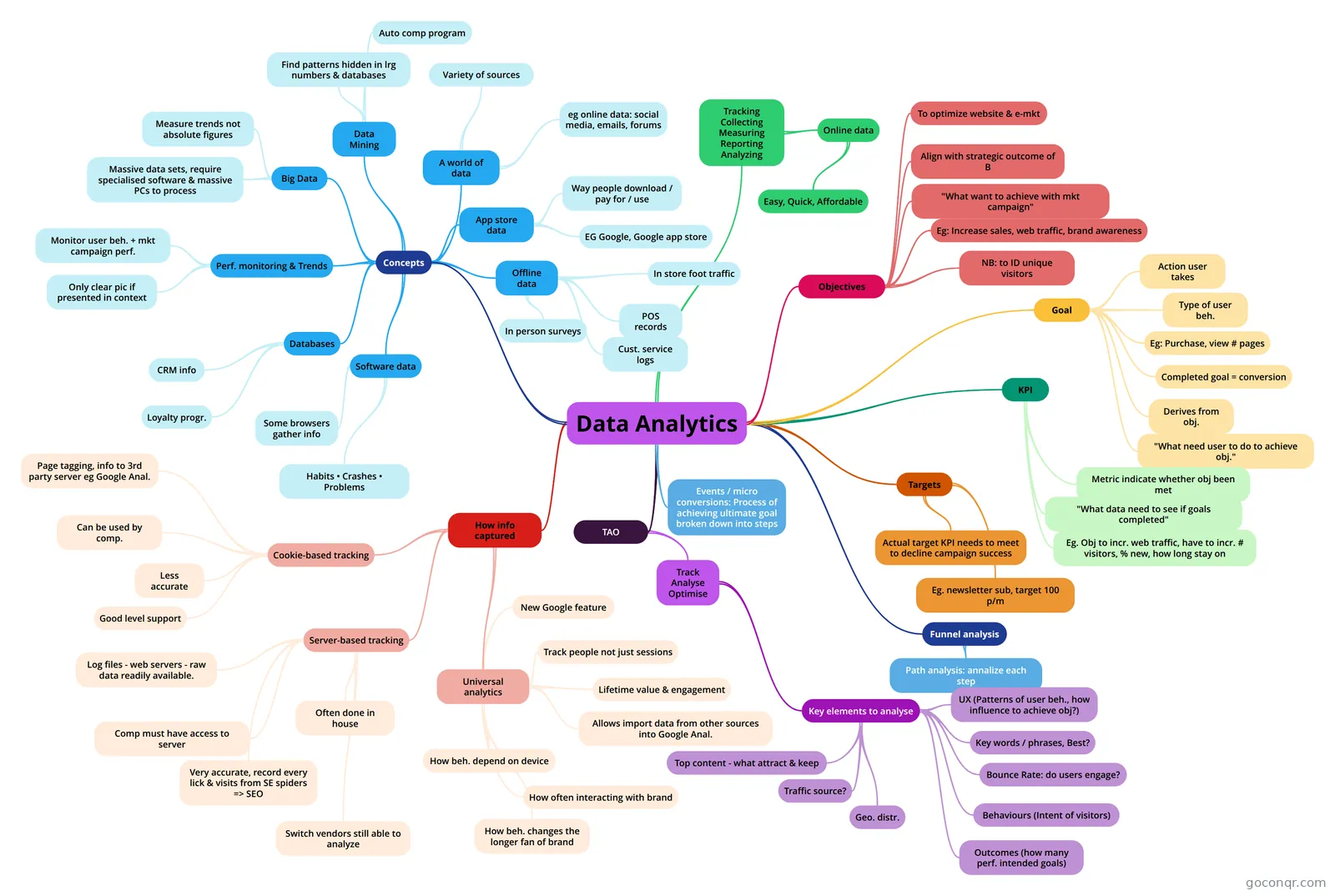 Mind map Data Analytics
-
9 cardsChapter 6 Key Terms Key terms for Chapter 6 for Data Analytics
-
8 cardsCOM302 Web Analytics Topic 1 Web Metrics + 1 Example (3)
Quizzes
See all 15 quizzesMind maps
See all 116 mind maps
Flashcards
See all 14 flashcards-
18 cardsCOM302 Web Analytics Topic 2 Why is "Big Data" only a general term? (1)
-
25 cardsIntroduction to Analytics Modeling Week1 of ISYE 6501
-
18 cardsChapter 1 Key Terms PSC - Data Analytics - Chapter 1: Key Terms
-
9 cardsChapter 6 Key Terms Key terms for Chapter 6 for Data Analytics
-
8 cardsCOM302 Web Analytics Topic 1 Web Metrics + 1 Example (3)
-
5 cardsConceitos Lembrete de habilidades importantes para um analista de dados.
Flowcharts
See all 15 flowcharts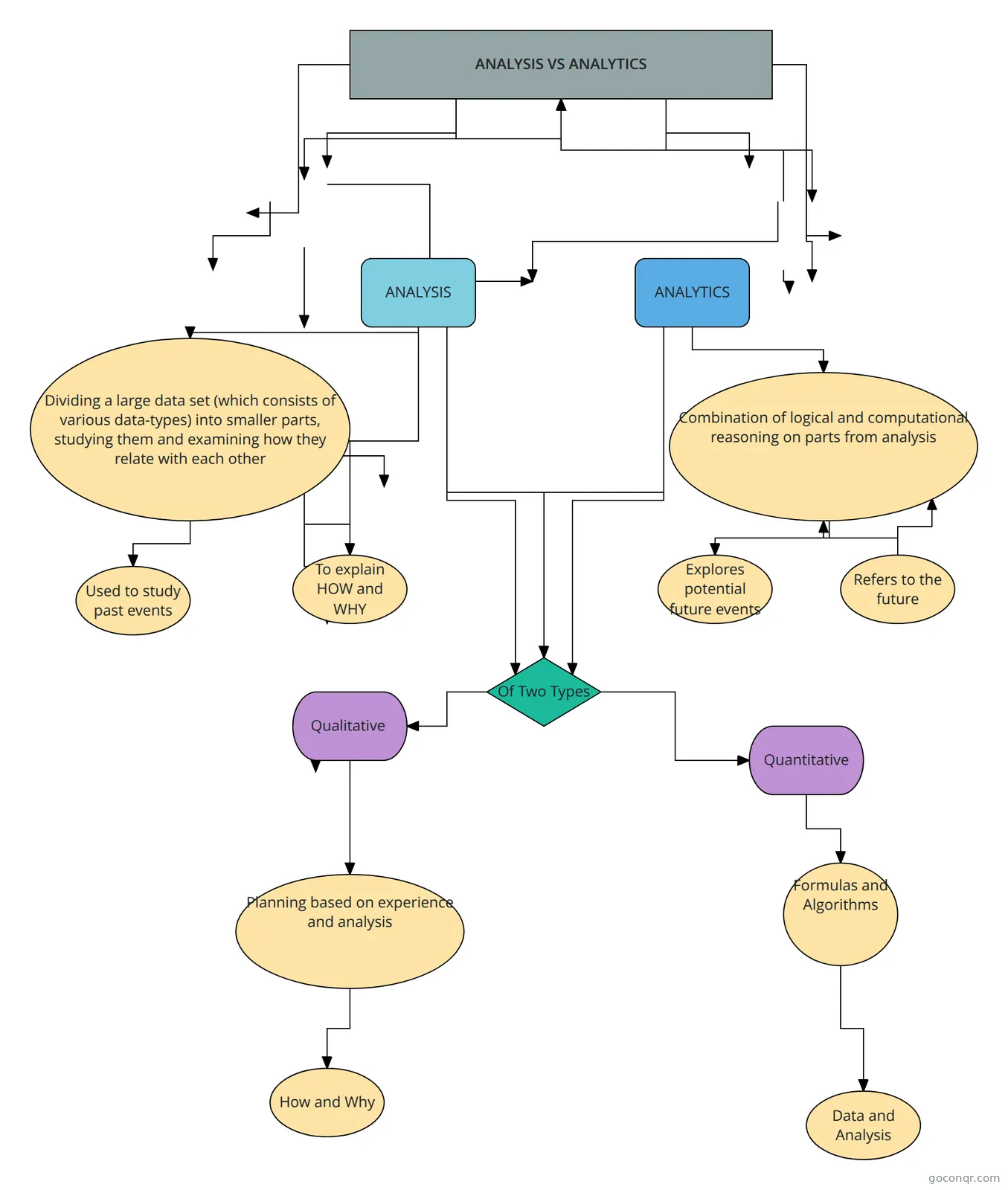
Notes
-
Data Analysis and Visualization Part 1 Types of Studies Experimental studies evaluate causal effects They interfere to keep certain factors under control in the target population and create randomized groups Observational studies evaluate associatio...
-
Chapter 16 inferential statistics provide a range of support for decision making statistical significance helps you to decide whether differences you see in averages between two or more groups is real or not Data vis...
More Databases and data science topics
About Data Analytics and Analysis
GoConqr OriginalWhat this unit covers
The unit sits in the Data Science and Analytics strand of Databases and data science. Most of what you will find are mind maps, so it suits anyone who likes to see a topic laid out as a whole. Notes, flowcharts, flashcard decks and quizzes fill in the rest.
Where to start
Begin with the process. The mind maps on the stages of data analysis walk through identifying the need, defining scope and detail, and finding sources. They stress that questions should be measurable, clear and concise. The Data Analysis Checklist is a handy companion once you know the steps.
Next, look at what can go wrong. The mind map on issues in data analysis covers trust, data quality, bias, completeness, correctness, reproducibility and provenance.
Methods and tools
- The notes called Data Analysis and Visualization cover graphical exploration: bar graphs and pie charts for categorical variables, and stem-and-leaf plots, histograms, boxplots and violin plots for numerical ones.
- The practical mind map on data analysis looks at importing, cleaning and transforming data with Power Query in Excel and Power BI.
- The roadmap of SPSS analysis for undergraduate research asks whether you have collected enough data before you go on.
- The mind map on data analysis tools explains why a well-structured database keeps separate tables for different types of information.
Business and big data
There are several maps on business analytics, big data and credit scoring, plus case studies in data analytics. Web analytics appears in flashcard decks and in quizzes such as Google Analytics Quiz and Exit Rate vs Bounce Rate.
Using quizzes and maps together
Read a map, then test yourself. The quiz Module 3 - Data and Data Exploration asks about missing data, data quality issues, noise and outliers, so it pairs well with the maps on data quality. Note what you miss, go back to the map, then try again. The flashcard decks, such as Analytics Terminology and Glossary Data Analysis, help with vocabulary.
Teachers can pull maps and quizzes straight into a lesson or a revision pack. When you are ready, build a map or deck of your own on the part you found hardest.
Frequently asked questions
Which resource should I open first?
Start with the mind maps on the stages of data analysis. They set out the steps from identifying the need to choosing sources, which gives you a frame for everything else. Then try the quiz Module 3 - Data and Data Exploration to check what you remember about data quality and missing data.
What do the mind maps on this page cover?
They range from the process of analysis and issues such as bias, trust and data quality to practical work with Power Query and SPSS. Others cover business analytics, big data, supply chain analytics and credit scoring case studies. There are over 100 mind maps, so you can compare how different authors explain a topic.
Are the resources free to use?
Yes. Every resource listed here is free to open, study and take, with no account needed. They were made by GoConqr users, not by GoConqr itself, so it is worth comparing a few on the same topic. A free account also saves your quiz scores and lets you create your own material.
Who are these resources aimed at?
Mostly university students and professional candidates, who can use them to learn the steps of analysis, practise terminology and check their understanding. Teachers can use the maps, quizzes and flashcard decks as ready-made material for lessons or revision sessions.
Is there anything on web analytics?
Yes. Two flashcard decks cover web analytics topics, and there are quizzes on Google Analytics and on exit rate against bounce rate. The mind map on Data Analytics also touches on monitoring user behaviour and marketing campaign performance.
What if I cannot find the topic I need?
Try the related terms, such as analytics, business analytics or big data, since authors name their resources differently. If something is still missing, you can make your own mind map, quiz or flashcards and use it for your own revision or with a class.