
Electoral Systems mind maps
156 mind maps by 101 users · Page 1 of 4
This Electoral Systems page on GoConqr gathers over 150 community-made mind maps, covering voting methods, proportional systems and election questions. School students, university students and professional candidates can practise comparing systems, while teachers can find material for lessons. Pick a map to start exploring.
Mind maps
-
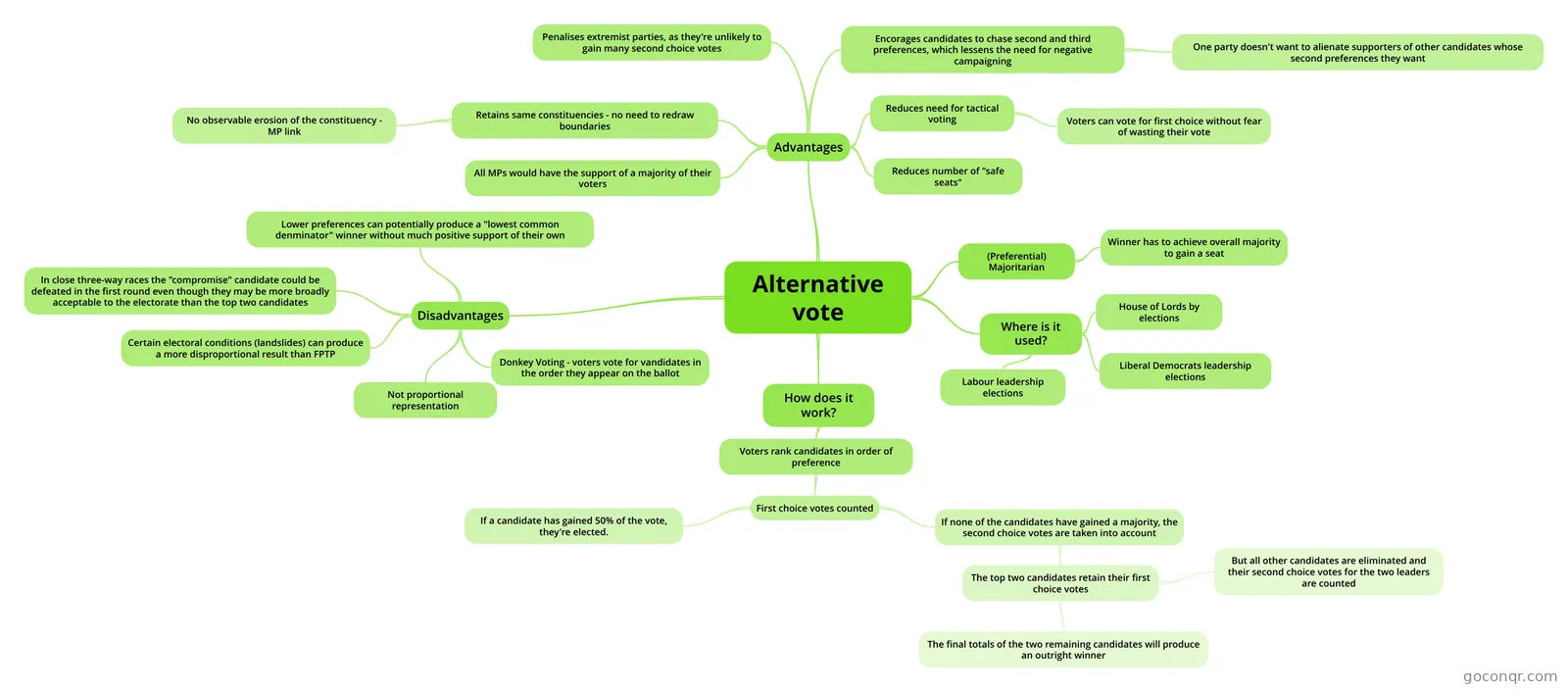 Alternative vote
-
 Neto and Cox, 'Electoral Institutions, cleavage structures and the number of parties
-
elections
-
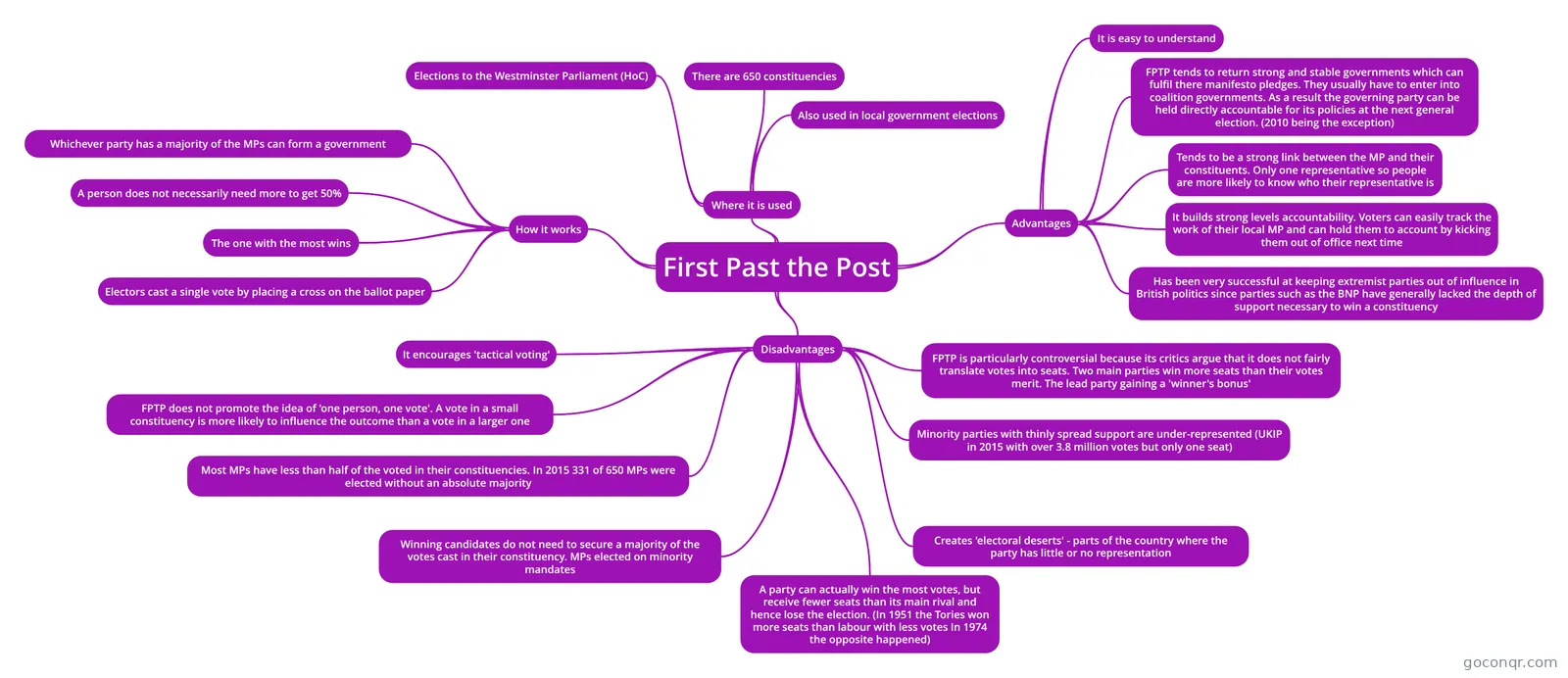 First Past the Post
-
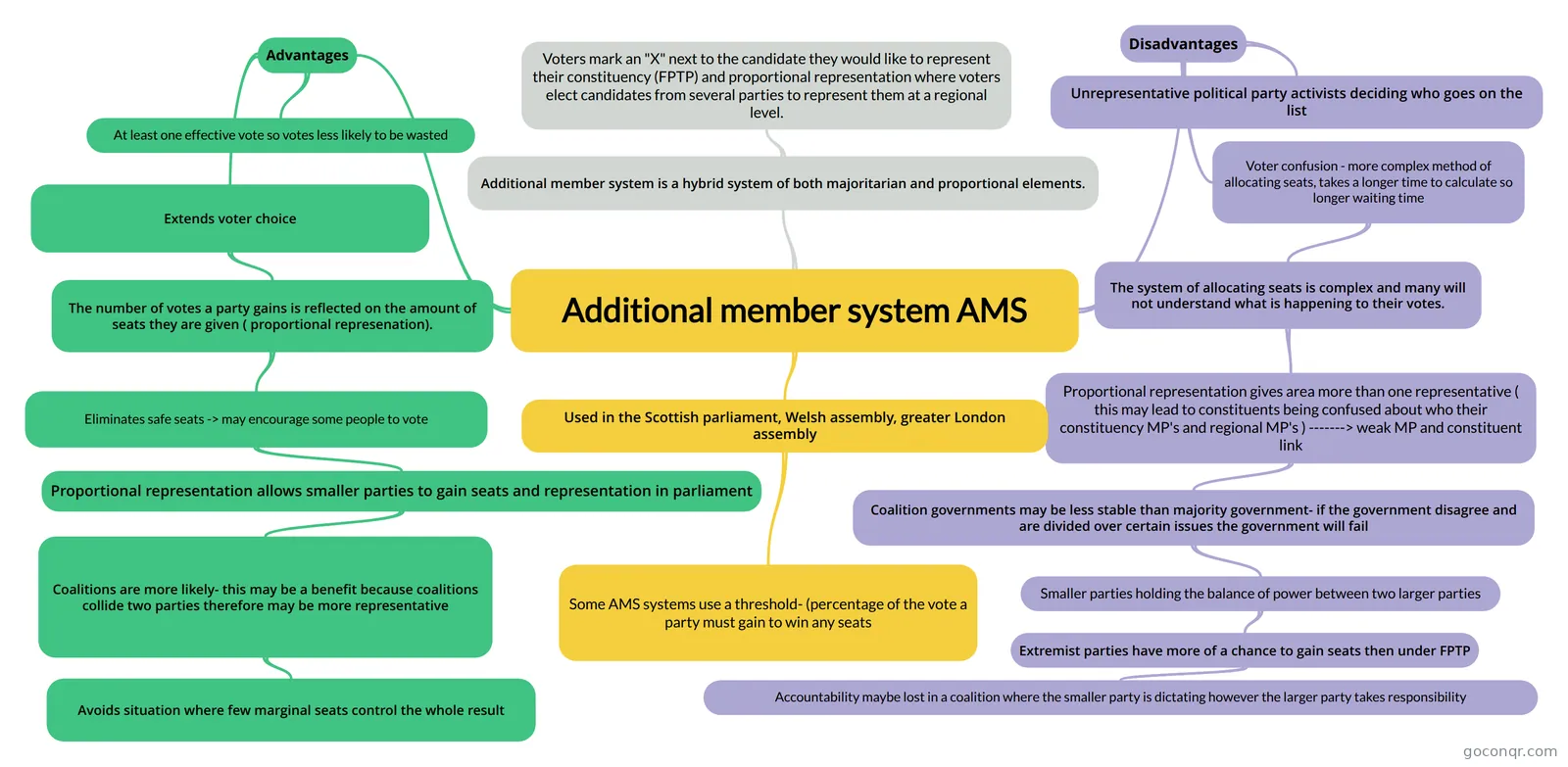 Additional member system AMS AQA A LEVEL
-
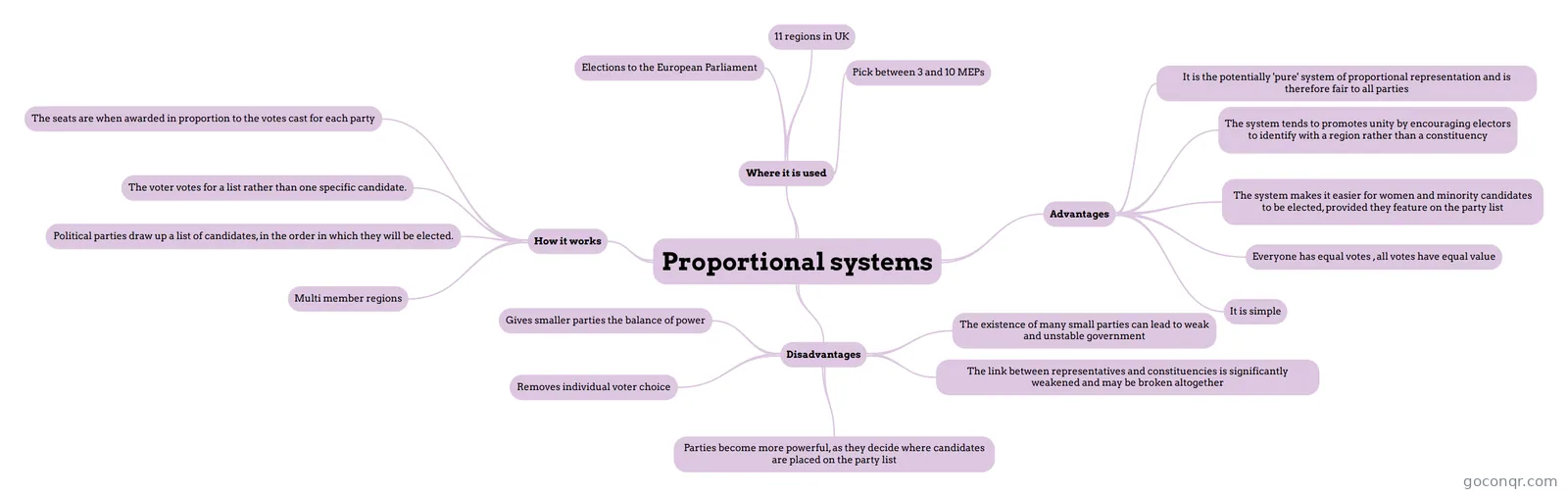 Proportional systems
-
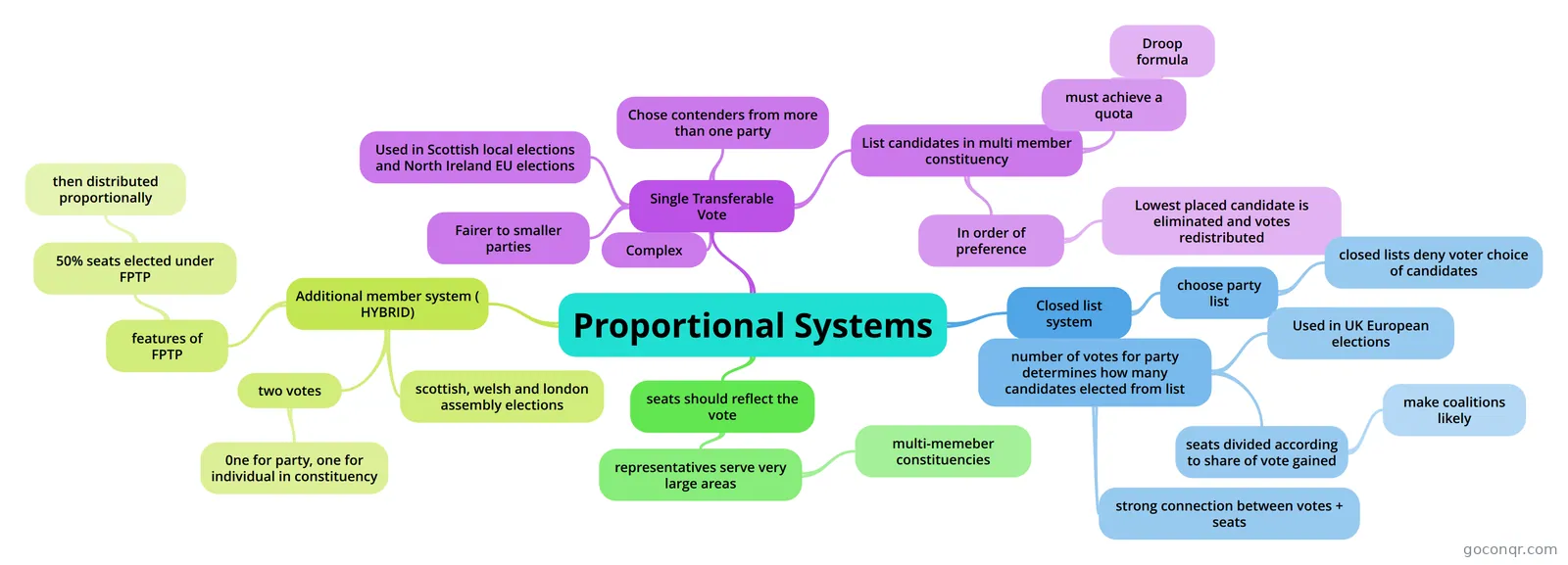 Proportional Systems
-
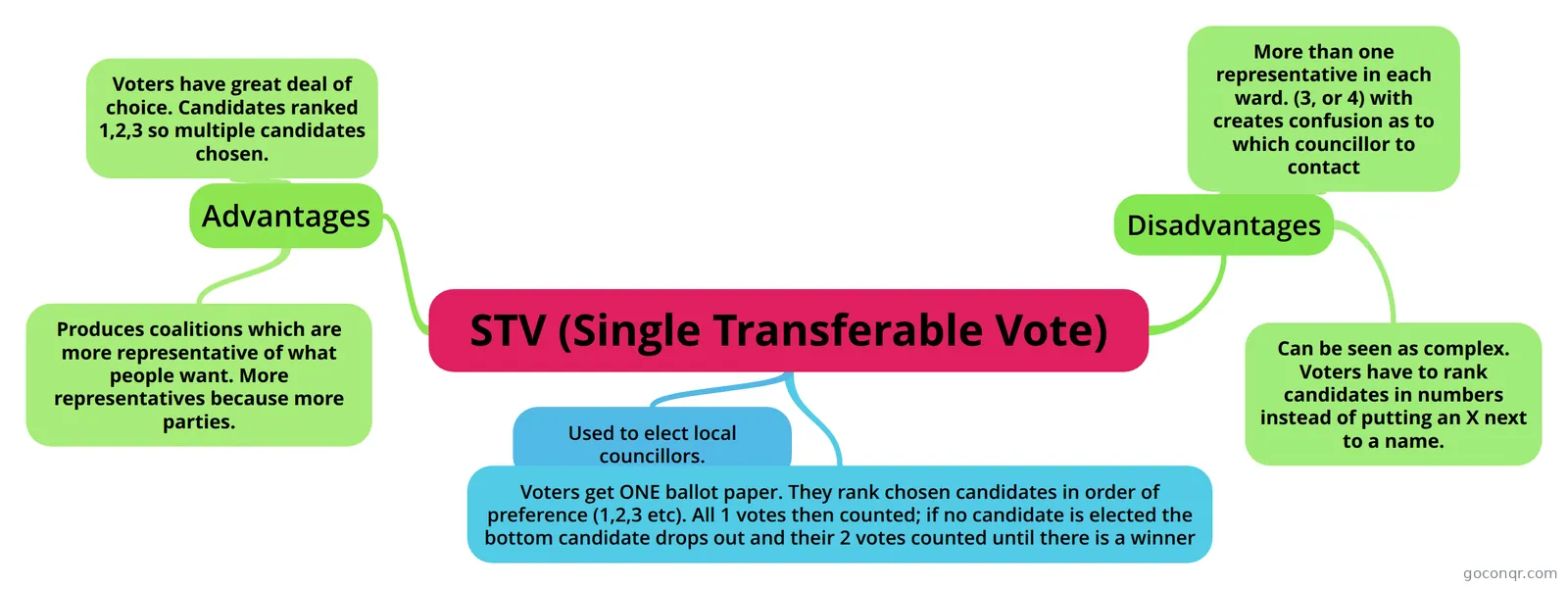 STV (Single Transferable Vote) Nat 5 Modern Studies - STV description with advantages and disadvantages.
-
mechanisms continued and outcomes
-
"Some electoral systems are superior to others" Discuss. (20)
-
Electoral Systems
-
Topic 5 - Electing the Legislature
-
ELECTORAL SYSTEMS
-
First-Past-the-Post
-
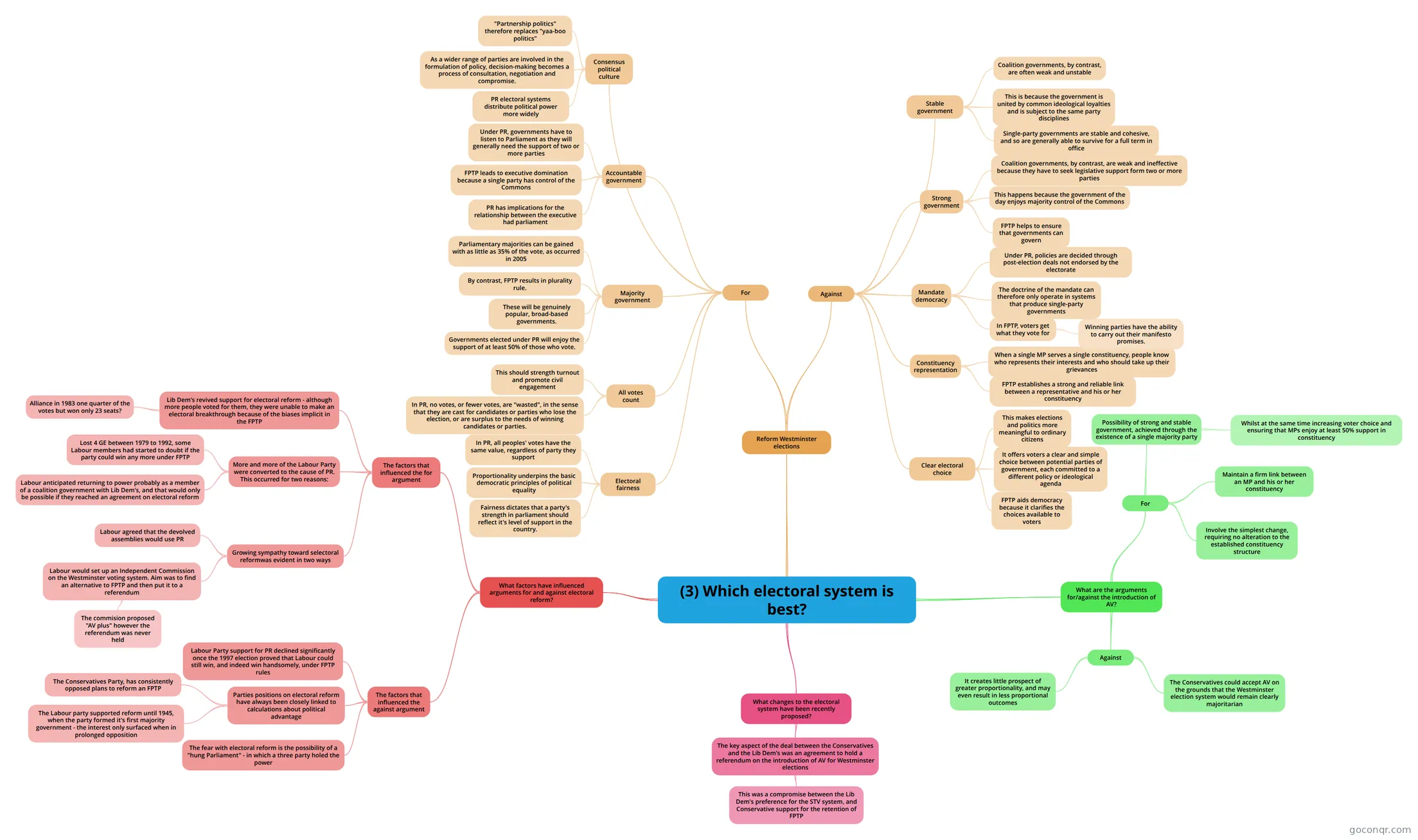 (3) Which electoral system is best?
-
ELECTORAL SYSTEMS
-
First-past-the-post
-
The Single Transferable Vote
-
Electoral systems
-
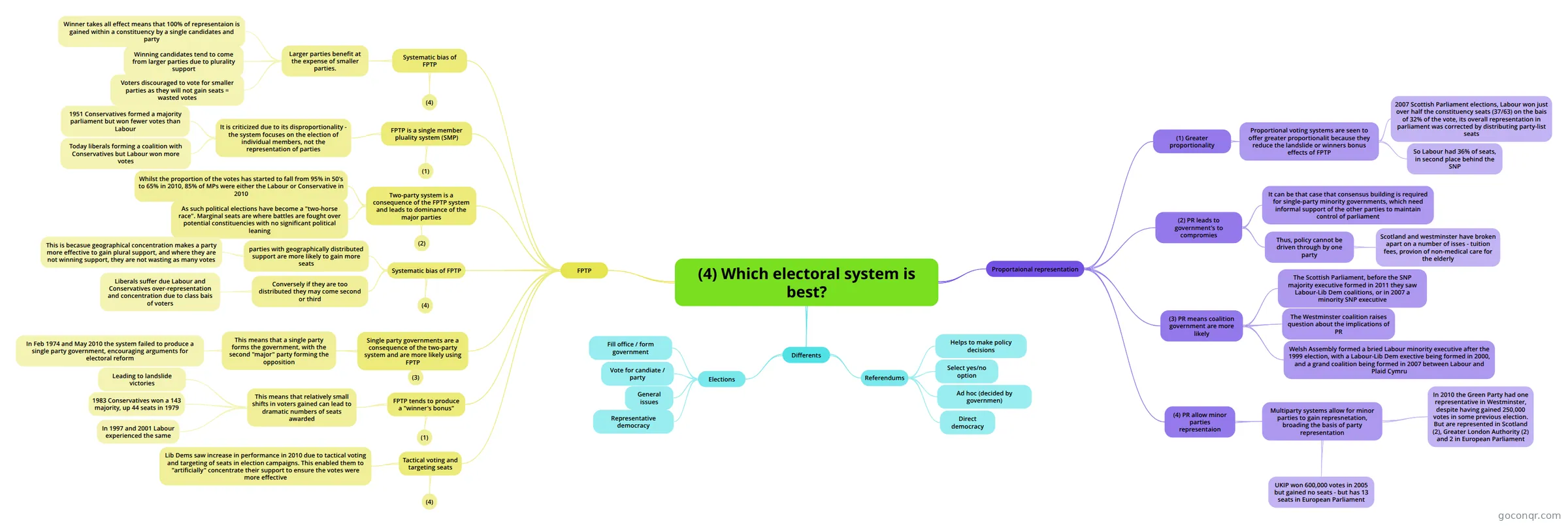 (4) Which electoral system is best?
-
The Alternative Vote
-
UK Elections
-
Evaluate the effectiveness of an electoral system you have studied in providing fair representation.
-
LECTURE 6: ELECTORAL SYSTEMS FOR LEGISLATURES
-
FPTP
-
Elections and Voting: June 2014
-
Electoral Systems in the UK
-
(6) What are two-party and multi-party systems?
-
Voting systems
-
First-Past-the-Post
-
Voting Systems Different voting systems in the UK
-
FPTP Reform
-
Electoral systems
-
Understanding Politics
-
First Past The Post
-
June 2011: Electoral Systems
-
The Supplementary Vote
-
Electoral Systems
-
Electoral Systems
-
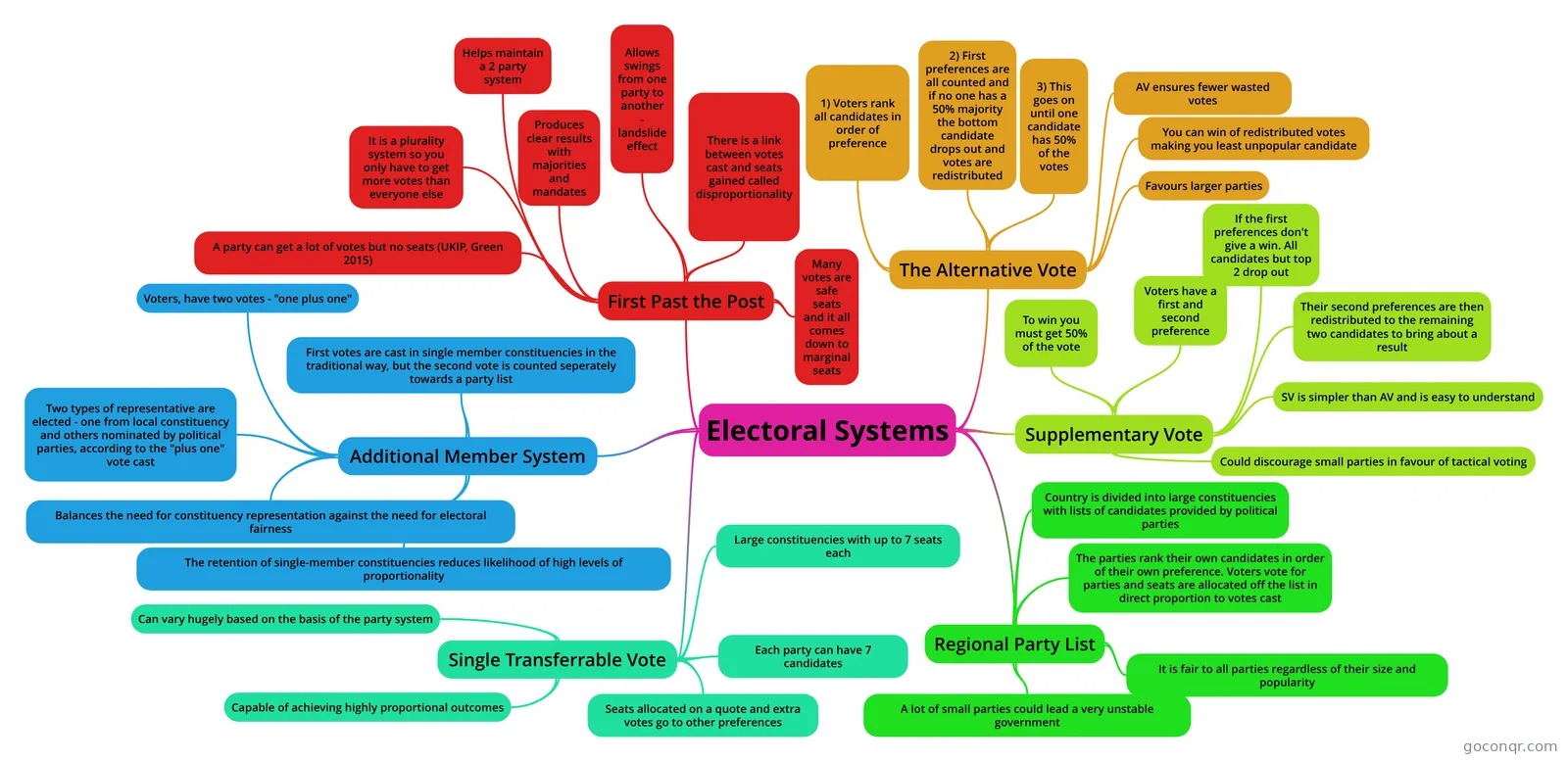 Electoral Systems
More Electoral Systems resources
About electoral systems mind maps
GoConqr OriginalUsing Electoral Systems mind maps
These maps put related points together on a page, making them useful for tracing how a system works. Start with Proportional Systems to explore ranked preferences and candidate lists. Then look at First Past the Post, which sets out how the system works alongside its advantages and disadvantages.
For another approach, Alternative vote follows ranked choices, while Additional member system AMS introduces a system with majoritarian and proportional elements. The map on electoral institutions and the number of parties offers a different line of enquiry for more advanced study.
Turn a map into revision
Follow one branch at a time, then cover the map and explain its points in your own words. Compare branches from different maps to find questions you want to revisit. When you want to check your recall or practise it in a different way, switch to a quiz or flashcards on the unit page.
Choose a map and follow a branch that interests you.
Frequently asked questions
Which mind map should I start with?
Try Proportional Systems if you want to explore ranked preferences and candidate lists. For a map organised around how a system works, where it is used, and its advantages and disadvantages, choose First Past the Post. You can then compare the points each map brings out.
Are these mind maps free to use?
Yes. Every resource listed here is free to open and study without an account. The maps were made by GoConqr users. A free account also lets you save quiz scores and make your own quizzes, mind maps, flashcards and notes.
What do the mind maps cover?
The maps cover individual voting methods, including Alternative vote and the additional member system, as well as broader questions about elections. Some set out how a system works and its advantages and disadvantages. Others explore questions such as how electoral institutions and social cleavages relate to the number of parties.