
Group and Period Chemistry
87 resources created by 76 users
This Group and Period Chemistry page on GoConqr gathers community-made quizzes, mind maps, flashcards, notes and slide sets, from Group 2 and the halogens to Period 3, p-block elements and transition metals. It's built for school students revising a topic and teachers after ready-made material, with a little for university students too. There are over 450 resources here, including more than 20 quizzes, over 200 mind maps and over 170 flashcard decks, many aimed at GCSE, IGCSE and A-level. Pick a topic and try a quiz.
Top Group and Period Chemistry resources
-
83 cardsTransition Metals Where are transition metals found on the periodic table?
-
21 questionsChapter 23 - The Transition Metals Which of the following are typical properties of a Transition Metal element?
-
38 cardsInorganic Chemistry What is thermal decomposition?
-
17 cardsDioxygen Preparation of O2 in the laboratory
-
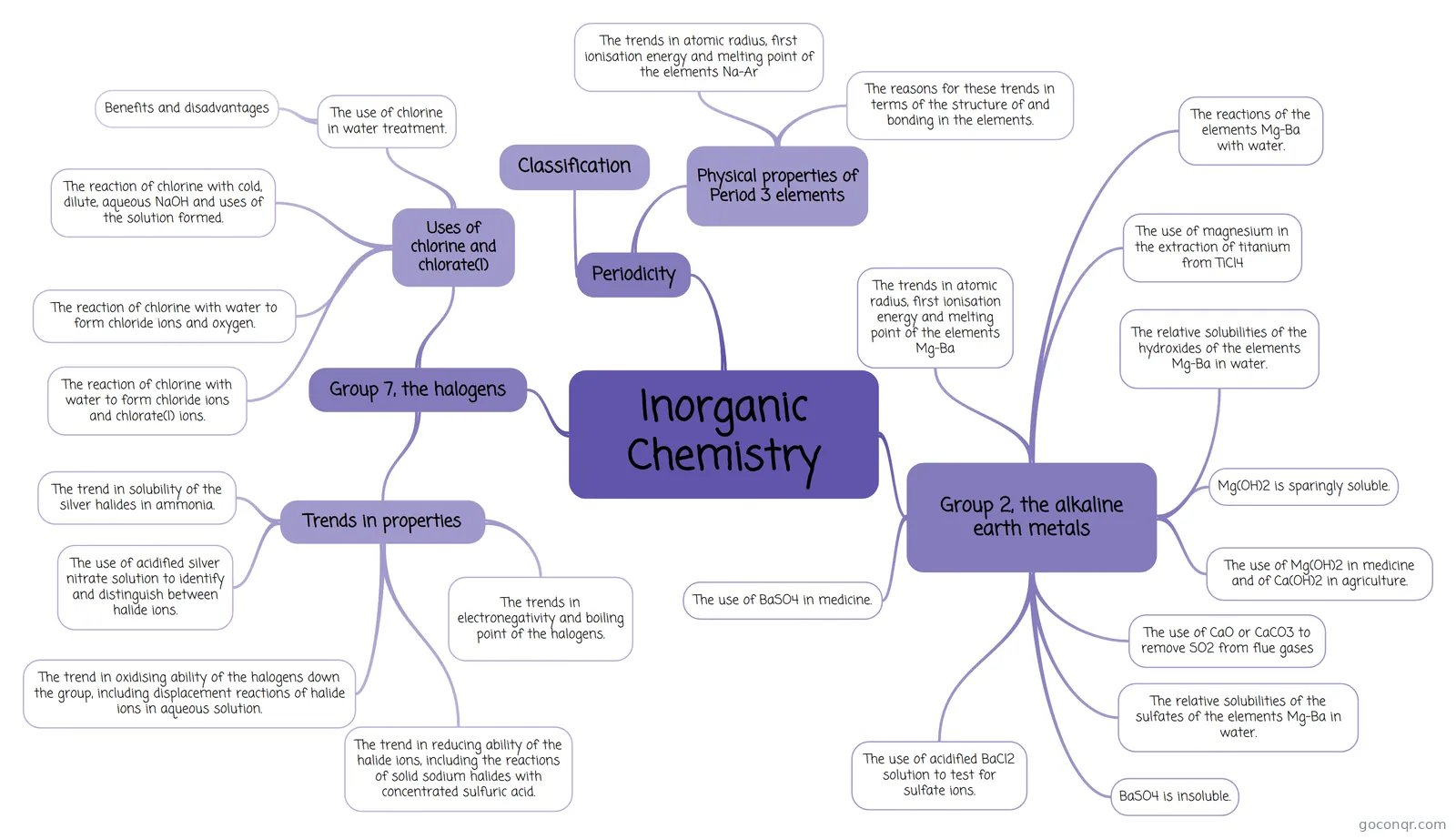 Mind map Inorganic Chemistry Overview of main and sub topics of Inorganic chemistry. Follows the AQA specification and only displays con...
-
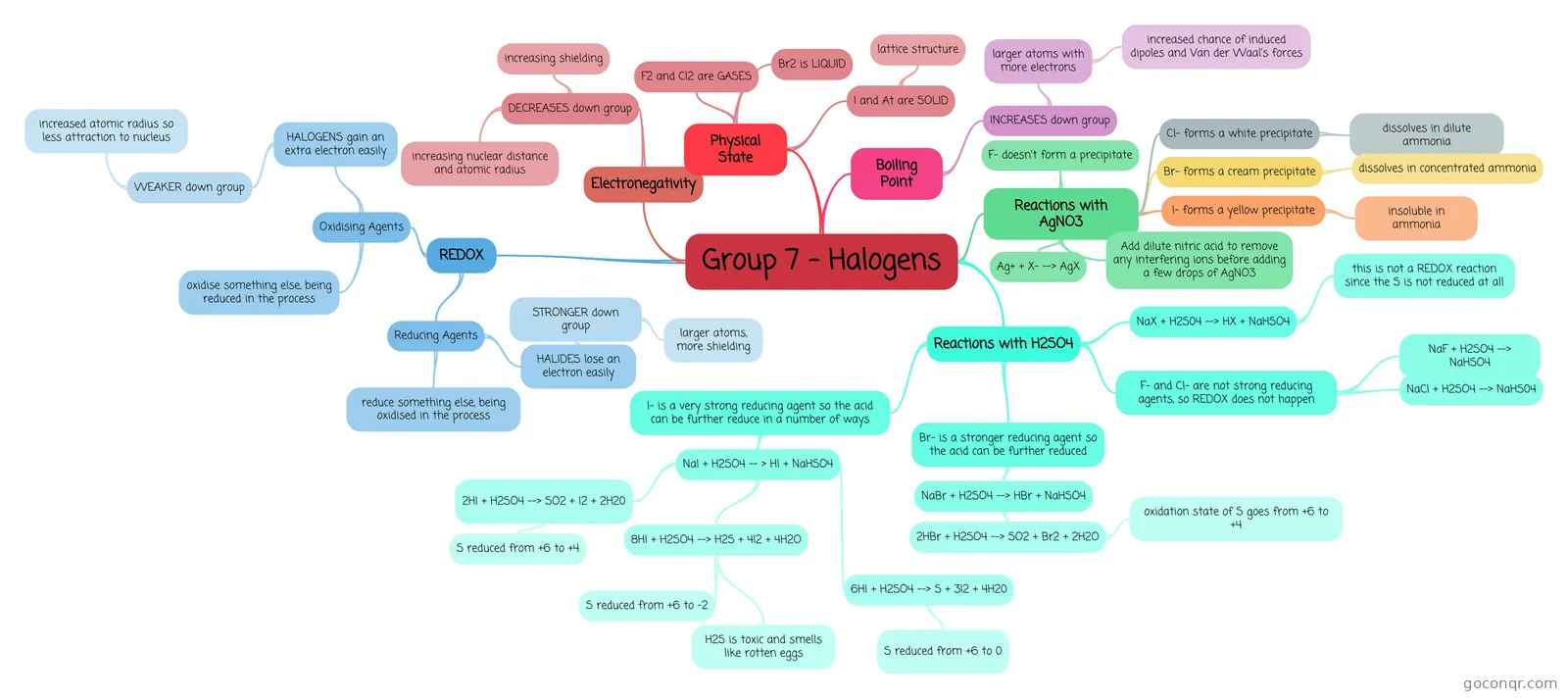 Mind map Group 7 - Halogens Mind-map of Group 7 Halogens for AS-Level Chemistry including reactions with Sulfuric Acid and Silver Nitrate
-
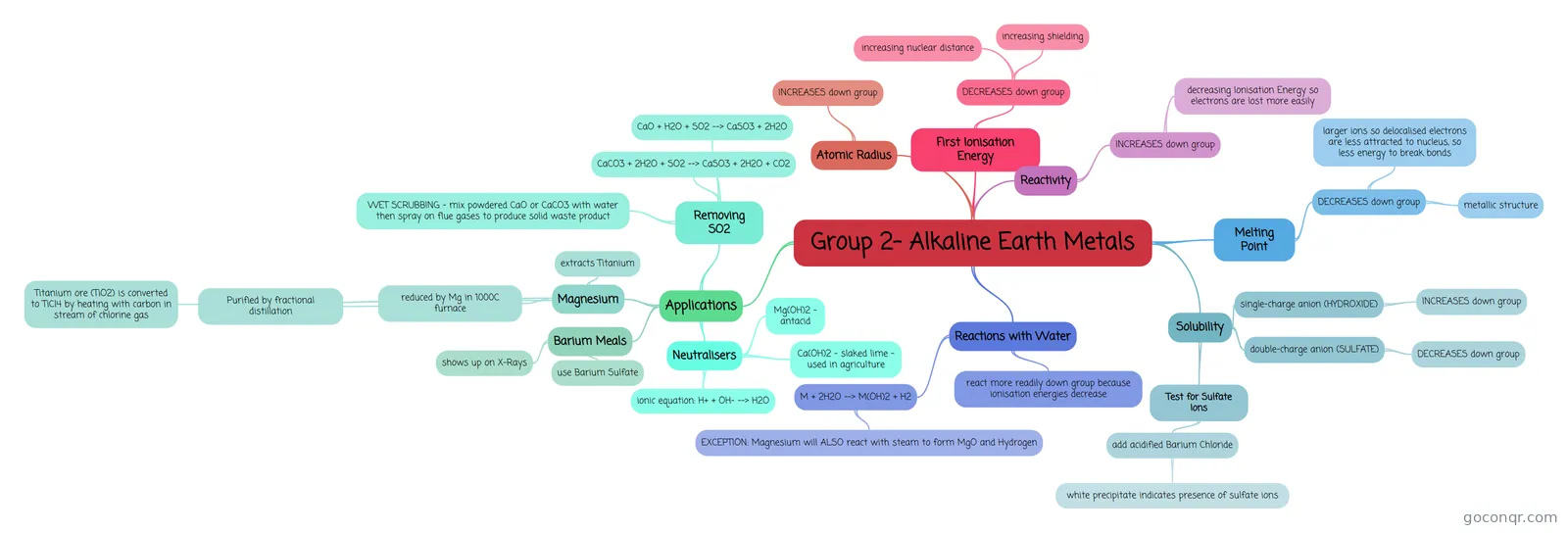 Mind map Group 2- Alkaline Earth Metals Mind-map for Group 2 - Alkaline Earth Metals for AS-Level Chemistry including reactions with water
-
Mind map OCR - A-Level - Chemistry - Group 17: The Halogens
Quizzes
Mind maps
See all 39 mind maps-
Inorganic Chemistry Overview of main and sub topics of Inorganic chemistry. Follows the AQA specification and only displays con...
-
Group 7 - Halogens Mind-map of Group 7 Halogens for AS-Level Chemistry including reactions with Sulfuric Acid and Silver Nitrate
-
Group 2- Alkaline Earth Metals Mind-map for Group 2 - Alkaline Earth Metals for AS-Level Chemistry including reactions with water
-
OCR - A-Level - Chemistry - Group 17: The Halogens
-
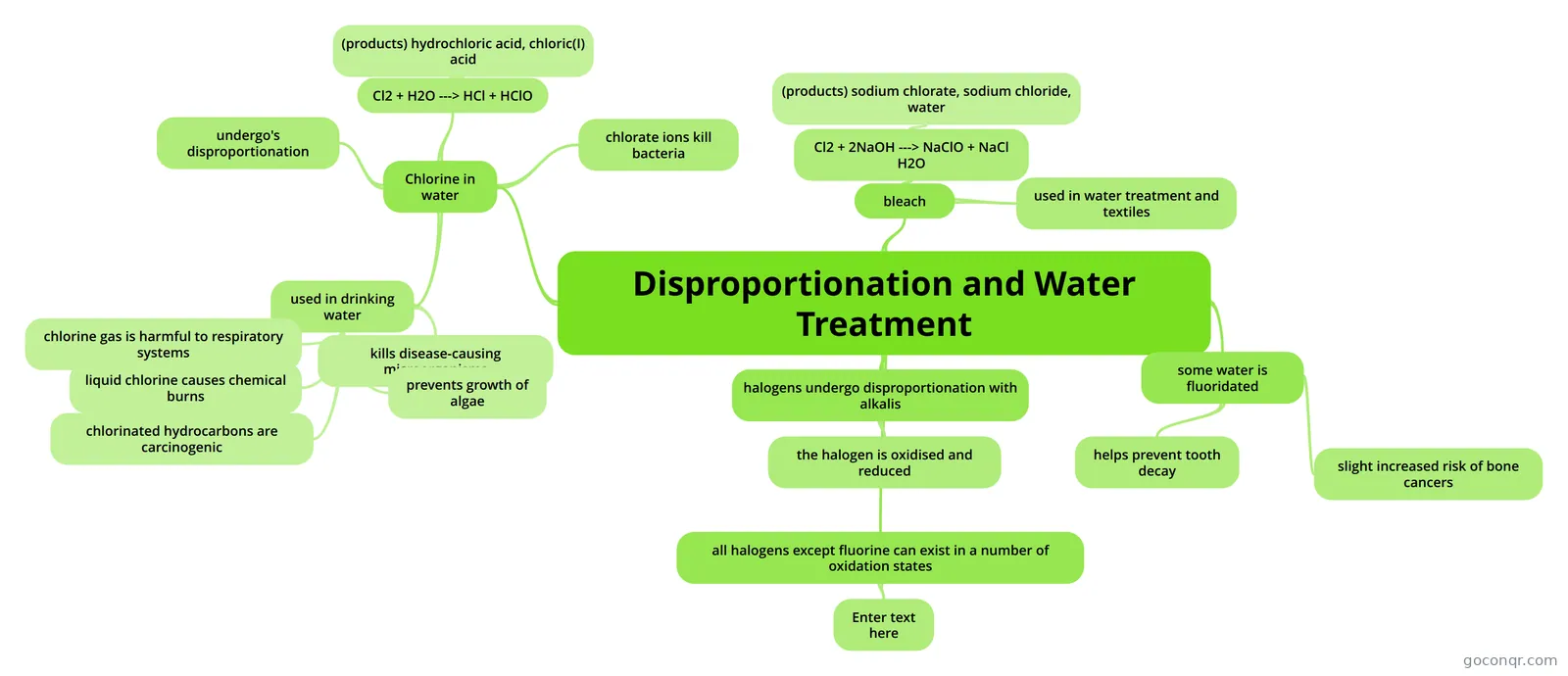 Disproportionation and Water Treatment
-
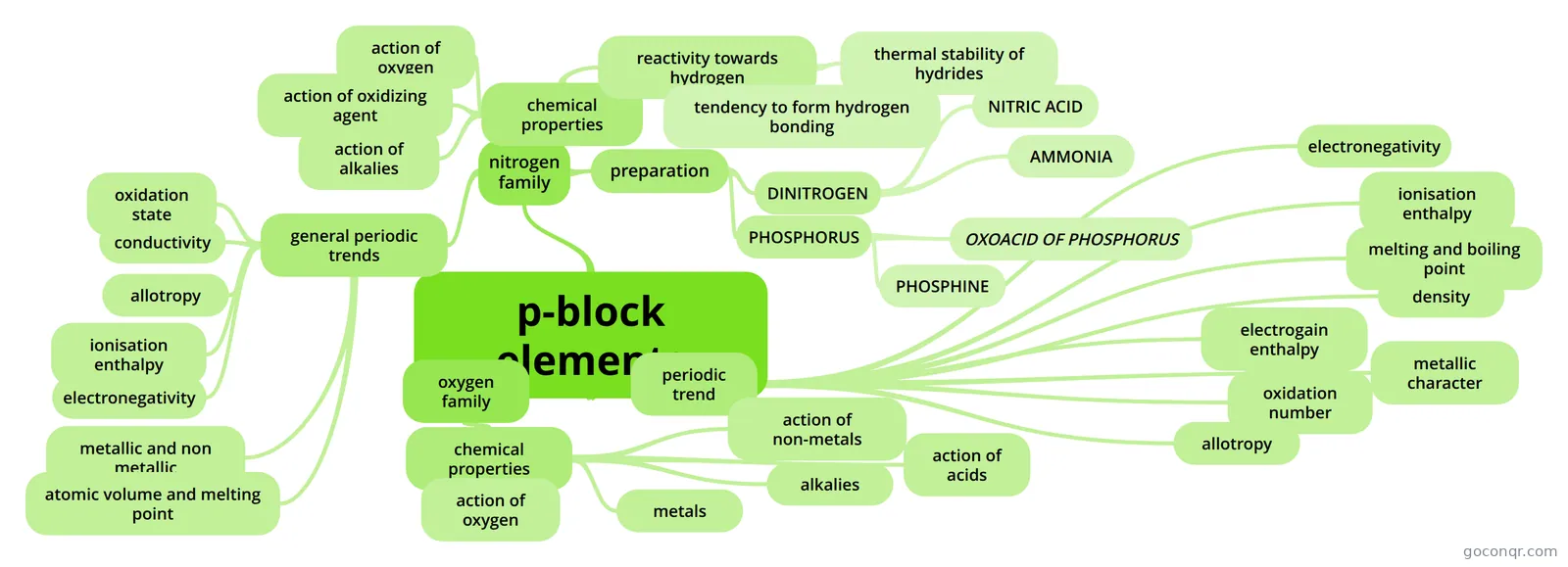 p-block elements
-
Ammonia 2019 sec 3 chem example
-
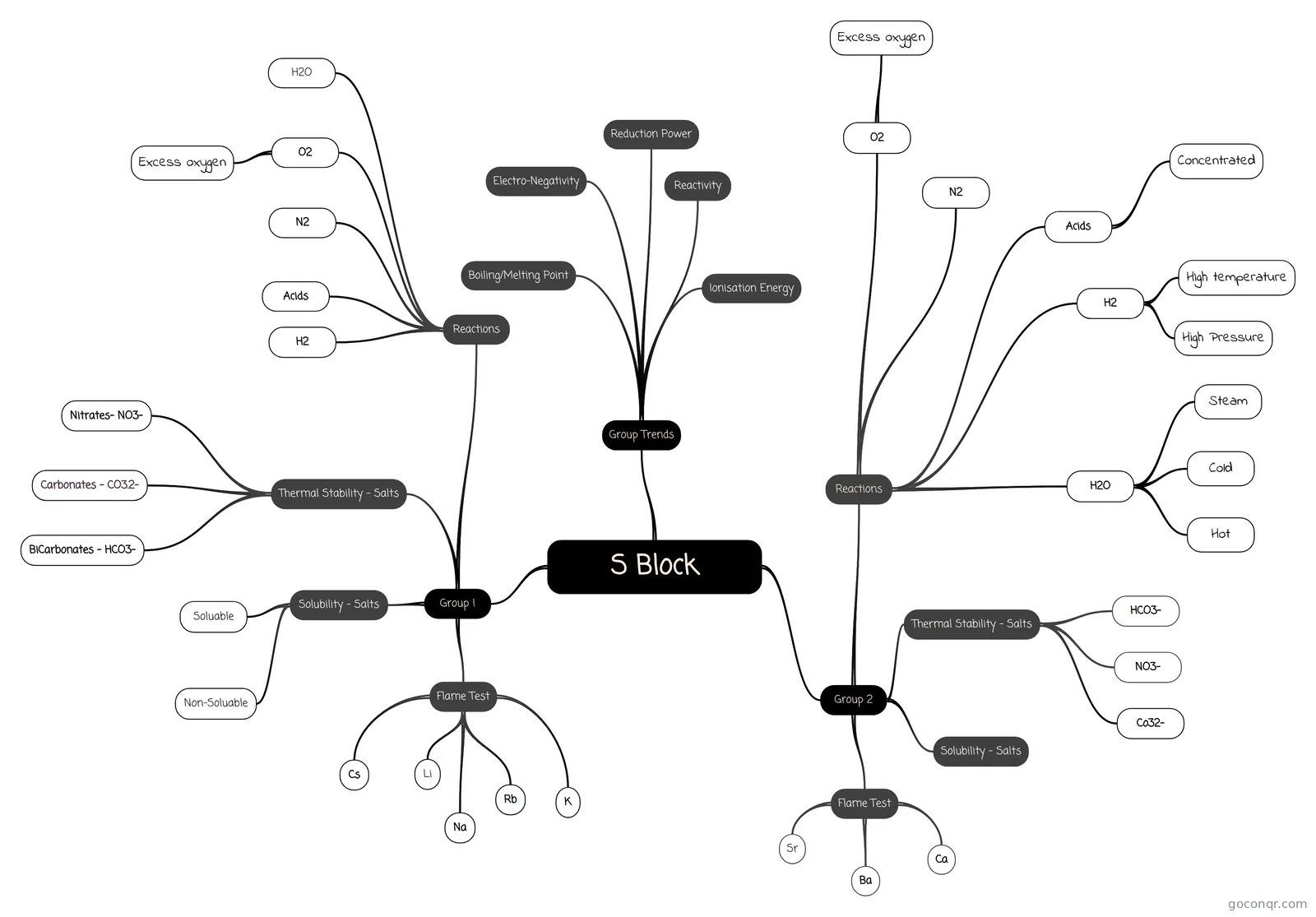 S Block Things I need to know
Flashcards
See all 30 flashcards-
83 cardsTransition Metals Where are transition metals found on the periodic table?
-
38 cardsInorganic Chemistry What is thermal decomposition?
-
17 cardsDioxygen Preparation of O2 in the laboratory
-
39 cardsGroups 2 & 7 Describe the trend in reactivity with water of group 2 elements
-
34 cardsChem 5 - Reactions of Metals in Aqueous Solution Aqueous Ion Iron(II)
-
72 cardsBLock 1 Chemistry: essential concepts What is electronegativity?
-
54 cardsInorganic What happens to the ionisation energy of the elements going down group 2?
-
92 cardsUnit 5 - transition metals definition of a transition metal is...
Flowcharts
Notes
See all 10 notes-
p-block elements Introduction The absence of d-orbitals in second and third period, and presence of d or f orbitals fourth period onwards has significant effects on properties of elements. Group 15 - General Trends E.C- ns2np3- h...
-
Group 7 Elements: Redox Reactions The Group 7 ElementsThe Group 7 elements are fluorine, chlorine, bromine, iodine and astatine. These elements are generally known as the halogens.Physical PropertiesThe halogens have the following physical properties:...
-
Uses of Halogens - Bromine & Chlorine
-
Groups and Trends Melting and boiling points increase as you go down the group7 electrons in the outer shell (group 7 duh)gets darker in colour as you go down the groupall diatomic molecules Chl Chorine is a toxic gas that cannot be st...
-
Group 2 Elements Introduction The elements of Group II are sometimes called the Alkali Earth metals. This is because the oxides and hydroxides of Group II elements are alkaline. - Goup II elements are 's' block elements - They react in a similar w...
-
Group 7 Elements: Uses and Halide Tests Properties of Group 7 Elements and Compounds Group 7 elements become less reactive down the group Group 7 elements react with metals to form ionic halides with an X- ion FluorinePale yellow-green gas, rarely seen as a...
-
Chapter 9 - Group 2, the alkaline earth metals chapter 9 - Group 2, the alkaline earth metals electron arrangement - 2 e-s in an outer s-orbital the s-orbital becomes further away from the nucleus going down the group due to inc. shielding and weaker nuclear pulla...
-
Group 2 Elements: Redox Reactions The Group 2 ElementsThe elements in Group 2 all have hydroxides that are alkaline, which is reflected in the common name for this group: the alkaline earth metals.Physical PropertiesThe Group 2 elements have the follo...
Slides
More Chemistry topics
About Group and Period Chemistry
GoConqr OriginalWhat the page covers
This unit sits in the Inorganic Chemistry strand of Chemistry. It follows the periodic table by group and by period. You will find material on Group 2, Group 7, Period 3, the p-block and the transition metals.
- Group 2: the mind map on Group 2- Alkaline Earth Metals shows atomic radius increasing down the group, first ionisation energy decreasing and reactivity increasing.
- Group 7: the Group 7 - Halogens mind map covers electronegativity and physical state, with fluorine and chlorine as gases, bromine as a liquid and iodine and astatine as solids.
- Period 3: the Period 3 mind map compares sodium and magnesium and how each loses electrons.
- Transition metals: a flashcard deck asks what a transition metal is and how chromium d-orbitals fill.
Where to start
Begin with the mind map called Inorganic Chemistry. It gives a wide view of periodicity, Group 2, the halogens and Period 3. Then choose one group and read its notes. The notes on Group 7 Elements: Redox Reactions list the halogens and their physical properties. For the p-block, the notes on p-block elements explain how the absence of d-orbitals in the second and third periods affects properties.
Using quizzes and maps together
Read a mind map first, then close it and try a quiz. The quiz Chapter 23 - The Transition Metals asks about typical properties and the electron configuration of copper. The quiz on Group 2 flame tests and the test for ammonium ions suits the s-block. If you miss a question, go back to the branch of the map that covers it.
Flashcards work well for equations and trends. Decks such as Group 2 and Group 7 Equations are handy for short, regular practice.
Who it helps
School students can revise for GCSE, IGCSE or A-level courses, and the listed resources mention AQA A-level Chemistry too. Teachers can pick ready-made maps and decks to share with a class.
Choose a group, work through one map and one quiz, then see what you remember.
Frequently asked questions
Where should I start on this page?
Start with the Inorganic Chemistry mind map for an overview of periodicity, Group 2, the halogens and Period 3. Then pick one group and read its notes, such as the notes on Group 7 Elements: Redox Reactions, before testing yourself with a quiz.
Which topics do the mind maps cover?
The mind maps cover Group 2, Group 7, Period 3, the p-block, transition metals, ammonia, oxygen and oxides, and Group 14. There are over 200 in total, so you can often compare several versions of the same topic and choose the layout that suits you.
Are the resources free to use?
Yes. Every resource listed here is free to open, study and take, with no account needed. A free account also saves your quiz scores and lets you make your own quizzes, mind maps, flashcards and notes.
Which exams do these resources suit?
The listed resources mention A-level Chemistry, AQA A-level Chemistry, GCSE Chemistry and IGCSE Chemistry. Most are at school level, with a smaller share for university students. Check each resource against your own course before relying on it.
Who made these resources?
They were made by GoConqr users, not by GoConqr itself. Over 330 contributors have added notes, maps, decks and quizzes, so styles and depth vary. Comparing a few on the same topic can help you spot gaps.
Are there quizzes for transition metals?
Yes. The quiz Chapter 23 - The Transition Metals asks about typical properties and copper's electron configuration. There is also a quiz on whether transition metals are hard or soft, and one on coordination compounds.