
Human-Computer Interaction and User Interfaces mind maps
750 mind maps by 602 users · Page 1 of 19
This GoConqr page gathers over 700 mind maps on Human-Computer Interaction and User Interfaces, covering interface types, usability and evaluation. University students can explore design principles, school students can revise interface types, and teachers can find ready-made material. Choose a map to start exploring.
Select topic
- History of User Interfaces64
- Types of User Interfaces149
- Cognition and Mental Models48
- Emotional and Social Interaction21
- User-Centered Design and Research39
- Interaction Design Process and Prototyping75
- UI vs UX8
- Interface Design Principles and Accessibility42
- Interface Architecture and Components15
- Java GUI Development7
- Usability Evaluation and Testing43
Mind maps
-
28. Some Types of Mental Processing Are More Challenging Than Others This section describes different types of mental processing that are more challenging than others
-
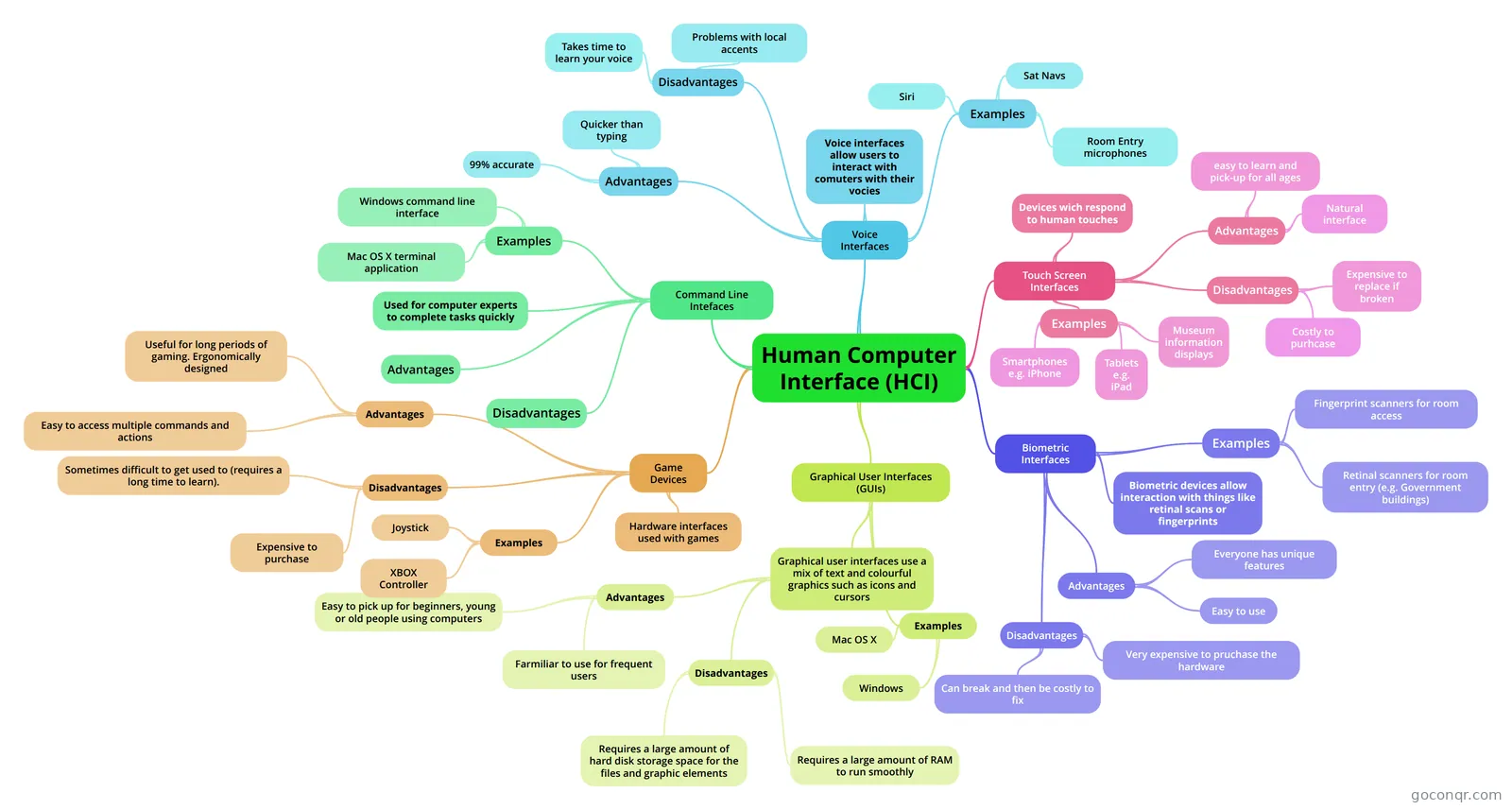 Human Computer Interface (HCI) A mindmap showing content from the WJEC HCI topic
-
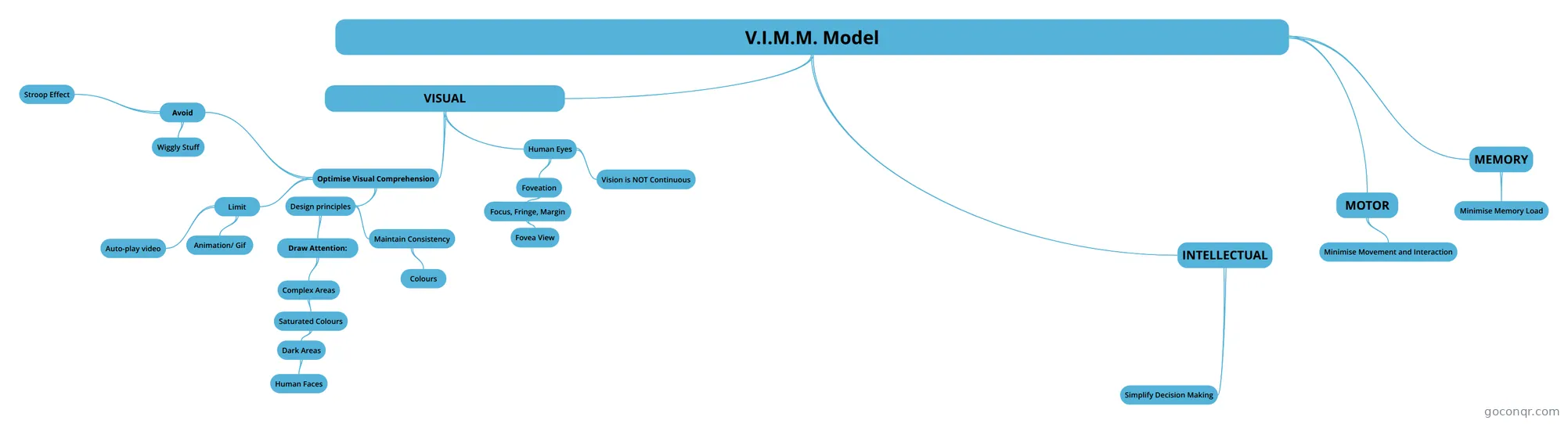 V.I.M.M. Model VIMM - Visual, Intellectual, Memory, Motor
-
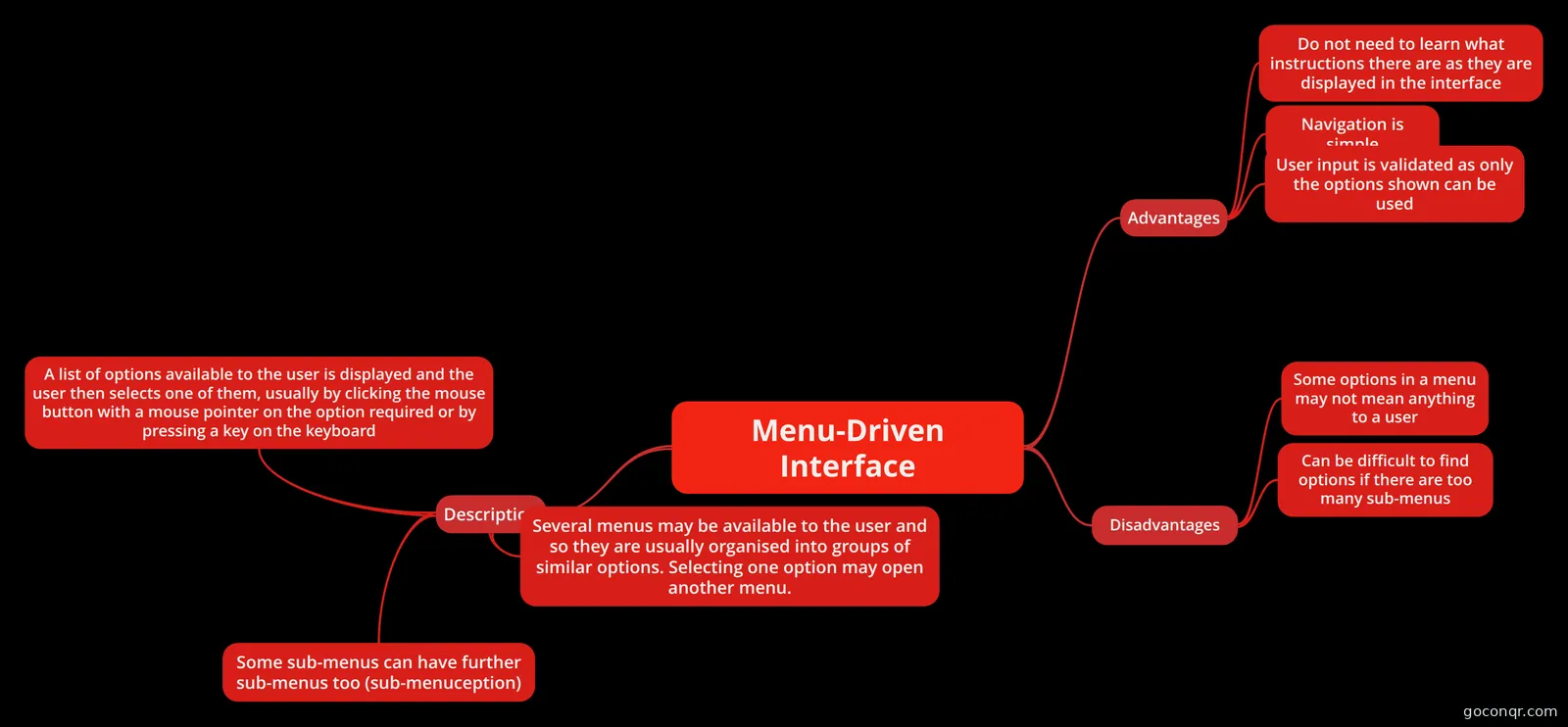 Menu-Driven Interface
-
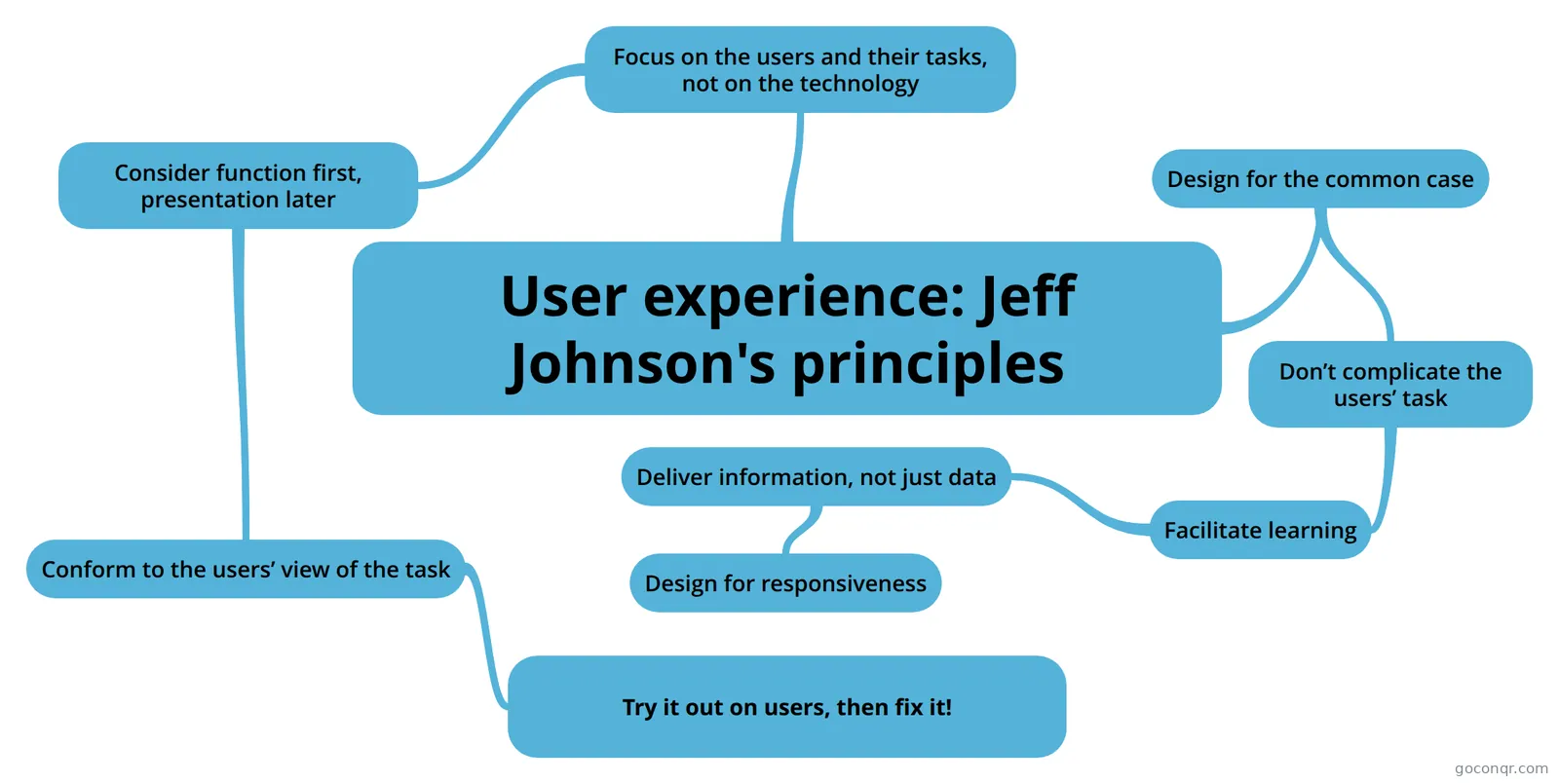 User experience: Jeff Johnson's principles Brief summation of Jeff Johnson's principles from Give Me The Why (2007)
-
User Interface Design
-
Asking users and experts
-
Foundations of HCI
-
Human Computer Interfaces
-
Human Computer Interfaces
-
Lecture 10: Interface Types
-
Human Computer Interaction
-
INF1520 - Human-computer Interaction
-
Cognitive Interaction Design
-
2 Understanding and ConceptualizingInteraction
-
Chapter 2: The process of interaction design (3720)
-
ASKING USERS AND EXPERTS
-
Lecture 9: Interaction Styles
-
Design and evaluation in the - real world: communicators and advisory systems
-
Testing and modeling users
-
1 What is Interaction Design?
-
User-centered approaches to interaction design
-
How to help the elderly search information over spoken conversation
-
The Human-Computer Interface
-
An Evaluation Framework
-
Information visualization
-
An evaluation framework
-
202 - UI
-
Chapter 1: What is interaction design (3720)
-
6 INTERFACES
-
The human-computer interface
-
Chapter 3 : Conceptualising Interaction (3720)
-
Design, Prototyping & Construction
-
IA2
-
The human-computer interface
-
Outdoor Activities Application B
-
User Centered Design
-
Introducing evaluation
-
UID Course
-
Chapter 4: Cognitive Aspects (3720)
More Human-Computer Interaction and User Interfaces resources
About human-computer interaction and user interfaces mind maps
GoConqr OriginalHuman-Computer Interaction and User Interfaces mind maps
These user-made maps let you follow connections between interface features, design principles and the people using an interface. User Interface Design brings together usability principles, evaluation and task analysis, making it a useful starting point for exploring how those topics relate.
For a closer look at people’s responses, Asking users and experts includes interviews. Foundations of HCI branches into the human, the computer and their interaction, including vision and hearing. The map on challenging types of mental processing considers trade-offs and motor load.
Revise with a map
Follow one branch at a time, then cover the map and try to recall its main points. Compare your notes with the branches before moving to another topic. If you want to check your recall in a different format, switch to a quiz on the unit page; flashcards can support shorter recall sessions.
Open a map and follow a branch that matches your revision.
Frequently asked questions
Which mind map could I start with?
Try Human Computer Interface (HCI) for an overview of interface types. It branches into graphical, command line, voice, touch screen and biometric interfaces, as well as game devices. You can then move to a map focused on one interface type or explore design principles.
Do the maps cover more than interface types?
Yes. User Interface Design includes usability principles and evaluation, while V.I.M.M. Model organises design concerns around visual, intellectual, memory and motor areas. Asking users and experts includes interviews, and Foundations of HCI covers the human, the computer and their interaction.
Are these mind maps free to use?
Yes. Every resource listed on this page is free to open and study without an account. A free account also lets you save quiz scores and make your own quizzes, mind maps, flashcards and notes. The listed resources were made by GoConqr users.