
Instructional Design mind maps
226 mind maps by 183 users · Page 1 of 6
This GoConqr page gathers over 210 instructional design mind maps, covering ADDIE, ASSURE and instructional methods. University students and professional candidates can use them to compare approaches, while teachers can explore ideas for planning instruction. The maps are mostly university-level resources, with some for professional study. Choose a map to get started.
Select topic
- Learning Theories9
- Instructional Design Models28
- ADDIE and ASSURE Models49
- Needs, Learner, and Task Analysis17
- Learning Objectives13
- Backward Design and Constructive Alignment6
- Course and Lesson Planning11
- Universal Design for Learning5
- Instructional Strategies16
- Learning Activities and Materials11
- Online Course and E-Learning Design12
- Instructional Evaluation and Quality Assurance7
Mind maps
-
ADDIE and ASSURE MODELS This is a summary of both models.
-
ADDIE Model The components of the instructional design include analysis of learners’ problems and needs, designing of i...
-
ADDIE and ASSURE Models ADDIE and ASSURE Models are instructional design model that has the goal of producing more effective teachi...
-
ASSURE MODEL The ASSURE model is a guide for planning and conducting instruction that uses media.
-
ADDIE MODEL AND ASSURE MODEL virtual learning
-
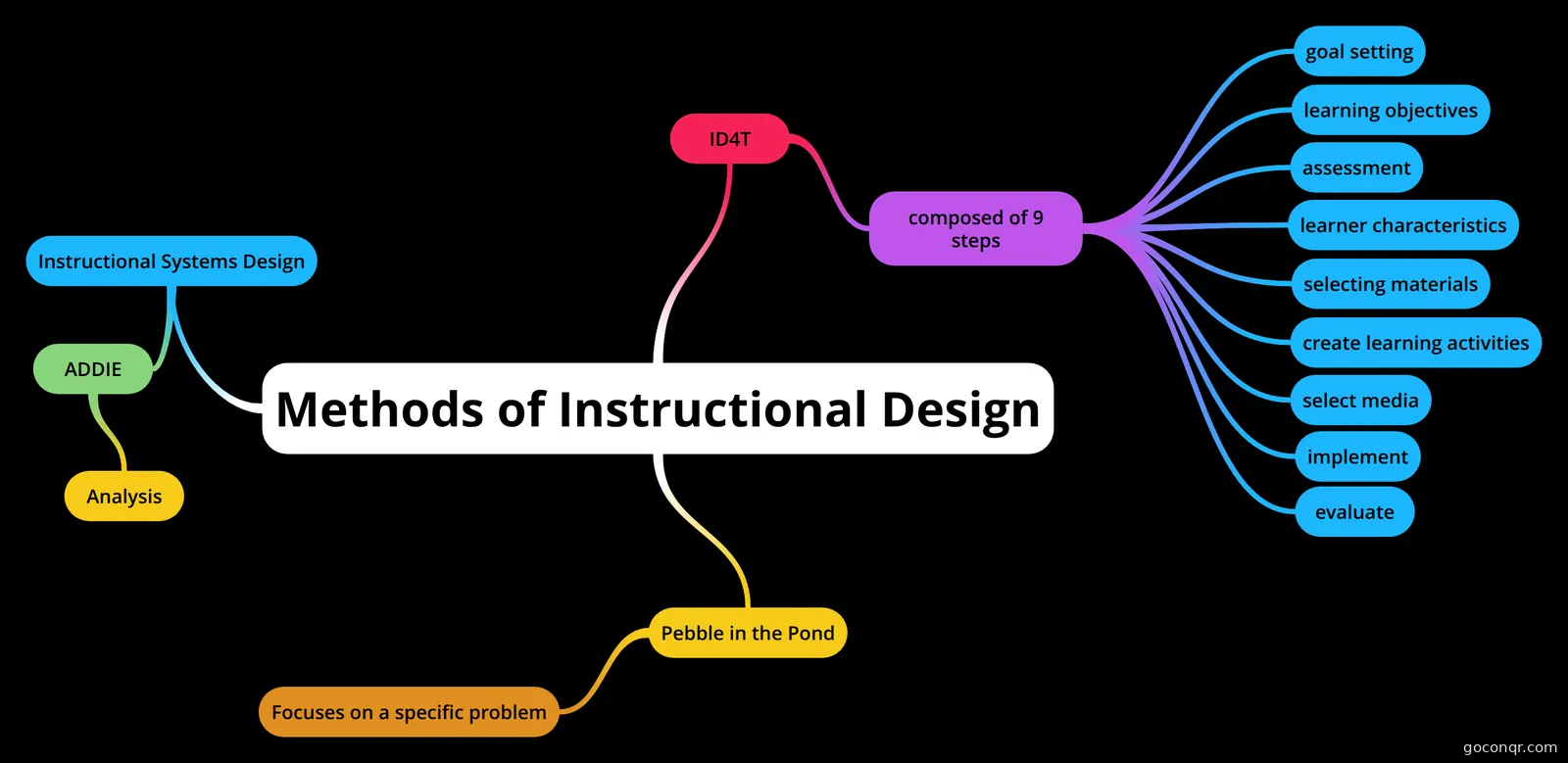 Methods of Instructional Design
-
ASSURE and ADDIE Models Mind Map
-
ISD From The Ground Up:A No-Nonsense Approach to Instructional Design
-
Learning Theory and Instructional Methods
-
Strategic design
-
Chapter 4 & 5 Making Sense of the Nurnberg Funnel
-
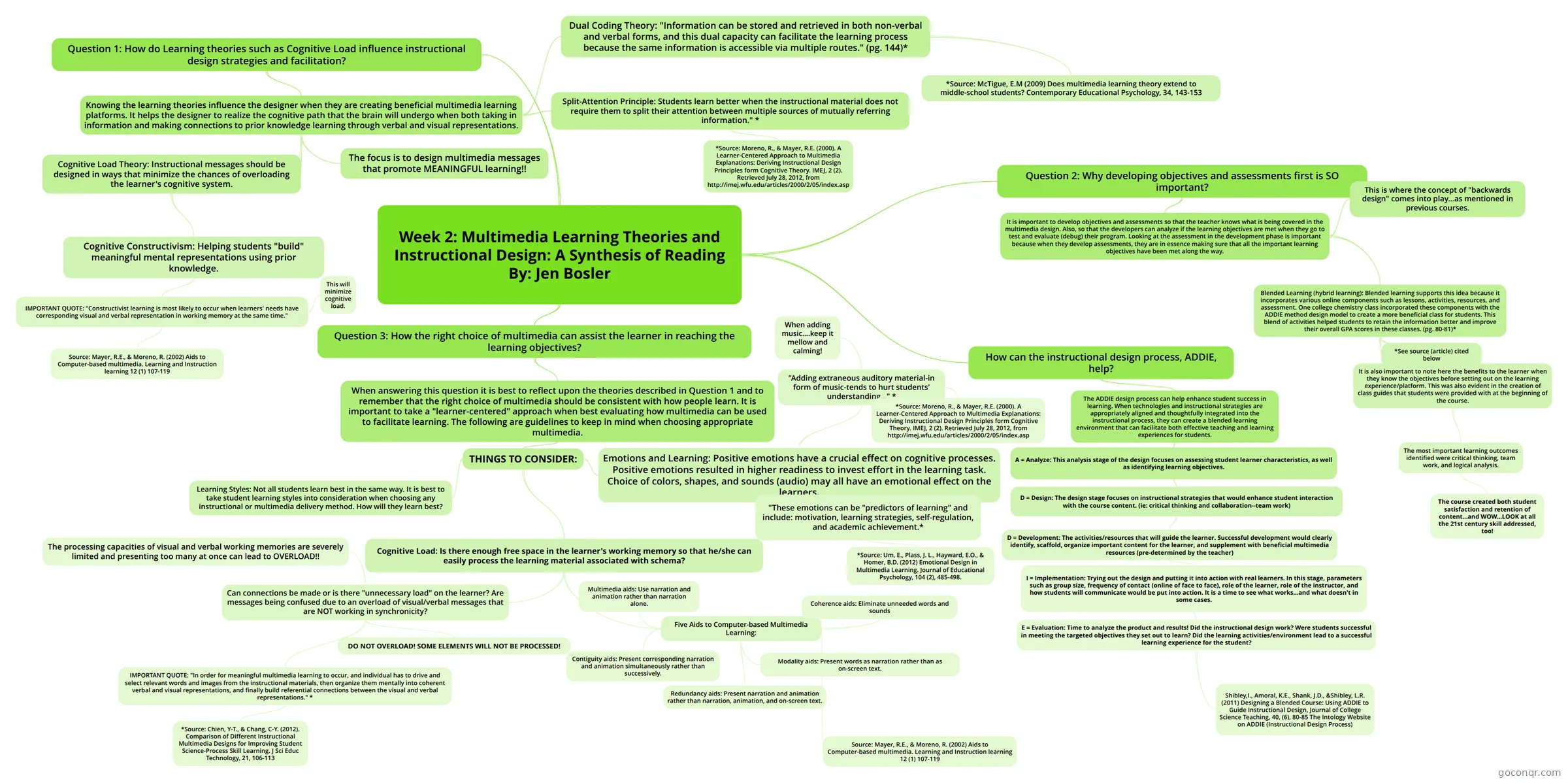 Week 2: Multimedia Learning Theories and Instructional Design: A Synthesis of Reading By: Jen Bosler
-
Week 2: Multimedia Learning Theories and Instructional Design: A Synthesis of Reading By: Jen Bosler
-
The Design and Development of Online Course Materials: Some Features and Recommendations
-
INSTRUCTIONAL DESIGN INSTRUCTIONAL DESIGN 3RD ED.
-
2_CFITES CFITES, Education
-
The Essentials of Instructional Design: Connecting Fundamental Principles with Process and Practice
-
CALLA
-
Analysis of learning material.
-
ISD From The Ground Up:A No-Nonsense Approach to Instructional Design
-
INSTRUCTIONAL DESIGN
-
Design Proposal for MLE
-
ADDIE -Suvra Dash
-
ADDIE MODEL it's an approach that helps instructional designers, developers and teacher to create an efficient and effe...
-
ASSURE INSTRUCTIONAL DESIGN MODEL
-
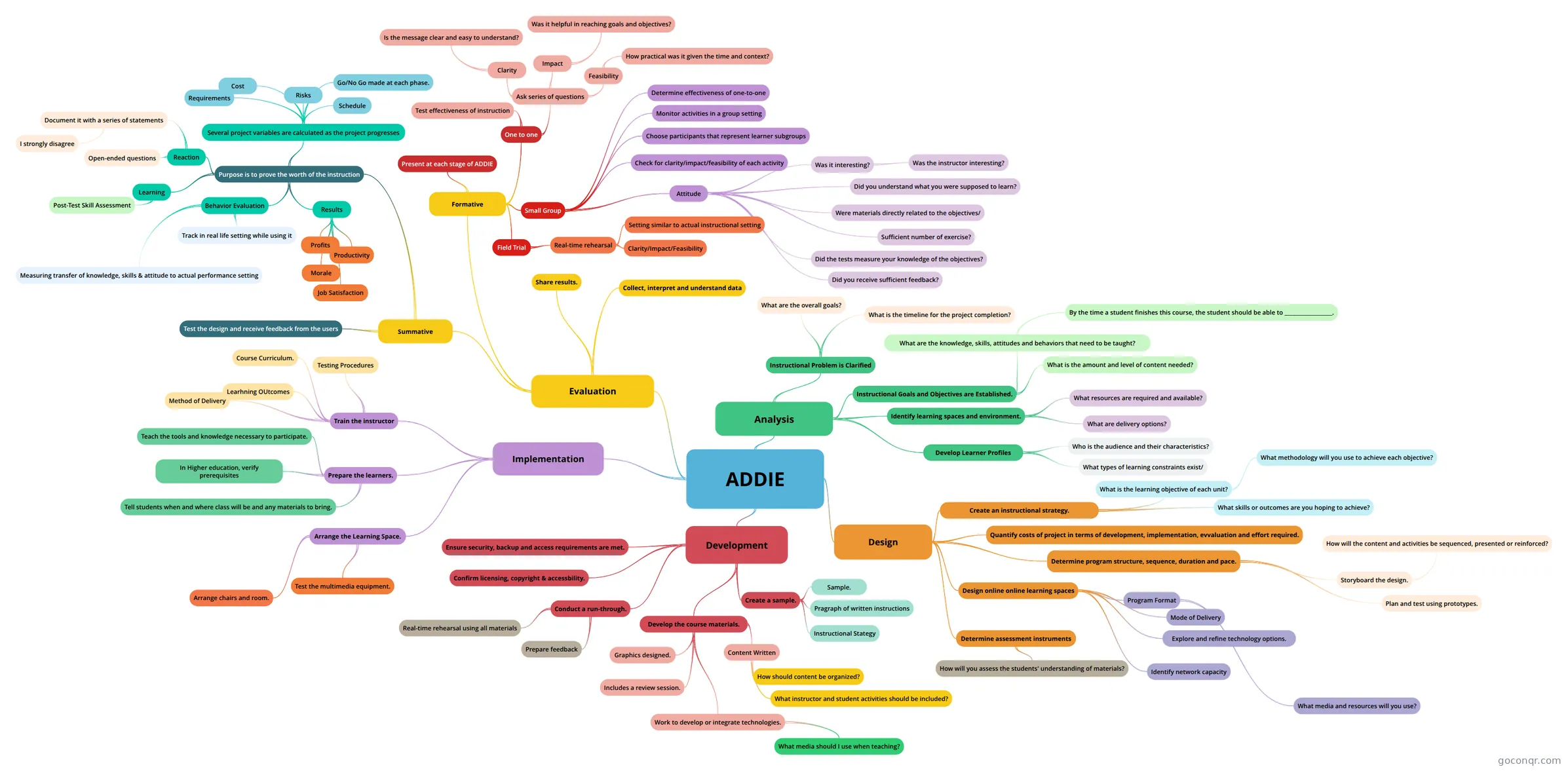 ADDIE Mind map of Addie.
-
Untitled
-
Assure Model (Rosemery and the gusty gnomes)
-
The Essentials of Instructional Design
-
Multimedia Instructional Design
-
Calla Instructional Approach
-
Instructional Designs These are the description of educational model (Instructions designs)
-
ASSURE and ADDIE Models Mind Map
-
New ELU Projects Design and QA Model
-
MCPUD Original version
-
MCPUD
-
THE TRAINING PLAN
-
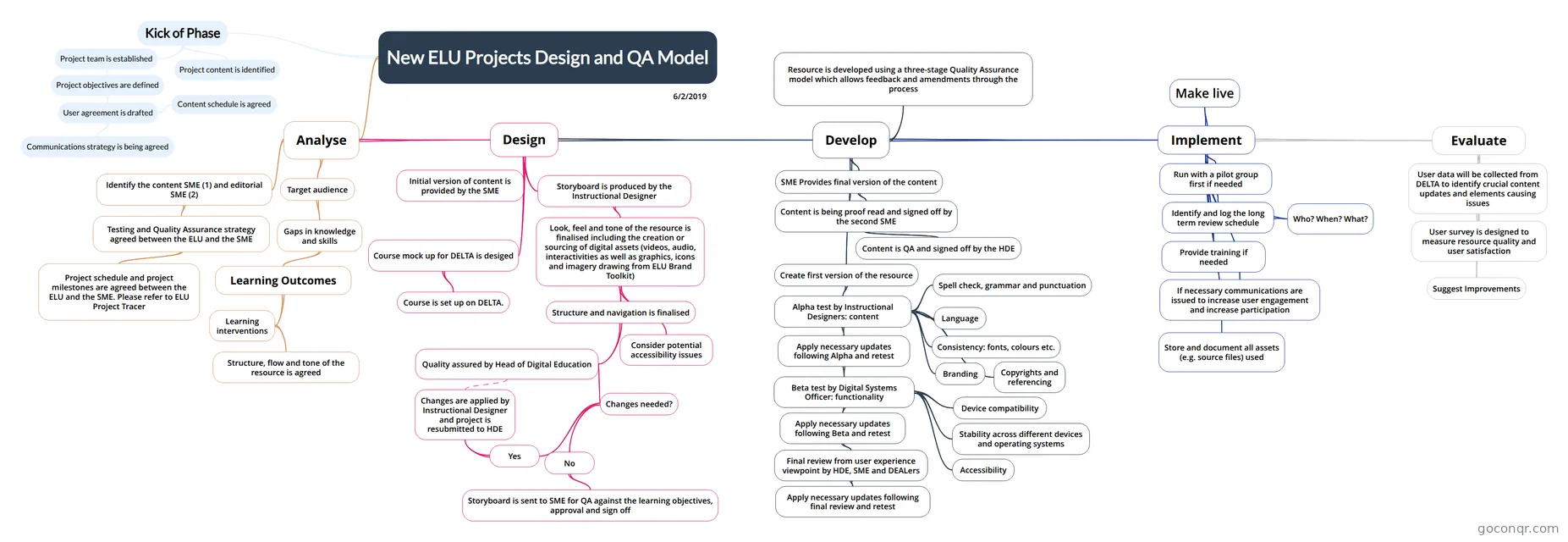 New ELU Projects Design and QA Model
-
ASSURE
-
Lesson design
More Instructional Design resources
About instructional design mind maps
GoConqr OriginalExplore instructional design mind maps
Mind maps on this page bring related ideas together in branches. Start with ADDIE and ASSURE Models for a map covering both approaches. Then look at ADDIE Model for more on analysing learners’ needs and designing activities and materials.
For a wider view, Methods of Instructional Design includes Instructional Systems Design, ID4T and Pebble in the Pond. Learning Theory and Instructional Methods connects design with topics such as practice, feedback and reinforcement.
Revise with the maps
Follow the branches of one map, then try to describe the connections in your own words. Compare it with another map on the same model to see which ideas each one includes. If you want to test recall rather than follow a visual outline, switch to a quiz on the unit page. Return to a map when you want to revisit a connection.
Pick a topic and follow its branches.
Frequently asked questions
Which mind map should I start with?
Start with “ADDIE and ASSURE Models” if you want to see both approaches in one map. For a closer look at ADDIE, try “ADDIE Model”, which includes learners’ needs, activities and materials. You can then compare the branches to see how each map presents the ideas.
What do these mind maps cover?
The maps cover ADDIE and ASSURE, as well as wider instructional design methods. “Learning Theory and Instructional Methods” includes practice, feedback and reinforcement, while “Methods of Instructional Design” includes approaches such as ID4T and Pebble in the Pond. The page lists over 210 mind maps to explore.
Are the mind maps free to use?
Yes. Every resource listed here is free to open and study without an account. The maps were made by GoConqr users. A free account also lets you save quiz scores and make your own quizzes, mind maps, flashcards and notes.