
Interwar Britain
222 resources created by 111 users
This Interwar Britain page on GoConqr gathers community-made mind maps, flashcards, quizzes, notes and slide sets, from the Lloyd George coalition and the General Strike to the Jarrow March and the National Government. It's built for school students revising GCSE History or A-level History topics, and for teachers after ready-made material. There are over 200 resources here, including more than 140 mind maps, more than 10 quizzes and 50 flashcards, made by over 100 contributors. Pick a topic, try a quiz, then make your own set.
Select topic
- Political Change and the Decline of the Liberal Party20
- Conservative Governments and Stanley Baldwin11
- Labour Governments of 1924 and 1929–193119
- British Economy in the 1920s14
- The General Strike of 192617
- Social Change and Leisure18
- Welfare, Housing and Education10
- The Great Depression in Britain29
- Unemployment and the Jarrow Crusade9
- The National Government, 1931–193917
- Political Extremism in the 1930s10
- Appeasement and the Road to War8
Top Interwar Britain resources
-
 Mind map Post war boom, crisis and recovery
-
 Mind map Decline of Lloyd George 1918-1922
-
14 cards2.3 Jarrow March Where was Jarrow situated?
-
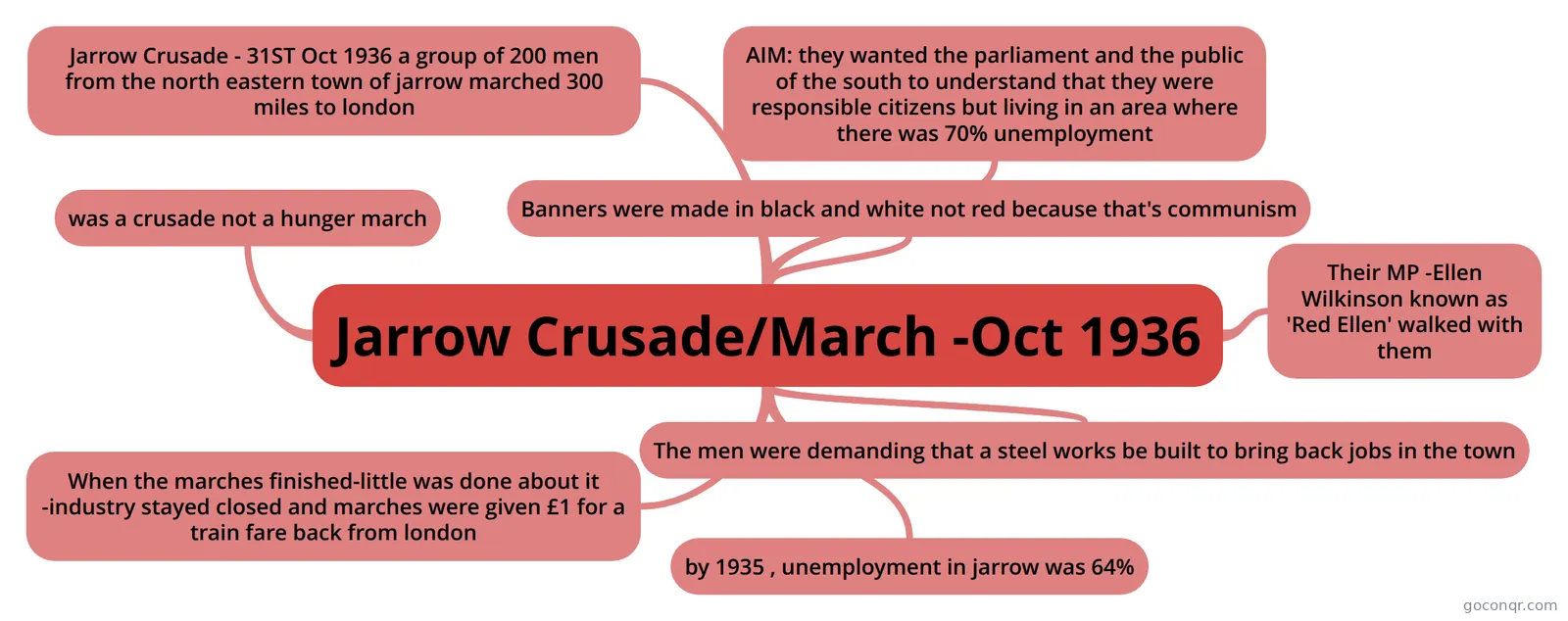 Mind map Jarrow Crusade/March -Oct 1936
-
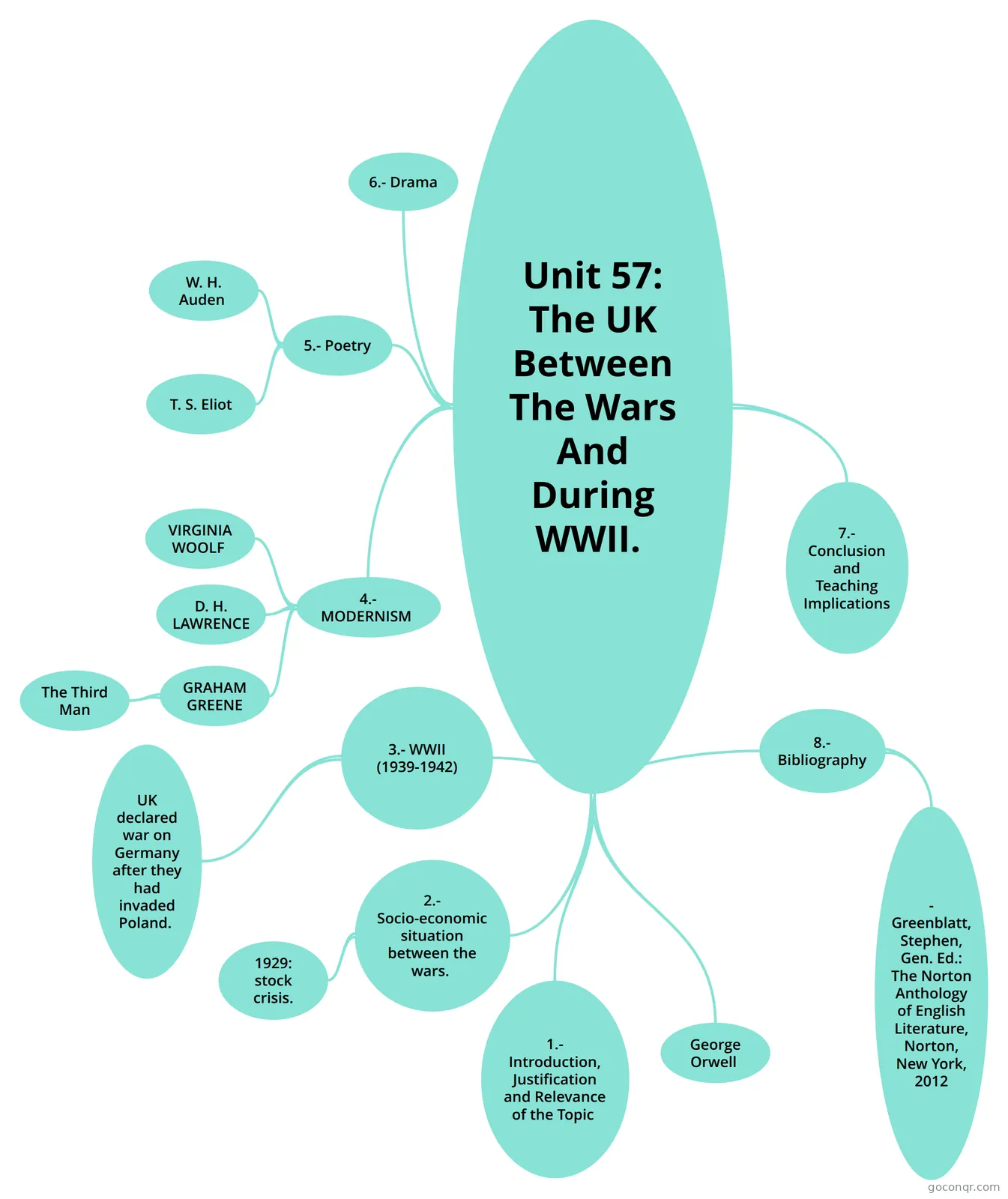 Mind map Unit 57: The UK Between The Wars And During WWII.
-
2 questionsTHE GENERAL STRIKE ON MAY 1926 an estimated 300,00 workers went on the strike
-
 Mind map How and why did Churchill react to the problems of post-war Britain from 1920 to 1937? Relevant to AS Level Modern History this can be used to revise the first key issue as stated on the OCR spe...
-
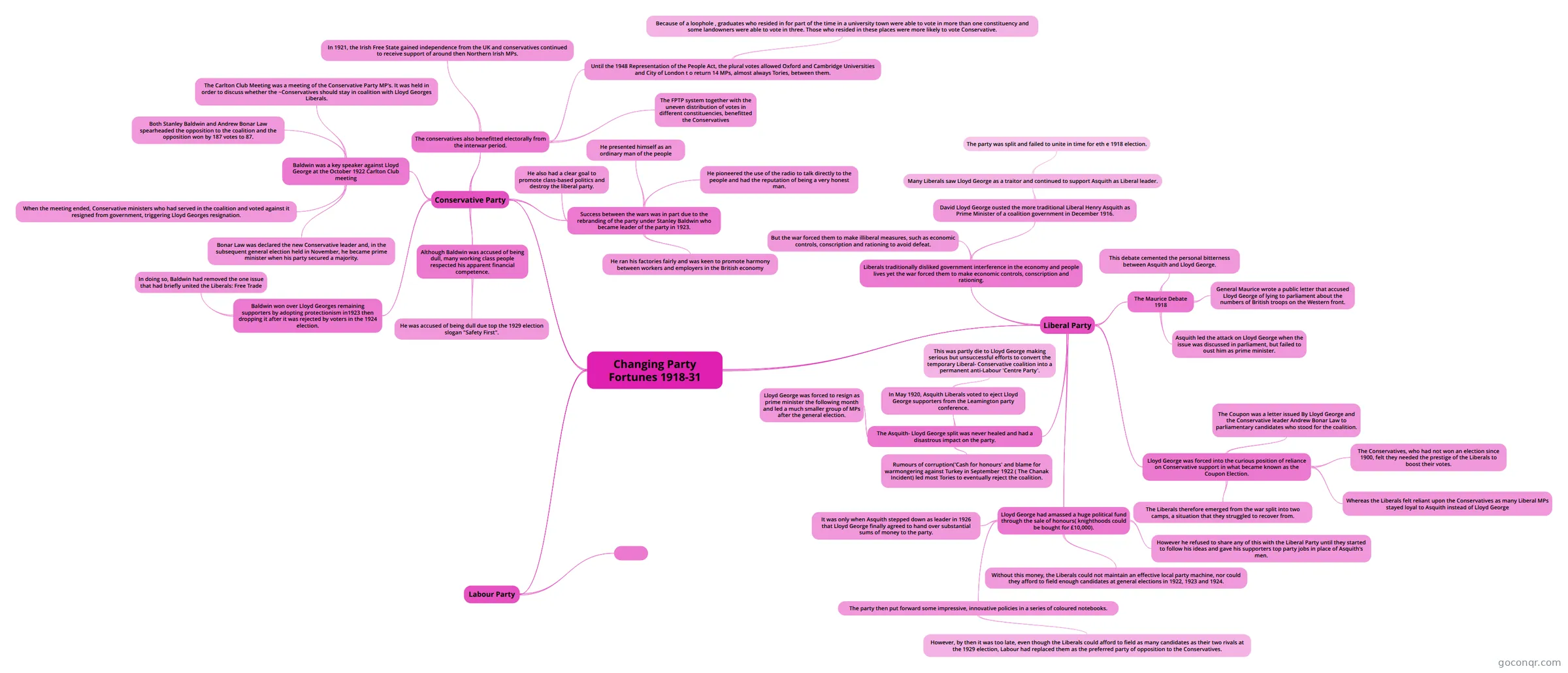 Mind map Changing Party Fortunes 1918-31
Quizzes
See all 12 quizzes-
2 questionsTHE GENERAL STRIKE ON MAY 1926 an estimated 300,00 workers went on the strike
-
44 questionsPart 1: The Impact of The Depression 1931-1939 When was The Dole first introduced?
-
31 questionsGeneral Strike Which unions were involved in the TIA?
-
19 questionsMarried love general quiz In what ways was marriage part of the process of post-war reconstruction
-
25 questions1_The Impact of the Depression 1931-1939 Which industries were the worst affected?
-
25 questionsThe Impact of the Depression 1931-1939 Which industries were the worst affected?
-
10 questionsFacing Fascism: The Peace Movement in the 1930s How many signatories did the PPU get in its first year?
-
9 questionsProvision of Welfare Statistics
Mind maps
See all 145 mind maps-
Post war boom, crisis and recovery
-
Decline of Lloyd George 1918-1922
-
Jarrow Crusade/March -Oct 1936
-
Unit 57: The UK Between The Wars And During WWII.
-
How and why did Churchill react to the problems of post-war Britain from 1920 to 1937? Relevant to AS Level Modern History this can be used to revise the first key issue as stated on the OCR spe...
-
Changing Party Fortunes 1918-31
-
1929 Labour Government
-
ECONOMIC ISSUES 1929-1939
Flashcards
See all 50 flashcards-
14 cards2.3 Jarrow March Where was Jarrow situated?
-
31 cardsEconomic and Social change 1918-28 When did women over 30 get the vote? What was the Equal Franchise Act?
-
38 cardsThe Conservative Government of 1922-23 Who did King George V call on to form a Government, after Lloyd-George's resignation in 1922?
-
43 cardsHST2030 FLASHCARDS Who resigned over the sacrifice of Czechoslovakia?
-
12 cardsWork and Leisure historiography when did the teenage wage earner emerge?
-
17 cards1920's Britain (Development of the UK) What was life like in Britain in the 1920s?
-
33 cardsThe First Labour Government (January - November 1924) QUOTE ON THE POWER OF THE FIRST LABOUR GOVERNMENT
-
25 cardsSection 4 - political developments Labour domestic policies?
Notes
See all 11 notes-
The Search for Stability 1922-1929 The Labour Party 1922-1929 1918 promises - free education, housing, clause IV, equality for women, keep free trade, pro peace and LofN January 1924 First Labour Government (lasted 266 days) Positives ...
-
A changing political landscape Chapter summary: - In 1918 GB saw the extension of the franchise. This radically altered the political landscape in GB. The main beneficiary of this change was the Labour Party - The war had elevated DLG to the office...
-
change and challenge in the workplace Chapter Summary - the short post war economic boom in 1919-20 led to an increase in Labour disputes, which decreased in times of economic hardship from 1921 - the failure of Ramsey MacDonald's Labour government led to...
-
responding to economic challenges Chapter Summary: - after a brief post war boom, a devastating economic slump led to a huge increase in unemployment and poverty from 1920-21 - the Conservatives hoped protectionism and tariffs would revive the economy...
-
Changing Living Standards Chapter summary: -GB enjoyed a short boom after WW1 but by 1920 the number of unemployed never fell below 1m in the interwar years - the depression was however regional, largely concentrated in the areas of old indust...
-
The Jarrow March In October 1936, a group 200 men from the north-eastern town of Jarrow marched 300 miles to London. They wanted Parliament, and the people in the south, to understand that they were orderly, responsible citizens, but ...
-
Economic issues of the 1930s and how the National Government dealt with it ECONOMIC ISSUES OF THE 1930s AND THEIR CAUSES:- Wall street crash 1929 - America recalled all loans and stopped trading, affected international trade- High unemployment - around 3 million workers were unemployed, most...
-
The 1930's: Prosperity vs. Wasted Years Indicators of Prosperity • Rising Living Standards → real income wages were higher• Prices of goods fell faster than wagesDecline in family size → Woman in late 1920's on average had 2.2 children → Down to wider avail...
Slides
Topics in Interwar Britain
More History topics
About Interwar Britain
GoConqr OriginalWhat this unit covers
The resources follow Britain from the end of the First World War to the approach of the Second. Political change runs through the maps and flashcards: the decline of Lloyd George, the Conservative government of 1922-23, the first Labour government and the 1929 election. Economic and social themes sit alongside them, including the post-war boom and crisis, the Depression, housing, leisure and the roles of women.
Where to start
Begin with an overview. The mind map Britain Between the Wars gives the wide picture, and Changing Party Fortunes 1918-31 shows how Labour, the Conservatives and the Liberals rose and fell. Then read Post war boom, crisis and recovery to see why the economy struggled after 1918.
Key events in detail
- The General Strike: several maps, a flashcard deck on the chronology and a quiz on the May 1926 strike. One map asks whether the strike threatened a revolution.
- The Jarrow March: a mind map on the October 1936 march, a flashcard deck and a quiz.
- The 1930s: maps on the National Government's economic policies, political extremism and the Abdication Crisis, plus a slide set asking whether the Hungry Thirties is a fair label.
Using quizzes and maps together
- Read a mind map on a topic, such as the Second Labour Government.
- Take the matching quiz, such as The Impact of the Depression 1931-1939, without looking back.
- Return to the map for anything you missed.
- Use flashcards for dates, names and causes.
Where it fits
This unit sits in the strand The World Wars and the Interwar Era (1900-1945) within History. Pick one topic, try its quiz, and then build your own maps and flashcards to fill any gaps.
Frequently asked questions
Which resource should I open first?
Start with the mind map Britain Between the Wars for the overall picture. Then move to Changing Party Fortunes 1918-31 for the politics and Post war boom, crisis and recovery for the economy. Once you have the outline, choose a quiz on a single topic to test what stuck.
What do the mind maps cover?
There are over 140 of them. They cover Lloyd George's decline, the Labour and Baldwin governments, the General Strike, the Jarrow March, the Depression, the National Government's policies, political extremism, appeasement and the Abdication Crisis. Some also look at housing policy and social challenges.
Are the resources free to use?
Yes. Every resource on this page is free to open, study and take, with no account needed. They were made by GoConqr users, not by GoConqr itself. A free account also saves your quiz scores and lets you make your own quizzes, mind maps, flashcards and notes.
Which exams do these resources suit?
The listed resources mention GCSE History and A-level History, and almost all of them are at secondary level. They suit school students revising British history between the wars. Teachers can also use them as ready-made material for lessons or revision.
Is there a quiz on the General Strike?
Yes. The quiz The General Strike on May 1926 and a quiz called General Strike are both listed. You can also revise with flashcards on the chronology, Black and Red Friday, and several mind maps on its causes and whether it threatened a revolution.
What if the topic I need is missing?
Look through the related units and other topics in History first. If you still cannot find it, you can make your own mind maps, flashcards, quizzes or notes with a free account, using the resources here as a model for structure and key points.