
Limits and Introduction to Calculus
100 resources created by 76 users
This Limits and Introduction to Calculus page on GoConqr gathers community-made quizzes, mind maps, flashcards and notes, from limits and continuity to differentiation rules and integration strategies. It's built for university students and professional candidates, school students, and teachers after ready-made material. There are over 400 resources here, including more than 20 quizzes and over 190 mind maps, with exam-style material for AP Calculus AB and A-level Maths. Pick a mind map to get your bearings, then try a quiz to find your gaps.
Top Limits and Introduction to Calculus resources
-
99 cardsMethods Flash Cards
-
83 cardsAP Calculus Must Know Concepts math formulas
-
9 questionsDifferentiation and Integration Quiz To wrap up our learning series on Differentiation and Integration, we present this quiz to test your knowle...
-
17 cardsDifferentiation Flash Cards What is the basic rule of differentiation?
-
10 questionsDifferentiation quiz High level quiz to test concepts of differentiation
-
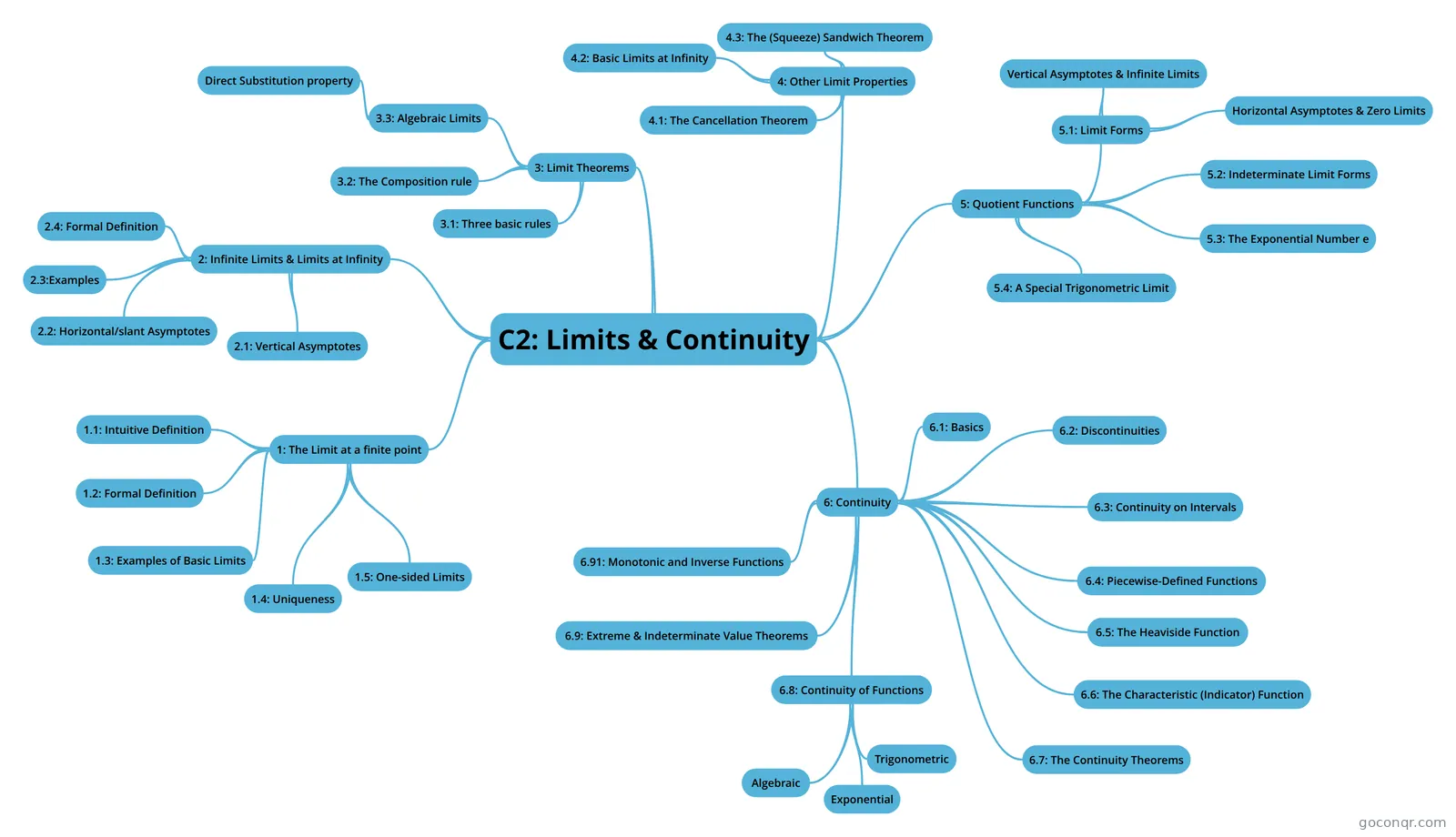 Mind map C2: Limits & Continuity
-
Mind map Calculus Not completed
-
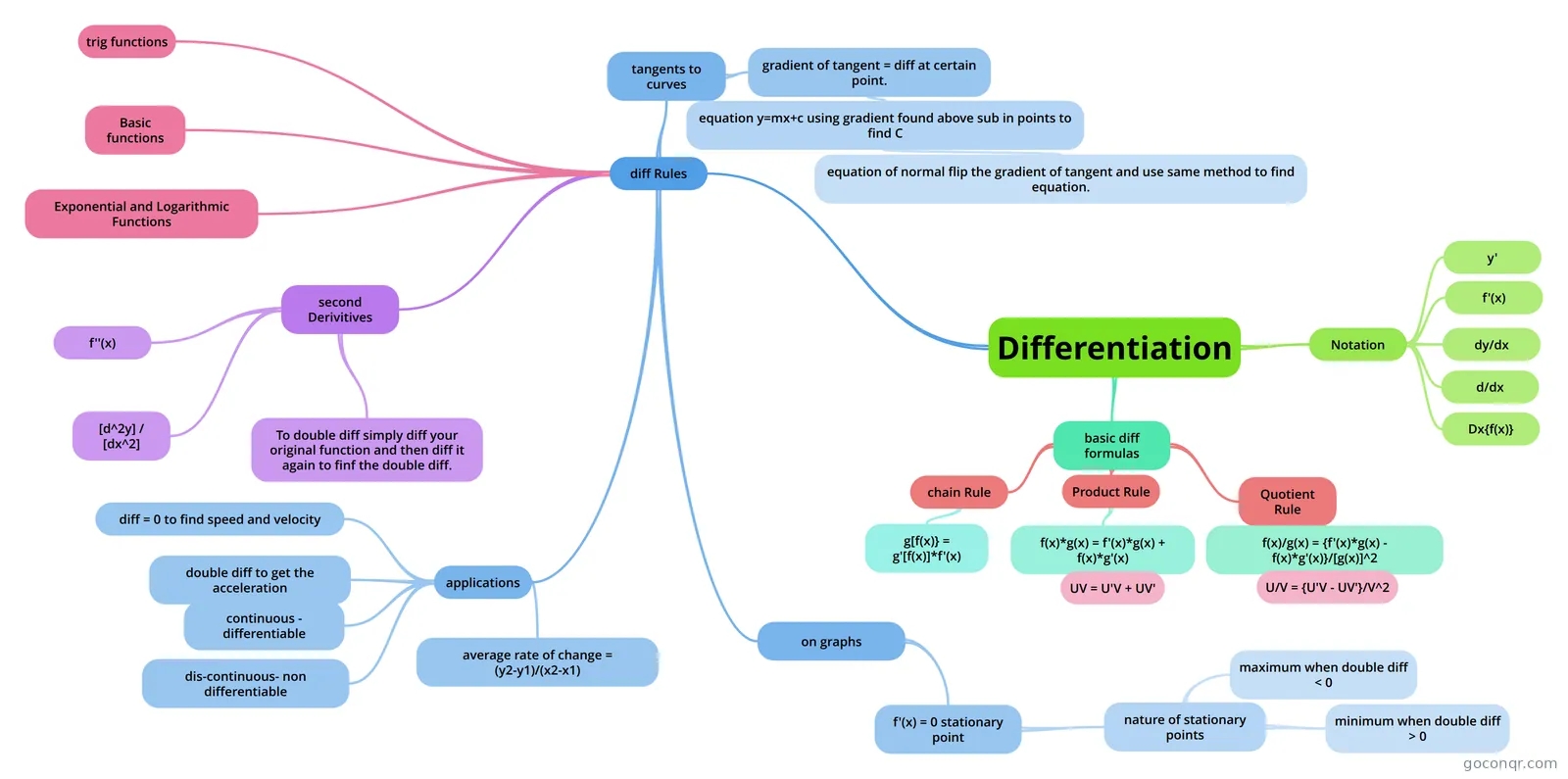 Mind map Differentiation
Quizzes
-
9 questionsDifferentiation and Integration Quiz To wrap up our learning series on Differentiation and Integration, we present this quiz to test your knowle...
-
10 questionsDifferentiation quiz High level quiz to test concepts of differentiation
-
20 questionsAlpha 1 Multikeuse oefening
-
5 questionsIntegration
-
5 questionsCalculus: Maths Diagnostic Maths Diagnostic
-
5 questionsDifferentiation
-
18 questionsMethods Theorems
-
25 questionsCalculus Test Calculus is the mathematical study of change and rate of change.
Mind maps
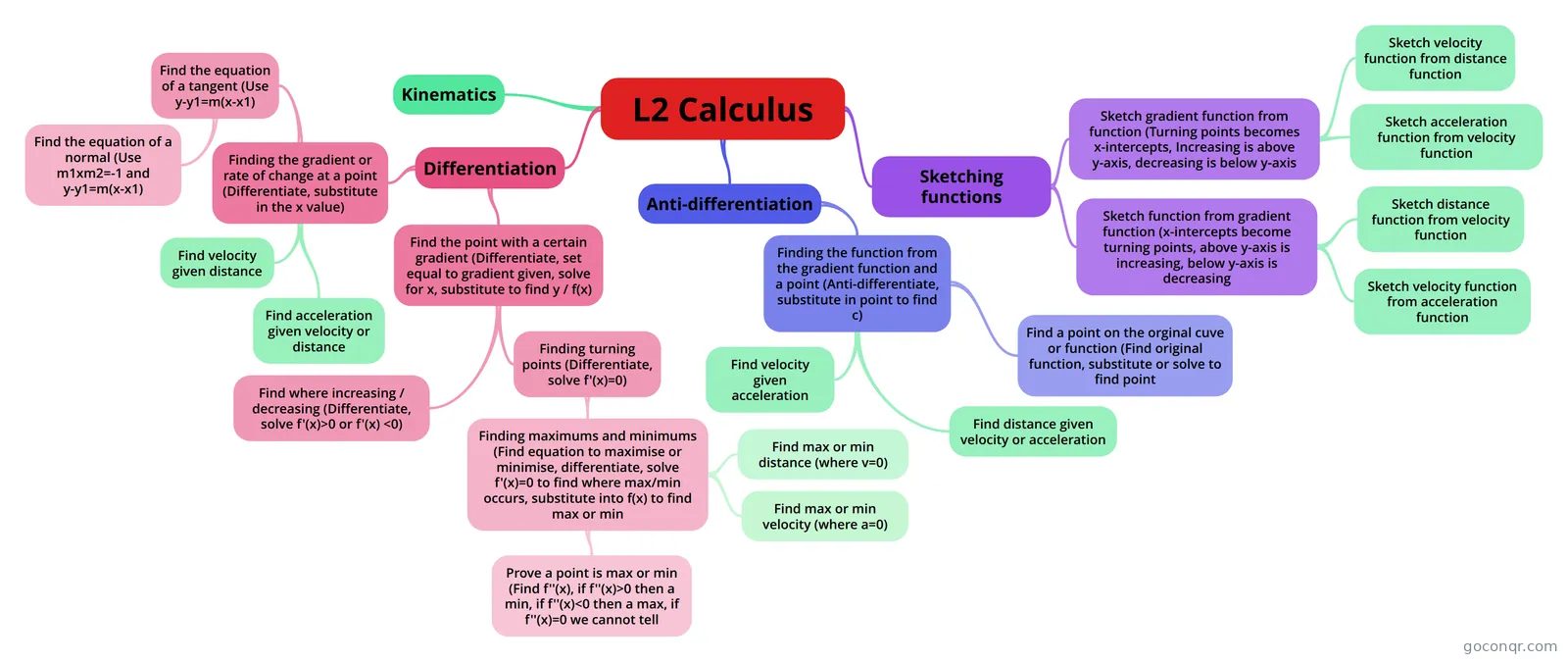
See all 25 mind maps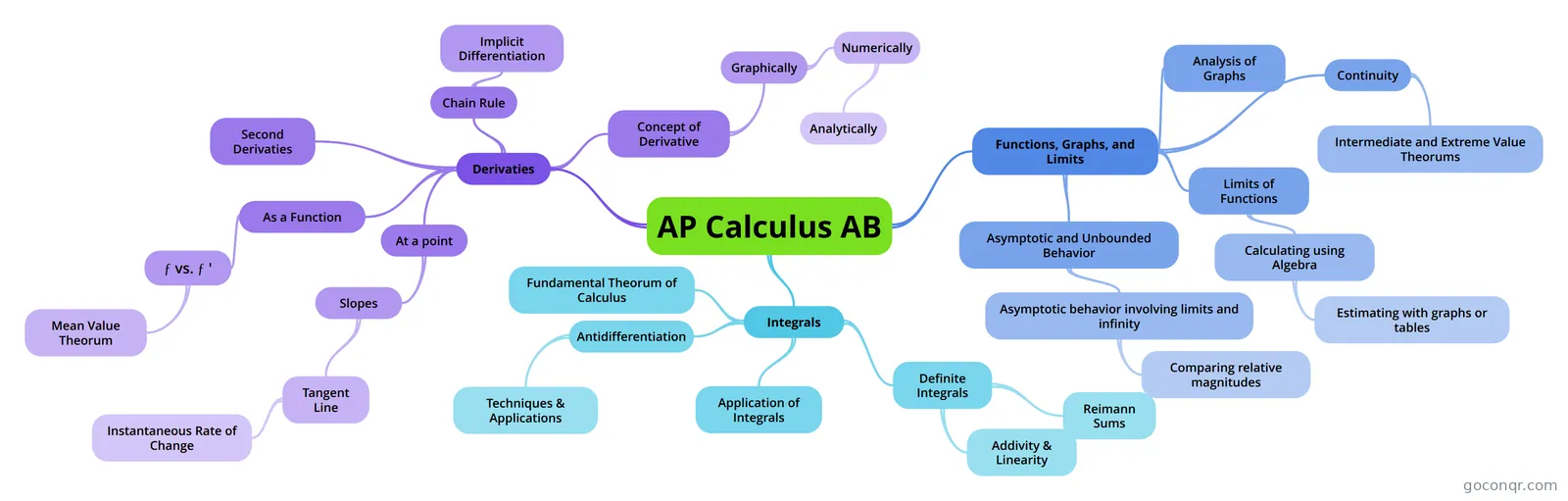
Flashcards
See all 52 flashcards-
99 cardsMethods Flash Cards
-
83 cardsAP Calculus Must Know Concepts math formulas
-
17 cardsDifferentiation Flash Cards What is the basic rule of differentiation?
-
29 cards2nd Semester Fundamentals to Know for AP Calc AB Test
-
28 cards2003 AB AP Calculus Multiple Choice questions "No Calculator" Multiple Choice No Calculators
-
4 cardsWODB #3 Calculus Hoping to start a discussion on limits involving infinity, and vertical and horizontal asymptotes.
-
45 cardsDifferentiation and Integration
-
31 cardsA2 Maths Formulas
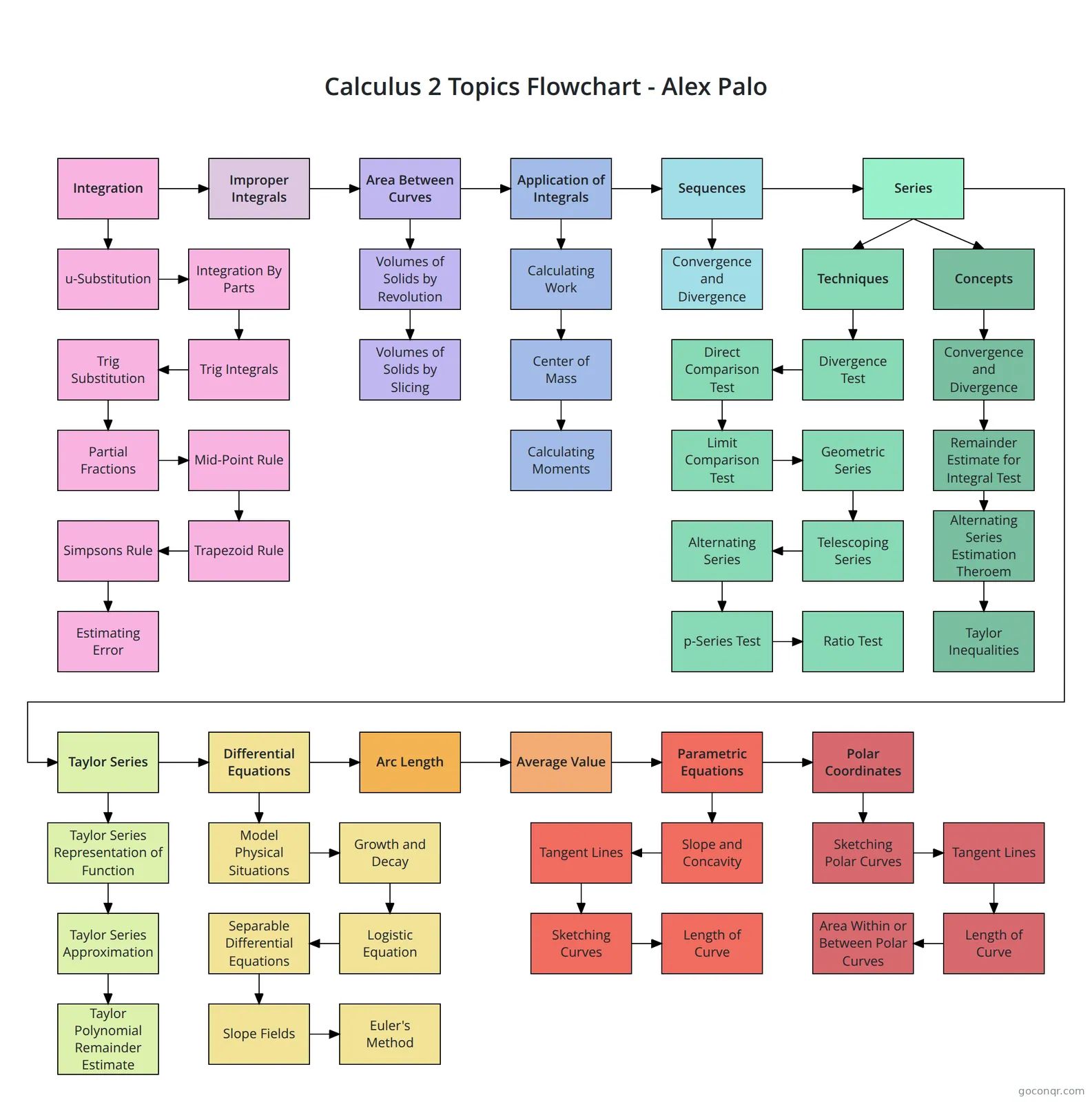
Flowcharts
Notes
See all 12 notes-
What is Integration?
-
Leaving Cert Maths Paper 1 2013 A stadium can hold 25 000 people. People attending a regular event at the stadium must purchase a ticket in advance. When the ticket price is €20, the expected attendance at an event is 12 000 people. The ...
-
A-Level Maths: Core Mathematics Prove that the rectangle of greatest perimeter which can be inscribed in a given circle is a square. The result changes if, instead of maximising the sum of lengths of sides of the rectangle, we seek to maximise the s...
-
Maths AP Logs and Algebra logX cannot be ln cannot be therefore look for asymptotes in this regard with graphs ln graph is similar to log graph, e graph is similar to exp. Basic log rules adding two logs is muliplying their 'X...
-
Differentiation Basic rules of differentiation Differentiation tells us about the gradient of tangents, the derivative and the rate of change. To differentiate: Multiply the number at the start by the power and reduce the power...
-
Differentiation assessment criteria Differentiation 3.6 6 credits mock exams achieved 10 Achievement You need to apply differentiation methods in solving problems. This could involve: selecting and using methods demonstrating knowledge of geometric conc...
-
Differentiation Rules
-
Coordinate transformation for \(\nabla^2\) operator
Slides
More Mathematics topics
About Limits and Introduction to Calculus
GoConqr OriginalWhat the resources cover
The unit starts with limits and moves through differentiation into integration. The mind map C2: Limits & Continuity sets out the limit at a finite point, with intuitive and formal definitions, basic examples, uniqueness and one-sided limits, then moves on to infinite limits. There are also several resources simply called Limits, in mind map, flashcard and note form, plus notes on Continuity and on indeterminate forms and L’Hôpital’s Rule.
Differentiation is the largest theme. The Differentiation mind map lays out the chain rule, product rule and quotient rule. Integration appears in many mind maps on strategy, plus the notes What is Integration?, which covers the Fundamental Theorem of Calculus and the power rule.
Where to start
- Open the Calculus mind map for an overview of the derivative as an instantaneous rate of change and the main rules.
- Read the limits mind maps and notes before moving to derivatives.
- Work through the Differentiation Flash Cards, which ask how to apply each step of the chain rule, product rule and quotient rule.
- Move on to integration notes and the integration strategy maps.
Using quizzes and maps together
Read a map first, then test yourself. The Differentiation and Integration Quiz begins with finding a gradient from first principles, so it checks whether you can follow the working, not just recall a rule. The Differentiation quiz uses fill-in-the-blank answers, which suit quick checks. When an answer is wrong, go back to the matching map branch and read it again.
Exam-style practice
If you are preparing for AP Calculus, the flashcard decks on the 2003 AB multiple-choice questions without a calculator, and the BC and AB exam decks, give timed-style practice. A-level students can look at the A2 Maths Formulas deck and the A-Level Maths core notes.
Where it fits
This unit sits in the Calculus strand of Mathematics. Choose one resource today, and add your own notes or cards as you go.
Frequently asked questions
Which resource should I open first?
Start with the Calculus mind map. It gives a quick overview of differentiation, including the product, quotient and composition rules. If limits are your focus, go to the C2: Limits & Continuity mind map next, then try one of the quizzes to see what needs another look.
What do the mind maps on this page cover?
They cover limits and continuity, differentiation rules, integration strategies and formulas, extreme values and multiple integrals. Some follow a single course or chapter, while others are general overviews. Open a few and keep the ones whose layout matches how you like to revise.
Are the resources free to use?
Yes. Every resource listed here is free to open, study and take, with no account needed. They were made by GoConqr users rather than by GoConqr itself. A free account also saves your quiz scores and lets you create your own quizzes, mind maps, flashcards and notes.
Which exams do these resources suit?
The listed resources mention AP Calculus AB, AP Calculus BC, AP Calculus, A-level Maths, A-level Mathematics and GCSE Maths. There are also university-style materials, such as course maps and final-exam review notes, for students who need more advanced practice.
Is there anything for practising without a calculator?
Yes. There are flashcard decks for the 2003 AB AP Calculus multiple-choice questions with no calculator, and a BC exam deck marked no calculator. An AB exam deck marked calculator is there too, so you can practise both styles.
What if I can't find the topic I need?
Try the related maps and flashcards under a nearby heading, such as Limits, Continuity or Integration. If nothing fits, you can make your own quiz, mind map or flashcards with a free account, and build exactly the revision material you want.