
Introduction to Algebra and Algebraic Expressions
317 resources created by 256 users
This Introduction to Algebra and Algebraic Expressions page on GoConqr gathers community-made quizzes, mind maps, flashcards and notes, from factorisation and expanding brackets to simultaneous equations, inequalities and quadratics. It's built for school students practising algebra and teachers after ready-made material. There are over 1,400 resources here, including more than 200 quizzes, over 700 mind maps and over 300 flashcard decks, almost all at secondary level. Pick a mind map to refresh a method, then try a quiz to find your gaps.
Top Introduction to Algebra and Algebraic Expressions resources
-
87 cardsAll math revision direct proportion If two quantities are in direct proportion, as one increases, the other increases by the ...
-
133 cards2023 Algebra 1 SOL Vocabulary & Strategy Guide Translating Expressions Translate from left to right unless you see a...
-
10 questionsIntegrated Algebra Regents Review Questions (with Explanations) Sample questions from the Integrated Algebra Regents with explanations.
-
Mind map Quadratics cghsdfghjk gjk iop
-
22 cardsMAS114 Revison Cards Russell's Paradox: Prove that the set of all sets which are not elements of themselves is self-contradictory:
-
Mind map Fibonacci Number/Sequence This Mind Map gives an overview of the Fibonacci numbers or Fibonacci sequence for GCSE Algebra.
-
Mind map Fundamentals of College Algebra
-
21 cardsAlgebra Revision What is the definition of pronumeral?
Quizzes
See all 78 quizzes-
10 questionsIntegrated Algebra Regents Review Questions (with Explanations) Sample questions from the Integrated Algebra Regents with explanations.
-
10 questionsA-level Maths: Algebra Quiz Test your algebra revision with this quiz for A-level students.
-
7 questionsACT Math - Absolute Value - Level 2 ACT Math Absolute Value with 2 operations.
-
7 questionsVariables, Expressions, & Like Terms Which is an examples of a variable?
-
4 questionsSimultaneous equations What is the method that we mostly have used for solving simultaneous equations called?
-
3 questionsMaths Quiz Math Quiz with equations, fractions and roots. 3 questions
-
4 questionsAlgebra 1 Readiness | Take One Which of the following is a rational number?
-
8 questionsSatanic Maths Quiz//calculator paper I'm thinking of an number. I times it 6 and i then divide it by 2. what number am i thinking of?
Mind maps
See all 95 mind maps-
Quadratics cghsdfghjk gjk iop
-
Fibonacci Number/Sequence This Mind Map gives an overview of the Fibonacci numbers or Fibonacci sequence for GCSE Algebra.
-
Fundamentals of College Algebra
-
Algebraic fractions
-
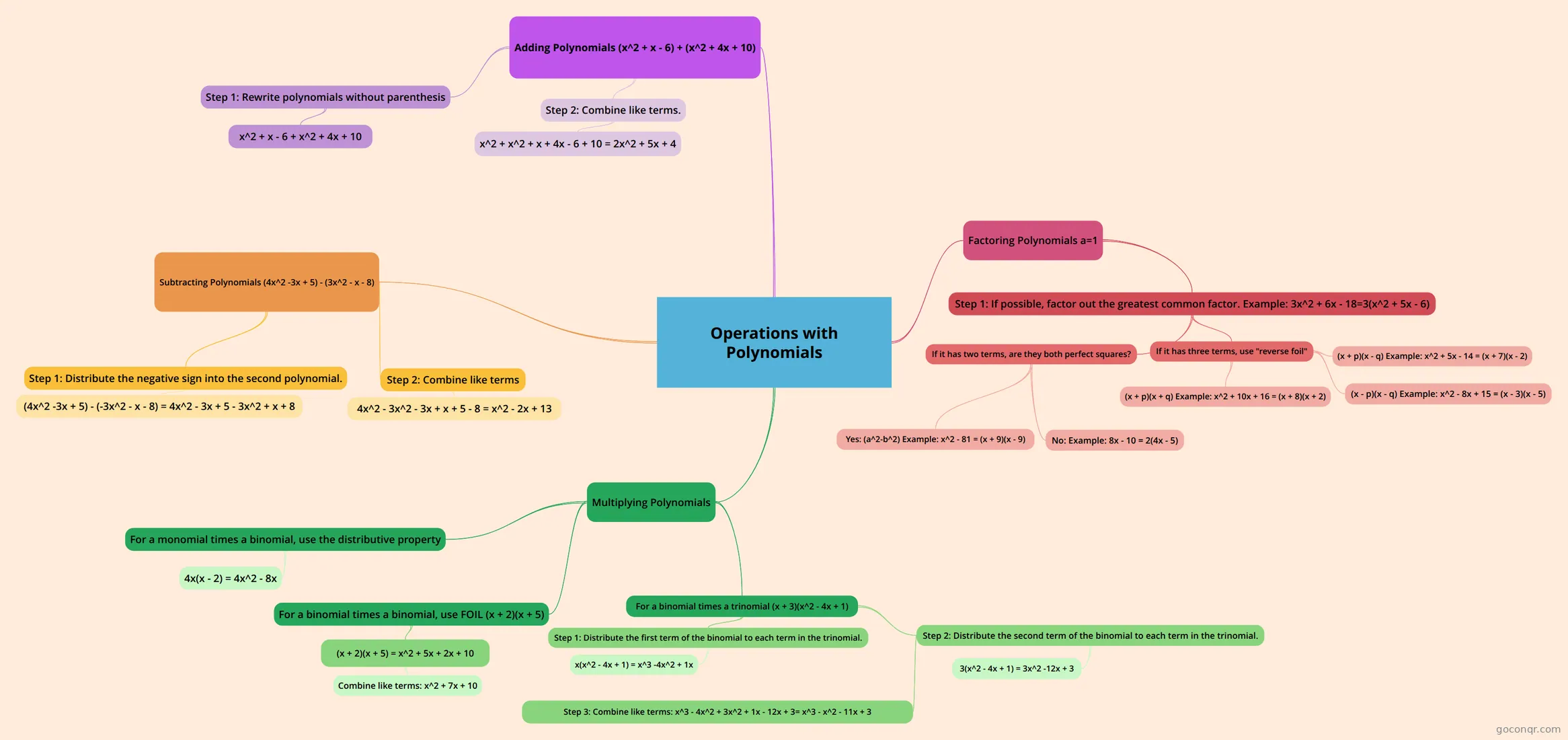 Operations with Polynomials First Draft
-
inequalities
-
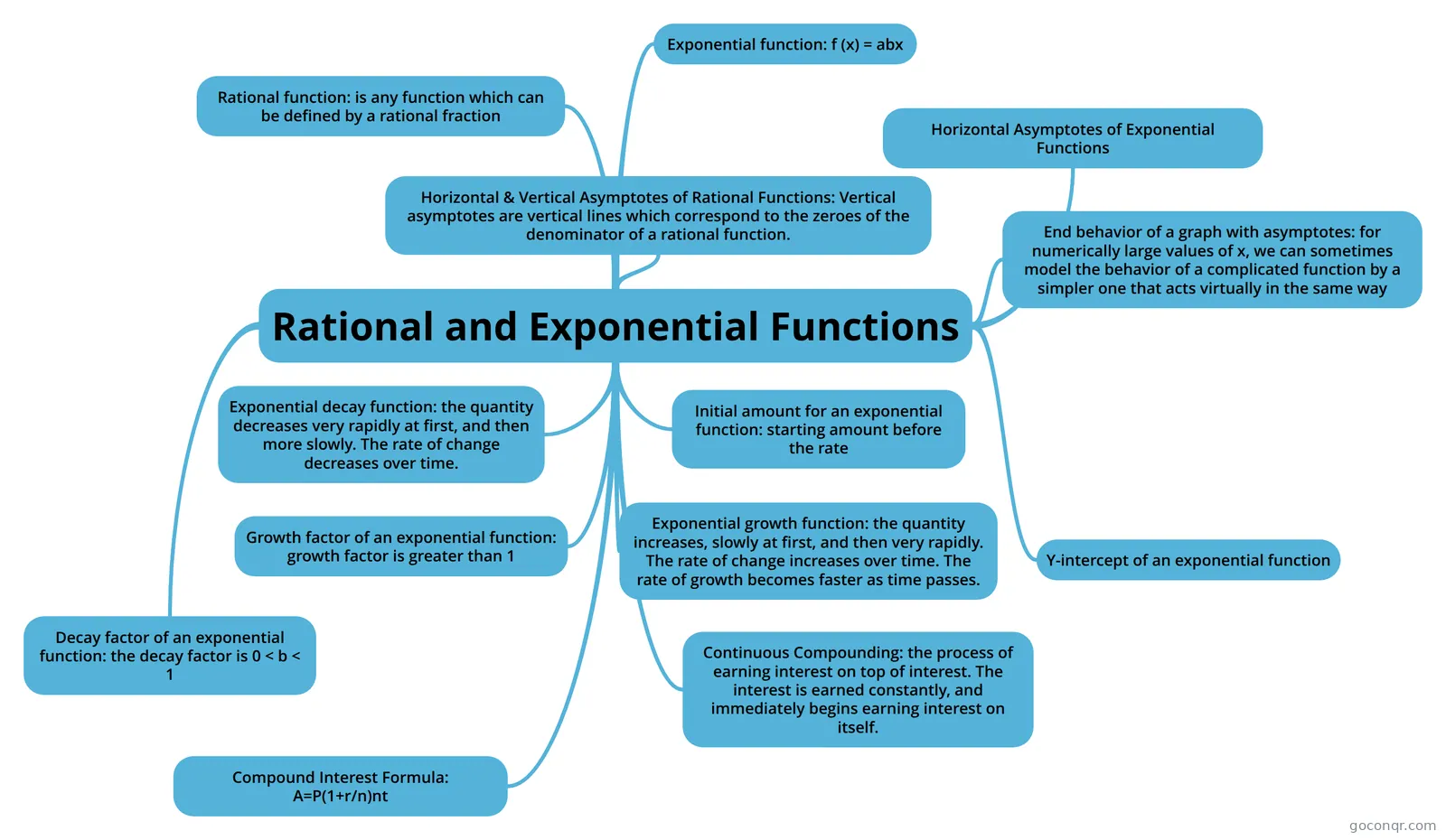 Rational and Exponential Functions Mindmap Math II
-
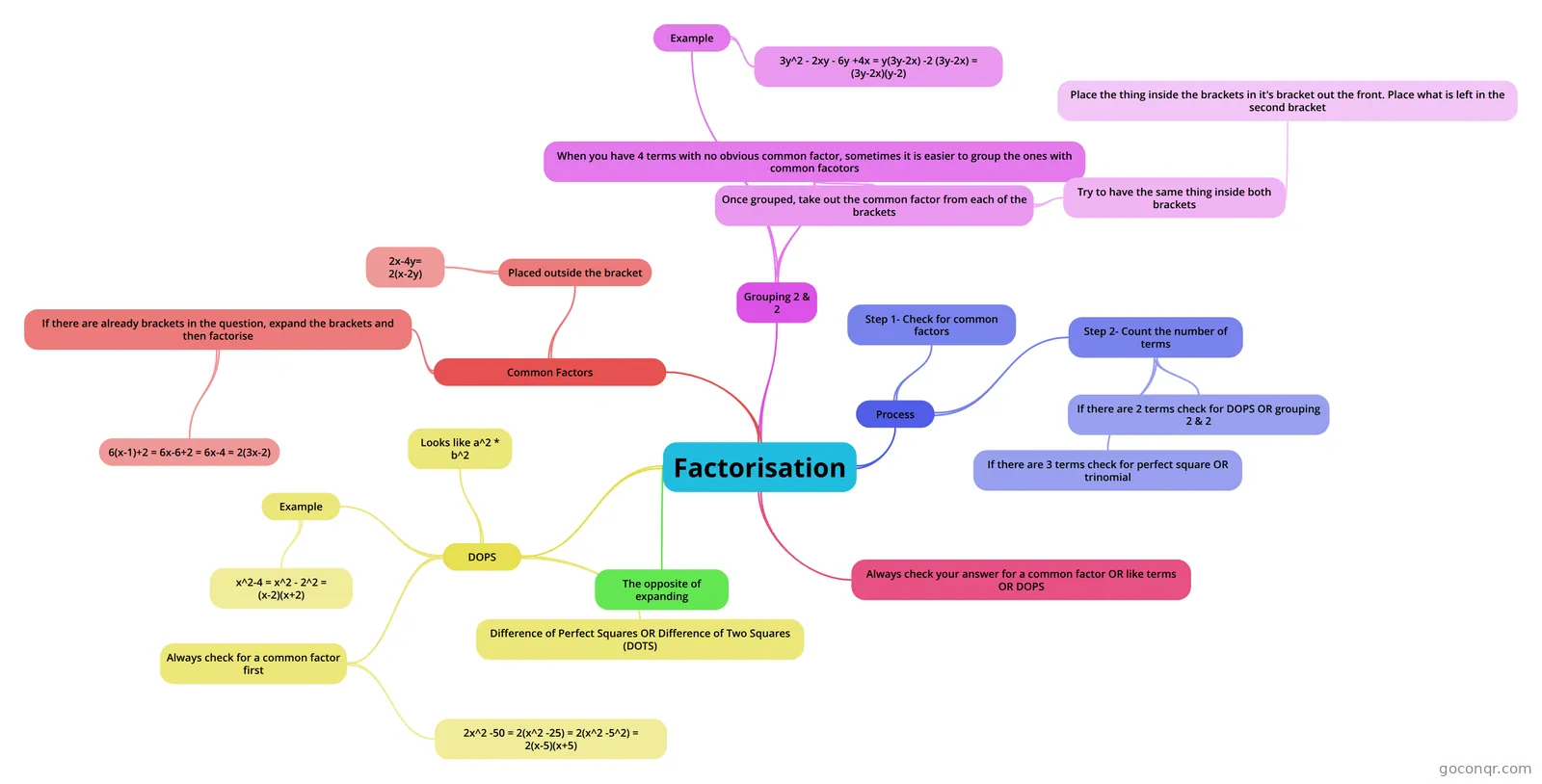 Factorisation
Flashcards
See all 104 flashcards-
87 cardsAll math revision direct proportion If two quantities are in direct proportion, as one increases, the other increases by the ...
-
133 cards2023 Algebra 1 SOL Vocabulary & Strategy Guide Translating Expressions Translate from left to right unless you see a...
-
22 cardsMAS114 Revison Cards Russell's Paradox: Prove that the set of all sets which are not elements of themselves is self-contradictory:
-
21 cardsAlgebra Revision What is the definition of pronumeral?
-
9 cardsProperties of Operations Associative Property of Addition
-
40 cardsMath Formula's
-
4 cardsQuadratic Equations Solving quadratic equations by factorising: To solve a quadratic equation, the first step is to write it in...
-
20 cardsGCSE Maths Symbols, Equations & Formulae This Flashcard deck shows you the formulae needed for your GCSE Maths exam. This includes Algebra equations...
Notes
See all 36 notes-
Solving Simultaneous Equations 1. Work out the values of N and M(1) 8m+ 4n = 104(2) 8m + 2n = 1342n = -30n = -15(1) 8m + 4(-15) = 1048m - 60 = 1048m = 164m = 20.5(2) 8(20.5) + 2(-15) = 134164 - 30 = 104N = -15M = 20.52. Work out the values of A and...
-
Leaving Certificate Algebra Table of Contents Expressions Factorising Algebraic Fractions : Adding and Subtracting Algebraic Fractions : Multiplying and Dividing Binomial Expansions Long Division in Algebra Solving Linear Equations Solving Quadr...
-
C3 Math Edexcel I should know how to:1. Cancel down algebraic fractions2. Multiply together two or more algebraic fractions3. Divide algebraic fractions4. Add or subtract algebraic fractions5. Convert an improper fraction into a mixe...
-
Trial and Improvement The equation:x³ + 5x = 67has a solution between 3 and 4 Use a trial and improvement method to find a solution.Give the solution to one decimal place. Th The answer is always the one on its own...for example:small...
-
algebra 2
-
Algebra Definition: study is the use of letters. Use of letters will allow us to write rules and formulas in a general way. letters stand for numbers, operations can be performed on them as on numbers. This leads to the study...
-
algebra 1 Algebraic Fractions When adding or subtracting algebraic fractions, the first thing to do is to put them onto a common denominator (by cross multiplying). e.g. 1 + ...
-
Algebraic & Geometric Proofs Statements Reasons 1) 5x-4 = 6 ...
Slides
More Mathematics topics
About Introduction to Algebra and Algebraic Expressions
GoConqr OriginalWhat the page covers
The resources here start with the basics and build up. You will find notes and quizzes on variables, like terms, substitution and writing formulae. Further in, there are maps and decks on expanding brackets, factorising, indices, radicals, special products and algebraic fractions.
The Algebraic fractions mind map explains that you simplify by cancelling common terms on the top and bottom, factorising first where needed. The inequalities map reminds you to flip the sign when multiplying or dividing by a negative number.
Where to start
If algebra is new, begin with the mind map called Algebra or Basic Algebra, then try the quiz Variables, Expressions, & Like Terms. Next, move to expanding brackets and factorising.
- Expand and simplify: the Expanding brackets mind map, then a quiz on distribution and like terms.
- Factorise: the Factorisation map sets out steps, starting with a check for common factors and then counting the terms.
- Solve: try Solving Simultaneous Equations and Linear Inequalities.
- Go further: quadratics, powers and roots, and rational and exponential functions.
Using quizzes and maps together
Read a map first to see the whole method on one screen. Then take a quiz without looking. The A-level Maths: Algebra Quiz includes function notation, quadratics and a cubic to factorise. Any question you miss tells you which map to open again.
Flashcards suit the vocabulary and formulae. The GCSE Maths Symbols, Equations & Formulae deck is a handy one to run through before a test.
Exams and levels
Most resources are secondary level. Listed resources mention GCSE Maths, A-level Maths, SAT, ACT, CBSE, IB, EQAO and SOL Algebra 1, so you can choose material close to your own course.
Where it sits
This unit belongs to the Algebra strand of Mathematics. Teachers can pick a map or quiz to set as ready-made work, and students can choose one topic and start there today.
Frequently asked questions
Which resource should I start with?
If you are new to algebra, open the Algebra or Basic Algebra mind maps for an overview. Then try the quiz Variables, Expressions, & Like Terms. It lets you check the basics of terms and expressions before you move on to brackets and factorising.
What do the mind maps cover?
There are over 700 mind maps. They cover algebraic fractions, factorisation, inequalities, powers and roots, simultaneous equations, special products, radicals, quadratics and straight line graphs. Many show the steps of a method, so they work well for quick revision before a quiz.
Are the resources free to use?
Yes. Every resource listed here is free to open, study and take, with no account needed. They were made by GoConqr users, not by GoConqr itself, so styles and depth vary. Browse a few and choose the ones that match your course.
Which levels and exams do they suit?
Nearly all of the resources are at secondary level. The listed ones mention GCSE Maths, A-level Maths, SAT, ACT, CBSE, IB, EQAO and SOL Algebra 1. Check the title or description to see which course a resource was made for before you start.
What if I cannot find the topic I need?
Try a nearby topic first, such as expanding brackets, factorising or equations, as many resources overlap. If the gap remains, a free account lets you make your own quiz, mind map, flashcards or notes, and teachers can build material for a class.