
Measurement and Units
137 resources created by 113 users
This GoConqr page gathers over 650 community-made resources on Measurement and Units: quizzes, mind maps, flashcards and notes to revise and practise with.
Top Measurement and Units resources
-
20 questionsGeneral Physics - Vectors We say that the displacement of a particle is a vector quantity. Our best justification for this assertion is
-
18 questionsAS Physics Quantities, Units, Measurements & Errors Quiz for AS Level Physics on quantities, measurements and errors
-
15 questions0654 Measurement Techniques - Length & Time Quiz The diagram shows an enlarged drawing of the end of a metre rule. It is being used to measure the length of...
-
12 questionsIGCSE Coordinated Sciences Measurement & Practical Skillls A ruler is used to measure the length of a nail. What is the length of the nail?
-
19 questionsQuiz 1 Measurement PreS B Weekly Quiz 1 for Pre Spring B students
-
8 cardsMCAT Physics - Vectors
-
16 cardsChapter 1 Measurements and units What are SI units?
-
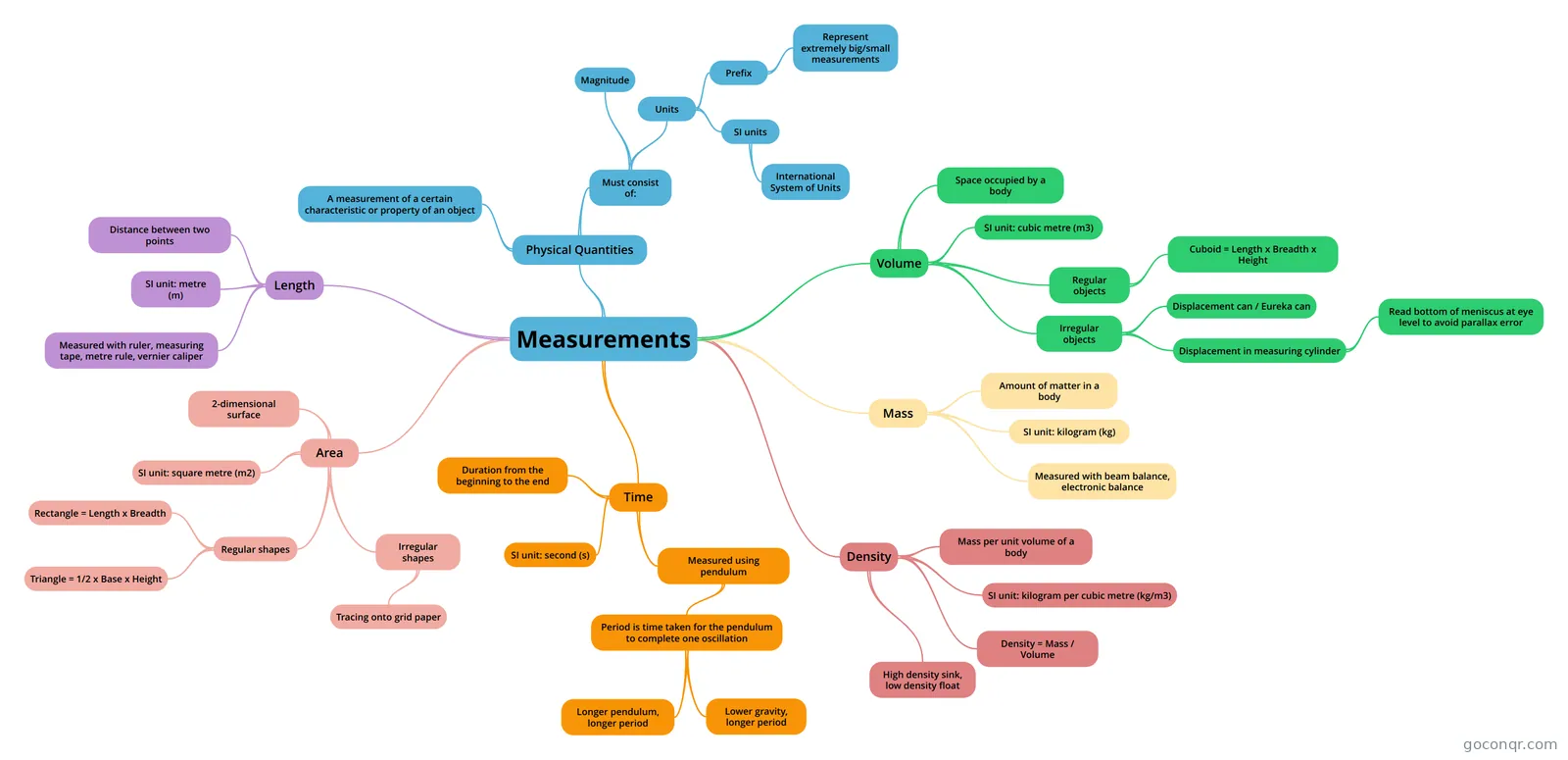 Mind map Measurements Sec 1 Physics: Measurements
Quizzes
See all 26 quizzes-
20 questionsGeneral Physics - Vectors We say that the displacement of a particle is a vector quantity. Our best justification for this assertion is
-
18 questionsAS Physics Quantities, Units, Measurements & Errors Quiz for AS Level Physics on quantities, measurements and errors
-
15 questions0654 Measurement Techniques - Length & Time Quiz The diagram shows an enlarged drawing of the end of a metre rule. It is being used to measure the length of...
-
12 questionsIGCSE Coordinated Sciences Measurement & Practical Skillls A ruler is used to measure the length of a nail. What is the length of the nail?
-
19 questionsQuiz 1 Measurement PreS B Weekly Quiz 1 for Pre Spring B students
-
5 questionsDimensional Analysis
-
5 questionsSI Units & Standard Form
-
10 questionsS.I. Base Units Quiz The unit of time is measured in minutes (min).
Mind maps
See all 27 mind maps-
Measurements Sec 1 Physics: Measurements
-
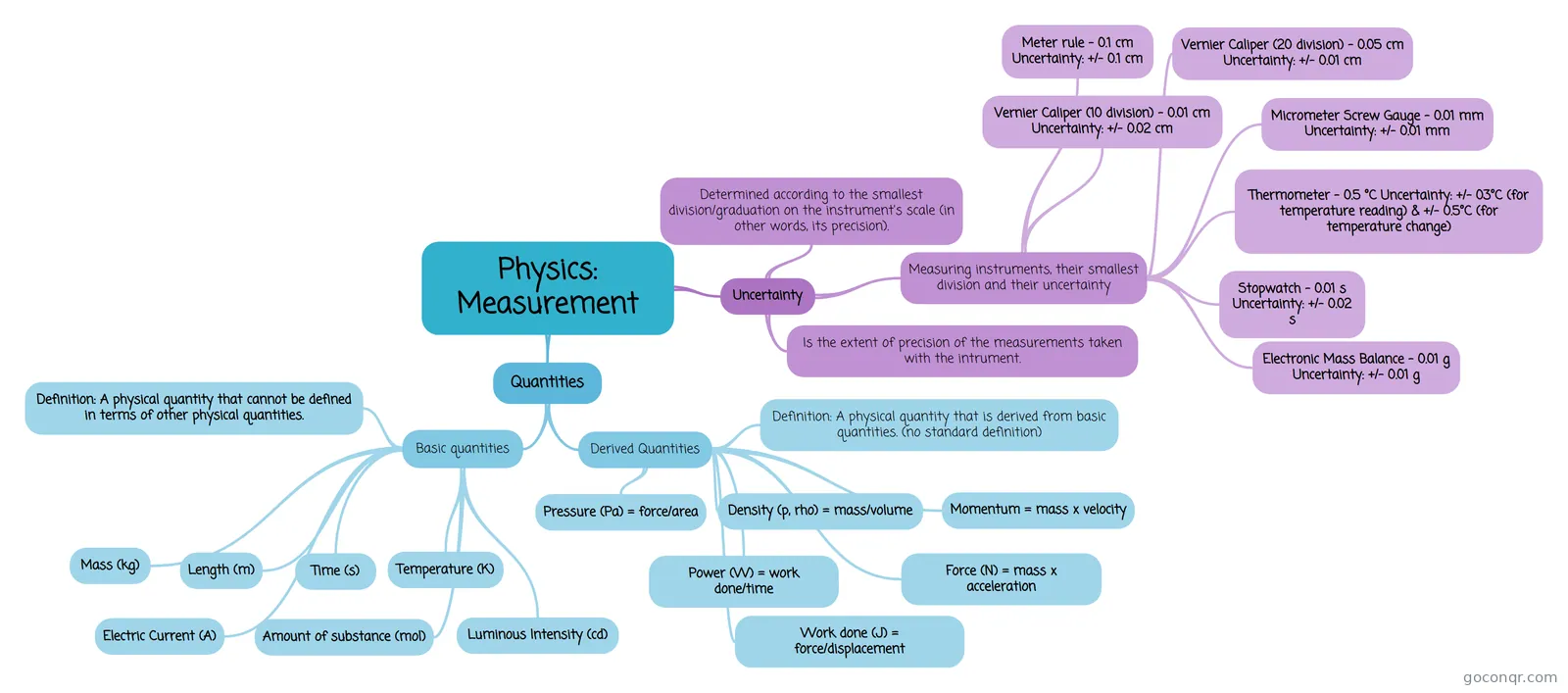 Physics: Measurement Fundamentals of Physics. Includes quantities, uncertainties and measuring instruments.
-
Units of measurement
-
Vectors!!!
-
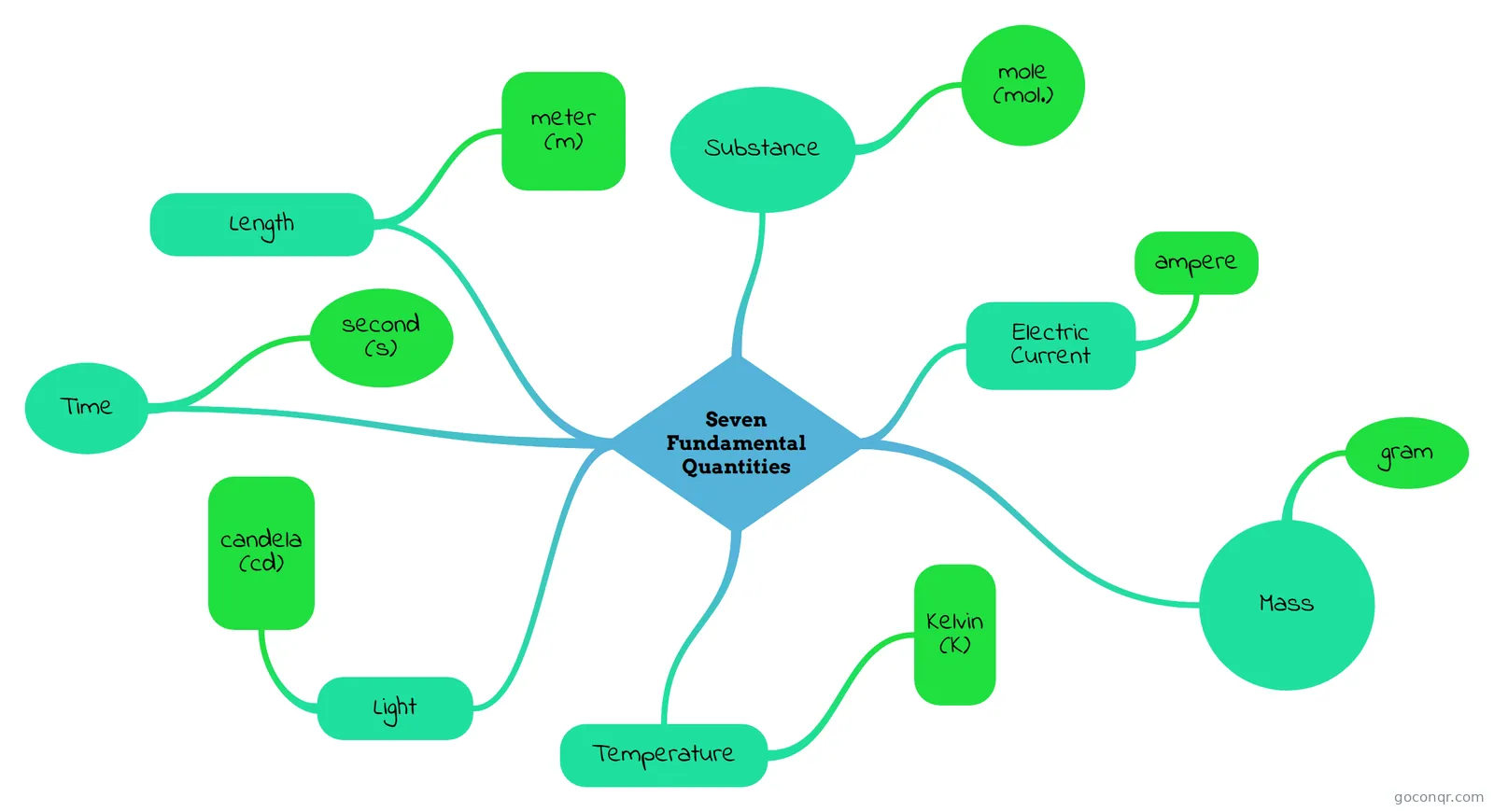 Seven Fundamental Quantities Mind Map on Measurement, created by Lance Jabson on 06/18/2017.
-
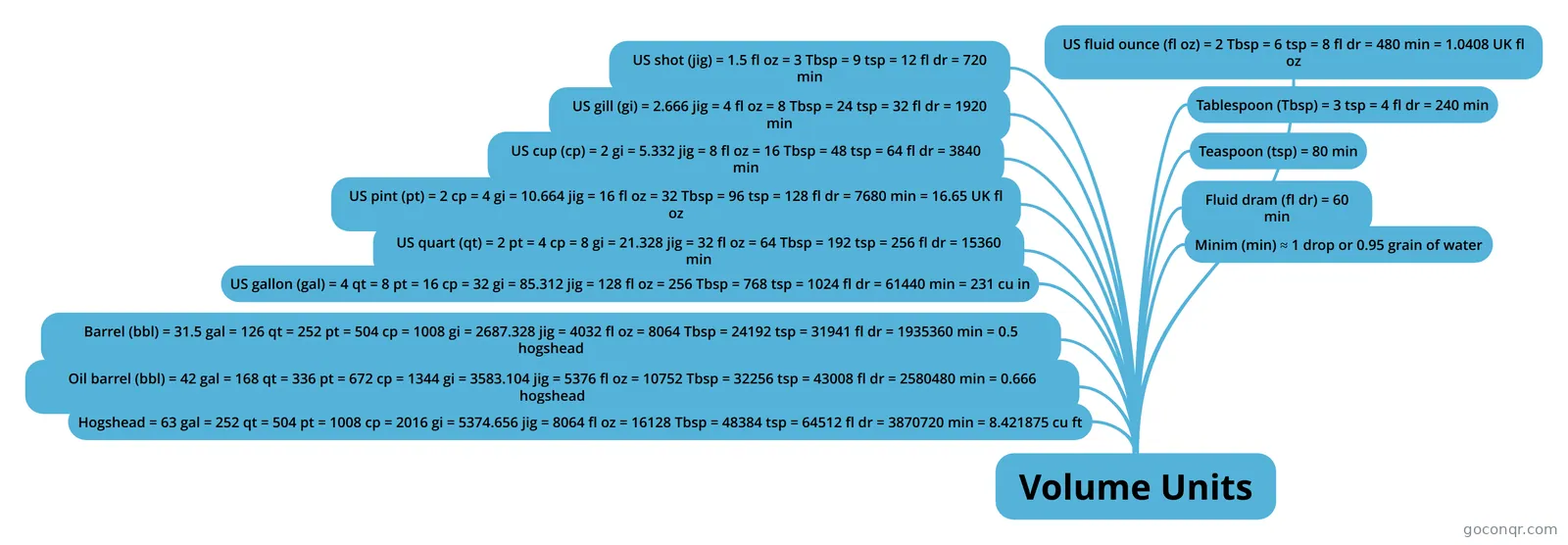 Volume Units a simple mind mapping for the US volume units
-
Foundations of Physics
-
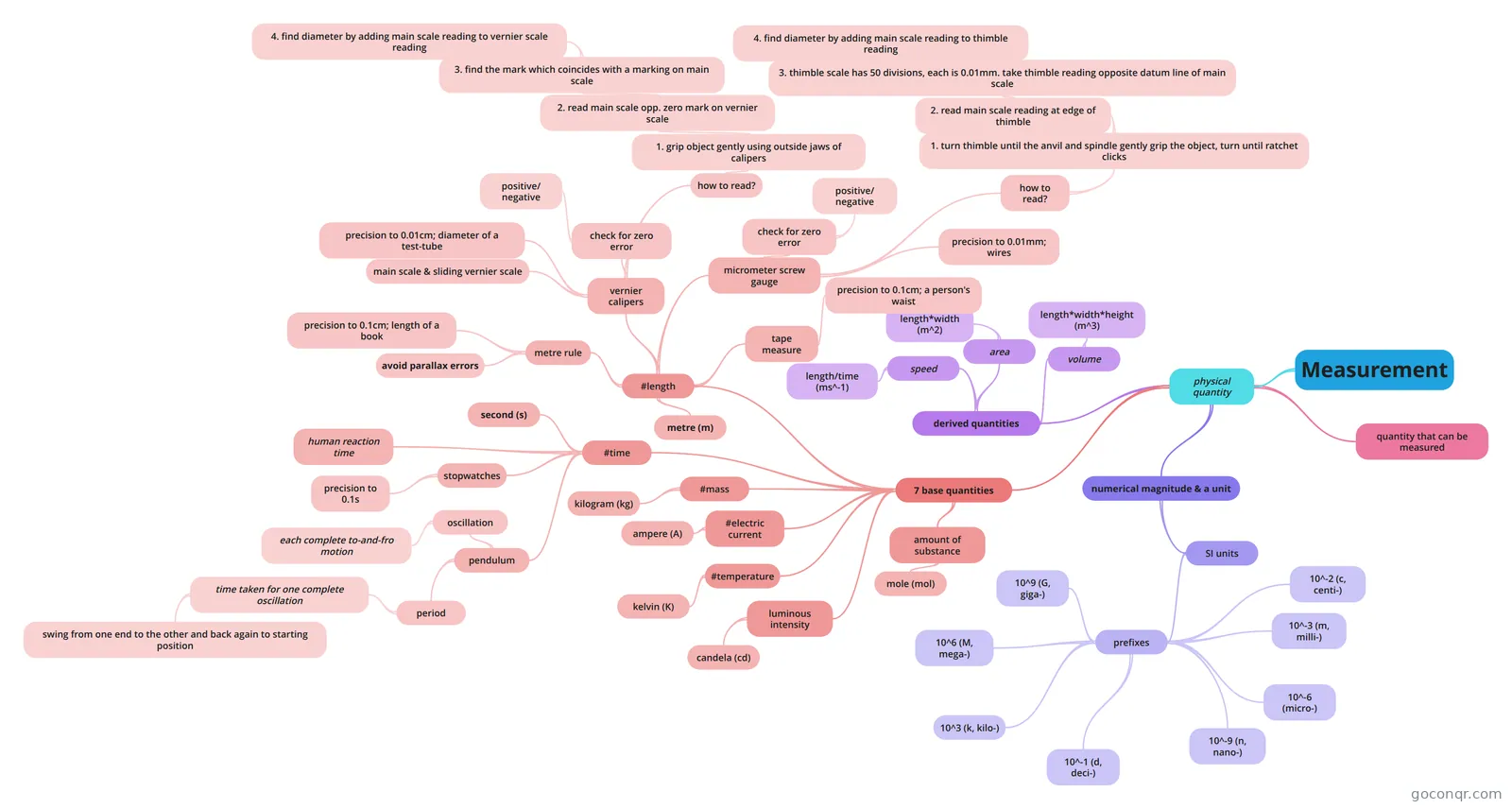 Measurement Measurement: Chapter 1
Flashcards
See all 60 flashcards-
8 cardsMCAT Physics - Vectors
-
16 cardsChapter 1 Measurements and units What are SI units?
-
18 cardsBase Units + SI Units A fundamental unit is called a....
-
3 cardsImperial System versus Metric System Imperial System versus Metric System
-
21 cardsUnits and Dimensions Units and Dimensions
-
39 cardsA level physics ocr year 1 vocab
-
23 cardsMeasurements In short, how do you use a Vernier Calliper?
-
53 cardsPhysical Science Measurement/Conversion/Method Exam 9th Grade Exam 1 9/21/2020
Notes
See all 20 notes-
Units of Measurement
-
G481 Motion G481 Motion1.1.1 Physical Quantities and Units(a) some physical quantities consist of a numerical magnitude and a unit(b) use correctly the named units listed in this specification(c) use correctly the following prefi...
-
Significant Figures DEFINITION: It is to make sure that the answers you get isn't more precise than the numbers you started with. The significant figures of a number are digits that cary meaningful contributions to its ...
-
Significant figures Def: Tell us how to round and to make sure the answers you get isn't more precise than the numbers you started with. 1-4= 0 5-9= you add 1 to the number on the left you have to count the significant figures...
-
Measurements Accuracy: Measurement of the deviation of a spread of data with reference to the actual valuePrecision: Measurement of a spread of data from the average value/ Measurement of the reproducibility of results.Systematic ...
-
Base Units Kilogram Base SI unit for measuring mass Defined as the mass of a specific platinum-iridium alloy in France Symbol: kg Metre
-
Errors Errors are uncertainties in measured quantities which arise from different sources due to limitationsSystematic ErrorsSystematic error arise due to mistakes in the design of an experiment, calibration of instruments n...
-
Metric system Kilo 1000 Hecta 100 Deka 10 ...
Slides
More Physics topics
About Measurement and Units
GoConqr OriginalWhat the page covers
This unit sits in the Foundations of Physics strand of Physics. The listed resources begin with the basics: what a physical quantity is, and the difference between base and derived quantities. The mind map Physics: Measurement sets out those definitions, while Seven Fundamental Quantities and Units and Dimensions go further.
Where to start
Begin with the flashcards. Base Units + SI Units asks what a fundamental unit is and what the derived units for speed, velocity and acceleration are. The SI Metric Prefixes and Physics conversion factors then help with converting between sizes.
- Learn the base quantities and their SI units.
- Practise prefixes and conversions.
- Move on to reading instruments, such as rulers and micrometers.
- Finish with errors, uncertainties and significant figures.
Using quizzes and maps together
Read a mind map first, then test yourself. S.I. Base Units Quiz checks the seven base units. AS Physics Quantities, Units, Measurements & Errors is more demanding and includes a scale-model question using the radii of the Earth and the Moon. IGCSE Coordinated Sciences Measurement & Practical Skillls includes ruler readings and wave experiments. If a question trips you up, go back to the matching map, such as Errors in Measurements or Measurements and Uncertainties.
Beyond units
The page also includes material on vectors, such as the General Physics - Vectors quiz, and on dimensional analysis. Teachers can pick slide sets like Tools to Measure Mass for class use, or hand out notes and quizzes as they are.
Your next step
Choose one resource that matches what you are working on today, open it and see how far you get. Then make a map or flashcard set of your own.
Frequently asked questions
Which resource should I open first?
Start with the mind map Physics: Measurement, which defines physical quantities and separates base from derived ones. Then try the flashcards Base Units + SI Units. Once those feel familiar, take the S.I. Base Units Quiz to see which units you still mix up.
What do the mind maps cover?
They cover quantities, units, SI prefixes and dimensions, along with making measurements, errors, uncertainties and vectors. Examples include Seven Fundamental Quantities, Units and Dimensions, Errors in Measurements and Vector Rules. There are over 230 mind maps on the page, so you can compare how different authors lay out the same idea.
Are the resources free to use?
Yes. Every resource listed on this page is free to open, study and take, with no account needed. They were made by GoConqr users, not by GoConqr itself, so styles and depth vary. Have a quick look at a few before settling on one.
Which exams do these resources suit?
The listed resources mention A-level Physics, GCSE Physics, AS Physics, IB Physics and IGCSE Physics. Most of the material is aimed at school students at secondary level. Check the title and the first few questions to see whether a resource matches your course.
Can I use this page for teaching?
Yes. Teachers can use slide sets such as Tools to Measure Mass, quizzes on length and time, and notes on significant figures as ready-made material. With a free account you can also save quiz scores and make your own quizzes, maps, flashcards and notes.
What if I can't find the topic I need?
Try a nearby heading first. Many topics sit under errors, uncertainties, prefixes or vectors, and some resources cover several at once. If nothing fits, build your own mind map or flashcard set on that topic.