
Peace and Conflict
31 resources created by 29 users
This Peace and Conflict page on GoConqr gathers community-made mind maps, flashcards, quizzes and notes on topics such as Just War, pacifism, holy war, reasons for war and forgiveness. It's built for school students revising for GCSE Religious Studies and for teachers after ready-made material. There are over 300 resources here, including more than 180 mind maps, over 100 flashcard decks and more than 9 quizzes, all made by GoConqr users. Pick a mind map, try a quiz to find your gaps, then build your own.
Top Peace and Conflict resources
-
21 cardsPeace and Conflict - 3 - Reasons for War AQA GCSE RS (from 2018)
-
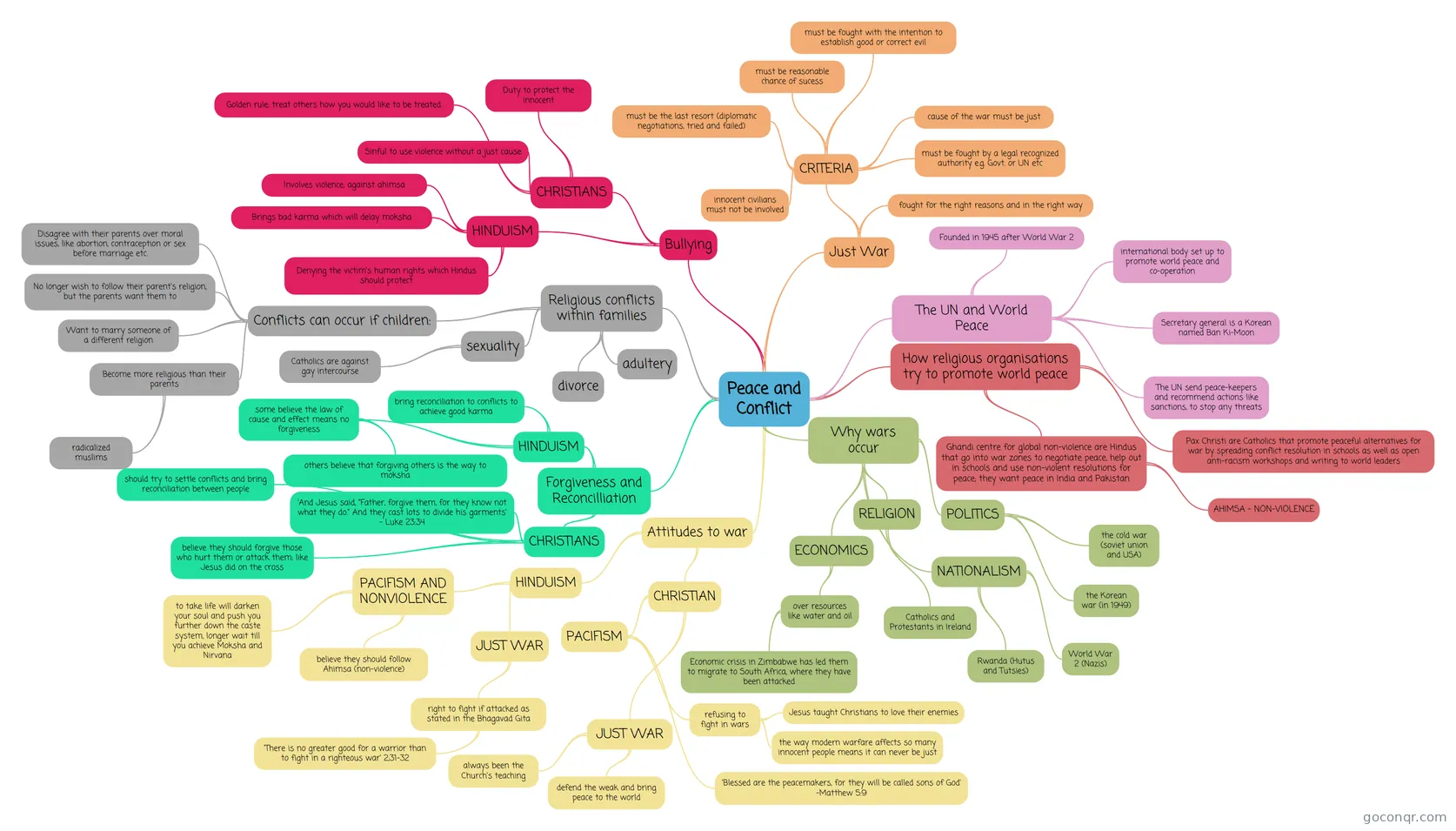 Mind map Peace and Conflict This a mind map of 'Peace and Conflict' at GCSE level RE.
-
 Mind map Religious Studies - Ethics 2 Peace and Justice
-
Mind map Religion, peace and conflict GSCE OCR mindmap on religion, peace and conflict
-
14 cardsReligion War and Peace What is peace?
-
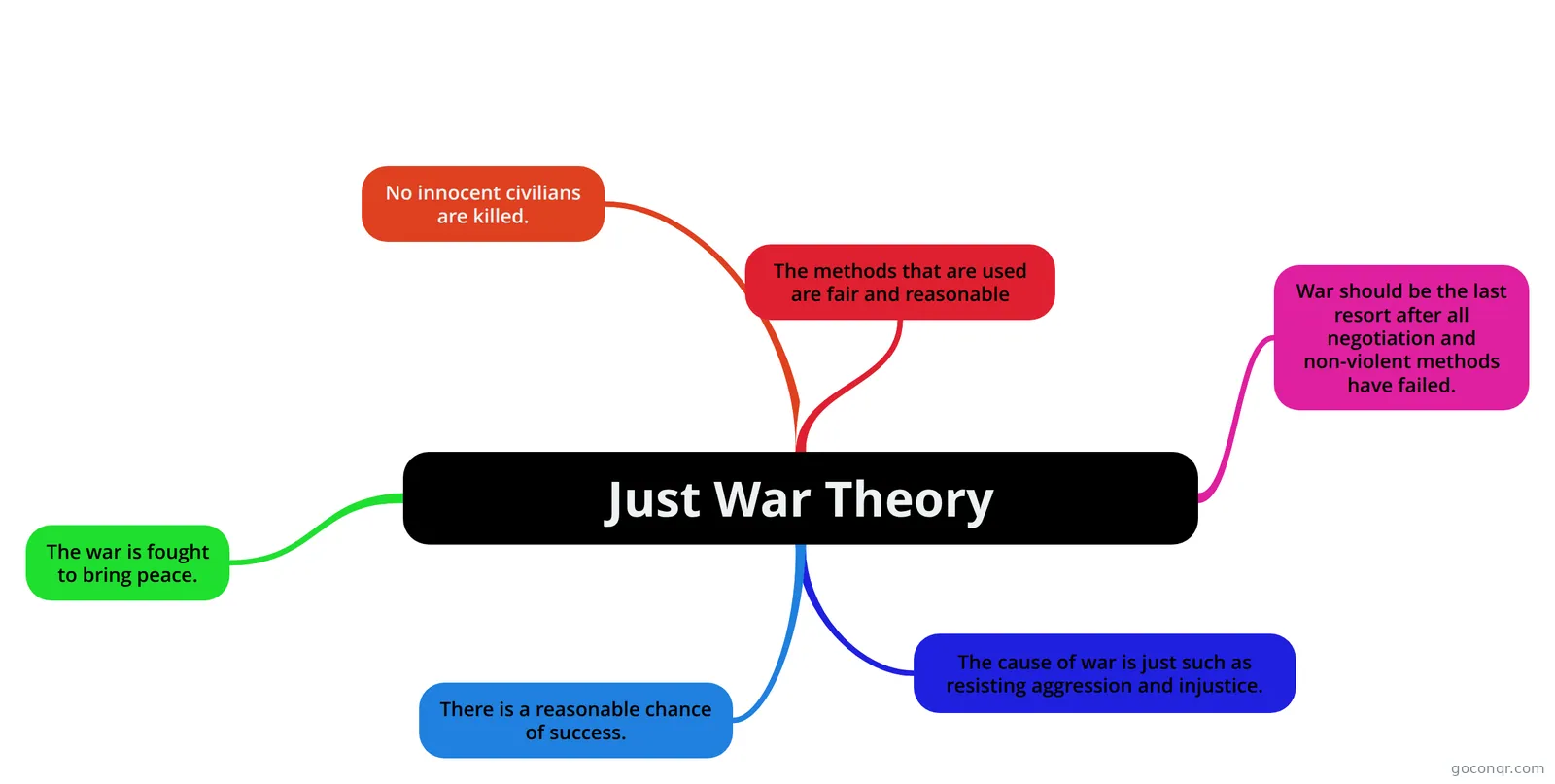 Mind map Just War Theory The reasons why war should be fought.
-
46 cardsR.S:Peace and Conflict Why is the UN important for World Peace?
-
28 cardsPeace and Conflict - 4 - Nuclear and Weapons of Mass Destruction AQA GCSE RS
Quizzes
Mind maps
See all 10 mind maps-
Peace and Conflict This a mind map of 'Peace and Conflict' at GCSE level RE.
-
Religious Studies - Ethics 2 Peace and Justice
-
Religion, peace and conflict GSCE OCR mindmap on religion, peace and conflict
-
Just War Theory The reasons why war should be fought.
-
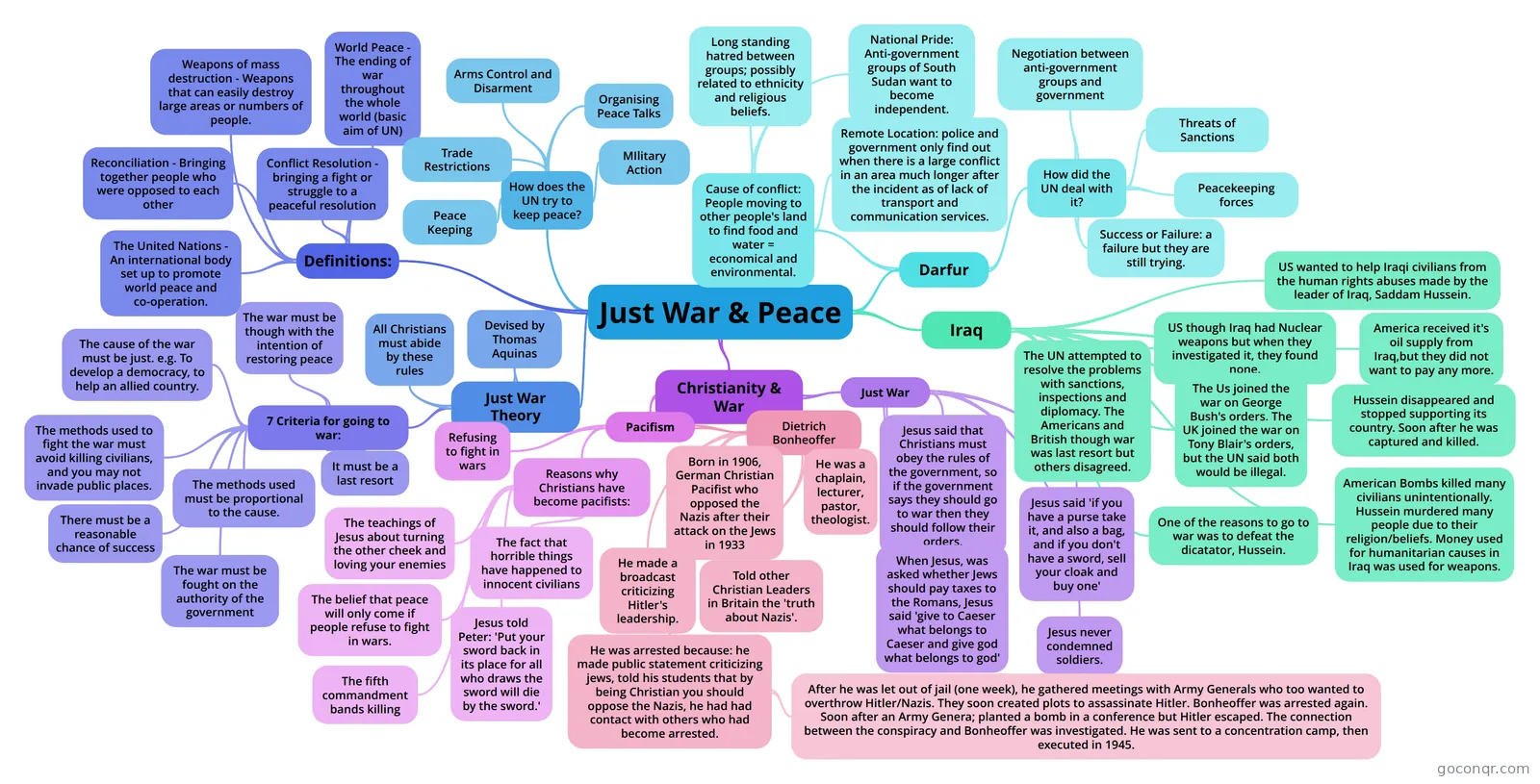 Just War & Peace
-
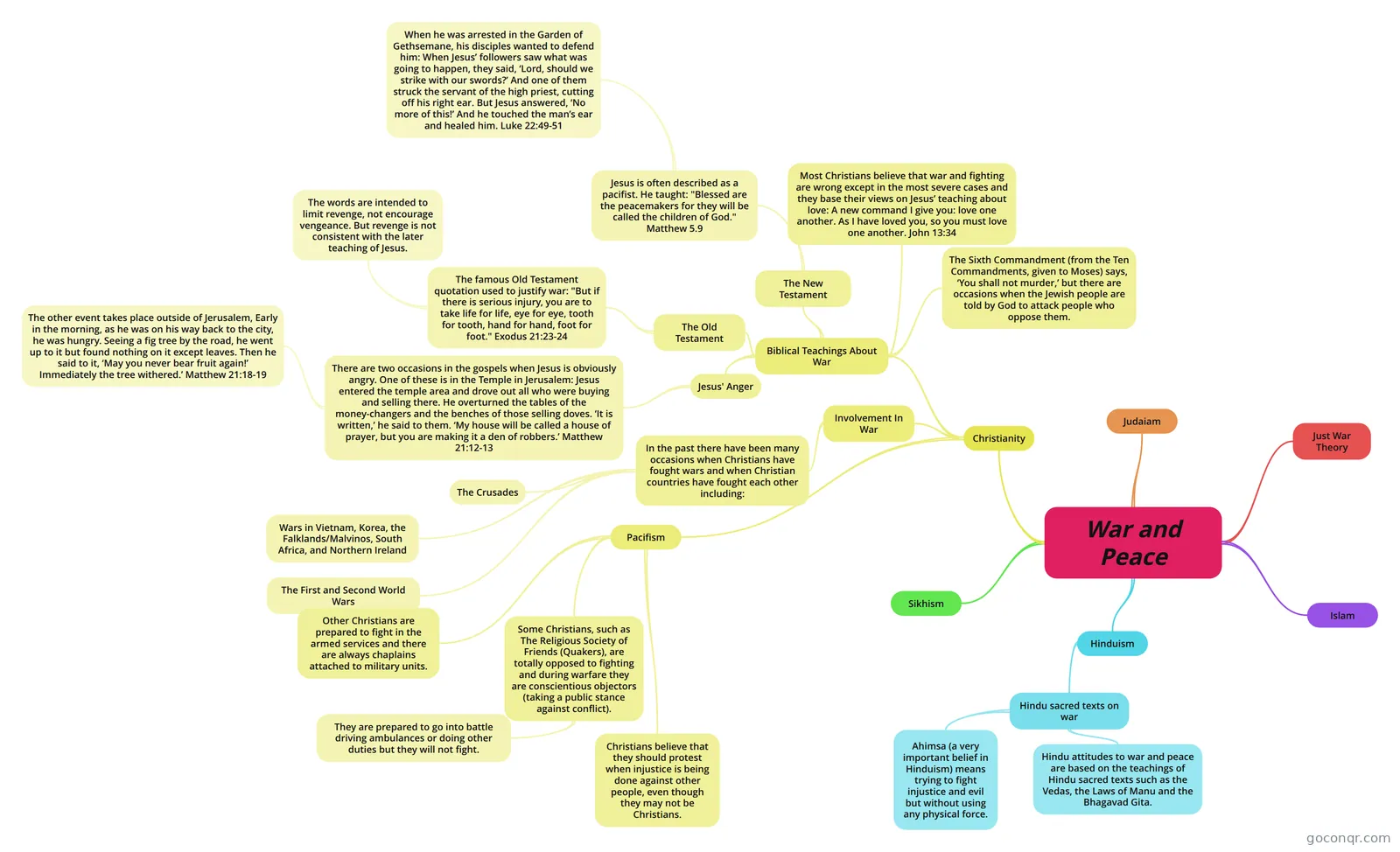 War and Peace
-
"War is never justified" A Mind Map to aid revision of the "Religion, Peace and Justice" unit of the OCR B Philosophy and Ethics cou...
-
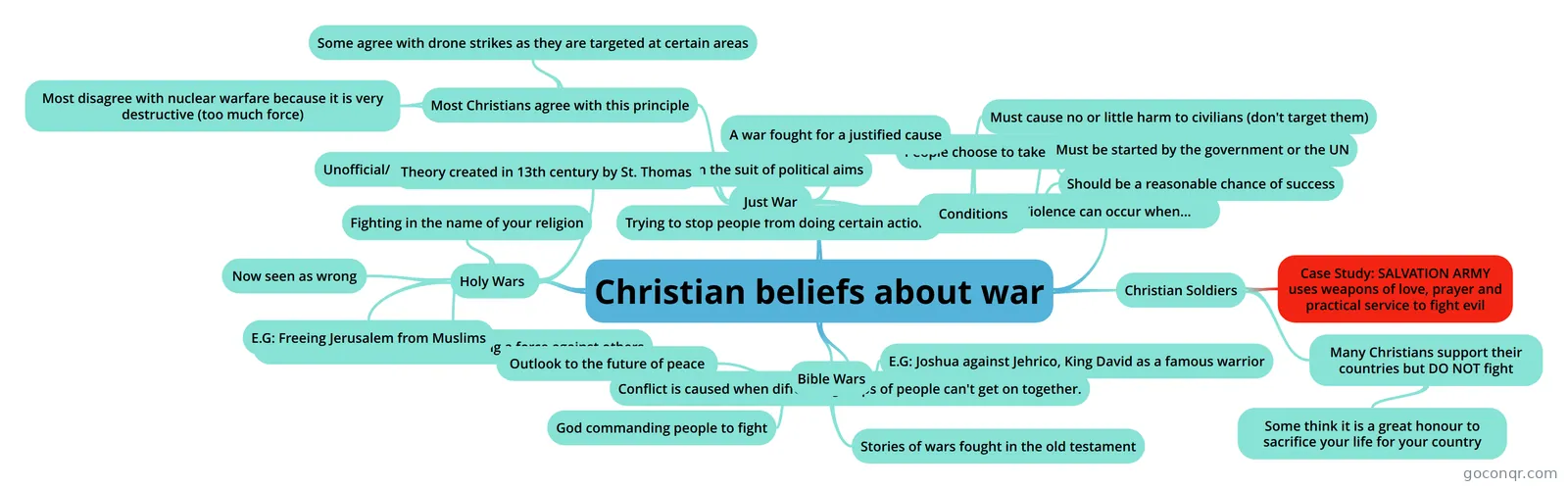 Christian beliefs about war Mind Map for section A of theme D
Flashcards
See all 17 flashcards-
21 cardsPeace and Conflict - 3 - Reasons for War AQA GCSE RS (from 2018)
-
14 cardsReligion War and Peace What is peace?
-
46 cardsR.S:Peace and Conflict Why is the UN important for World Peace?
-
28 cardsPeace and Conflict - 4 - Nuclear and Weapons of Mass Destruction AQA GCSE RS
-
25 cardsGCSE Edexcel RE Peace and Conflict
-
40 cardsReligion- peace and conflict What did Isaiah say about God bringing peace on earth?
-
25 cardsRS-Peace and Conflict (unit-8) Define: Conflict Resolution
-
18 cardsPeace and Conflict - 8 - Victims of War Casualties of war
Notes
-
Conflict The Causes of War defend country defend beliefs, religion, freedom defend ally remove leader (civil war) gain more land stop dictator Christian Beliefs about War - christians are peacemakers. 'blessed are the peacemak...
-
Violence is Sometimes Necessary... Violence is Sometimes Necessary... Yes Sometimes people will not listen - the Pharaoh would not listen to Moses, so God punished him Jesus himself lost his temper - he turned over the tables in the temper Violent acti...
More Religion and theology topics
About Peace and Conflict
GoConqr OriginalWhat the resources cover
The listed material looks at how religion approaches war, peace and justice. The mind map Religion, peace and conflict opens with the mixed messages in the Bible about violence, then moves to absolute and conditional pacifism, with Quakers as an example of Christian pacifists. The mind map Peace and Conflict is wider. It takes in the UN and world peace, why wars occur, Just War, bullying, conflict in families and forgiveness.
Where to start
- Begin with a broad mind map such as Peace and Conflict to see the shape of the topic.
- Work through the flashcards. Religion War and Peace asks what peace, justice, pacifism and a Just War are, and what the Red Cross is.
- Move to a focused set such as Peace and Conflict - 3 - Reasons for War, which covers greed, self-defence and retaliation, with quotes from 1 Timothy and the Quran.
- Finish with the Just War Theory mind map, which lists conditions such as reasonable chance of success and war as a last resort.
Using maps and quizzes together
Read a map first, then close it and take a quiz. Quizzes such as Peace and Justice, War and Peace and Religion, peace and conflict definitions show quickly which terms you still mix up. Go back to the matching map or deck for those gaps, then retry.
The mind map Religious Studies - Ethics 2 Peace and Justice is useful for arguments. It sets out points for and against war, with quotes like 'Love thy enemies..' and 'Do not Murder'. Several resources mention AQA GCSE Religious Studies, so check your own course before relying on any one set.
Where it sits
This unit belongs to the Religion, Society and Justice strand of Religion and theology. Every resource here is free to open and study.
Teachers can pick a map or deck to share with a class. Students can choose one resource today and see how it goes.
Frequently asked questions
Which resource should I open first?
Start with the mind map Peace and Conflict. It gives a wide view of the unit, from why wars occur and Just War to forgiveness and bullying. After that, move to flashcards such as Religion War and Peace to check key terms, then try a quiz.
What do the mind maps cover?
They cover attitudes to war, Just War Theory, pacifism, holy war, Quakers and conscientious objectors, and causes of conflict. Some set out arguments for and against war, with Biblical references. There are more than 180 mind maps, so you can compare how different students have organised the topic.
Are the resources free to use?
Yes. Every resource listed here is free to open, study and take, with no account needed. A free account also saves your quiz scores and lets you make your own quizzes, mind maps, flashcards and notes.
Which exams do these resources suit?
The listed resources are aimed at secondary students. They mention GCSE Religious Studies and AQA GCSE Religious Studies. Exam boards differ in what they set, so compare any resource with your own course before you rely on it.
Who made these resources?
They were made by GoConqr users, including students and teachers, not by GoConqr itself. Over 260 contributors have added material, so styles and depth vary. Look at a few resources on the same subtopic and use whichever explains it most clearly.
What if I can't find what I need?
Try a nearby topic. Pacifism, Just War, Holy War and Reasons for War each have their own maps or decks, and the broader maps often cover the same ground. You can also make your own mind map, flashcards or notes.