
Pragmatics mind maps
298 mind maps by 206 users · Page 1 of 8
This GoConqr page gathers over 290 Pragmatics mind maps made by more than 200 users, covering context, speech acts and politeness. The mostly university-level resources are for university students revising these topics and teachers looking for teaching material. Pick a map to explore.
Mind maps
-
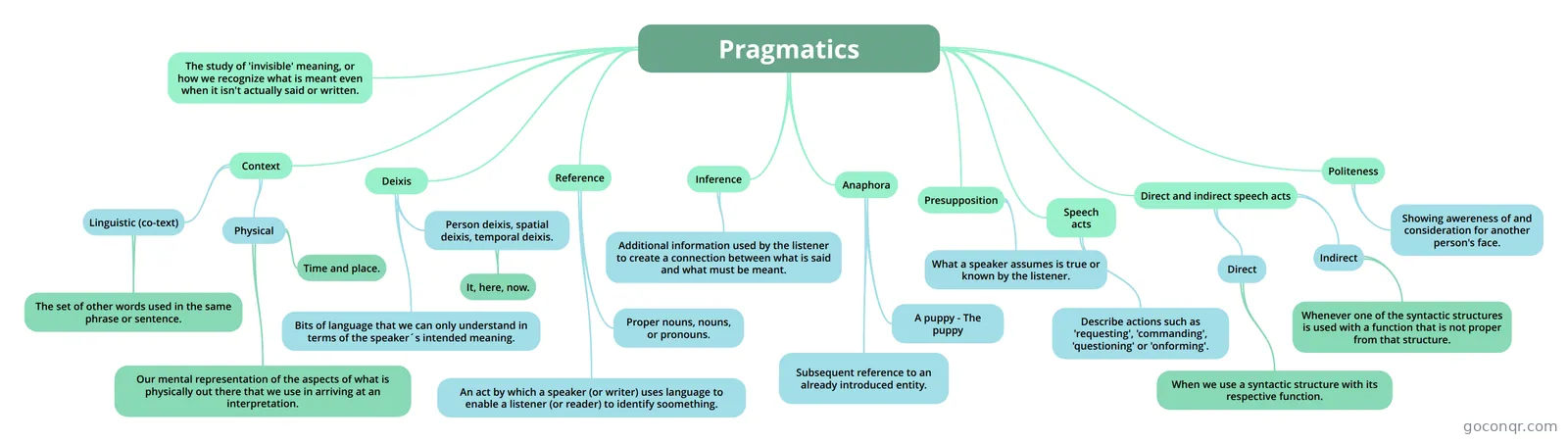 Pragmatics References: Yule, G. (2006). Pragmatics. In The study of language (3rd ed.). Cambridge [England: Cambridge ...
-
Grice's Maxims
-
Pragmatics Pragmatics
-
Pragmatics Pragmatics
-
PRAGMATICS
-
Pragmatics
-
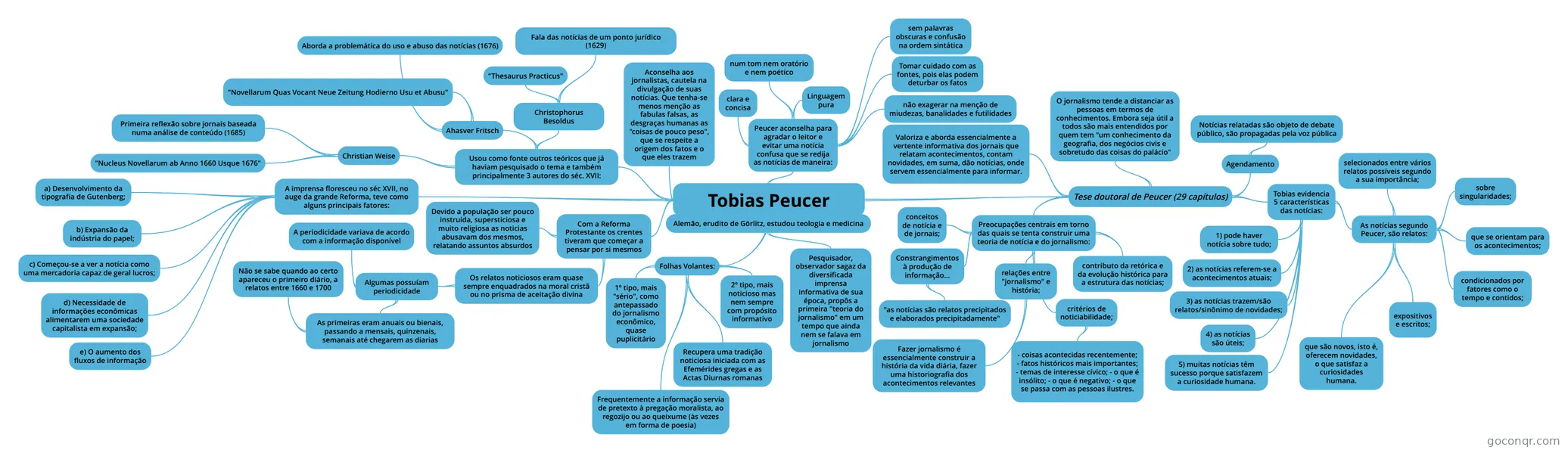 Tobias Peucer O progenitor da Teoria do Jornalismo
-
Other topics of interest in Pragmatics
-
Pragmatics
-
The Pragmatics of Cooperation and Relevance for Teaching and Learning
-
Pragmatics
-
POLITENESS
-
Illocutionary Forces, Register, and Formulaic Elements
-
RELEVANCE OF PRAGMATICS
-
Reference and Inference in English Pragmatics
-
Pragmatics
-
POLITENESS
-
RELEVANCE THEORY-SPEBER ANDWILSON
-
SPEECH ACTS AND CONVERSATION.
-
Relevance Theory
-
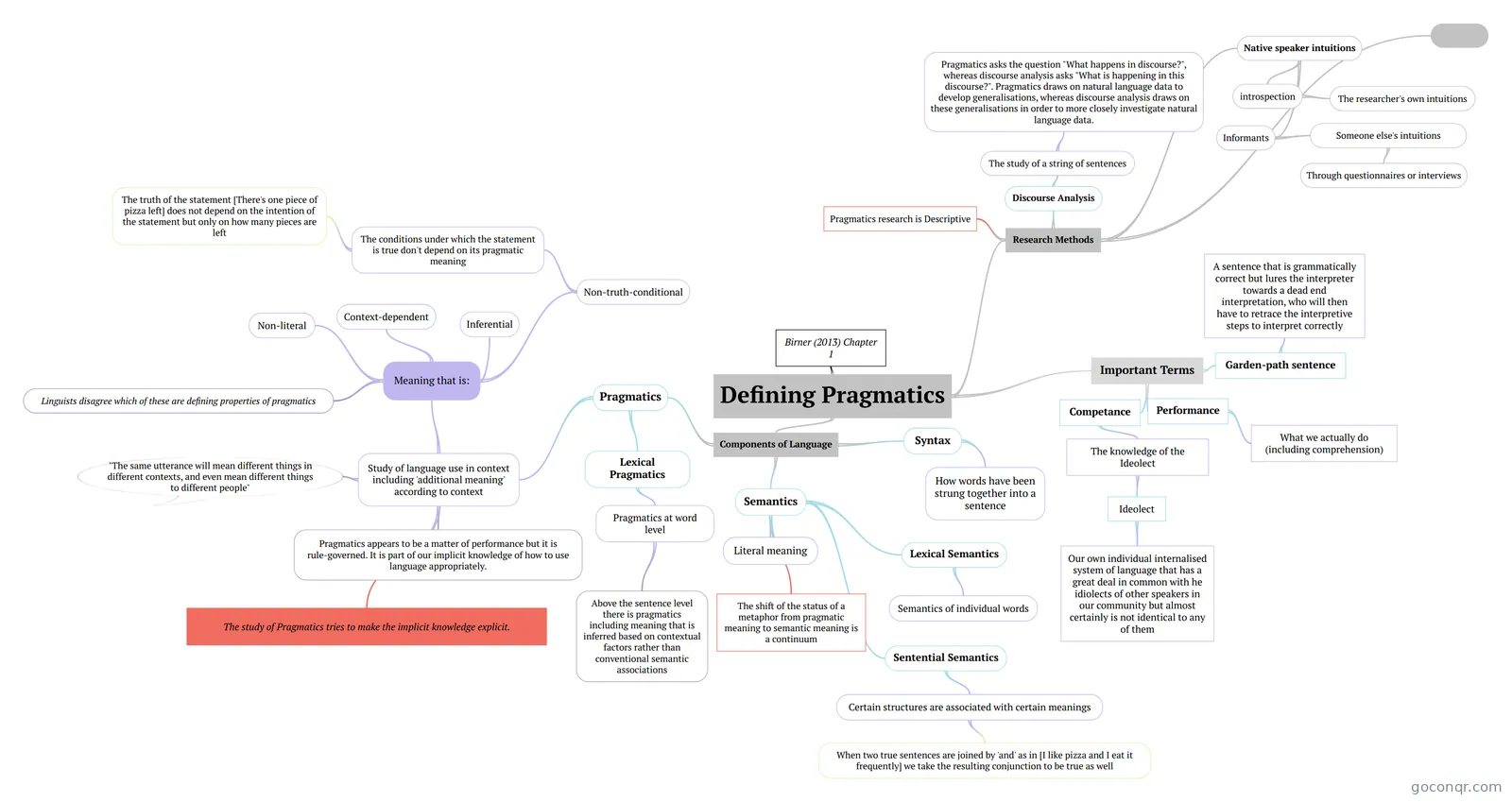 Defining Pragmatics Reading Mindmap
-
Context and Inference
-
IMPLICATURE/CONTEXT
-
COOPERATION AND IMPLICATION
-
Politeness
-
(Re)visiting Pragmatics Through the Lenses of Communication Skills
-
Pragmatics and syntax
-
Austin speech theory
-
Pragmatics
-
Theories of Searle's speech act and its implications in the English language
-
The Pragmatics of Cooperation and Relevance for Teaching and Learning
-
Deixis
-
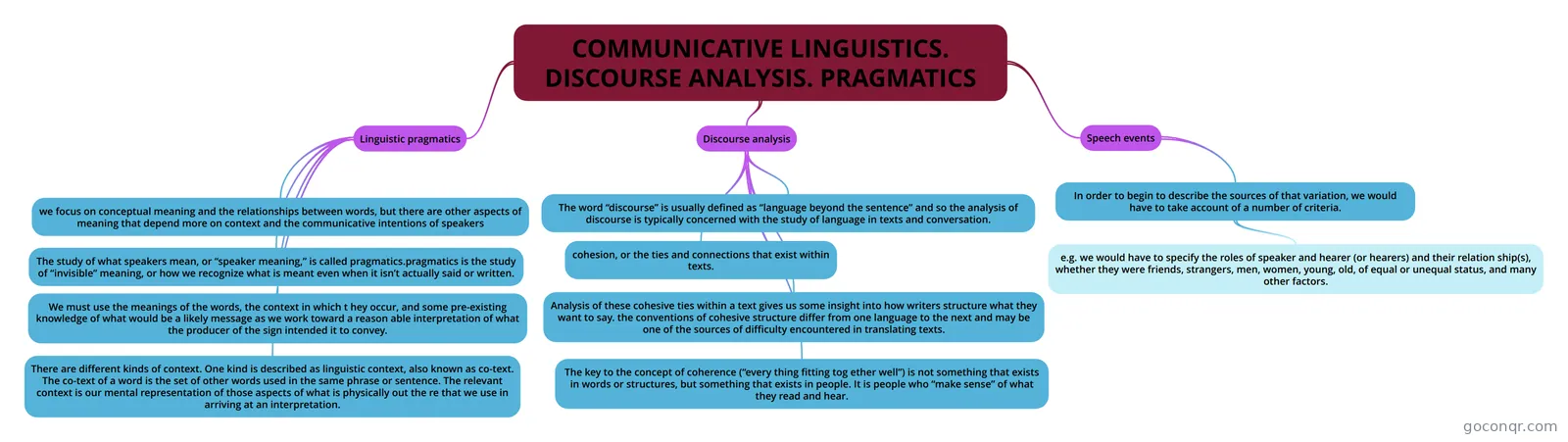 COMMUNICATIVE LINGUISTICS. DISCOURSE ANALYSIS. PRAGMATICS
-
PRAGMATICS
-
Reference and Inference
-
Politness Theory
-
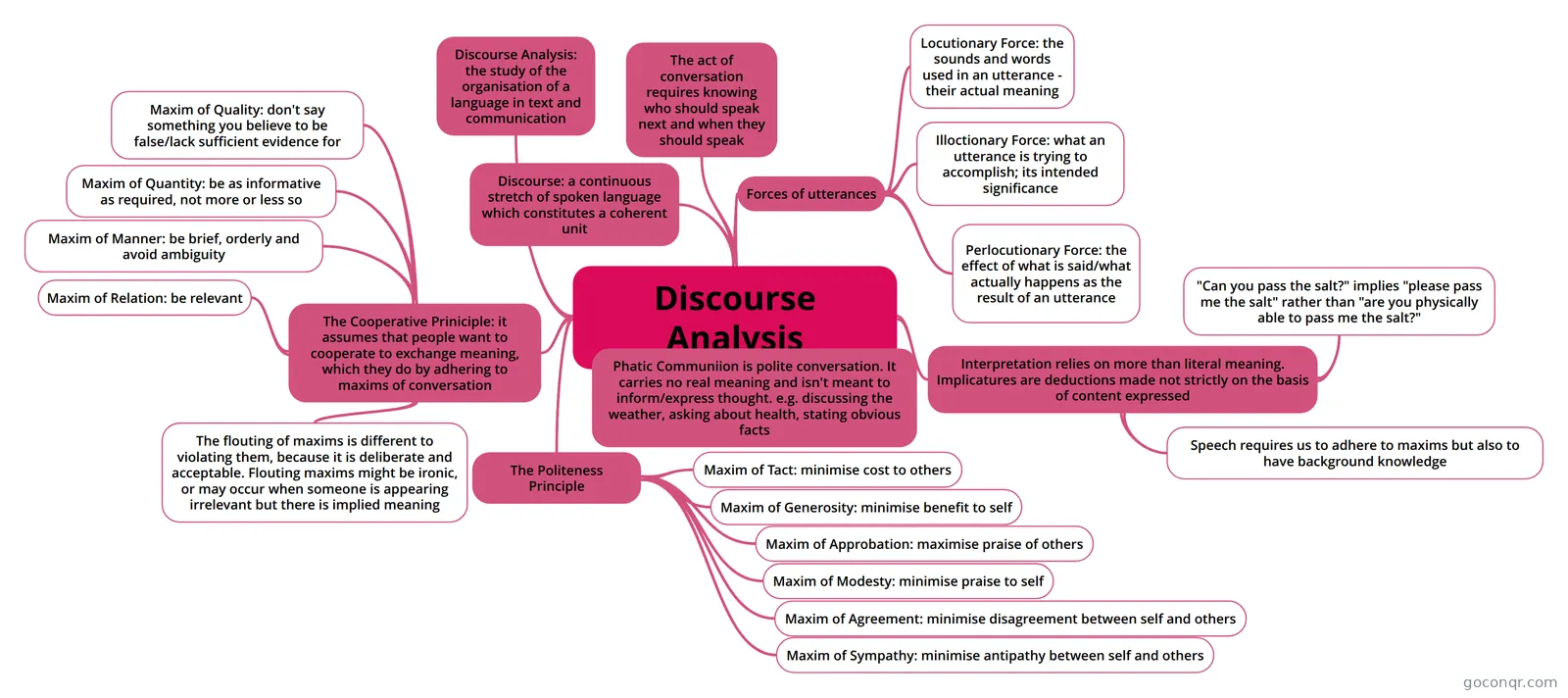 Discourse Analysis
-
THEORY OF SPEECH ACTS
-
Cooperation and Conversational Implicatures
-
Context and inference
More Pragmatics resources
About pragmatics mind maps
GoConqr OriginalExploring pragmatics mind maps
These maps offer different routes through the unit. Speech acts separates locutionary, illocutionary and perlocutionary acts, while Context and Inference offers a starting point for those topics. The map called Politeness includes politeness and power. Other maps cover deixis, functions of language and discourse analysis.
For a focused start, open Speech acts and follow its branches from the basic act of utterance to intention and consequence. Then compare it with the map on illocutionary forces, register and formulaic elements, which includes statements, questions and commands.
Revise with the maps
After reading a map, close it and sketch its main branches from memory. Reopen it to check what you missed, then use another map to revisit a related term. If you want short prompts on individual terms, switch to the flashcards on the unit page; use the notes when you want a written explanation instead. Try rebuilding a map in your own words.
Frequently asked questions
Which mind map could I start with?
Speech acts is a focused place to start. It separates the basic act of utterance, the communicative intention and the result or consequence. You can then compare its branches with the map on illocutionary forces, register and formulaic elements, which includes statements, questions and commands.
What topics do the maps cover?
The listed maps cover context and inference, deixis, speech acts, politeness and functions of language. Grice's Maxims includes the maxim of quantity, while a Pragmatics map brings together terms such as reference, anaphora and presupposition. There are also maps on discourse analysis.
Are the mind maps free to use?
Yes. Every resource listed here is free to open and study without an account. The maps were made by GoConqr users, rather than by GoConqr. A free account also lets you save quiz scores and make your own quizzes, mind maps, flashcards and notes.