
Text Types and Genres
91 resources created by 88 users
This Text Types and Genres page on GoConqr gathers community-made mind maps, quizzes, flashcards and flowcharts on reading and text analysis, from expository and persuasive texts to news reports, recounts, legends and play scripts. It's built for school students revising how different texts work, and for teachers after ready-made material. There are over 80 resources here, including more than 70 mind maps, with most aimed at secondary level. Pick a text type, try a quiz to spot your gaps, then build your own maps.
Top Text Types and Genres resources
-
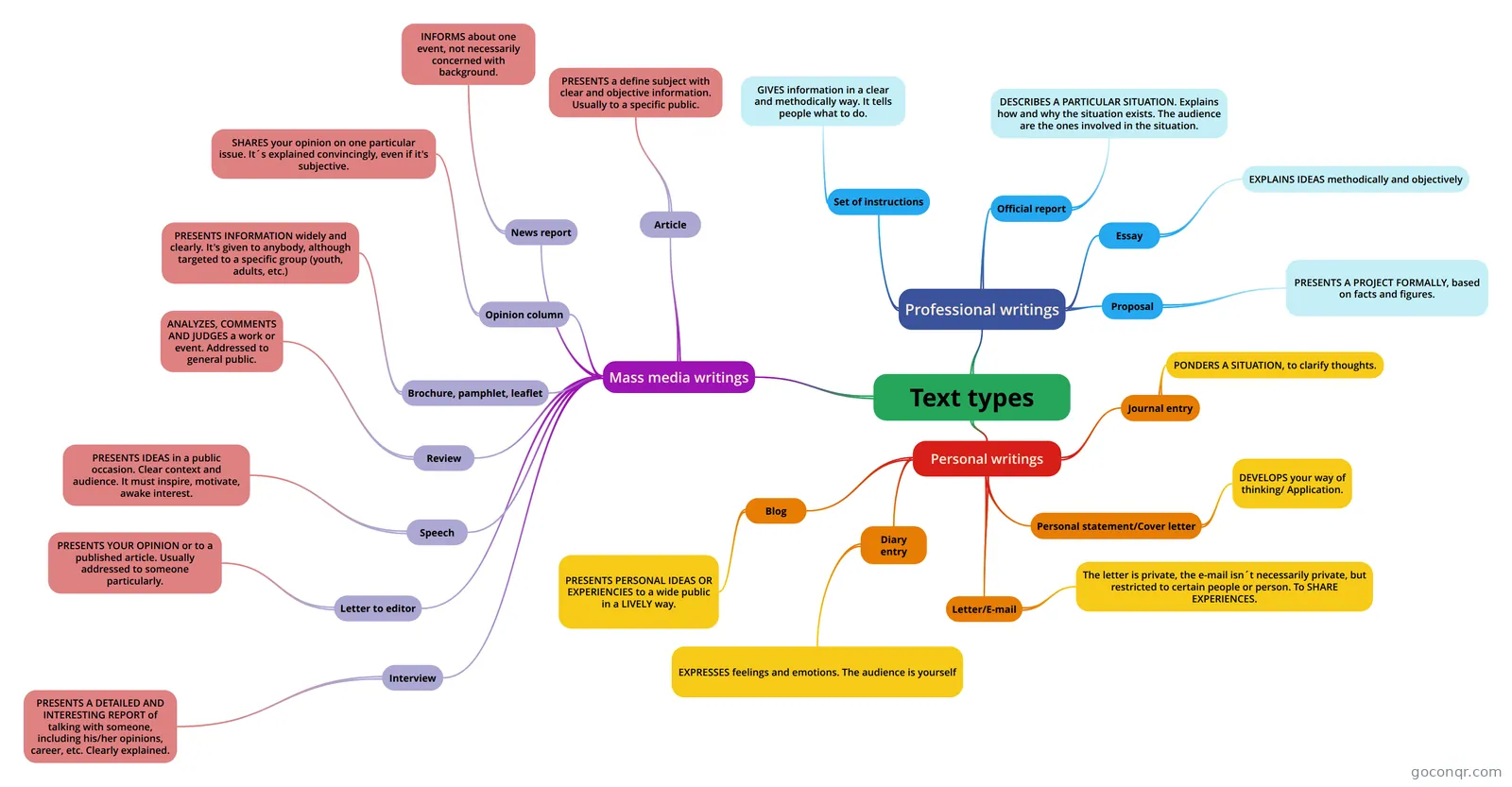 Mind map Text types
-
10 questionsPurposes of non-fiction writing What is meant by form, audience and purpose in relation to writing tasks
-
Mind map Text types
-
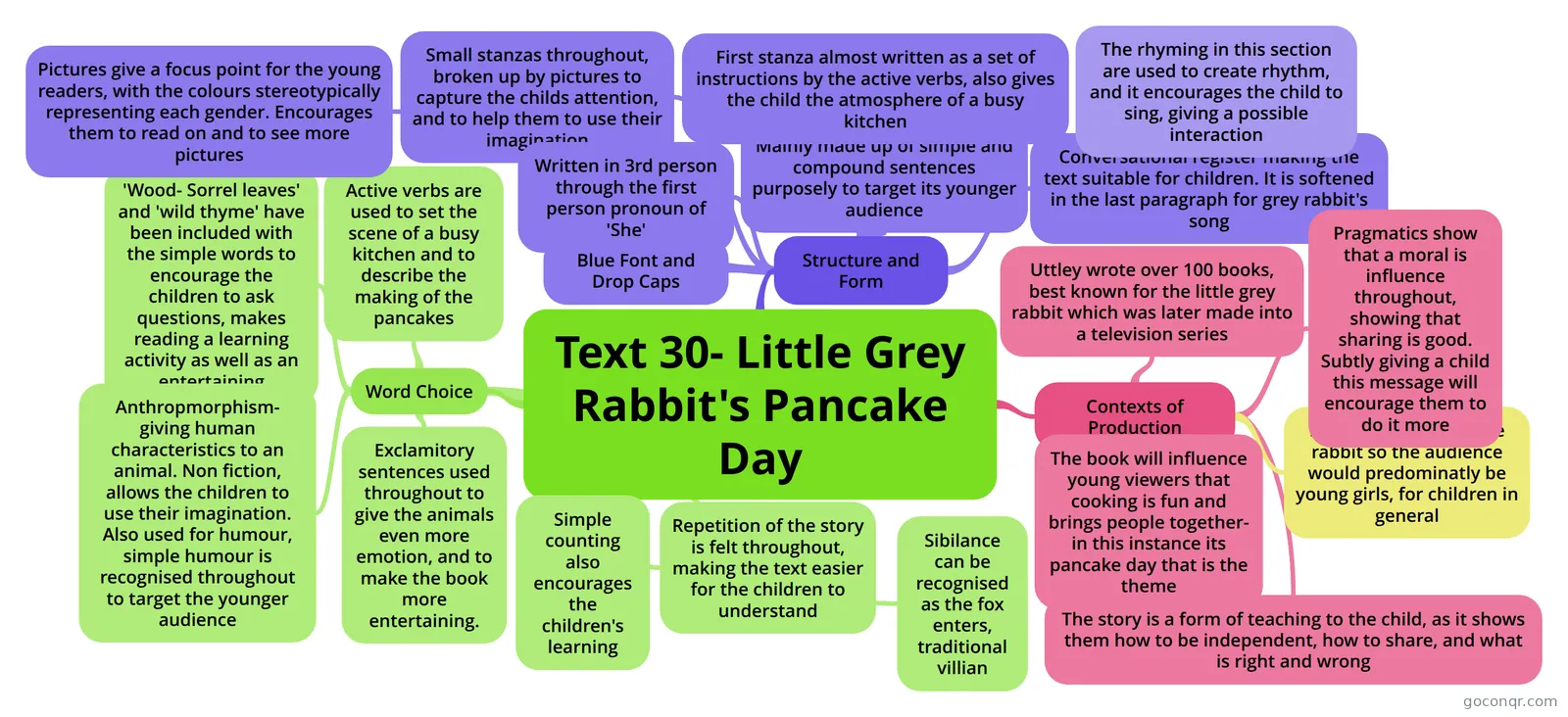 Mind map Text 30- Little Grey Rabbit's Pancake Day
-
Mind map Types of Expository Texts
-
16 cardsInformational Text Features Table of Contents
-
Mind map Expository Writing
-
13 cardsText Features Study Cards
Quizzes
-
10 questionsPurposes of non-fiction writing What is meant by form, audience and purpose in relation to writing tasks
-
10 questionsAnswer the questions about description. What is a description?
-
6 questionsquiz on the acricles. what is the mail online article full off?
-
10 questionsPlay Scripts The punctuation mark after a character's name is...
-
3 questionsEnglish What is subject?
Mind maps
See all 77 mind maps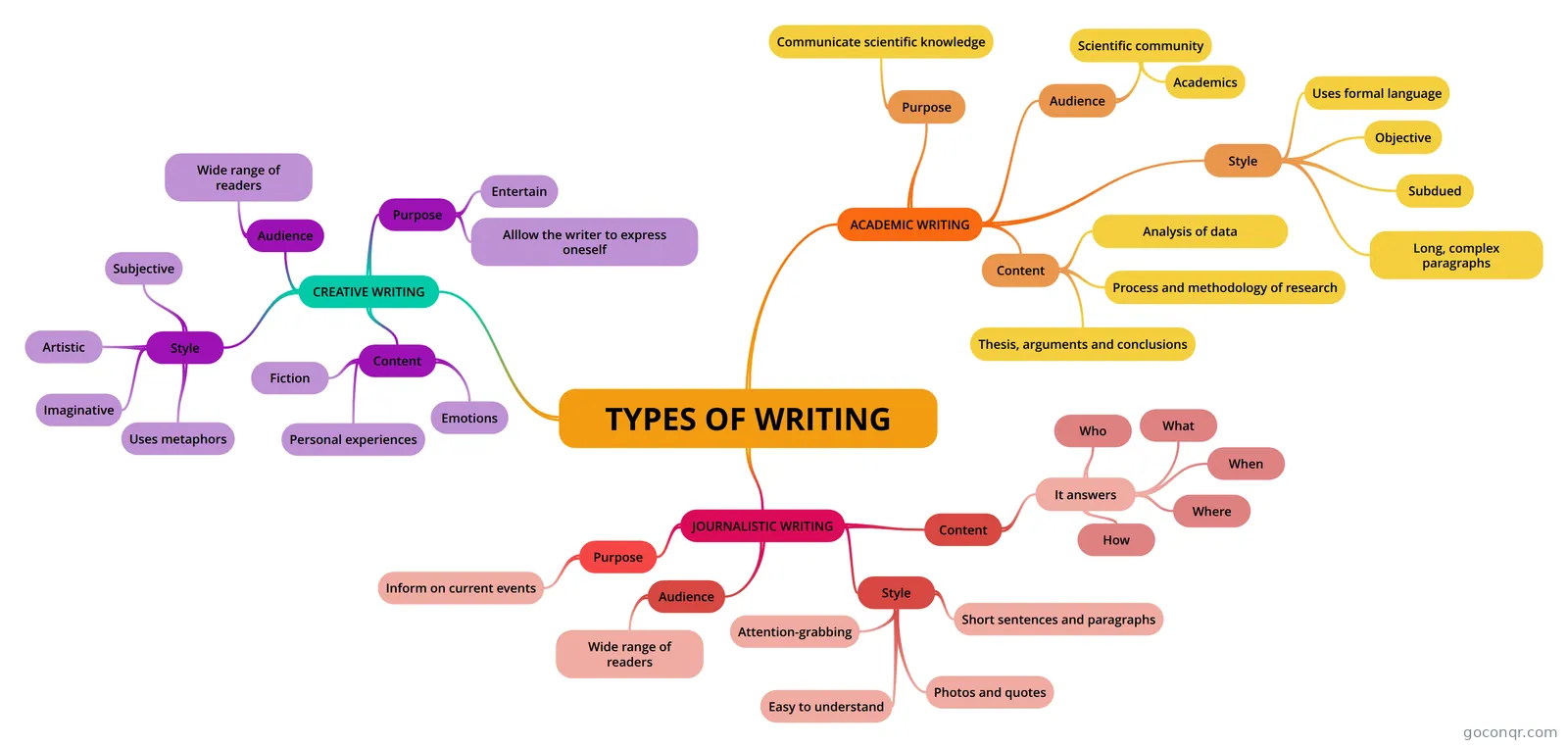
Flashcards
Flowcharts
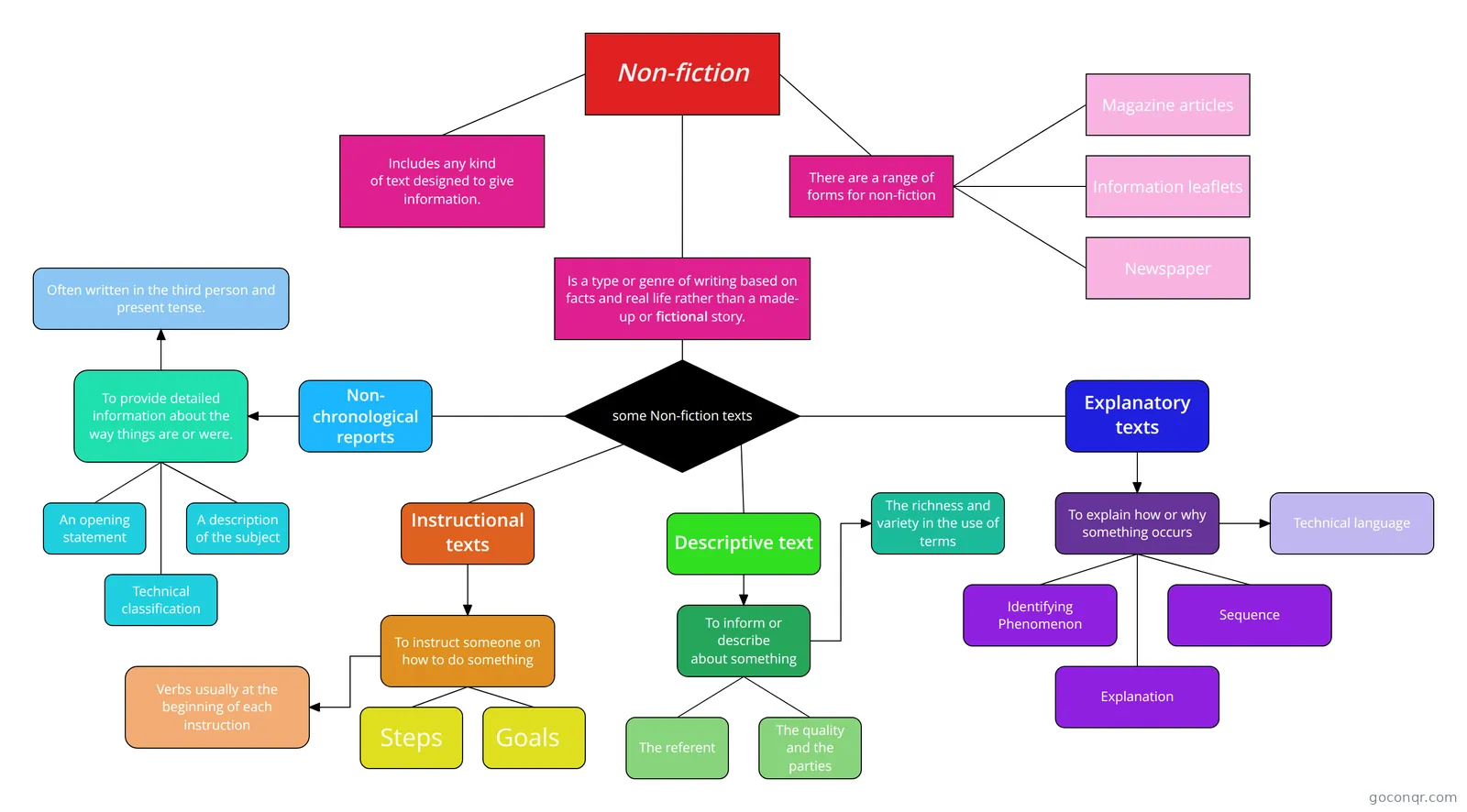
Topics in Text Types and Genres
More Spanish language (as a school subject) topics
About Text Types and Genres
GoConqr OriginalWhat this page covers
This unit is about recognising and comparing kinds of writing. Most of the material is mind maps, with a few quizzes, flashcard decks and flowcharts alongside them. The maps look at expository, persuasive, discussion, informative, narrative and non-fiction texts, plus journalistic writing and news reports.
Where to start
Begin with the Text types mind map. It sets out personal writing such as a diary entry, journal entry, letter or e-mail, and blog. Next, open Types of Expository Texts. It splits expository writing into description, temporal sequence, explanation, problem/solution, definition and comparison/contrast.
Then move on to the persuasive material:
- Persuasive Text, which covers structure and language features, from the opening statement to the supporting evidence.
- Persuasion texts, which explains the purpose of arguing a case from one point of view.
- Discussion texts, which looks at taking a position, supporting arguments and refuting counter-arguments.
Using quizzes and maps together
Read a map first, then test yourself. The quiz Purposes of non-fiction writing asks what form, audience and purpose mean in a writing task. It works well after the maps on types of writing. The Play Scripts quiz and the quiz on description are useful for checking narrower topics.
The flashcard deck Informational Text Features covers items such as the table of contents, glossaries, index, diagrams, captions and sidebars. Use it to learn the vocabulary of presentation. The map Presentation Devices fits well with it.
Fiction and other forms
For stories, try the maps on Analysing Fiction, Legends and NARRATIVE. The map on Little Grey Rabbit's Pancake Day looks at the contexts of production for a single text. One listed resource mentions GCSE English, so some material will suit students working at that stage.
Where it fits
This unit sits in the Reading and Text Analysis strand of Spanish language as a school subject. Several maps and flowcharts repeat the same topic from different angles, so compare them and keep what helps.
Choose one text type today, open its map, then see how much you can recall without looking.
Frequently asked questions
Which resource should I open first?
Start with the Text types mind map. It lists personal writing such as diary entries, journal entries, letters, e-mails and blogs. After that, Types of Expository Texts gives a clear set of categories, and Persuasive Text shows how an argument is built.
What do the mind maps on this page cover?
They cover expository, persuasive, discussion, informative, narrative and non-fiction texts, along with journalistic writing, news reports, recounts, legends and presentation devices. Some maps also ask what vocabulary and organisation each writing form uses, which helps you plan your own writing.
Are there quizzes and flashcards as well?
Yes. There are quizzes on the purposes of non-fiction writing, description and play scripts, and flashcard decks on informational text features and text features. They let you check what you have read in the maps, and they are a quick way to find topics to revisit.
Are the resources free to use?
Yes. Every resource listed here is free to open, study and take, with no account needed. They were made by GoConqr users, not by GoConqr itself. A free account also saves your quiz scores and lets you make your own quizzes, mind maps, flashcards and notes.
Which exams or levels do these suit?
Most of the resources are at secondary level, and a small share is for younger learners. One listed resource mentions GCSE English. Check each map or quiz to see whether it matches your course, since the resources were made by different users.
What if I cannot find the text type I need?
Try related titles first. Informative text, non-fiction and expository writing appear under several names, so a search of those words may help. If something is still missing, you can build your own mind map or flashcards for it.