
Argumentation, Persuasion and Rhetoric
28 resources created by 27 users
This Argumentation, Persuasion and Rhetoric page on GoConqr gathers community-made quizzes, mind maps, flashcards, notes and slides, from rhetorical devices and persuasive writing frames to the classical, Toulmin and Rogerian approaches to argument. It's built for school students practising how to argue and persuade in writing, and for teachers after ready-made material, with university students dipping in now and then. There are over 220 resources here, including more than 160 mind maps and 7 quizzes. Try a quiz first, then explore the maps and flashcards.
Top Argumentation, Persuasion and Rhetoric resources
-
10 questionsWriters' techniques 1: Rhetorical devices Why would anyone want to hunt foxes with dogs? This is an example of which persuasive technique?
-
11 questionsPersuasive Devices 'Who here doesn't believe that education is important?' This is an example of emotive language being used a...
-
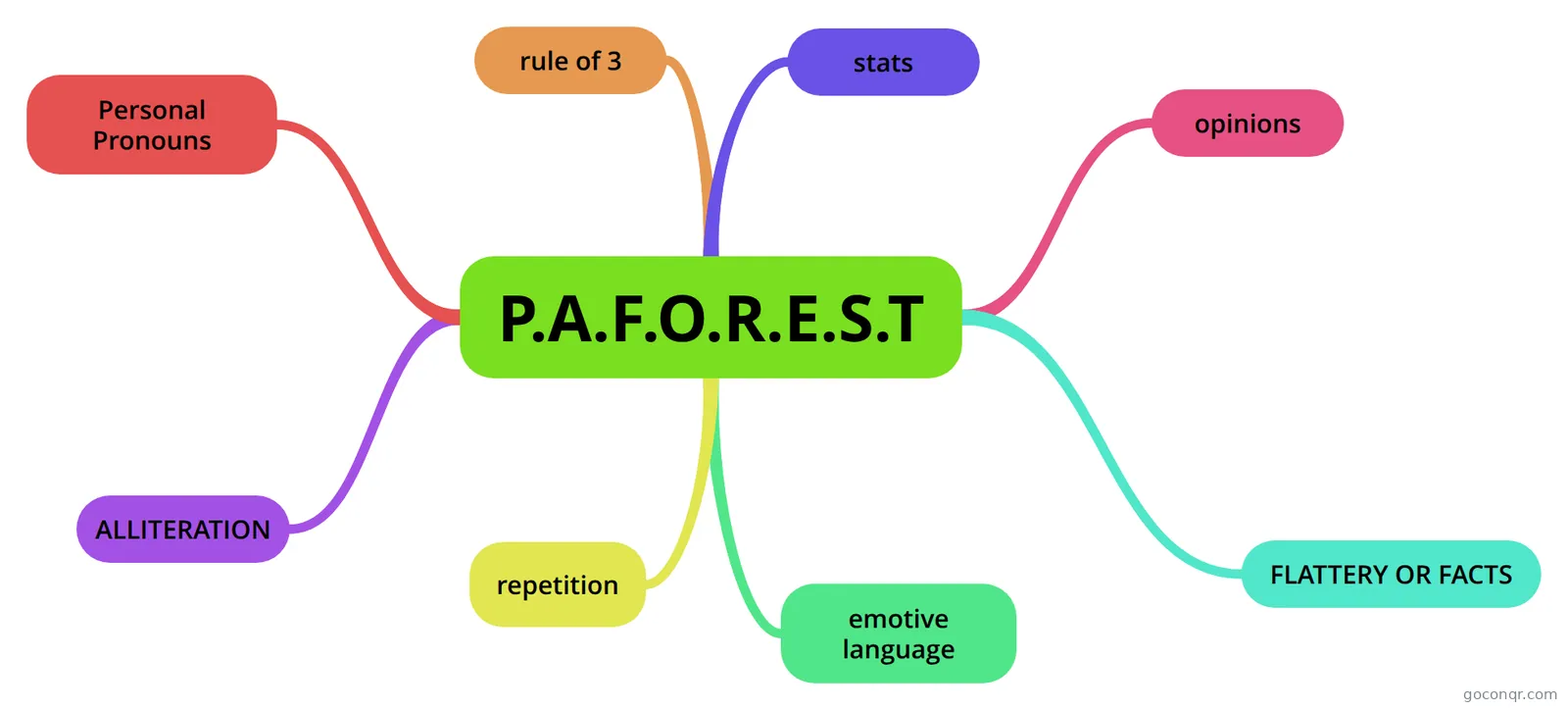 Mind map P.A.F.O.R.E.S.T
-
39 cardsArgument Notes What are the three types of Persuasion?
-
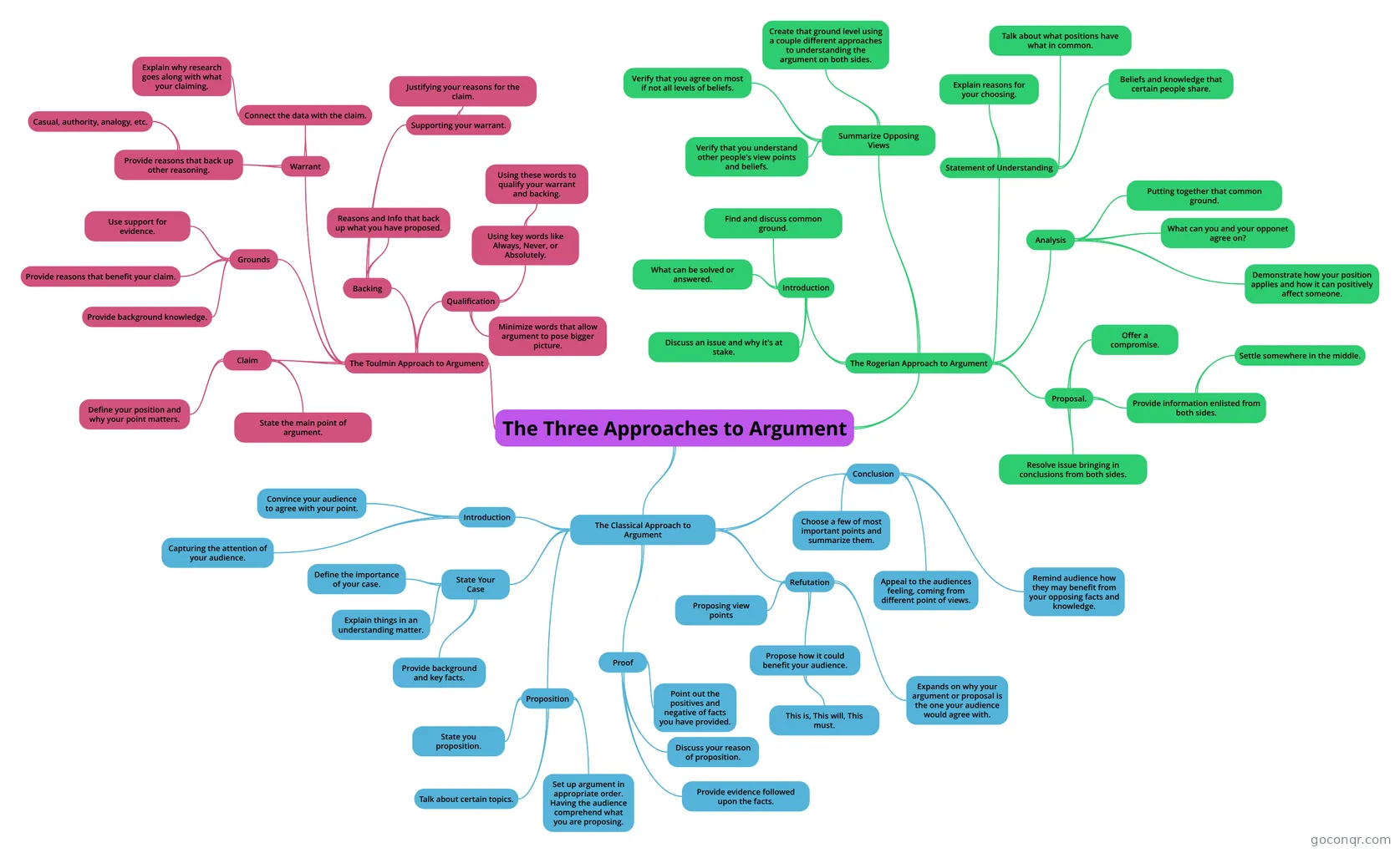 Mind map The Three Approaches to Argument Defining all approaches to present an argument.
-
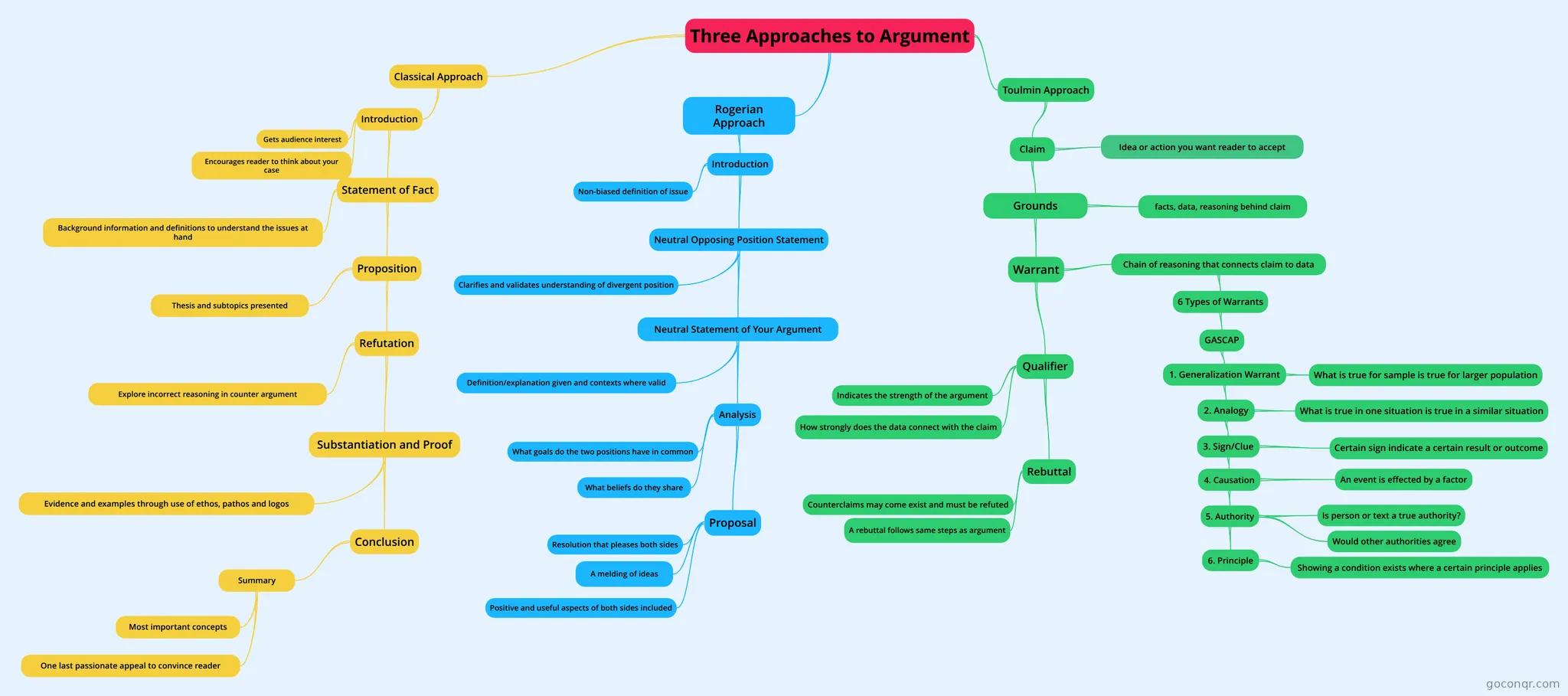 Mind map Three Approaches to Argument Maria Ali Language Arts 11 Mrs. Hetzel 2-1-15
-
17 cardsPersuasive Ethics Claim of Fact
-
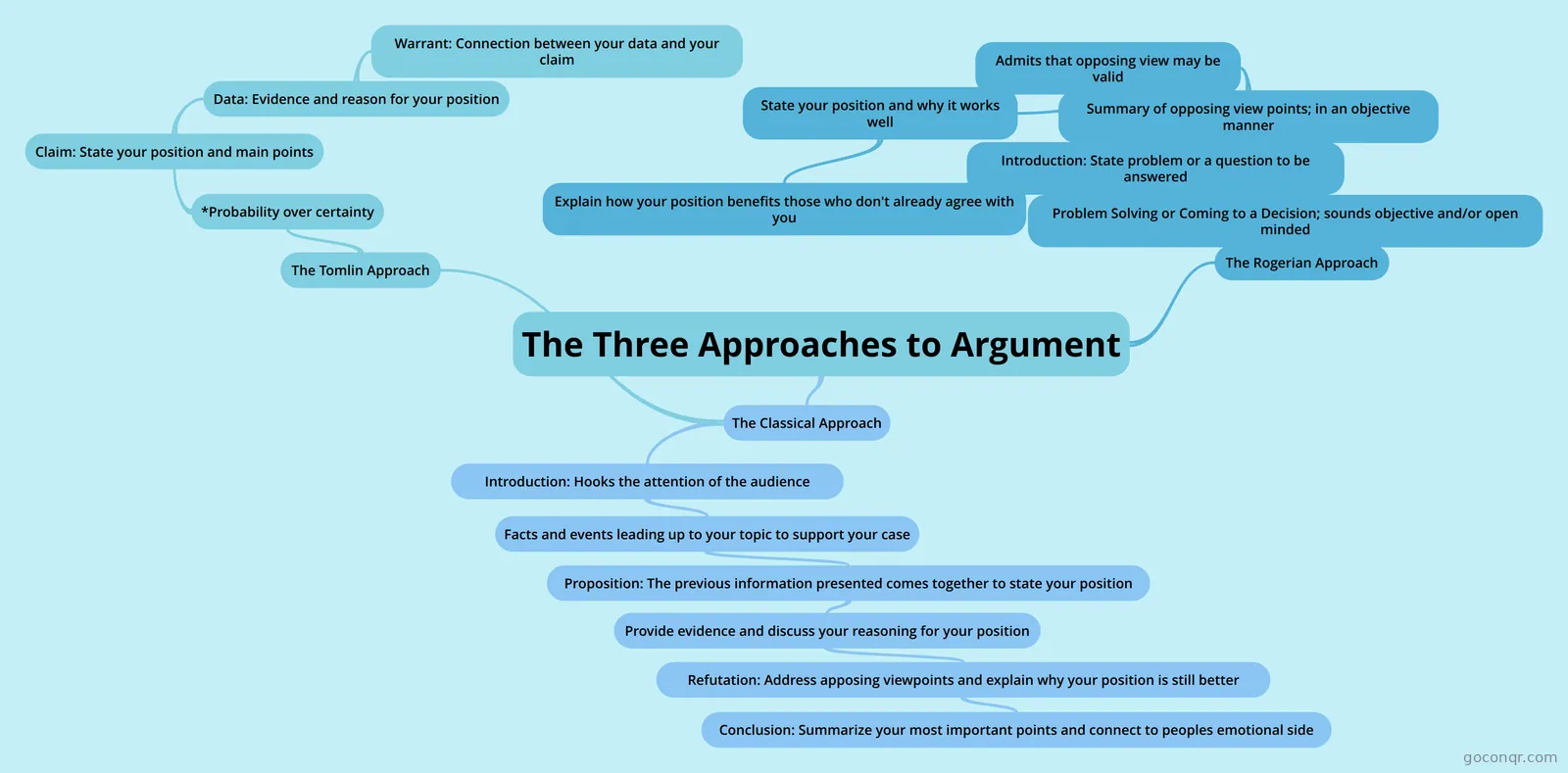 Mind map The Three Approaches to Argument The Three Approaches to Argument Wed Map
Quizzes
Mind maps
See all 17 mind maps-
P.A.F.O.R.E.S.T
-
The Three Approaches to Argument Defining all approaches to present an argument.
-
Three Approaches to Argument Maria Ali Language Arts 11 Mrs. Hetzel 2-1-15
-
The Three Approaches to Argument The Three Approaches to Argument Wed Map
-
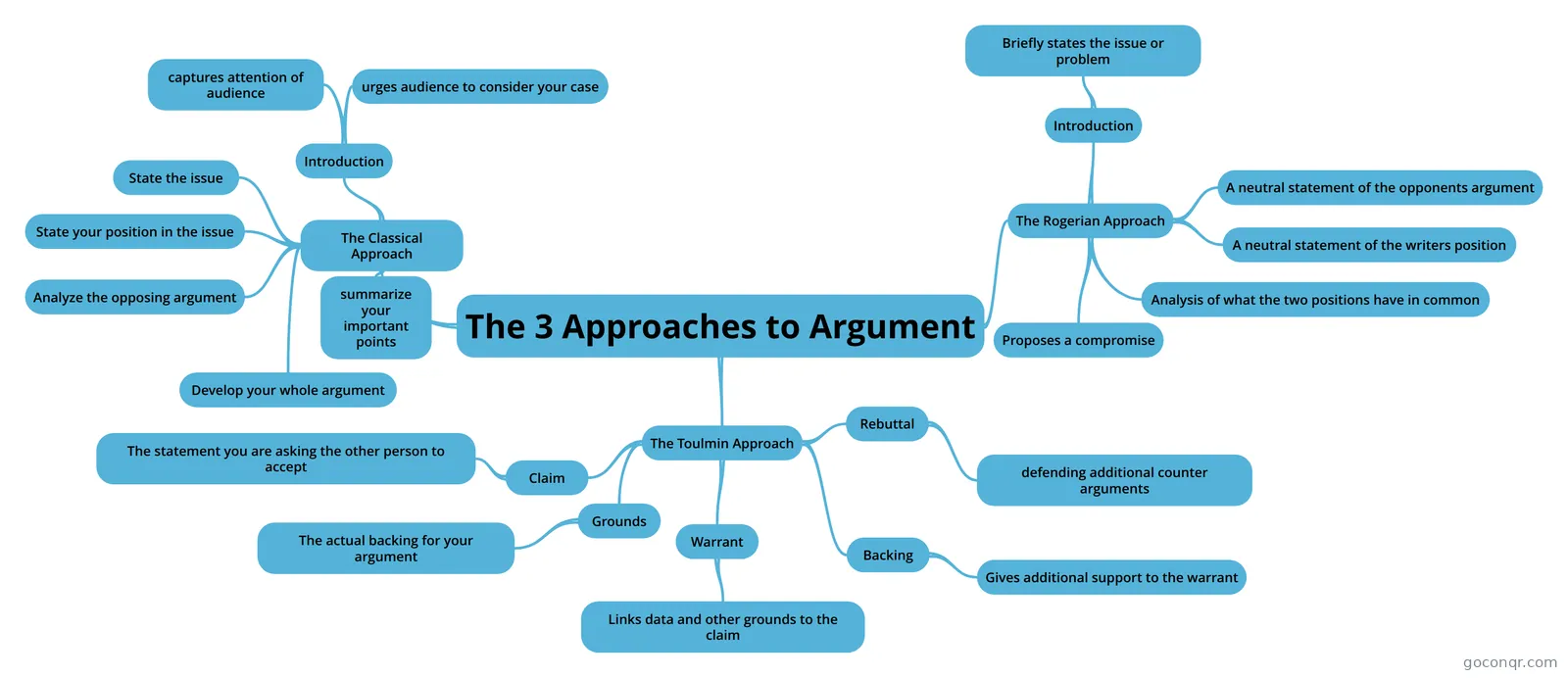 The 3 Approaches to Argument Describes the three approaches to arguments.
-
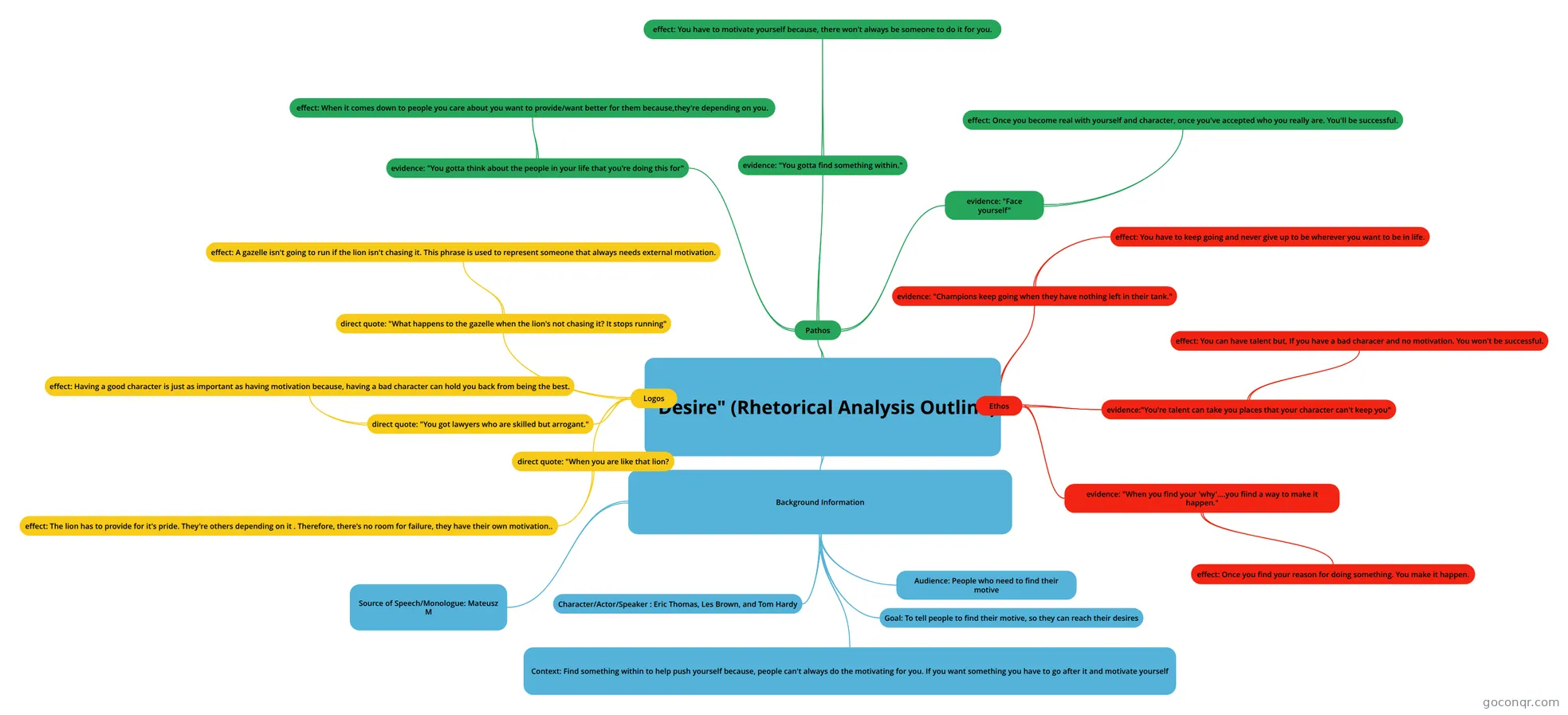 "Desire" (Rhetorical Analysis Outline) Rhetorical Analysis Outline
-
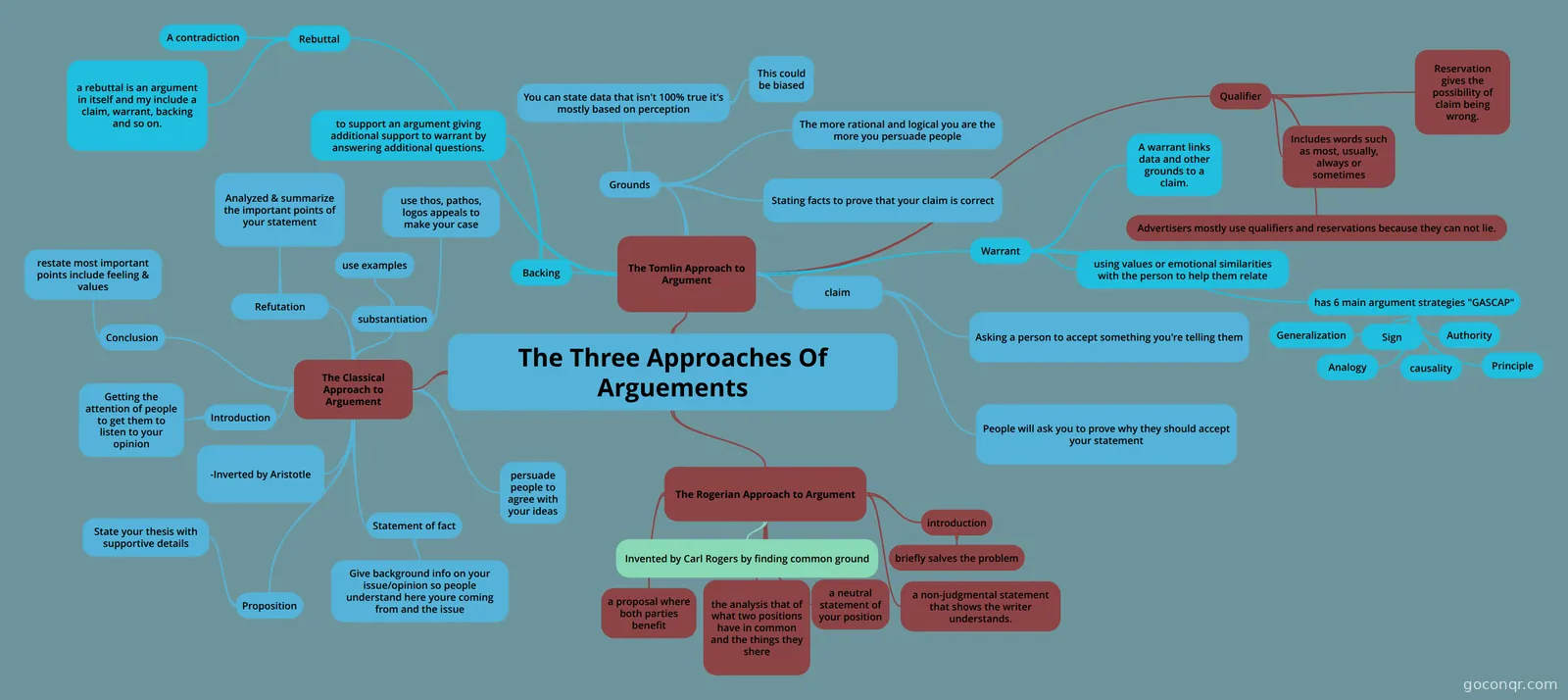 The Three Approaches Of Arguements three approaches of arguments. details
-
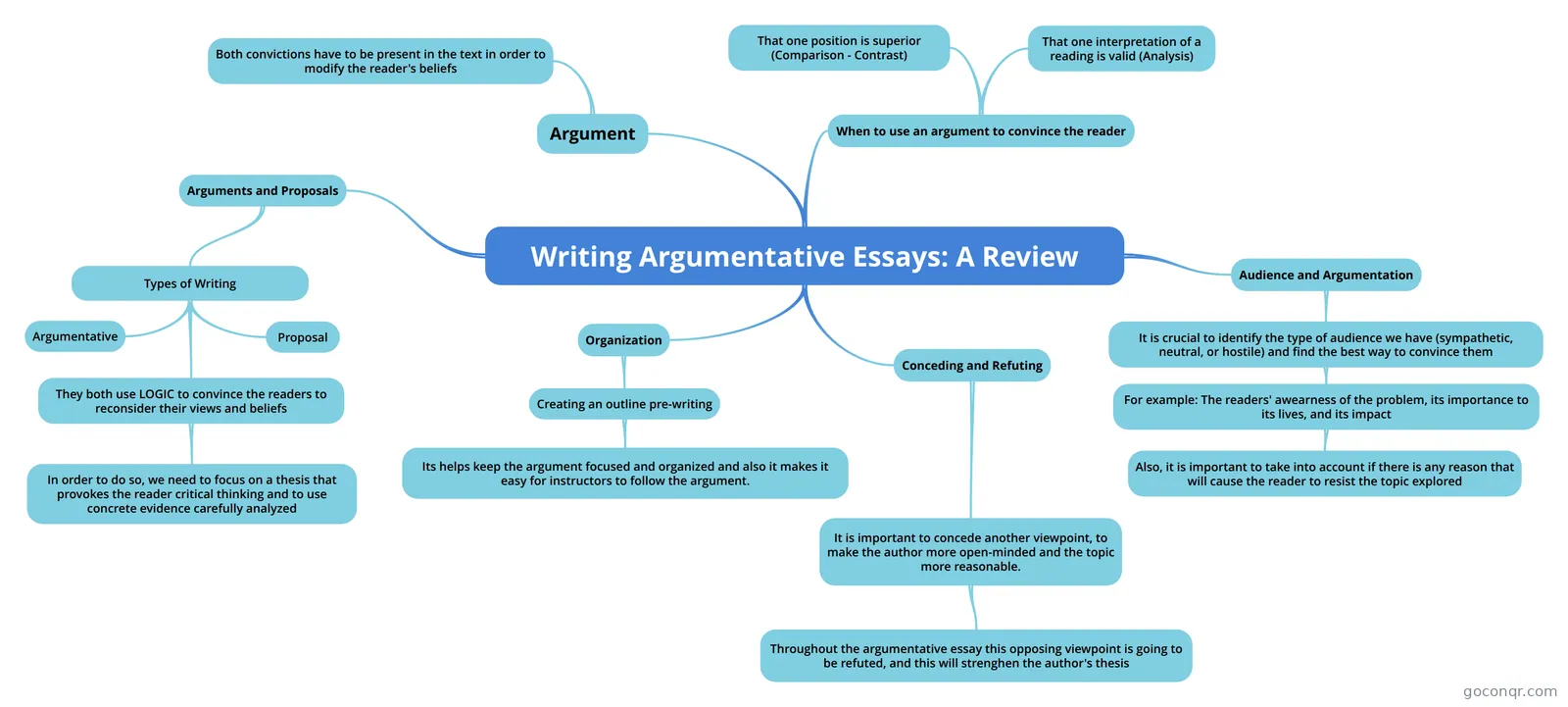 Writing Argumentative Essays: A Review
Flashcards
-
39 cardsArgument Notes What are the three types of Persuasion?
-
17 cardsPersuasive Ethics Claim of Fact
-
6 cardsRhetoric
-
3 cardsPersuasive Devices Persuasive Language Techniques
-
24 cardsFeatures of Language List of three
-
10 cardsText Features Text features used in persuasive language.
-
3 cardsAssertion Flashcards
Notes
-
' A FOREST' - a persuasive writing frame. A - alliterationF - factO - opinionR -rhetorical questionE - expertS - statisticsT - The rule of three (mention the same idea three times but in different ways) TASKS:1. Write a final sentence for paragraph 1 and an o...
-
Thesis Statements Closed thesis statement is a statement of the main idea of argument that also previews major points writer intends to make. it limits the number of points writer will make. Open thesis statement is one that does not l...
More Spanish language (as a school subject) topics
About Argumentation, Persuasion and Rhetoric
GoConqr OriginalWhat this unit covers
This unit sits in the Writing strand of Spanish language (as a school subject). Its resources look at how writers build a case and win over a reader. Some focus on persuasive techniques, others on how to structure an argument from introduction to conclusion.
Where to start
Begin with the quiz on rhetorical devices, which asks why anyone would hunt foxes with dogs and checks whether you can spot a rhetorical question. Then try the Persuasive Devices quiz, which separates emotive language from rhetorical questions and other techniques. Both are quick ways to find what you already know.
Maps for structure
The mind maps are the largest part of the page. Many of them set out the three approaches to argument: the Classical approach, the Toulmin approach and the Rogerian approach. The Classical version moves from an introduction that gets attention, through a statement of fact, to a proposition. The Argument mind map gives a simple essay plan: a brief introduction that ends with your thesis, then body paragraphs that open with a topic statement and use facts, statistics and evidence. Persuade and Argue sets out two memory aids, A.F.O.R.E.S.T for persuading and A.R.M.I.E.S for arguing.
Flashcards and notes
Use the Rhetoric flashcards to learn terms such as chiasmus, antithesis, asyndeton, polysyndeton and litotes. Persuasive Ethics covers claims of fact, value and policy, along with supporting statements such as testimony, analogy and statistics. Argument Notes asks about ethos and pathos. For worked writing, read the Example Question (c) note, an exemplar answer that shows how a writer uses statistics about the tobacco industry to persuade.
A simple study order
- Take a quiz to spot gaps.
- Read a mind map on the topic you missed.
- Learn the terms with a flashcard deck.
- Read the exemplar note, then write your own paragraph.
Teachers can pick a map or deck to set as a starter task. Choose one resource today and see how it fits your next piece of writing.
Frequently asked questions
Which resource should I open first?
Start with the quiz on rhetorical devices or the Persuasive Devices quiz. Both test whether you can name techniques such as rhetorical questions and emotive language. Once you know which ones trip you up, move on to the Rhetoric flashcards or the Persuade and Argue mind map.
What do the mind maps cover?
Most of the mind maps cover the three approaches to argument: Classical, Toulmin and Rogerian. Others deal with structuring arguments, argument types, the DAFOREST persuasive checklist and writing argumentative essays. Together they show how to plan an introduction, support points and a conclusion.
Are the resources free to use?
Yes. Every resource listed here is free to open, study and take, with no account needed. A free account also saves your quiz scores and lets you make your own quizzes, mind maps, flashcards and notes.
Who made these resources?
They were made by GoConqr users, not by GoConqr itself. Over 200 contributors have added material, so you will see different styles and some repeated topics, such as the many versions of the three approaches to argument.
Which levels and exams do they suit?
Most resources are secondary level, so they suit school students. Some mention AP Lang and an AS English Language quiz on rhetoric and power in advertising. A smaller share is university level. Teachers can use the maps, slides and flashcards as ready-made class material.
What if I can't find the topic I need?
Try a nearby resource first, such as the flashcards on language features or persuasion techniques. If the topic is still missing, you can make your own quiz, mind map or flashcards and build exactly the set you want.