
Verbs and Verb Conjugation
507 resources created by 401 users
This Verbs and Verb Conjugation page on GoConqr gathers community-made quizzes, mind maps, flashcards, notes and slides, from present tense endings and ser and estar to the preterite, imperfect, reflexive verbs and the subjunctive. It's built for school students practising conjugation and tenses, and teachers after ready-made material. There are over 470 resources here, including more than 50 quizzes, over 150 mind maps and over 210 flashcards, mostly at secondary level. Pick a topic, try a quiz to find your gaps, then make your own.
Select topic
- Spanish Infinitives and Common Verbs21
- Spanish Present Tense91
- Spanish Irregular Present Tense Verbs24
- Ser and Estar27
- Tener Conjugation and Expressions9
- Spanish Reflexive Verbs55
- Spanish Preterite Tense25
- Spanish Imperfect Tense11
- Spanish Preterite vs. Imperfect15
- Spanish Progressive Tenses6
- Spanish Perfect Tenses and Past Participles6
- Spanish Future Tense8
- Spanish Conditional Tense10
- Spanish Subjunctive7
- Spanish Imperative and Commands5
Top Verbs and Verb Conjugation resources
-
50 cards50 frases y términos de vocabulario relacionados con Kendrick Lamar - Tiempo presente | Español intermedio (With English translations) Él es un músico estadounidense.
-
11 cardsSpanish Tense Flashcards Preterite Tense (Past Tense)
-
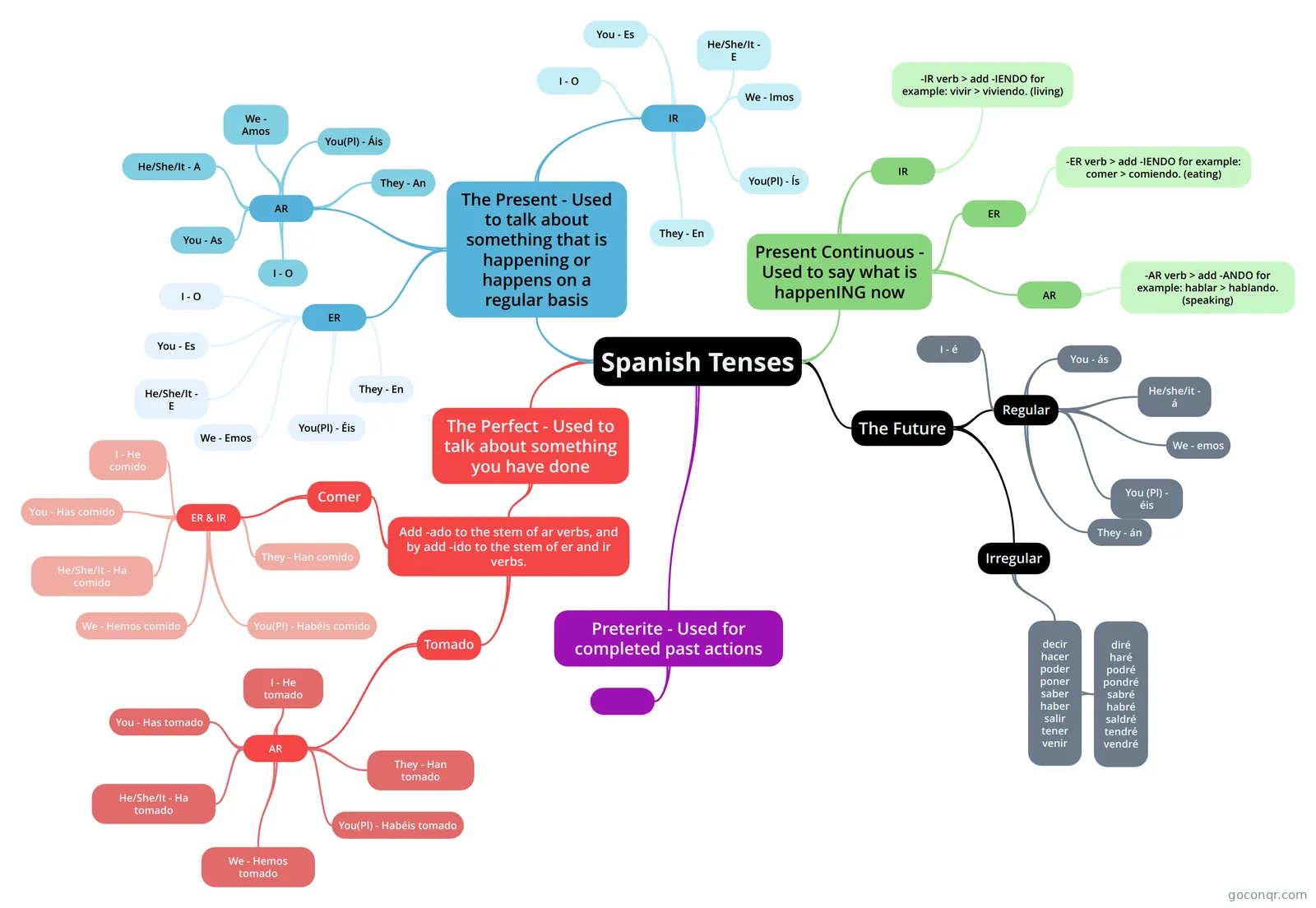 Mind map Spanish Tenses
-
47 cardsSpanish Verbs Verbs from class 11
-
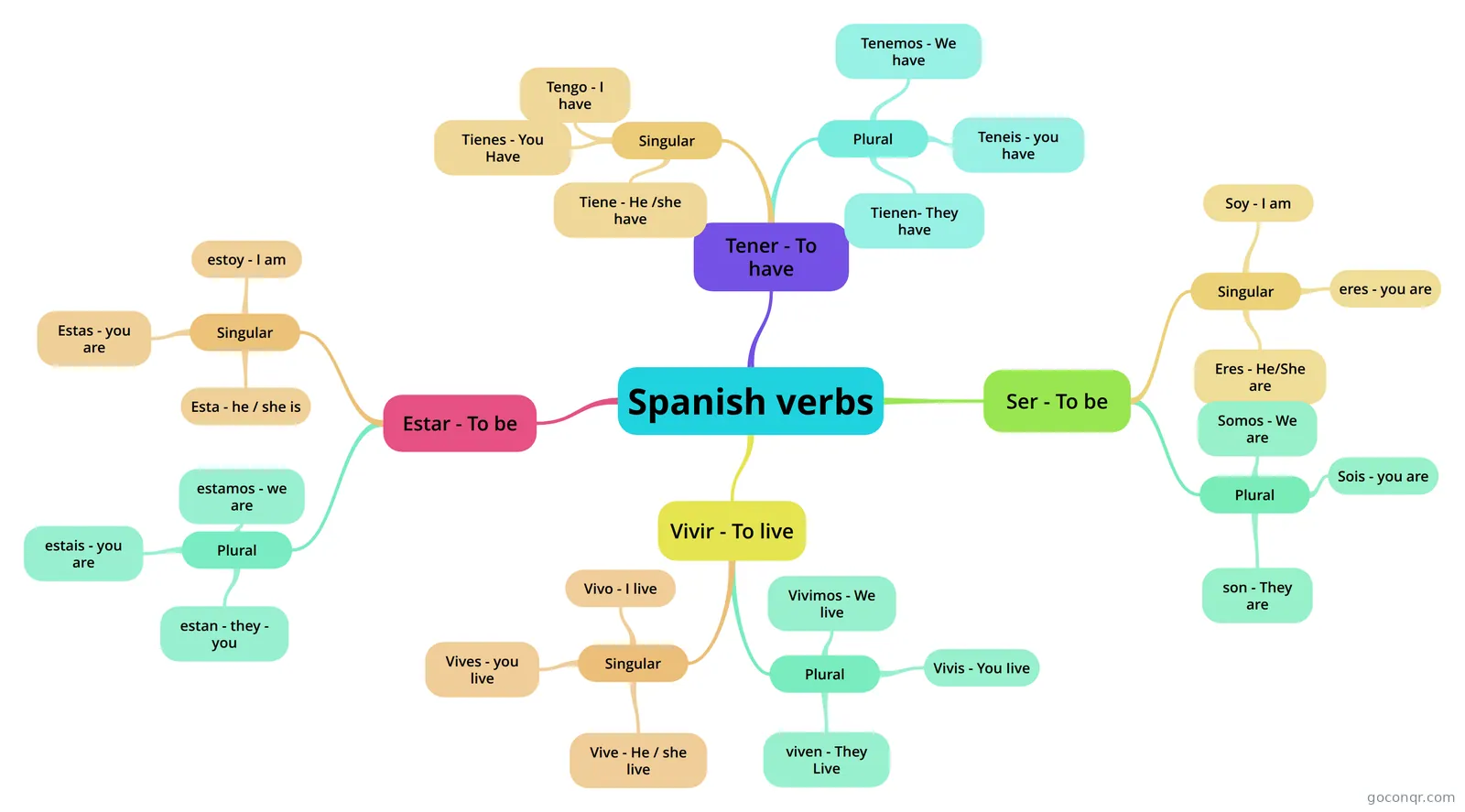 Mind map Spanish verbs
-
5 questionsSpanish 1 Unit 6 Lesson 1 Do you use tocar or jugar when referring to playing an instrument?
-
12 cardsSpanish Preterite Verb Endings (ar/er/ir) yo preterite (ar)
-
4 questionsSpanish 2 Unit 6 Lesson 1 The format for present progressive tense is: estar (in the present tense) + a present participle
Quizzes
See all 66 quizzes-
5 questionsSpanish 1 Unit 6 Lesson 1 Do you use tocar or jugar when referring to playing an instrument?
-
4 questionsSpanish 2 Unit 6 Lesson 1 The format for present progressive tense is: estar (in the present tense) + a present participle
-
54 questionsPlacement Test Beginners 2 NOTICE: This test has the intention to get a better understanding of your Spanish proficiency in order to h...
-
73 questions(UNTIMED) Spanish II verb meanings & PRETERITE practice!
-
18 questionsSpanish 1 Unit 2 Lesson 4 How do you conjugate an -AR verb to Yo form in present tense?
-
21 questionsSER or ESTAR ¿Cómo se llama el ejercicio?
-
17 questionsSpanish Pret/Imp/Prog QUIZ Check all the imperfect endings for -AR
-
39 questionsSpanish Conjugation
Mind maps
See all 167 mind mapsFlashcards
See all 217 flashcards-
50 cards50 frases y términos de vocabulario relacionados con Kendrick Lamar - Tiempo presente | Español intermedio (With English translations) Él es un músico estadounidense.
-
11 cardsSpanish Tense Flashcards Preterite Tense (Past Tense)
-
47 cardsSpanish Verbs Verbs from class 11
-
12 cardsSpanish Preterite Verb Endings (ar/er/ir) yo preterite (ar)
-
53 cardsunidad 10 llegar a la meta What are we going to learn?
-
54 cardsSemester 2 Final How do you form the present subjunctive?
-
150 cardsimperfect spanish verbs -present, simple past & imperfect
-
43 cardsEl preterito y el imperfecto ¿Cómo conjugas -ar en pretérito?
Flowcharts
Notes
See all 27 notes-
Saber and Conocer In Spanish, there are two verbs that express the idea "to know". These two words are "saber" and "conocer". The verb you choose depends upon the context which it is used. These words are not interchangeable....
-
Preterite Tense Notes Spanish Regular Formation Take the stem and then add the appropriate ending. Note that the first and third person singular endings all have an accent! Irregular Preterites There are several verbs that do not follow the regula...
-
Semester 1 Review Specifics: For the semester final, you are expected to know the following information - notice the web code is for our book website: www.PHSchool.com A. It would be helpful to look at the test prepa...
-
Reflexive Verbs What is a Reflexive Verb? How to Conjugate Practice
-
GCSE Spanish - Verb Tenses #1 VERBS in the Present Tense The present tense is used in two cases:1) When you want to talk about something that is happening now.2) When you want to talk about...
-
Verb Forms and Tenses Present Tense (Indicative) Regular AR Verbs o as a amos an ER/IR Verbs o es e imos en Irregular Ser and Estar ser: to be (identity, occupation, origin, telling time) soy eres es somos son estar: to be (location,...
-
The preterite tense Preterite tense- something done in the past. Regular verbs(AR) Comprar-To buy &n...
-
Spanish Tenses Past -ar verbs (hablar) habléhablastehablóhablamoshablasteis hablaron -er verbs (comer)comícomistecomiócomimoscomi...
Slides
See all 25 slidesTopics in Verbs and Verb Conjugation
More Spanish language (as a school subject) topics
About Verbs and Verb Conjugation
GoConqr OriginalWhat this unit covers
This page sits in the Verbs and Tenses strand of Spanish language. The resources are made by GoConqr users and work through the main tenses one by one. The mind map Spanish Tenses sets out the present, with -ar, -er and -ir endings for each person. Other maps cover the verb ir, the imperfect tense and reflexive verbs, which have many versions to compare.
Where to start
Begin with the present tense. Read the notes called The Present Tense, then open the Spanish Tenses mind map to see the endings together. Next, look at Ser and Estar and Saber and Conocer, two pairs of verbs where the context decides which one you choose.
Moving on to the past
Once the present feels steady, move to the past tenses. The Preterite Tense Notes Spanish explain regular endings and point out the accents on the first and third person singular. The flashcards Spanish Preterite Verb Endings (ar/er/ir) let you drill each person. Then compare the preterite with the imperfect in the notes and maps on the imperfect.
Using quizzes and maps together
- Read a map or note on one tense.
- Take a quiz such as Spanish Conjugation or SER or ESTAR without looking back.
- Note the forms you missed and revisit the map.
- Test those forms again with flashcards.
Students preparing for GCSE Spanish will also find speaking and writing prompt maps and a note on verb tenses. Teachers can use the slide sets, such as the one on reflexive verbs, in class.
Make it your own
Every resource here is free to open. When you are ready, choose one tense, work through its quiz and then build a map or flashcard set in your own words.
Frequently asked questions
Where should I start with Spanish verbs?
Start with the present tense. The notes called The Present Tense and the Spanish Tenses mind map show regular endings for -ar, -er and -ir verbs. After that, move on to ser and estar, then the preterite and imperfect, once the present forms feel familiar.
Are these resources free to use?
Yes. Every resource listed on this page is free to open, study and take, with no account needed. They were made by GoConqr users, not by GoConqr itself, so it is worth comparing a few versions of a topic to find the one that suits you.
Which exams do the resources suit?
The resources are mostly at secondary level. The listed material mentions GCSE Spanish, including a note on verb tenses and mind maps with speaking and writing prompts. Many other items are class study guides, unit quizzes and revision slides that work for general school practice.
What do the mind maps cover?
The mind maps cover the present, preterite and imperfect tenses, the verb ir, ser and estar, and many on reflexive verbs. They lay out endings and uses on one screen, so they suit a first look at a tense or a quick check before a quiz.
Can teachers use anything here?
Yes. Teachers can use the slide sets, such as the reflexive verb presentations and the imperfect tense slides, along with ready-made quizzes and flashcards. They can set a quiz as a starter or share a mind map to recap a tense with the class.
What if I cannot find a topic I need?
Try a nearby topic first, as the page also lists commands, the conditional, stem-changing verbs and the subjunctive. If something is still missing, a free account lets you make your own quizzes, mind maps, flashcards and notes and save your quiz scores.