
The Design Process
376 resources created by 347 users
This page on The Design Process gathers community-made mind maps, quizzes, flashcards and notes, from a Desk Lamp design map and Resistant Materials to task analysis, sustainability and the engineering design process. It's built for school students revising GCSE Design and Technology topics, and for teachers after ready-made material, with a few university students dipping in too. There are over 350 resources here, including more than 290 mind maps and over 15 quizzes. Pick a map, try a quiz to find your gaps, then make your own.
Select topic
- Design Thinking13
- Task Analysis and Research29
- Design Briefs and Specifications20
- Design Elements and Factors7
- Inclusive Design and Human Factors10
- Sustainable and Ethical Design11
- Materials and Manufacturing15
- Idea Generation and Concept Selection7
- Design Communication and CAD/CAM8
- Lighting Design Projects9
Top The Design Process resources
Quizzes
See all 20 quizzes-
2 questionsY8 Subject knowledge test What saw would you use to cut wood in a straight line?
-
73 questionsHuman factors 2 REM sleep can also be referred to as.
-
24 questionsEngineering Unit 1 Key terms A person using the services of a professional person or organization
-
10 questionsengineering design process DEFINITION OF CONSTRAINT
-
10 questionsSenior Design Chapter 2: Defining and Solving Problems A collection of two or more parts is a...
-
28 questionsStudy Guide For TED Finals Describe the rate of technological development through time.
-
15 questionsTED 9/18 Comparing tools made of stone, iron and bronze, place them in the correct order from least to most durable.
-
13 questionsUnit 3 Test Review Select which questions would be most appropriate when deciding between paper or plastic bags.
Mind maps
See all 312 mind mapsFlashcards
See all 23 flashcards-
32 cardsWorkplace Design and Alarm Systems Workplaces vs. Anthropometrics
-
33 cardsGCSE DT Theory
-
38 cardswood
-
5 cardsA LEVEL PRODUCT DESIGN - COMMUNICATION METHODS
-
14 cardsdesign the acronym s.a.f.e. stands for
-
4 cardsA LEVEL PRODUCT DESIGN - SUSTAINABILITY
-
6 cards+e(#N0\0&Y WHAT DOSE S.A.F.E. STAND FOR?
-
22 cardsUntitled To thoroughly and methodically analyze accomplishment against specific goals and criteria.
Flowcharts
See all 13 flowchartsNotes
-
Modelling ModellingSimulationsDefinition- Is a process that takes various scenarios and applies them to the design and manufacture of all types of productSimulation Examples Seat belts- Over the years tests on lap-only belts de...
-
SUBJECT STUDY NOTES Technology Study Notes: - Design Process: The steps taken to create a design - Ways of converying a design: Moodboards, rendered sketches, technical drawing etc. Glossary: - Built environment: Human-made surroundings ...
-
task analysis - created from Mind Map equipment saws files drill sand paper chisel vice materials metal plastic wood aluminium steel iron rods acrylic transparent hard soft ash balsa cocobolo european white cedar fir pine spruce redwood target audience oa...
-
client profile - created from Mind Map_2_1 most be attractive to the eye.most be little.most be of a good quality.most have different ways of use.mos be easy to use. design specifications she plays allot of footbal but always in the middle of the game or wile ...
-
Easily Deployed Portable Bridge - created from Mind Map Uses Mountain Climbing Military Applications Emergency Applications Hiking Considerations Safety Economics Ergonomics Bridge Failure Bridge Sliding (Stabilizing) User Safety Factor of Safety Anchor Bridge to Ground Bu...
-
Untitled_2 design is a way of finding a solution to a challenge s-simplea-appropriate f-functionale-economical simple-simple designs are loge lasting appropriate-appropriate to get the job done functional- the product achieves t...
-
1_Birdhouse - created from Mind Map Location Materials Birds Needs
-
Engineering Design Process - creado desde un Mapa Mental Need Research Propose Design Solution Analyze, Evaluate Solution Select and Test Define the Problem Gather InfoInvestigate
Topics in The Design Process
More Engineering and technology (general or other) topics
About The Design Process
GoConqr OriginalWhat this unit covers
The Design Process page brings together material on how a product goes from a problem to a finished item. Most of it is mind maps, with quizzes, flashcards, notes and a few flowcharts alongside.
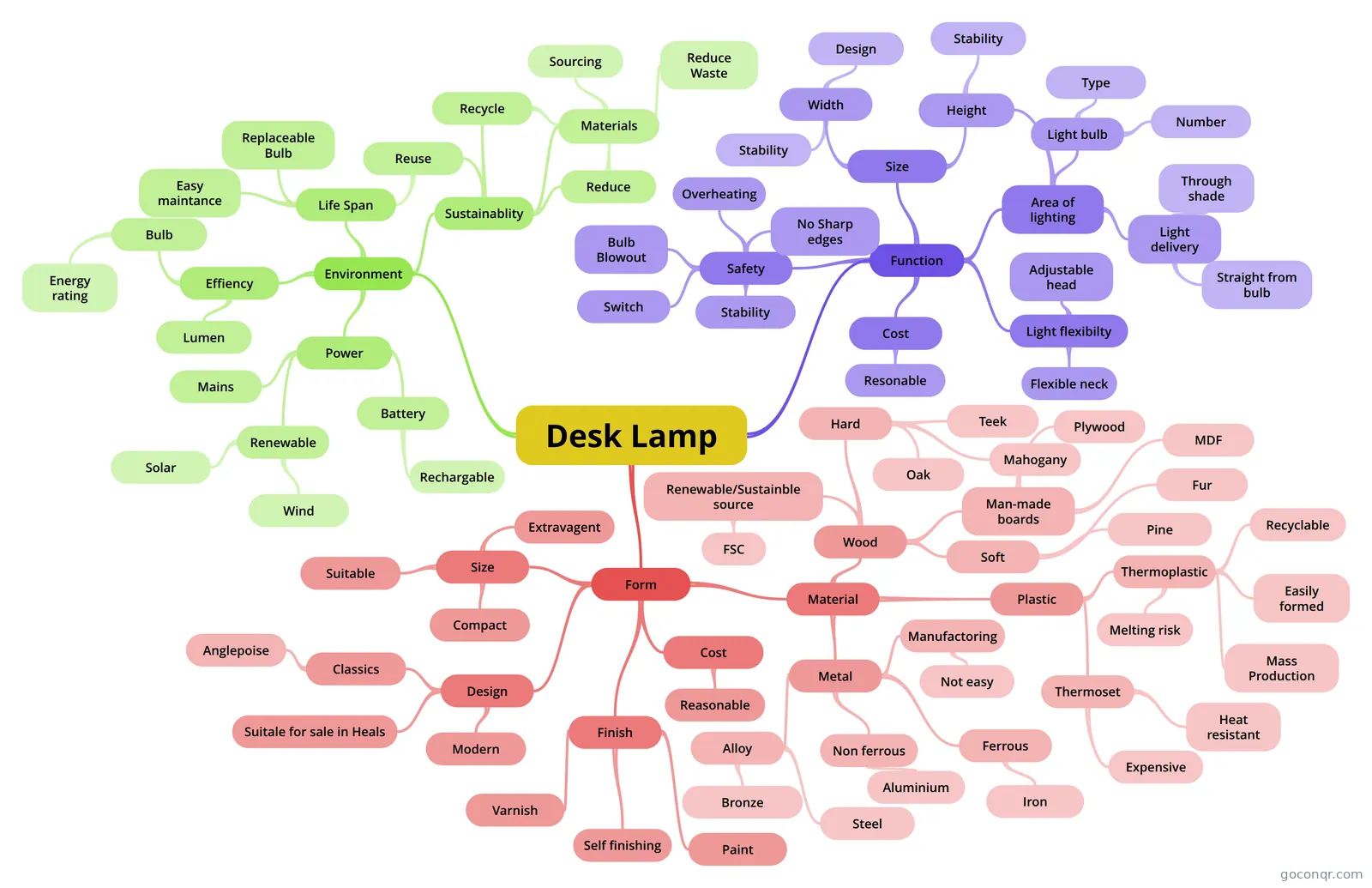
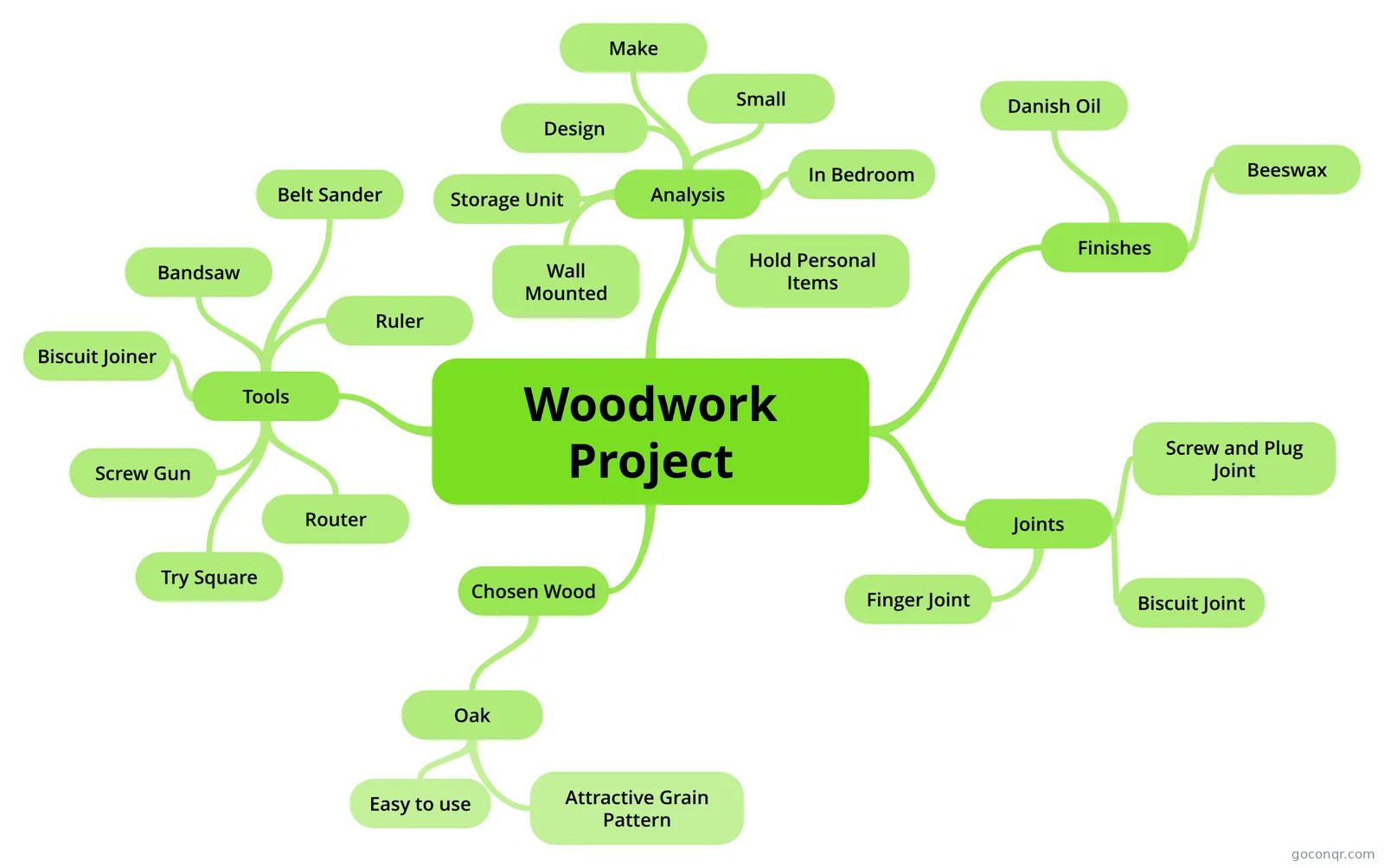
Several maps follow a single product. The Desk Lamp map breaks a design into function, environment and form, then looks at size, cost, light flexibility, material, finish and safety. The Pizza Cutter map covers materials such as aluminium and acrylic, plus sustainability, ease of use and the tools needed to make it. The Woodwork Project map looks at oak, joints such as finger and biscuit joints, and finishes such as beeswax and Danish oil.
Where to start
- Open Task Analysis or What is a good design? to get the basic idea of analysing a brief.
- Move on to The Engineering Design Process and Product Development Cycle to see the stages in order.
- Try one worked example, such as the Desk Lamp or Pizza Cutter map.
Materials, safety and wider issues
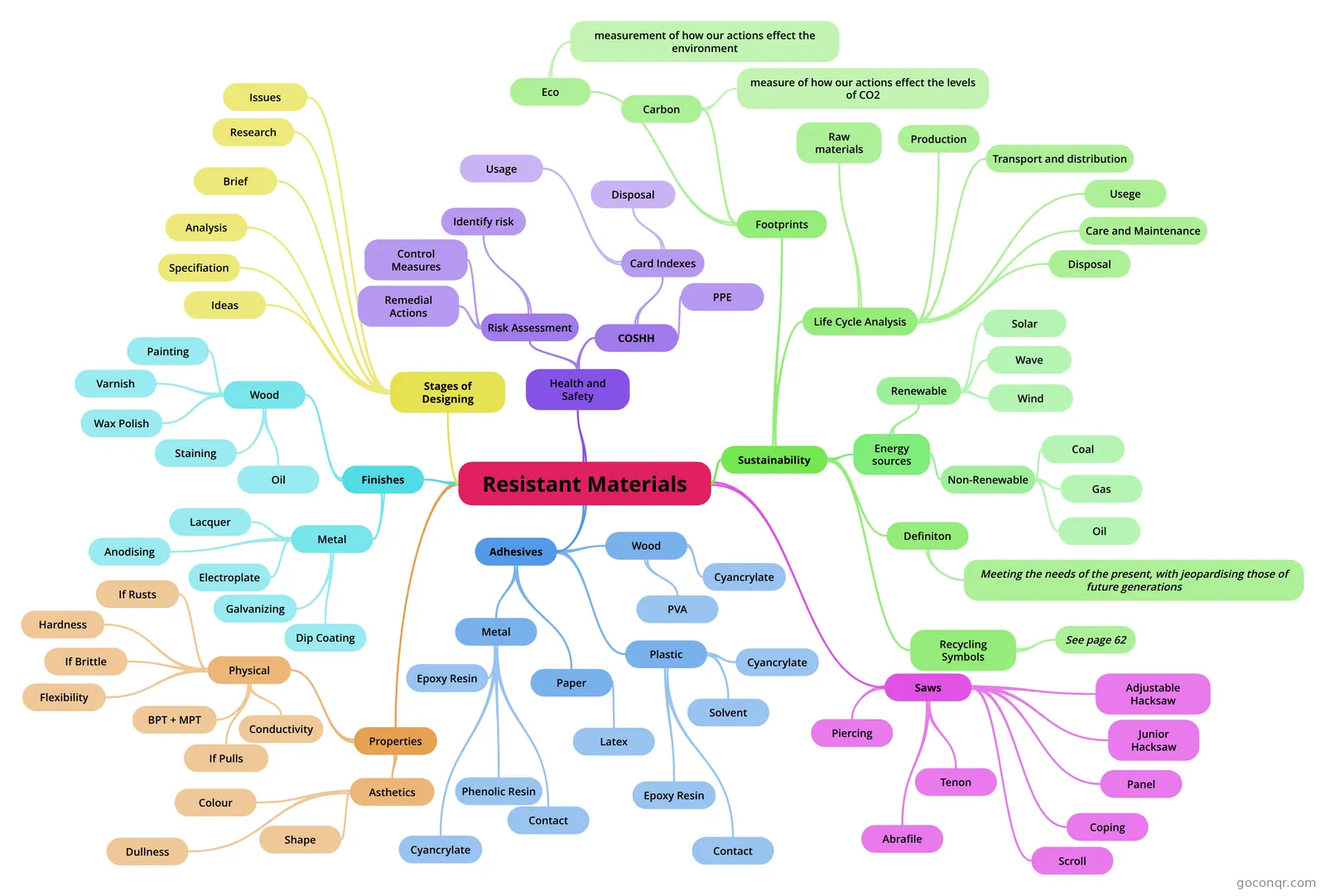
The Resistant Materials map covers renewable and non-renewable energy sources and life cycle analysis. DT Revision 1 covers workshop safety, from ear defenders to safety goggles. Maps such as Sustainability and Factors Affecting Design look at the wider issues a designer must weigh up.
Using quizzes and maps together
Read a map first, then test yourself. The Y8 Subject knowledge test asks practical questions, such as which saw cuts wood in a straight line. The Engineering Design Process Quiz checks the stages. Where you slip, go back to the matching map and look again. Flashcards such as DT Key Words help fix the vocabulary.
Where it fits
This unit sits in the Design and Problem Solving strand of Engineering and technology. Teachers can use the maps as starting points for lessons or project work.
Choose one map today, take a quiz on it, and see what you remember.
Frequently asked questions
Which resource should I open first?
Start with a map that explains the basics, such as Task Analysis or What is a good design?. Then try The Engineering Design Process to see the stages in order. If you prefer a worked example, the Desk Lamp map is a clear one to follow.
What do the mind maps cover?
They cover product examples like the Desk Lamp, Pizza Cutter and Woodwork Project, plus materials, sustainability, safety, CAD and CAM, and ethical and environmental issues. Over 290 maps are listed, so you can pick the topic that matches your project or revision.
Are the resources free to use?
Yes. Every resource listed here is free to open, study and take, with no account needed. They were made by GoConqr users, not by GoConqr itself, so styles and depth vary from one resource to the next.
Which exams do these resources suit?
Most of the material is at secondary level, and the listed resources mention GCSE Design and Technology. Some are aimed at university study, so check the title and content before you rely on a resource for a particular course.
Is there anything for testing myself?
Yes. There are more than 15 quizzes, including the Y8 Subject knowledge test, the Engineering Design Process Quiz and one on human factors. There are also over 20 flashcards, such as DT Key Words, for quick recall of terms.
What if I can't find my topic?
Browse the maps and notes on related topics first, since many cover several areas at once. If nothing fits, a free account lets you save quiz scores and make your own quizzes, maps, flashcards and notes for that topic.