
Addiction mind maps
231 mind maps by 134 users · Page 1 of 6
This Addiction page gathers mind maps on approaches to addictive behaviour, risk factors and interventions. School students, university students and professional candidates can use them to practise organising these topics, while teachers can find ready-made material. There are over 220 mind maps by more than 120 users, with resources at school and university levels. Choose a map to begin.
Select topic
- Dependence, Tolerance and Characteristics of Addiction10
- Behavioural Addictions16
- Gambling Addiction16
- Substance Addiction11
- Risk Factors for Addiction36
- Media Influences on Addiction8
- Biological Explanations of Addiction42
- Cognitive Explanations of Addiction32
- Learning Explanations of Addiction8
- Theory of Planned Behaviour8
- Biological Treatments for Addiction10
- Addiction Treatment and Interventions9
Mind maps
-
Models of Addictive Behaviour - Smoking
-
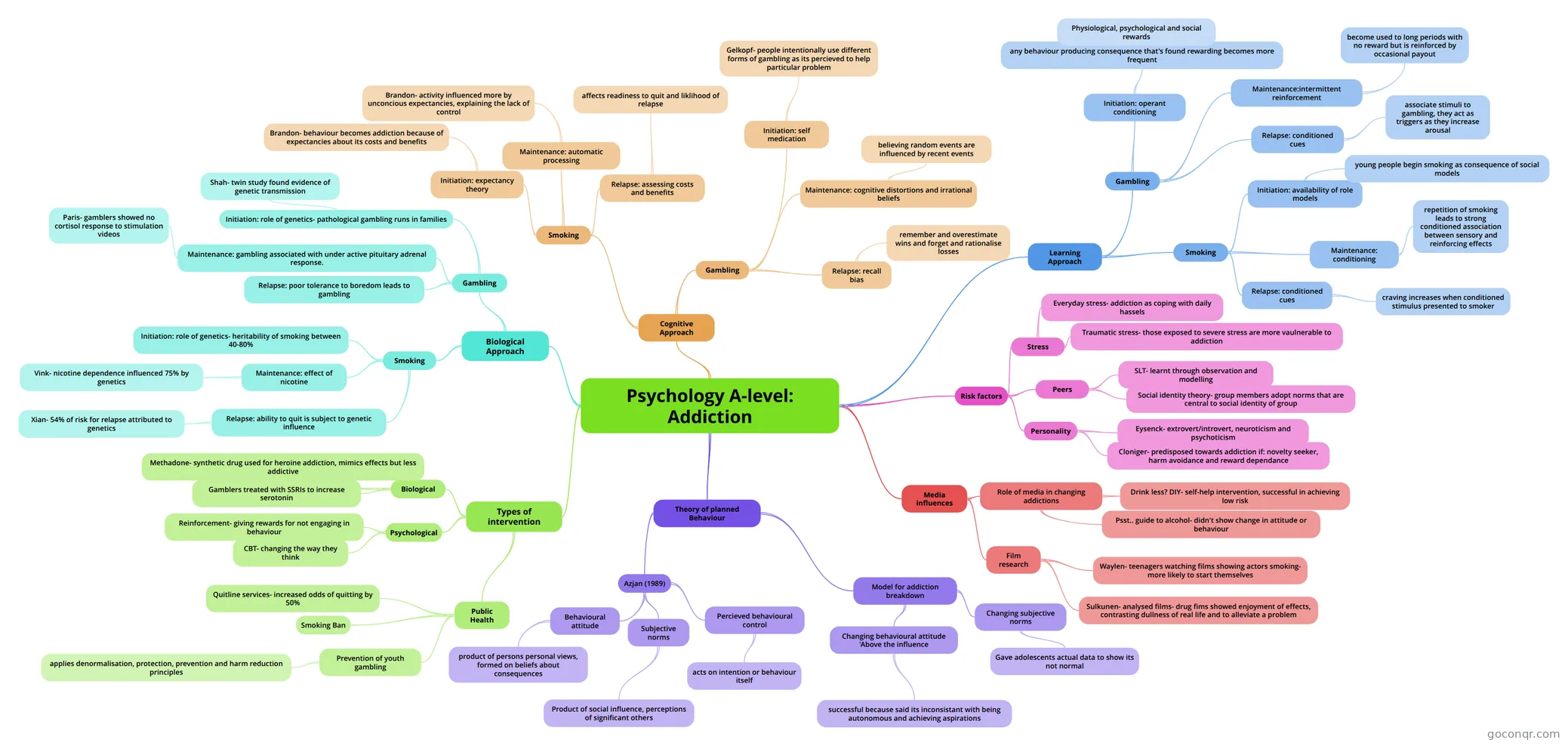 Psychology A-level: Addiction
-
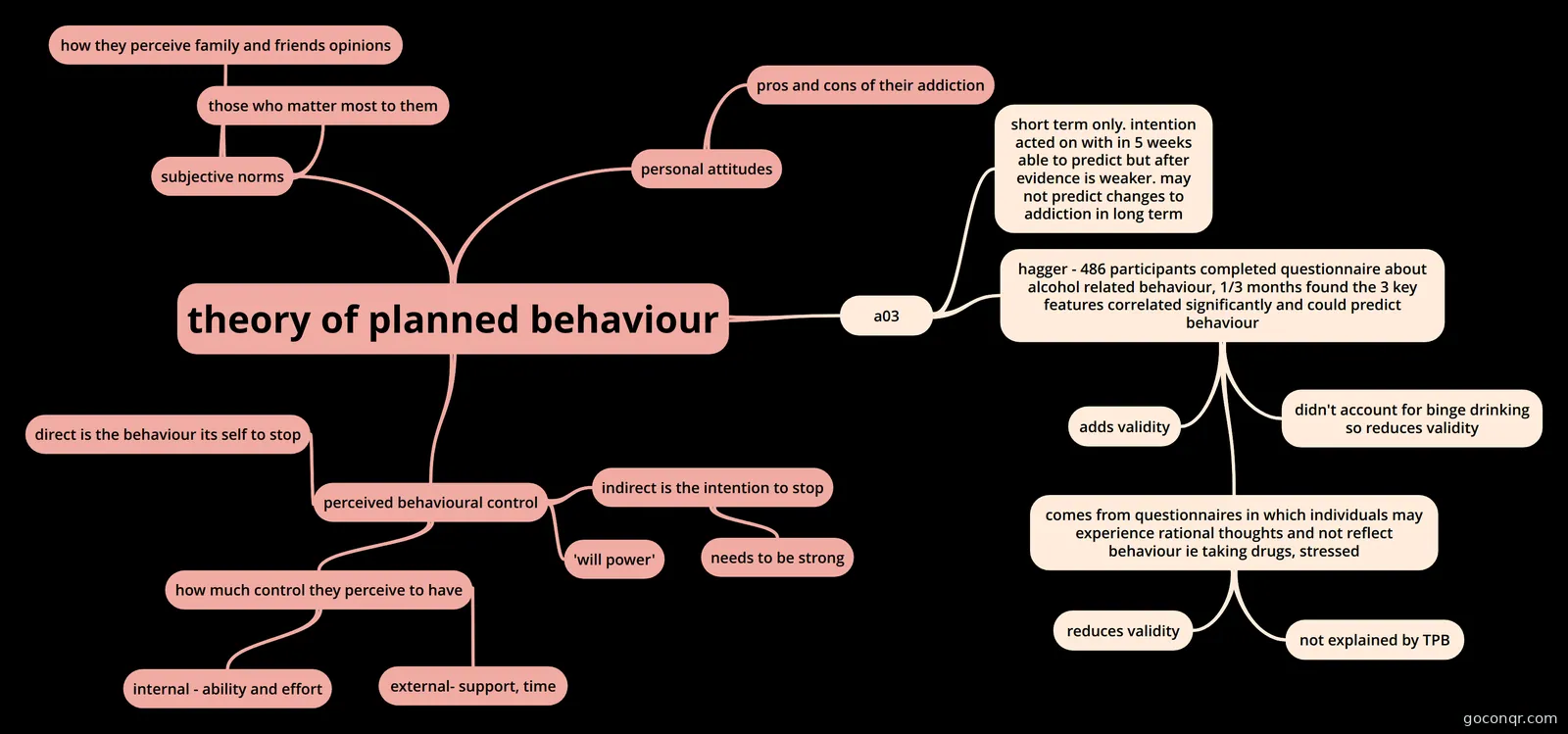 theory of planned behaviour TPB
-
Addiction psych 12 mind map about addiction
-
Addiction Addiction
-
INITIATION, MAINTENANCE AND RELAPSE OF ADDICTION
-
Learning model of gambling
-
Types of Intervention and their Effectiveness
-
addiction-the biological and cognitive approach
-
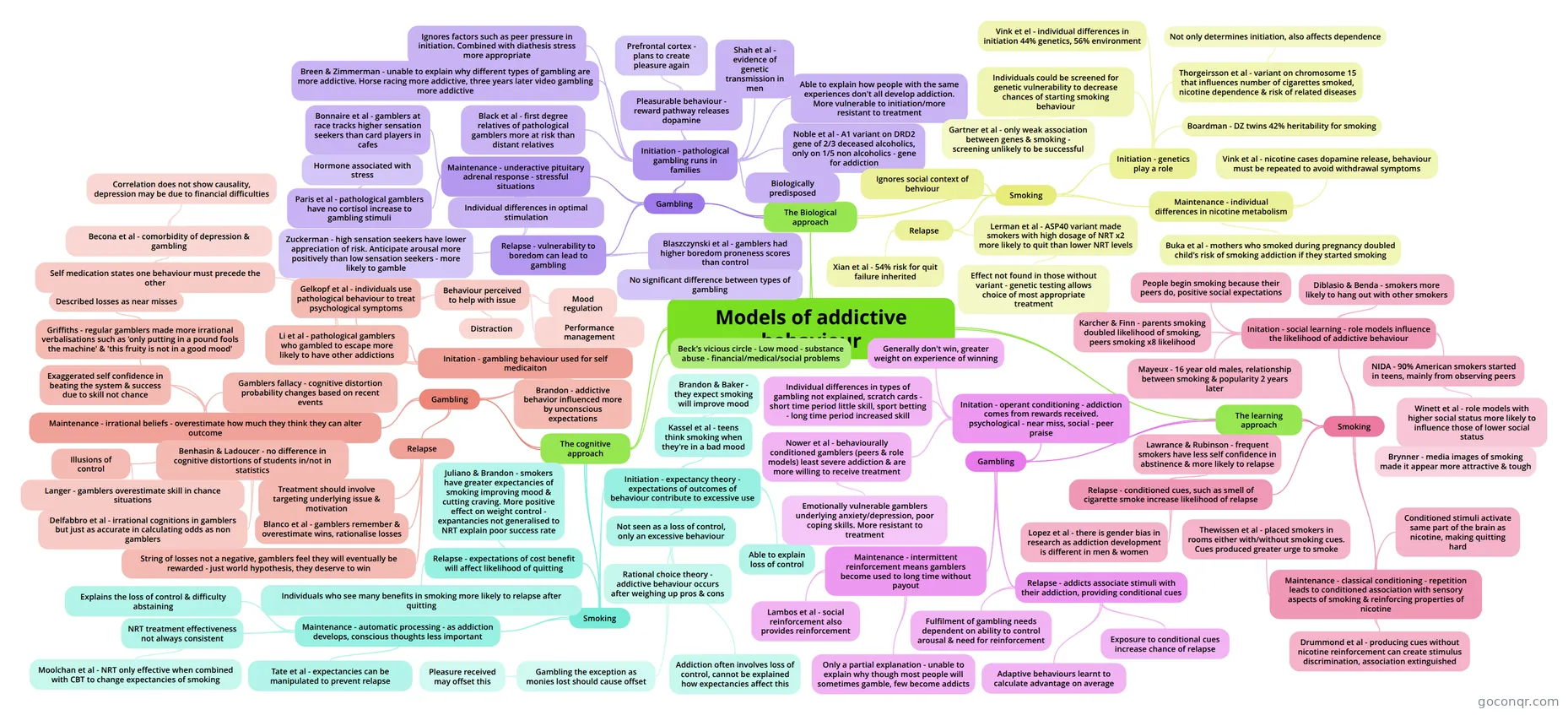 Models of addictive behaviour
-
Biological Explanations of Addictive Behaviour
-
With reference to the literature, critically examine the role that the dopamine reward system plays in addiction.
-
Addictive behaviour-Cognitive Explanation- Smoking
-
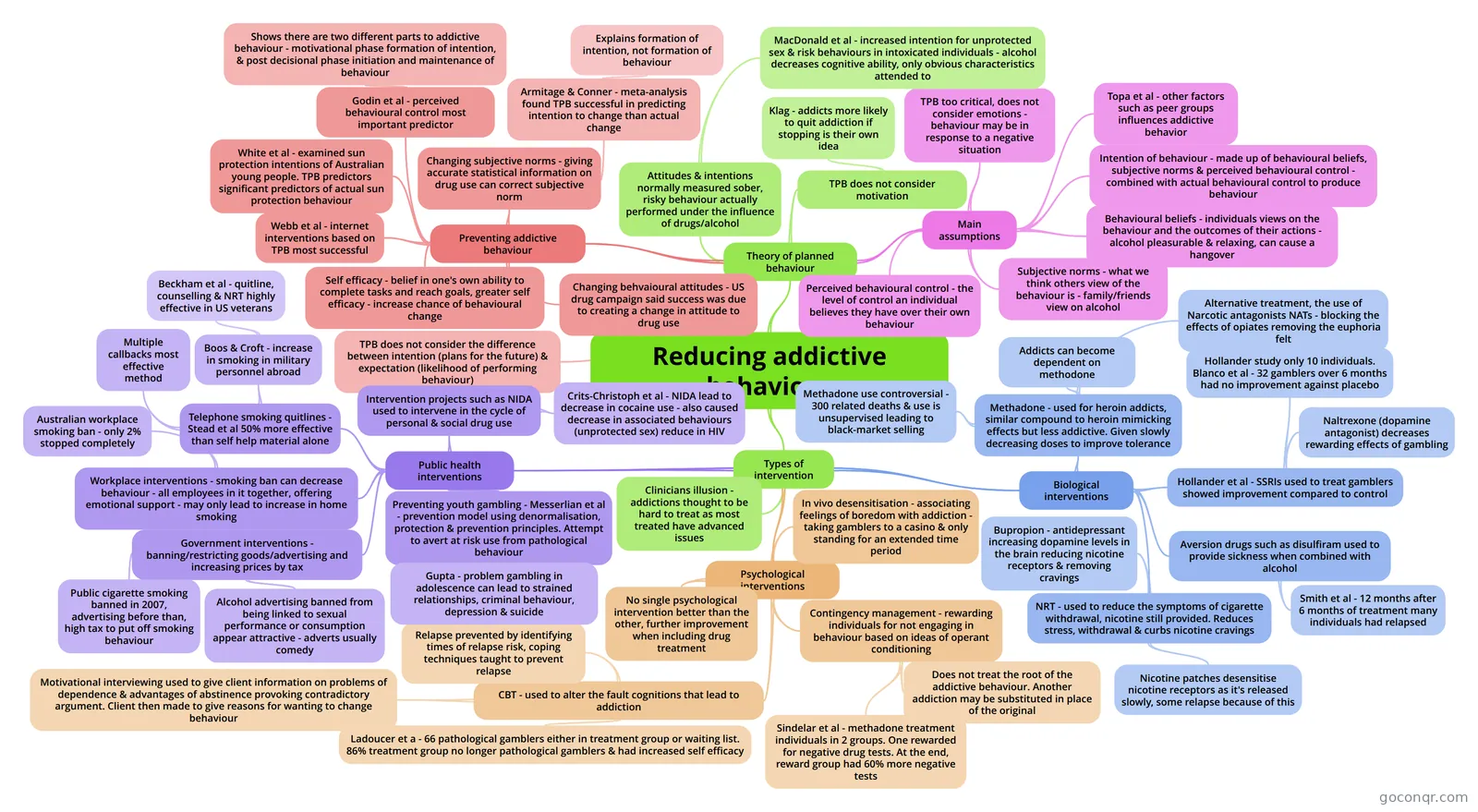 Reducing addictive behaviour
-
Individual differences explanations of addiction
-
LEARNING EXPLANATIONS OF ADDICTION
-
Cognitive Approches to Gambling (LO5 b and LO6/7)
-
Methods of Modifying Addiction
-
MEDIA INFLUENCES ON ADDICTIVE BEHAVIOUR
-
RISK FACTORS IN THE DEVELOPMENT OF ADDICTION
-
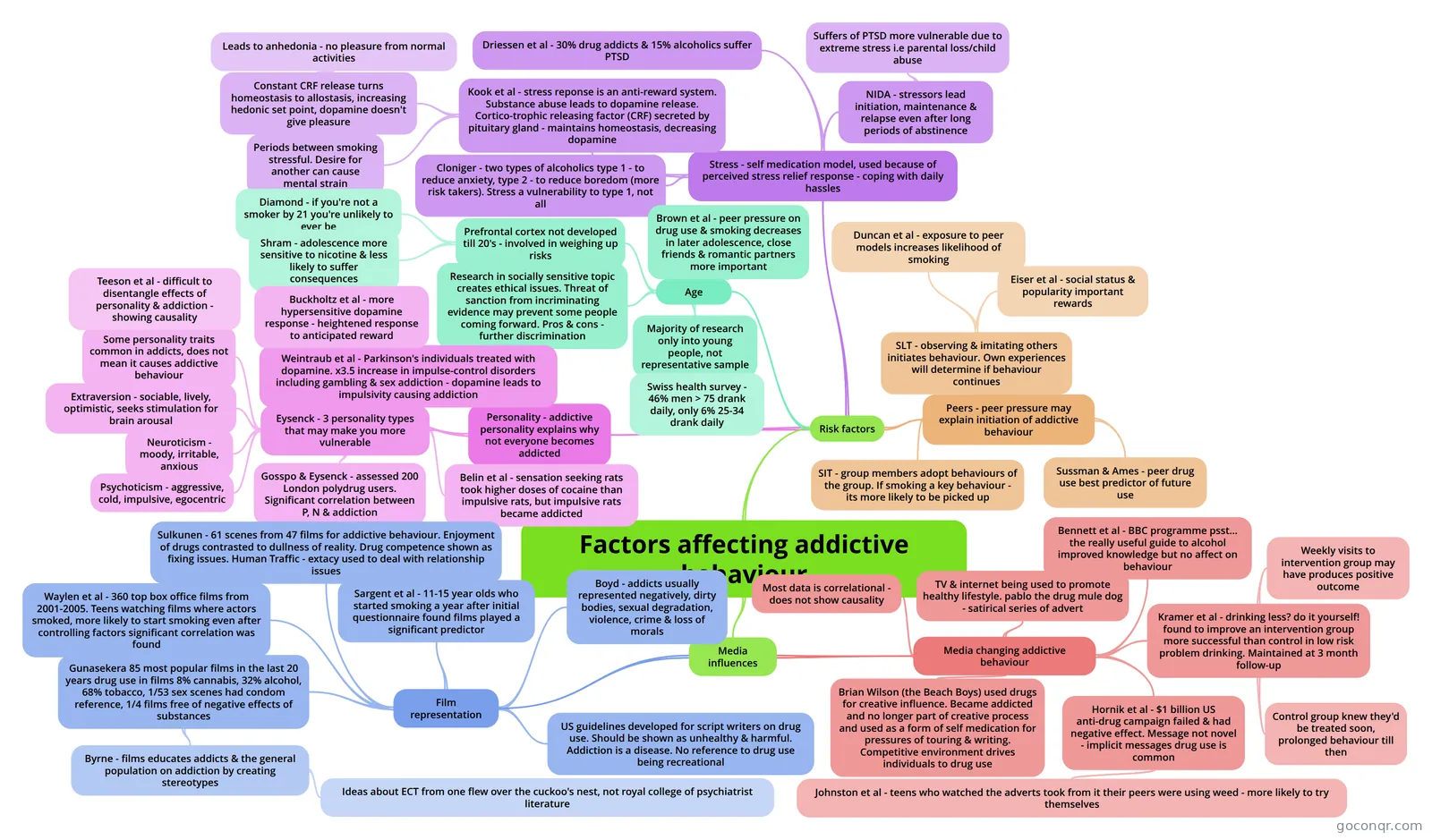 Factors affecting addictive behaviour
-
Cognitive approach to addiction
-
Addiction
-
Interventions
-
Addictive behaviour-Cognitive Explanation- Gambling
-
Problematic Internet Use & Addiction
-
Addiction
-
Risk Factors
-
cognitive models of behaviour: gambling
-
GAMBLING
-
SP Explanations of Addiction
-
Biological model of addiction
-
The biological model into addiction
-
Addiction.2
-
Models and Media of Addiction
-
Addiction - Cognitive Approach and Risk Factors
-
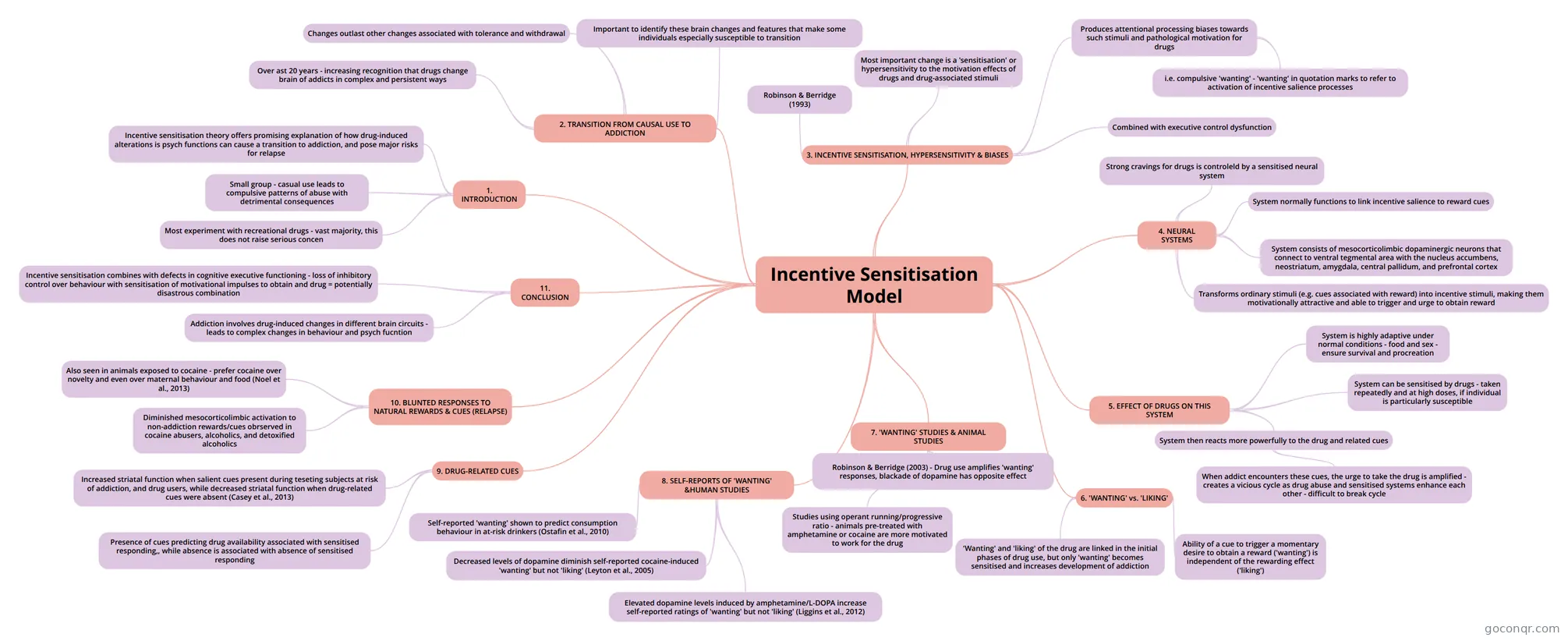 Incentive Sensitisation Model Incentive sensitisation - drud addiction
-
Addictive behaviour-Gambling-Learning explanations
-
Types of Intervention
-
Factors affecting addictive behaviour-media influences
More Addiction resources
About addiction mind maps
GoConqr OriginalUsing addiction mind maps
These maps show connections between ideas in the Addiction unit. They cover biological, cognitive and learning approaches, as well as risk factors, media influences and interventions. Some focus on smoking or gambling; others bring several topics together.
For a focused starting point, try Learning model of gambling. Its branches separate initiation, maintenance, relapse and evaluation. You can use those labels to organise your revision before looking at a different approach.
Move between maps and other formats
After reading a map, cover it and write down the branches you remember. Then reopen it and check what you missed. Compare it with Biological Approach Gambling to see how another approach is organised around the same behaviour.
When you want to test your recall, switch to a quiz on the unit page. Flashcards can help when you want to revisit individual points rather than the whole map. Pick a map and follow a branch that interests you.
Frequently asked questions
Which mind map is useful for starting with definitions?
Look for the Addiction map that opens with the question of what addiction is. It gives you a starting point for definitions before you move to maps on particular approaches or interventions. The page also lists other maps called Addiction, so check the opening branch when choosing.
Are these mind maps free to use?
Yes. Every mind map listed here is free to open and study without an account. The maps were made by GoConqr users. A free account also lets you make your own mind maps, flashcards, notes and quizzes, and save your quiz scores.
What can I use to compare approaches to smoking?
Models of Addictive Behaviour - Smoking brings learning, cognitive and biological approaches into one map. Its branches use initiation, maintenance and relapse to organise the approaches. You can also look at the separate maps on the biological and cognitive approaches to smoking for a more focused view.