
Cardiovascular System and Heart Disease
199 resources created by 168 users
This Cardiovascular System and Heart Disease page on GoConqr gathers community-made mind maps, quizzes, flashcards and notes, from valvular heart disease and rheumatic fever to ischaemic heart disease, arrhythmias and heart failure. It's built for university students and professional candidates practising pathology, ECGs and clinical cardiology, and for teachers after ready-made material. There are over 1,700 resources here, including more than 100 quizzes, over 1,000 mind maps and over 400 flashcards. Pick a topic, try a quiz to find your gaps, then make your own revision sets.
Top Cardiovascular System and Heart Disease resources
-
82 questionsClinical Cardiology Multiple Choice Questions A 45 year old male patient presents with abrupt severe chest pain, flank pain, and syncope. Physical exam r...
-
47 questionsCardiac Pathology :) ACE inhibitors work by:
-
40 cardsCardiac Dysrhythmias
-
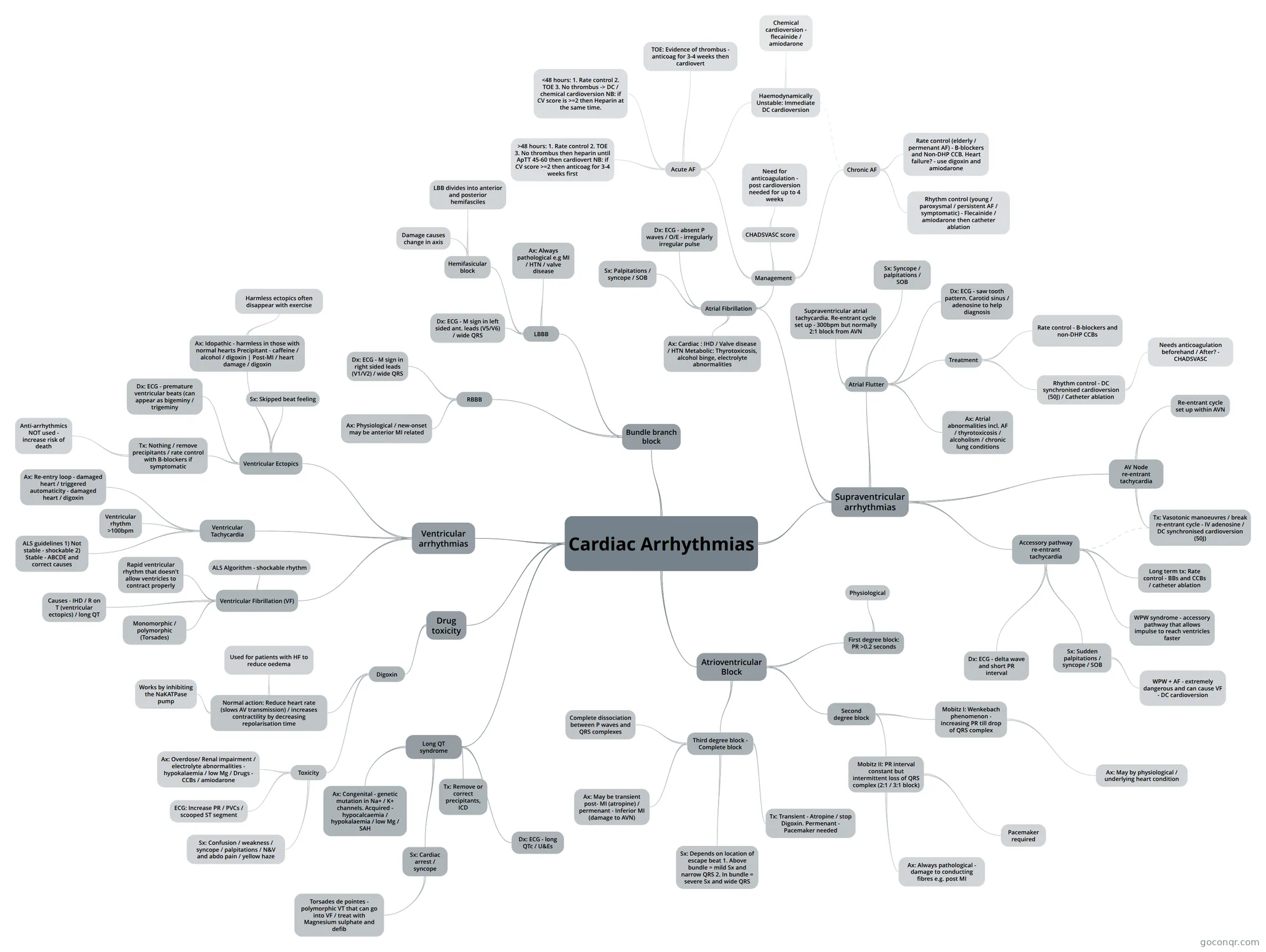 Mind map Cardiac Arrhythmias Overview of the common cardiac arrhythmias
-
15 cardsAtrial fibrillation management Atrial fibrillation prevalence influenced by:
-
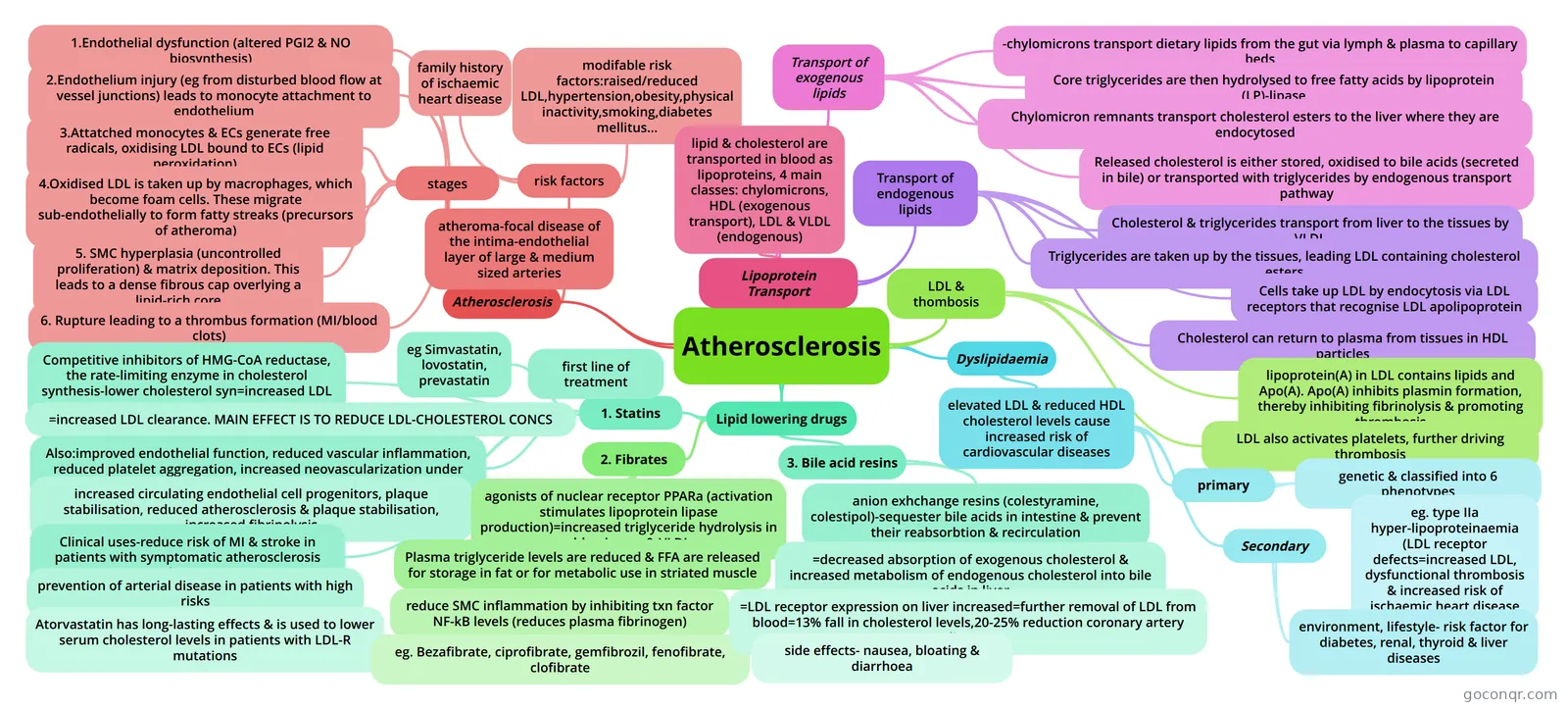 Mind map Atherosclerosis
-
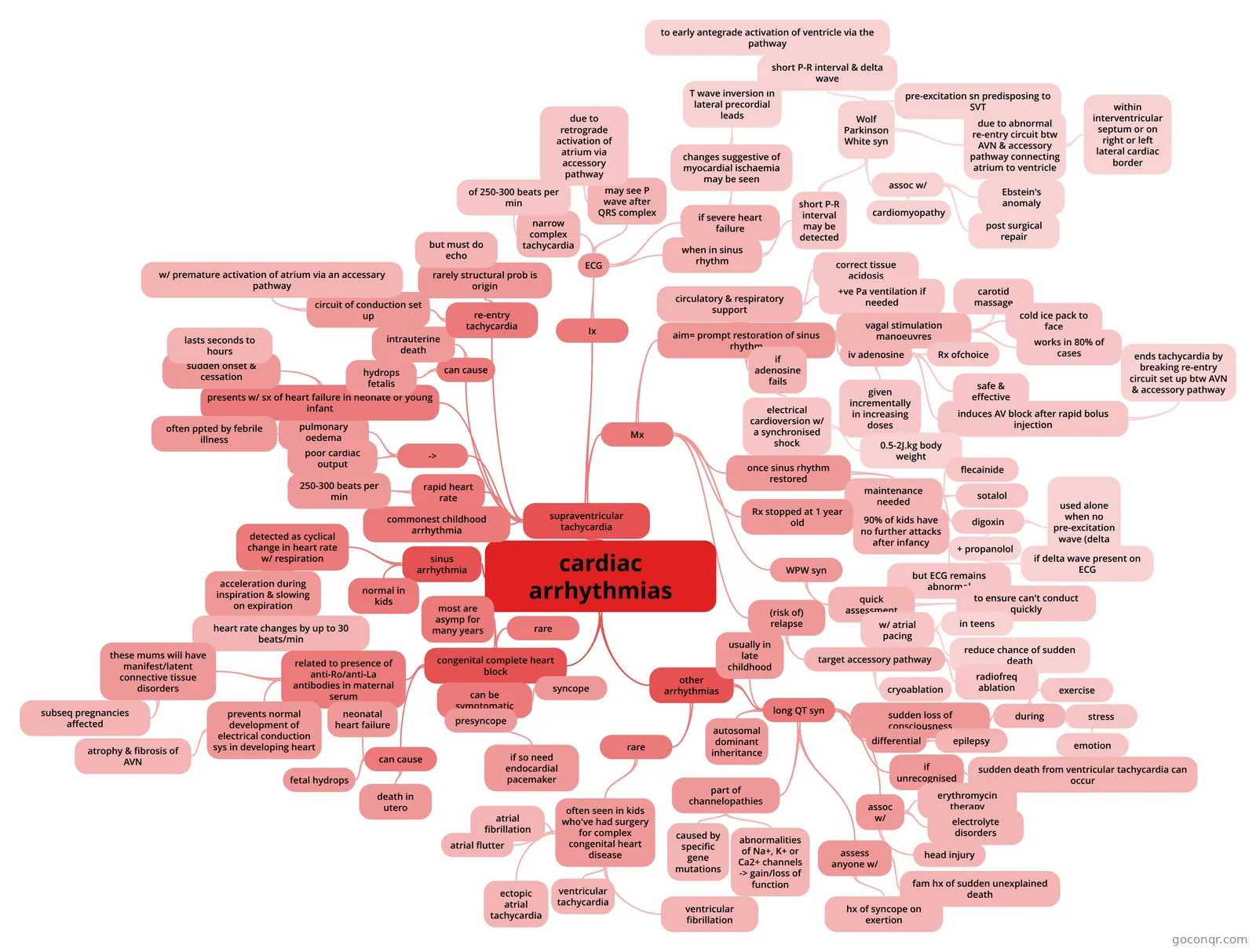 Mind map cardiac arrhythmias
-
Mind map Myocardial infarction
Quizzes
See all 40 quizzes-
82 questionsClinical Cardiology Multiple Choice Questions A 45 year old male patient presents with abrupt severe chest pain, flank pain, and syncope. Physical exam r...
-
47 questionsCardiac Pathology :) ACE inhibitors work by:
-
130 questions2808NRS Human Pathophysiology and Pharmacology 2 (Module 1) A 56-year-old male is diagnosed with coronary heart disease. Which of the following modifiable risk factors...
-
40 questionsChapter 28 A patient with mitral stenosis exhibits new symptoms of a dysrhythmia. Based on the pathophysiology of this...
-
23 questionsMyocardial infarction 1. Which of the following is the most common symptom of myocardial infarction (MI)?
-
55 questionsCardiovascular System- Internal Medicine 3rd Year PMU The upper relative heart border is found
-
40 questionsPhath & Pharm Lesson 3 Quiz Which of the following factors greatly improves venous return to the heart during strenous exercise?
-
35 questionsWeek 1 patho tri 2 Typical early signs or symptoms of myocardial infarction include:
Mind maps
See all 111 mind maps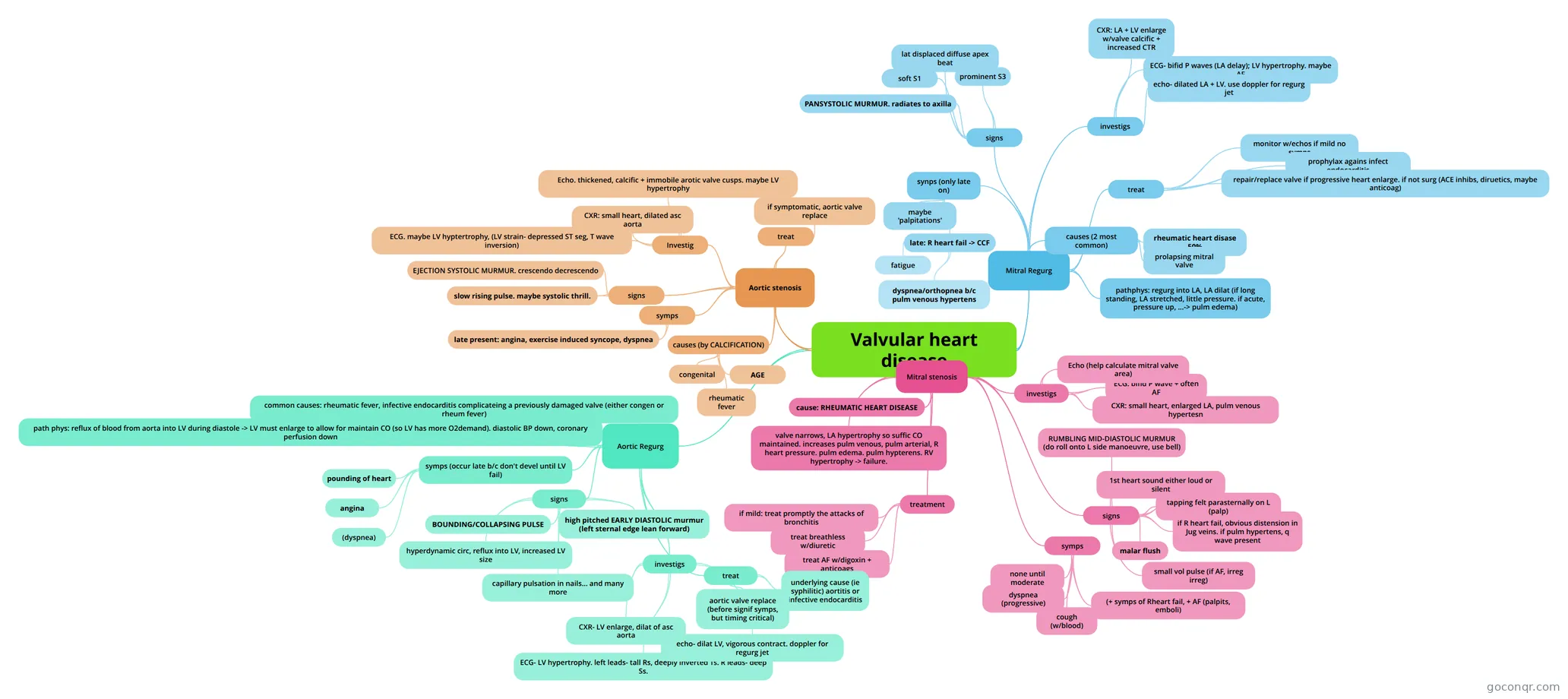
Flashcards
See all 40 flashcards-
40 cardsCardiac Dysrhythmias
-
15 cardsAtrial fibrillation management Atrial fibrillation prevalence influenced by:
-
12 cardsAcute Circulatory failure/ Shock Describe how cardiac tamponade cause shock?
-
182 cardsCardiovascular Pathology What disease is associated with the development of an abdominal aortic aneurysm?
-
98 cardsCardiology PA What is the pathophysiology of mitral stenosis?
-
147 cardsCardiac Arrhythmia's ACM with some EMED stuff Goals of evaluation and treatment: of arrythmias
-
186 cards5 - ACS and HF what is HF
-
150 cardsStep 3- Cardiology RF for CAD
Flowcharts

Notes
-
Haemodynamic disorders Functions of the cardiovascular system: maintain normal systemic arterial blood pressure ensure adequate supply to metabolising tissues (brain, heart etc) maintain normal venous and capillary pressur...
-
ECG! - created from Mind Map
-
atherosclerosis process of atherosclerosis
-
Calculating the Likelihood of CAD
Slides
More Internal medicine, pathology and clinical semiology topics
About Cardiovascular System and Heart Disease
GoConqr OriginalWhat this page covers
This unit sits in the Cardiovascular Medicine strand of Internal medicine, pathology and clinical semiology. The resources were made by GoConqr users and run from structural disease to rhythm problems and circulatory failure. Most are mind maps, with flashcard decks, quizzes, notes, slide sets and flowcharts alongside them.
Where to start
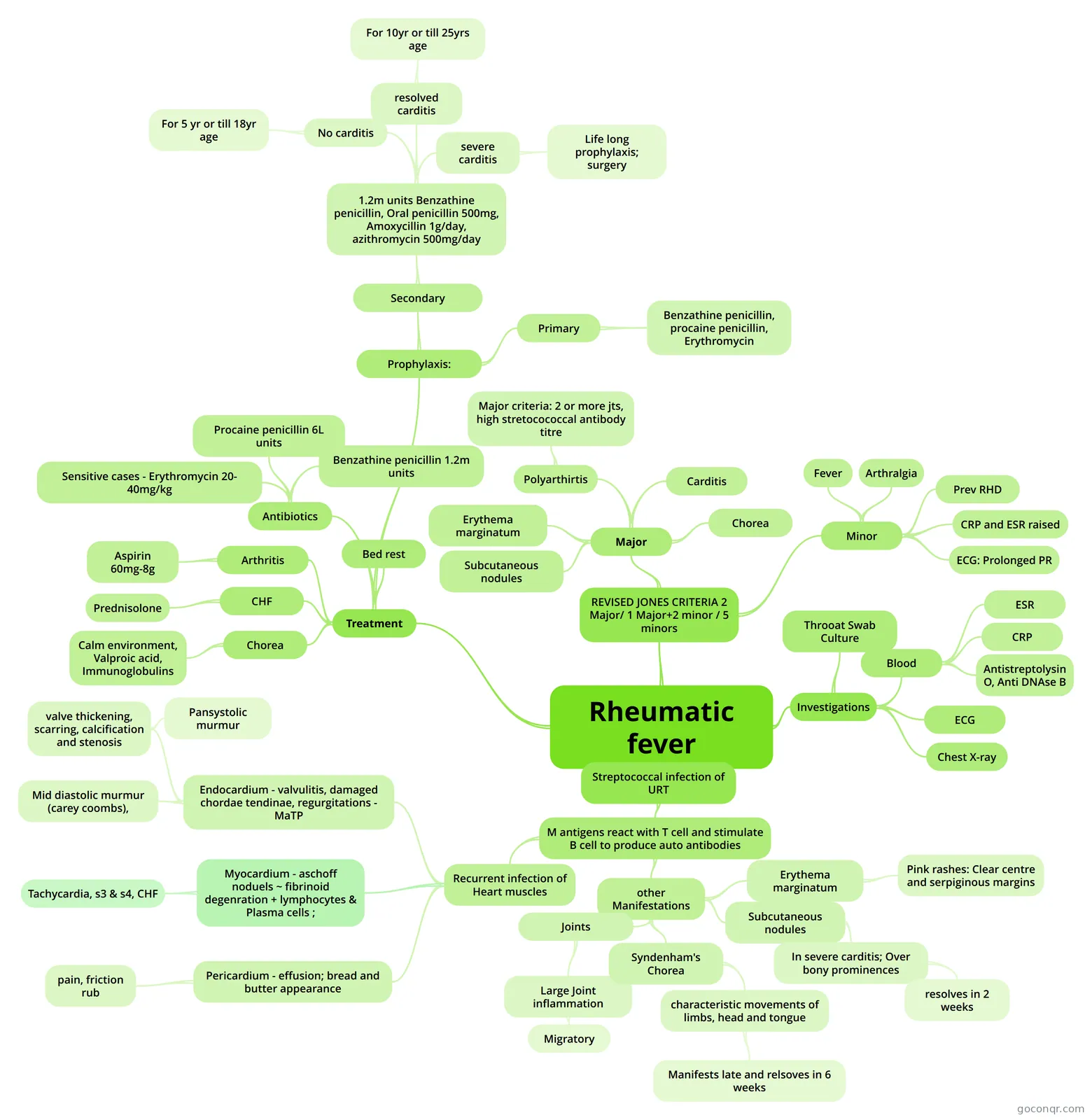
Begin with a broad mind map. The Valvular heart disease map links aortic stenosis and mitral regurgitation to causes such as calcification, congenital disease and rheumatic fever. It also lists symptoms such as angina, exercise-induced syncope and dyspnoea, plus signs such as a slow-rising pulse. The Rheumatic fever map follows the chain from streptococcal infection of the upper respiratory tract to autoantibodies and recurrent heart damage.
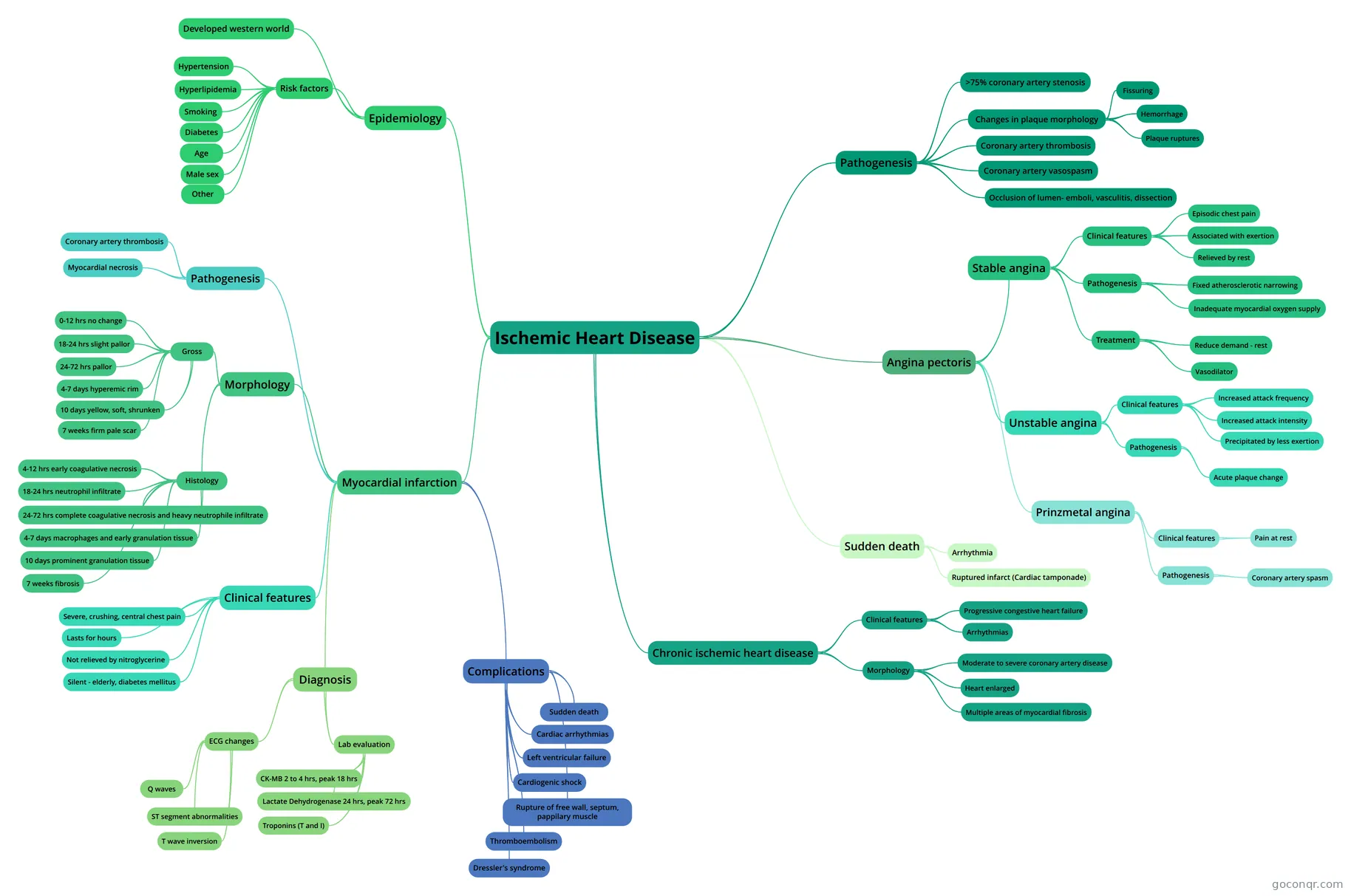
Next, move to coronary disease. The Ischemic Heart Disease map covers stenosis of more than 75%, plaque fissuring, haemorrhage, rupture and coronary thrombosis. The Atherosclerosis and Myocardial infarction maps fill in the risk factors and definitions.
Rhythm and ECGs
- The Cardiac Dysrhythmias flashcard deck goes through the causes of sinus bradycardia, sinus tachycardia, premature complexes and atrial fibrillation or flutter.
- The Atrial fibrillation management deck takes a stepwise approach, from confirming the diagnosis on ECG to the aims of treatment.
- The Cardiac Arrhythmias mind map separates supraventricular from ventricular rhythms.
Using quizzes and maps together
Read a map first, then test yourself. The Clinical Cardiology Multiple Choice Questions quiz uses case stems, such as a patient with abrupt severe chest pain, syncope and different blood pressures in each arm. Other options include Cardiovascular USMLE Quiz 1 and Heart Sounds: An Overview. Note the questions you miss, then go back to the matching map or deck.
Make it your own
Teachers can set a map as pre-reading and a quiz as a check afterwards. Choose a topic that feels shaky today and work through one map, one deck and one quiz in turn.
Frequently asked questions
Which resource should I open first?
Start with the Valvular heart disease mind map for a clear overview of aortic stenosis, mitral regurgitation, causes, symptoms and signs. Then open the Ischemic Heart Disease map. Once you have the outline, try the Clinical Cardiology Multiple Choice Questions quiz to see which areas need more work.
What do the mind maps cover?
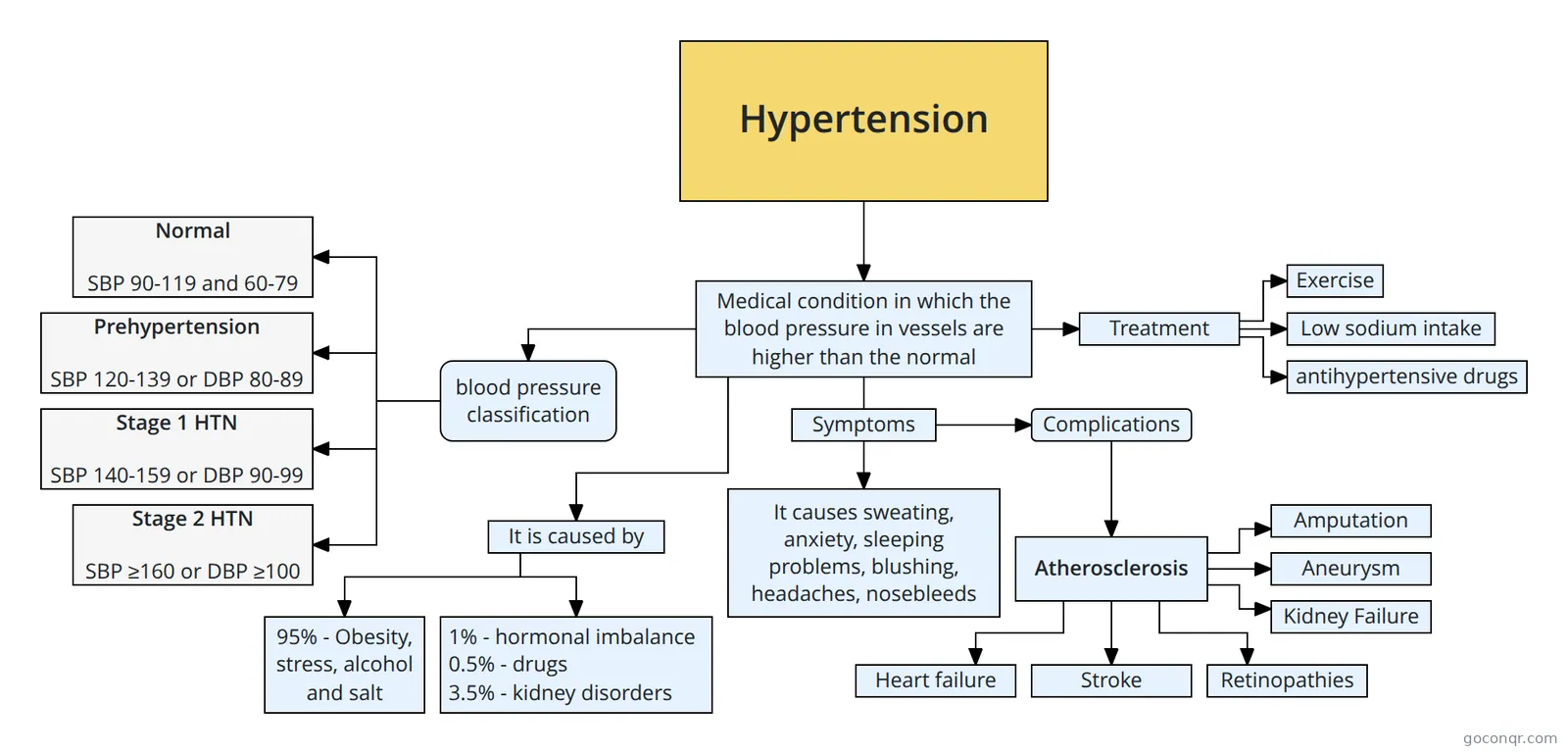
The mind maps cover valvular disease, rheumatic fever, ischaemic heart disease, atherosclerosis, myocardial infarction, arrhythmias, heart failure, endocarditis, pulmonary hypertension, congenital heart disease and cardiac tamponade. There are also maps on deep vein thrombosis and hypertension, so you can move between the heart and the wider circulation.
Are the resources free to use?
Yes. Every resource listed here is free to open, study and take, with no account needed. They were made by GoConqr users, not by GoConqr itself. If you want your quiz scores saved or want to build your own quizzes, maps, flashcards and notes, a free account lets you do that.
Who are these resources for?
They are mainly for university students and professional candidates, with some material that teachers can reuse. Some resources mention USMLE and ATI, so they suit learners preparing for those. Most of the content is pathology and clinical cardiology at university level.
Is there help with ECGs and heart rhythms?
Yes. The page lists flashcard decks called ECGs, ECG analysis and heart block, and Cardiac Dysrhythmias, plus quizzes such as Basic interpretation of ECG and Easy ECG. Together they cover rhythm causes, atrial fibrillation management and reading traces.
What if I can't find a topic I need?
Try a related map, deck or note first, since many resources overlap. Heart failure, for example, appears as maps, decks, notes and quizzes. If a gap remains, you can make your own notes, flashcards or mind maps for it.