
Respiratory System and Lung Disease
1,456 resources created by 837 users
This Respiratory System and Lung Disease page on GoConqr gathers community-made mind maps, quizzes, flashcards and notes, from asthma, COPD and cystic fibrosis to interstitial lung disease, pneumonia and lung cancer. It's built for university students and professional candidates revising a topic, and for teachers after ready-made material. There are over 1,400 resources here, including more than 100 quizzes, over 900 mind maps and more than 300 flashcard decks. Pick a condition, try a quiz to find your gaps, then make your own revision sets.
Select topic
- Respiratory Symptoms and Assessment31
- Upper Respiratory Tract Diseases13
- Asthma303
- COPD161
- Obstructive Lung Diseases80
- Cystic Fibrosis and Bronchiectasis32
- Pneumonia and Respiratory Infections131
- Tuberculosis12
- Interstitial and Restrictive Lung Diseases32
- Lung Cancer90
- Pleural Diseases42
- Pulmonary Vascular Diseases26
- Respiratory Failure and ARDS36
- Sleep Apnea32
Top Respiratory System and Lung Disease resources
-
173 cardsPulmonology - Diseases Classic Community Acquired Pneumonia Characteristics
-
61 questionsPulm remedition practice quizzes Which of the following disorders is not associated with clubbing of the fingers/toes?
-
10 questionsExemplar 15.3: COPD You have a 50-year-old male that has just been told he has stage 1 COPD w/chronic bronchitis. He is unsure ...
-
14 questionsRespiratory Clinic Extended Matching Questions Formative Self Assessment An 18-year-old presents with polyphonic expiratory wheezes through the entire chest. The percussion note is...
-
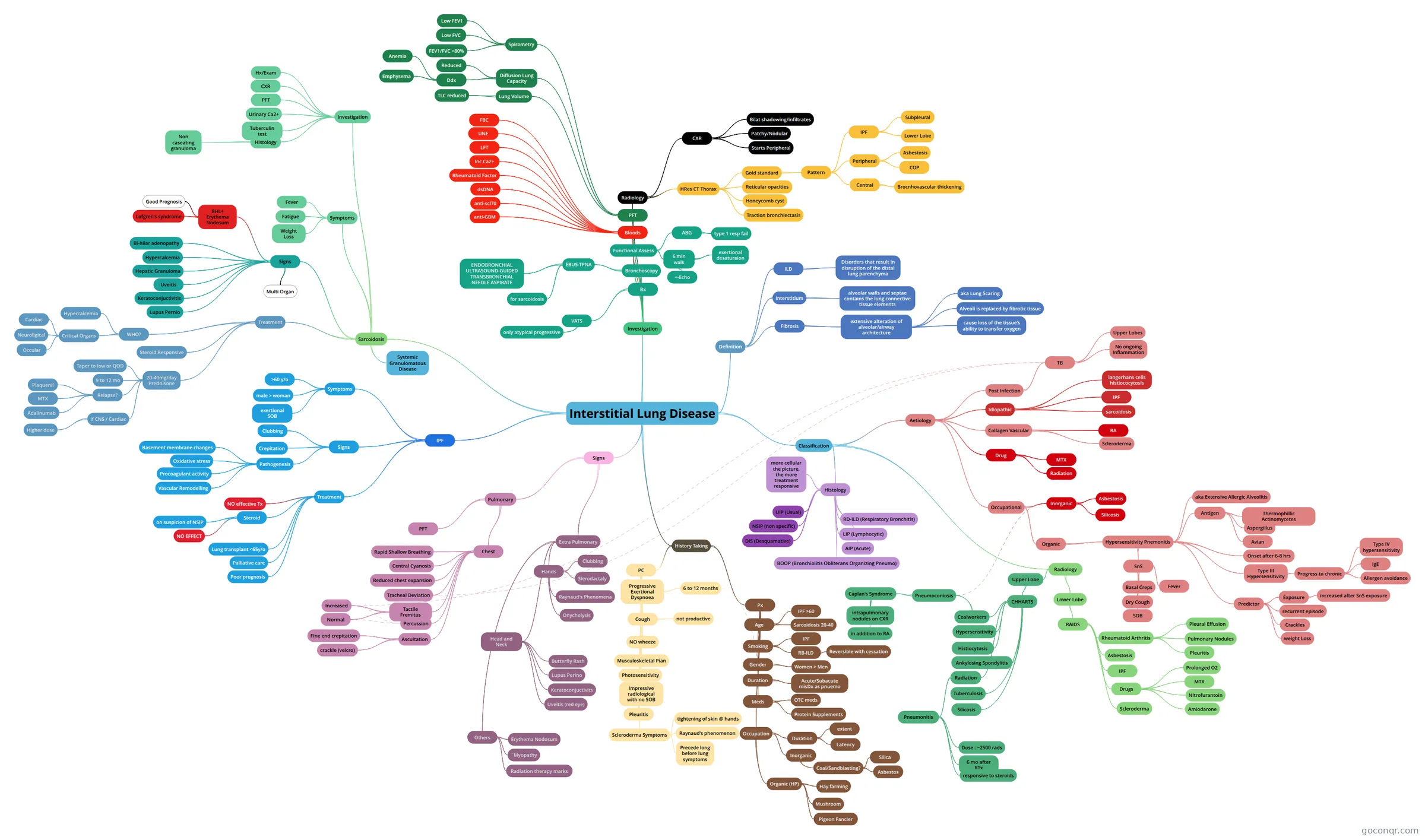 Mind map Interstitial Lung Disease
-
 Mind map Cystic fibrosis- epidem, pathophysiology, clinical features
-
Mind map Bronchiectasis pathology of bronchiectasis
-
Mind map COPD
Quizzes
See all 122 quizzes-
61 questionsPulm remedition practice quizzes Which of the following disorders is not associated with clubbing of the fingers/toes?
-
10 questionsExemplar 15.3: COPD You have a 50-year-old male that has just been told he has stage 1 COPD w/chronic bronchitis. He is unsure ...
-
14 questionsRespiratory Clinic Extended Matching Questions Formative Self Assessment An 18-year-old presents with polyphonic expiratory wheezes through the entire chest. The percussion note is...
-
20 questionsSCOPHBuzz | Quiz On Lung Cancer 1) During Inspiration- Which one is True? a) More energy is expended than during expiration b) Venous retur...
-
50 questionsClinical Medicine - ARF, COPD, OSA, etc. Acute respiratory failure (ARF) is not a diagnosis.
-
6 questionsPulmonary Vascular Disorders A 29 year old female presented with a 2 day history of shortness of breath & right-sided pleuritic chest pa...
-
56 questionsPathophysiology revision - SECTION II - Respiratory Systems Label the areas of the respiratory CONDUCTING zones as appropriate:
-
92 questionsrespiratory system iii 200. Where do you find mediastinal tumors?
Mind maps
See all 956 mind maps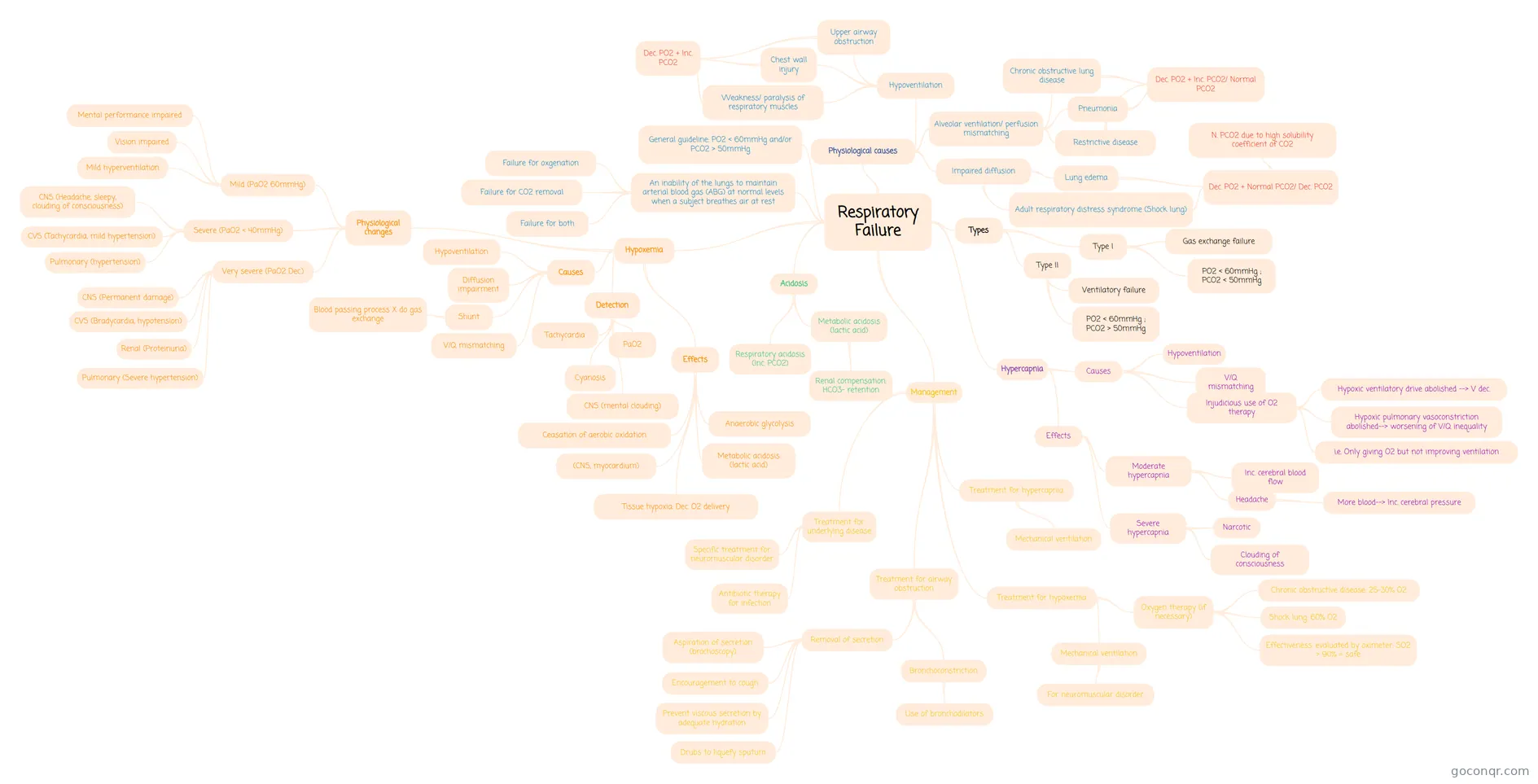
Flashcards
See all 314 flashcards-
173 cardsPulmonology - Diseases Classic Community Acquired Pneumonia Characteristics
-
148 cardsRespiratory System
-
79 cardsStep 3- Pulmonary signs of severe asthma exacerbation
-
16 cardsRespiratory: Respiratory Failure and O2 Delivery What is respiratory failure?
-
25 cardsLung Cancer What percentages of lung cancers are small cell vs. non-small cell?
-
20 cardsPleural Effusion & Empyema 3 possible causative mechanisms for pleural effusion
-
11 cardsBronchiectasis & CF What is bronchiectasis in general?
-
79 cardsRespiratory Qs how long should a peakflow diary be done for?
Notes
See all 35 notes-
Respiratory Alterations Allergic Rhinitis Definition: Allergic rhinitis is inflammation of the nasal mucosa in response to a specific allergen. Signs: Allergic Shinners - Caused by nasal congestion (stuffy nose). Allergic&nbs...
-
COPD BARREL CHEST Barrel chest refers to an increase in the anterioposterior diameter of the chest wall resembling the shape of a barrel.A ratio of anterioposterior (AP) to lateral chest diameter of greater than ...
-
Chronic Obstructive Pulmonary Disease "COPD" - created from Mind Map Causes Smoking, Secondhand smoke, organic/inorganic dust, polution alpha-1 antitrypsin deficiency (genetic) Pathophysiology increase of airway inflammation due to increase in WBCs and remodeling airways are then worse...
Topics in Respiratory System and Lung Disease
More Internal medicine, pathology and clinical semiology topics
About Respiratory System and Lung Disease
GoConqr OriginalWhat this unit covers
This unit sits in the Respiratory Medicine strand of Internal medicine, pathology and clinical semiology. It is mostly mind maps, with quizzes, flashcard decks and notes alongside. The topics run across obstructive disease, restrictive disease, infection, pleural problems, sleep apnoea, respiratory failure and lung cancer.
Where to start
Begin with the mind maps on the big conditions. The Interstitial Lung Disease map covers definition, classification, investigation, signs, history taking, PFT, IPF and sarcoidosis. The COPD map sets out emphysema and chronic bronchitis, with airflow limitation as the major physiological change. The cystic fibrosis map covers epidemiology, pathophysiology and clinical features, and the Bronchiectasis map explains permanent dilation of the bronchi.
For symptoms and presentations, look at these maps:
- Acute Bronchitis
- Pneumothorax
- Hemoptysis
- Respiratory Failure
- Spirometry
Using maps and quizzes together
Read a map first, then test yourself straight away. The extended matching quiz on the respiratory clinic starts with an 18-year-old with wheeze and hyperresonant lungs, so it asks you to reason from signs. The Pulm remedition practice quizzes include clubbing and a 64-year-old smoker with weight loss. The Exemplar quiz on COPD asks how you would explain stage 1 disease to a patient. Note which questions you miss, then return to the matching map.
Flashcards and notes
Flashcard decks suit short recall sessions. The Pulmonology - Diseases deck covers community acquired pneumonia, including clinical features and laboratory findings. The Step 3- Pulmonary deck is one of the resources that mentions USMLE. Notes such as the COPD note on barrel chest help with the physical examination side.
Make it your own
Every resource here was made by GoConqr users, and all of it is free to open. Choose one condition this week, work through its map and quiz, then build a short deck of your own for the points you keep forgetting.
Frequently asked questions
Which resource should I open first?
Start with a mind map on a major condition, such as Interstitial Lung Disease or COPD. Both give a structured overview of definition, signs and treatment. Once you have read one, move to a quiz on the same topic, for example the Exemplar quiz on COPD, to check what stuck.
What do the mind maps cover?
There are over 900 mind maps. They span asthma, COPD, bronchiectasis, cystic fibrosis, pneumonia, pleural effusion, ARDS, respiratory failure, obstructive sleep apnoea, spirometry and lung cancer. Some also follow case-style presentations, such as the maps on a patient with fever and respiratory distress.
Are the resources free to use?
Yes. Every resource listed here is free to open, study and take, with no account needed. They were made by GoConqr users rather than by GoConqr itself. If you want your quiz scores saved or want to create your own sets, a free account adds that.
Who are these resources for?
They suit university students and professional candidates, who make up nearly all of the material, and teachers looking for ready-made content. Students can use quizzes to test clinical reasoning, while teachers can pick maps or flashcard decks to share with a class.
Is there anything for exam practice?
There are more than 100 quizzes, including extended matching questions, practice quizzes on COPD, lung cancer, pulmonary vascular disease and respiratory pathology. The Step 3- Pulmonary flashcard deck is among the resources that mention USMLE, so it is a useful place to look for that exam.
What if I can't find my topic?
Try a related title first, since many topics are grouped. Pleural disease, for example, appears in several flashcard decks and maps. If it is still missing, you can build your own mind map, flashcards or notes and use them for revision.