
Musculoskeletal System and Disorders
512 resources created by 335 users
This Musculoskeletal System and Disorders page on GoConqr gathers community-made quizzes, mind maps, flashcards and notes, from rheumatoid arthritis, gout and osteoporosis to bone tumours, fractures and bone infections. It's built for university students and professional candidates practising pathology and clinical reasoning, and for teachers after ready-made material. There are over 500 resources here, including more than 50 quizzes, over 300 mind maps and more than 100 flashcards. Pick a topic, try a quiz to find your gaps, then make your own study set.
Select topic
- Musculoskeletal Assessment10
- Bone Diseases16
- Osteoporosis and Metabolic Bone Disease56
- Fractures and Bone Healing28
- Bone and Soft Tissue Tumors42
- Bone and Joint Infections23
- Osteoarthritis68
- Arthritis and Inflammatory Joint Diseases61
- Gout and Crystal Arthritis25
- Back Pain and Spinal Disorders23
- Upper Limb Disorders6
- Lower Limb Disorders and Injuries17
- Muscle Disorders and Pain6
Top Musculoskeletal System and Disorders resources
-
3 questionsMUSCULOSKELETAL USMLE Practice Qns Seven hours after undergoing left hip arthroplasty for chronic hip pain, a 67-year-old woman reports a pric...
-
Mind map Rheumatoid Arthritis Common disorder of connective tissue and important cause of disability morbidity and mortality. Life expect...
-
40 questionsChapter 45: Alterations of Musculoskeletal Function The health care professional is caring for a person who has a pathologic fracture. The patient asks the pro...
-
Mind map Bone Tumors
-
Mind map Bone Fractures
-
6 cardsMusculoskeletal: Polymyalgia Rheumatica (PMR) and Giant Cell Arteritis (GCA) PMR & GCA are types of l..... v...... v......
-
54 cardsCBL MSK Cardinal feature of osteoarthritis
-
49 cards14. Infection and osteomyelitis Musculoskeletal Infection - 3 categories
Quizzes
See all 56 quizzes-
3 questionsMUSCULOSKELETAL USMLE Practice Qns Seven hours after undergoing left hip arthroplasty for chronic hip pain, a 67-year-old woman reports a pric...
-
40 questionsChapter 45: Alterations of Musculoskeletal Function The health care professional is caring for a person who has a pathologic fracture. The patient asks the pro...
-
38 questionsLower Extremity Disorders Techniques of arthrocentesis includes skin prepping/draping, using a 30 mL syringe, and:
-
25 questionsMSK4 - Random Stuff for Final Myelopathy is any pathological condition of the spinal cord.
-
21 questionsOrtho Quiz: Orthopedic Diseases Which of these diseases is characterized by hyper mobility in joints and elasticity in skin?
Mind maps
See all 312 mind maps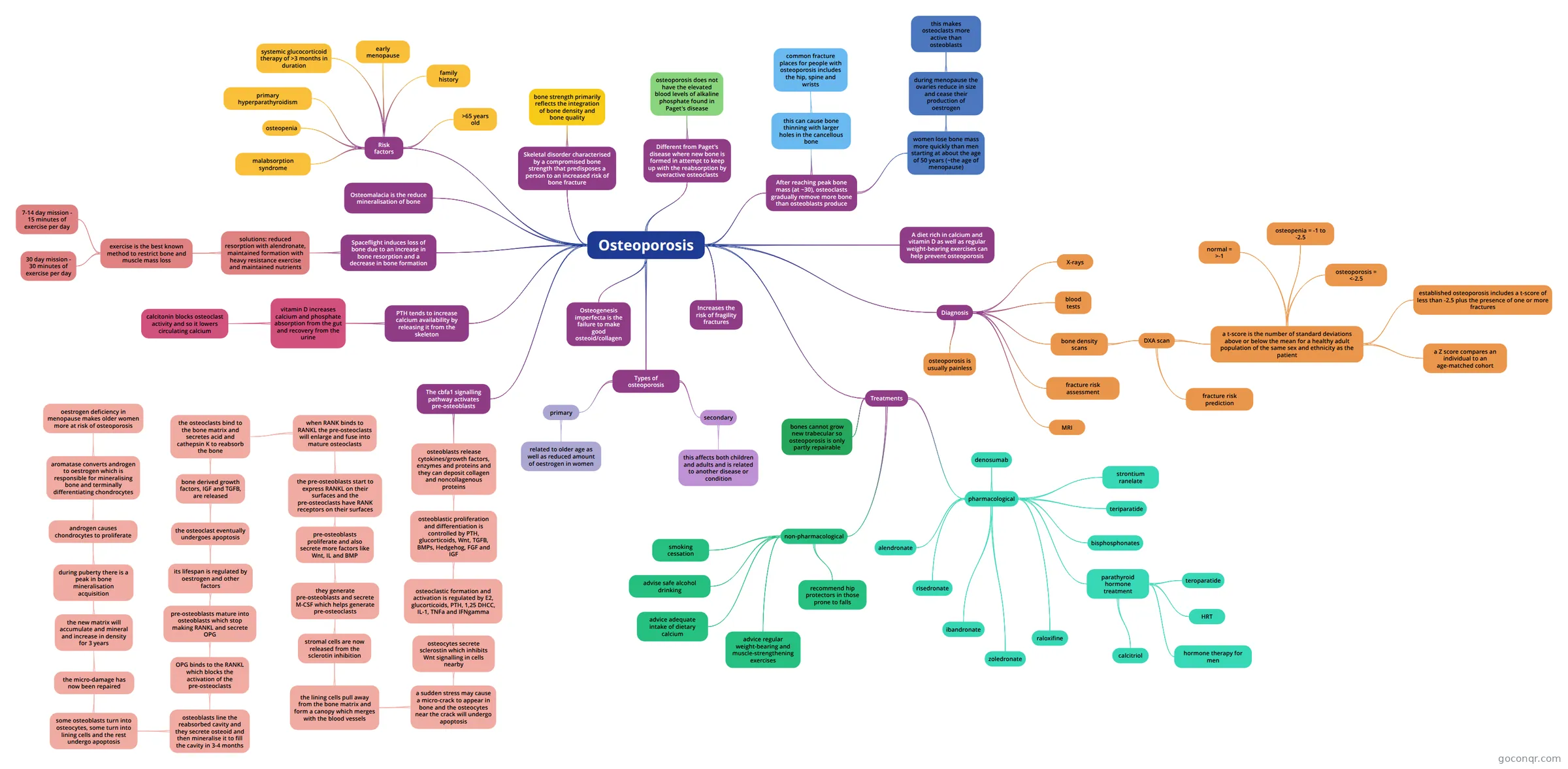
Flashcards
See all 122 flashcards-
6 cardsMusculoskeletal: Polymyalgia Rheumatica (PMR) and Giant Cell Arteritis (GCA) PMR & GCA are types of l..... v...... v......
-
54 cardsCBL MSK Cardinal feature of osteoarthritis
-
49 cards14. Infection and osteomyelitis Musculoskeletal Infection - 3 categories
-
39 cardsRheumatology What is OP?
-
36 cardsBack Pain What are the most likely causes of back pain in 0-15 year olds?
-
10 cardsBone and joint infections 1. TRUE/FALSE? A. Septic arthritis occurs most commonly in adolescents.
-
9 cardsMusculoskeletal: Crystal Arthritis Crystal related arthropathy defines a syndrome of s..... in response to crystal d...../f..... in the joint....
-
12 cardsMusculoskeletal Disorders What is rheumatology?
Topics in Musculoskeletal System and Disorders
More Internal medicine, pathology and clinical semiology topics
About Musculoskeletal System and Disorders
GoConqr OriginalWhat this unit covers
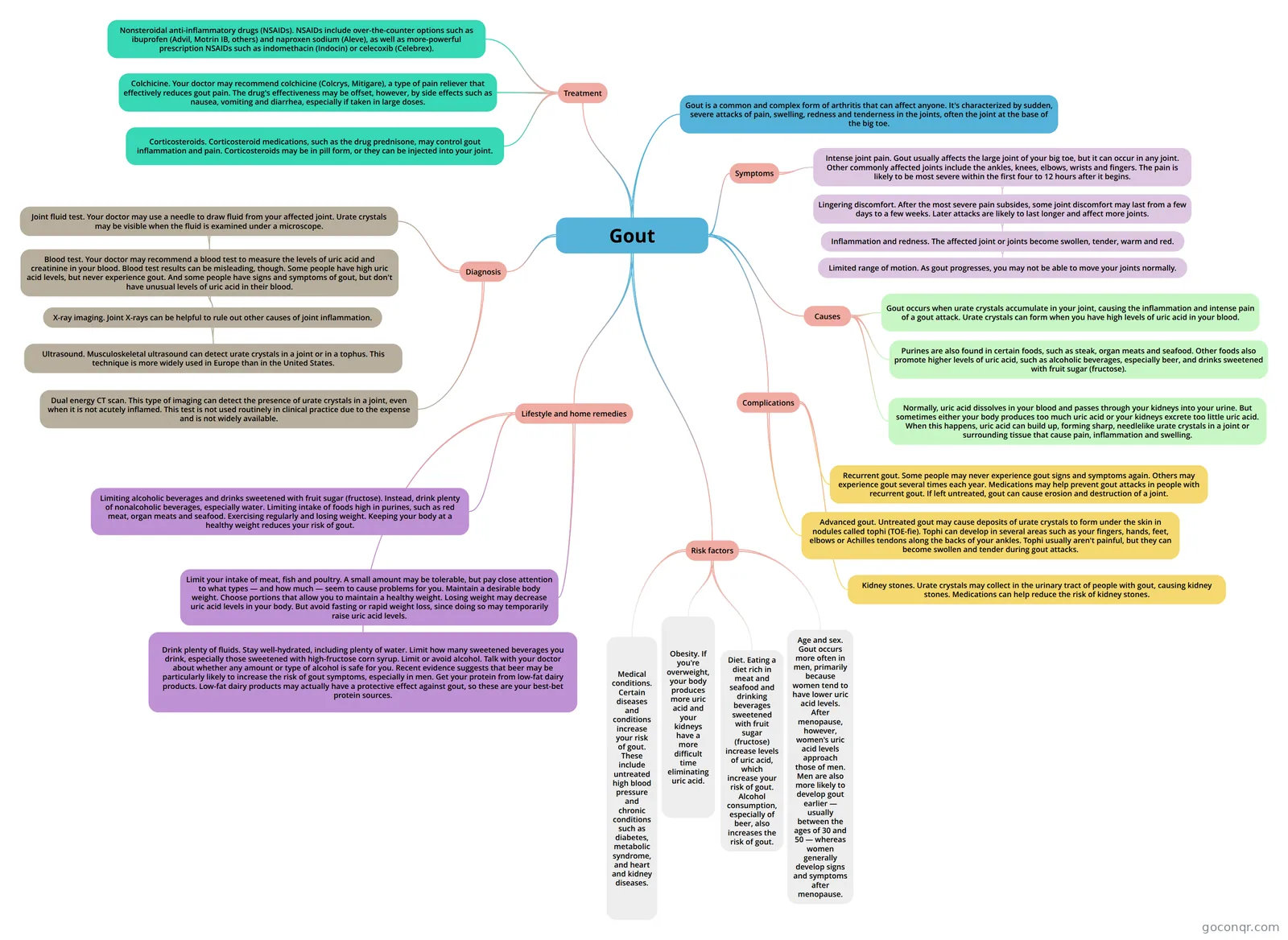
The page brings together material on joints, bones and soft tissue. Mind maps cover Rheumatoid Arthritis, Osteoarthritis, Gout, Osteomyelitis, Septic Arthritis and Osteoporosis. Others look at Bone Tumors, Bone Fractures and Bone pathology, which includes Paget's disease and alkaline phosphatase as a marker of bone turnover.
Where to begin
Start with a map to see the whole picture. The Rheumatoid Arthritis map, for example, opens with aetiology and genetics. The Primary Bone Neoplasms map moves from osteochondroma, the commonest benign tumour, to the malignant types. Then move to the flashcards for recall. The decks on Osteoarthritis, Fibromyalgia, Ankylosing spondylitis and Common Conditions of the Hand and Wrist suit short sessions.
Using quizzes and maps together
Quizzes turn reading into practice. Try these in order:
- Read one mind map on a single condition.
- Answer a short quiz on the same topic, such as the Gout quiz or the Osteoporosis quiz.
- Note what you missed and return to the map.
- Finish with a wider paper, such as Orthopedic and Rheumatology Practice Questions.
For exam-style practice, MUSCULOSKELETAL USMLE Practice Qns presents clinical vignettes, including a nerve complaint after hip arthroplasty. Those are useful for university students and professional candidates working towards USMLE-type questions.
Where it sits
This unit belongs to the strand Musculoskeletal, Skin and Special Senses, within Internal medicine, pathology and clinical semiology. Teachers can use the notes, slide sets and flowcharts, such as the Bone Tumors flowchart, as ready-made starting points for sessions.
Ready to begin? Open a map on a condition you find tricky, then test yourself on it.
Frequently asked questions
Which resource should I open first?
If you like a broad overview, begin with a mind map such as Rheumatoid Arthritis or Bone Fractures. If you prefer to test yourself straight away, try Orthopedic and Rheumatology Practice Questions, then return to the maps for any topics that felt shaky.
What do the mind maps cover?
There are over 300 mind maps. They cover inflammatory and degenerative joint disease, gout, bone tumours, fractures, metabolic bone disease, and bone and joint infections. Some also follow cases, such as a swollen leg or acute low back pain after heavy lifting.
Are the resources free to use?
Yes. Every resource listed here is free to open, study and take, with no account needed. They were made by GoConqr users rather than by GoConqr itself, so it helps to compare a few on the same topic.
Which exams and levels do they suit?
Most of the material is aimed at university level, with a smaller share for professional candidates. The only exam named in the listed resources is the USMLE, and the MUSCULOSKELETAL USMLE Practice Qns quiz is the clearest place to try that style.
What if I can't find my topic?
Look for a nearby heading first, since many decks and quizzes group several conditions together, such as Musculoskeletal Pathology. You can also make your own quiz, mind map, flashcards or notes with a free account, which also saves your quiz scores.