
Digestive System and Liver
51 resources created by 40 users
This Digestive System and Liver page on GoConqr gathers community-made quizzes, mind maps, flashcards and notes, from swallowing and gastric secretion to bile, nutrient absorption and liver function. It's built for university students revising physiology and teachers after ready-made material. There are over 600 resources here, including more than 110 quizzes, more than 190 mind maps and over 250 flashcards, shared by over 400 contributors. Pick a topic, try a quiz to find your gaps, then make your own study sets.
Top Digestive System and Liver resources
-
29 cardsGastric secretions What are the function of the following salivary secretions? 1) Amylase 2) Lysozyme 3) Bicarbonate 4) Growth...
-
Mind map GI Tract Overview
-
Mind map Stomach: Gastric Secretion, Motility and Emptying
-
Mind map Chemical Digestion and Absorption of Nutreints
-
113 questionsThe Gastrointestinal System- Physiology- PMU The term ‘metabolism’:
-
25 questionsDigestive System Quiz
-
7 questionsAlimentary Physiology Which of the below are functions of the mammalian GI tract?
-
Mind map Impaired Liver Function
Quizzes
See all 10 quizzes-
113 questionsThe Gastrointestinal System- Physiology- PMU The term ‘metabolism’:
-
25 questionsDigestive System Quiz
-
7 questionsAlimentary Physiology Which of the below are functions of the mammalian GI tract?
-
91 questionsBIOL 2P97 CO2 is produced through which of the following metabolic pathways?
-
18 questionsLectures 12, 13 and 16 - Stomach Physiology Which of the following functions of the digestive system are under the greatest degree of control?
-
20 questionsdigestion and absorption glucose absorption from the intestinal lumen is linked to sodium transport
-
19 questionsGIT Physiology Lecture 2+3 What is the swallowing reflex coordinated by?
-
6 questionsFinal Exam Poll Everywhere and In Class Questions Which of the following best describes the role of the esophagus in digestion?
Mind maps
See all 13 mind maps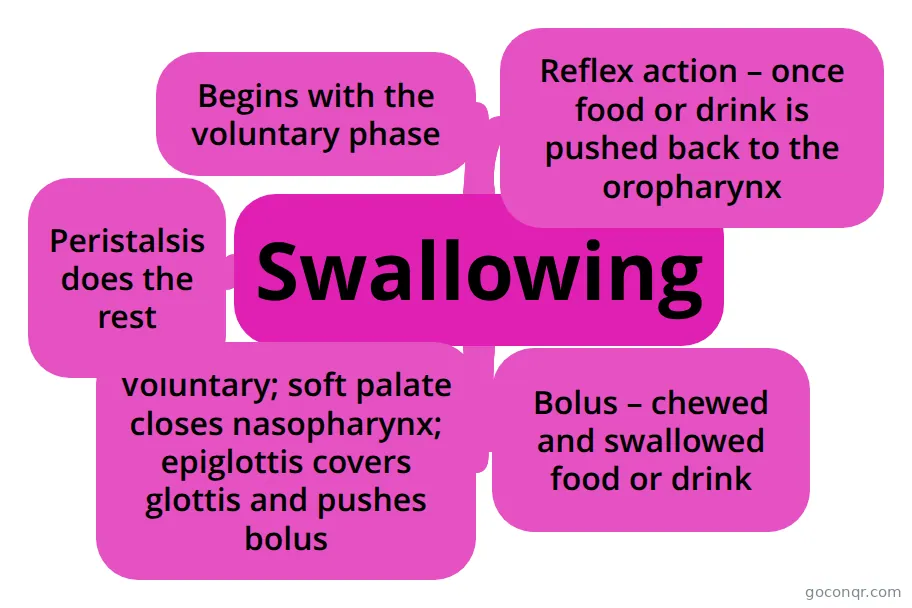
Flashcards
See all 26 flashcards-
29 cardsGastric secretions What are the function of the following salivary secretions? 1) Amylase 2) Lysozyme 3) Bicarbonate 4) Growth...
-
195 cardsPhysiology of Alimentary System On average how much saliva is produced each day?
-
48 cardsWeek 3 Overall function of the pancreas?
-
38 cardsDigestion and Absorption Learning objectives 1. Understand the 3 phases of digestion and absorption 2. Anatomical features of the mi...
-
28 cardsLiver and Gallbladder What are the key functions of the liver and gallbladder?
-
30 cardsAlimentary Flashcards What are the four main basic processes of the GI tract?
-
9 cardsGI Tract Hormones - Flashcards What is the function of the following gut hormones and what are they stimulated by?
-
83 cardsTest 4: Part 2 What is coprophagia?
Notes
-
Gastrointestinal Physiology Digestive System Anatomy and FunctionProcesses of the Digestive System1. Secretion- endocrine: hormones into blood- exocrine: enzymes into lumen2. Digestion- mechanical/chemical- most in small intest*3. Motility ...
-
Clinical Application SUBLINGUAL MEDICATION If you lift your tongue up and notice blood vessels everywhere beneath the surface of under your tongue (sublingual). Those sublingual blood vessel network have a specialty to absorb ce...
More Physiology topics
About Digestive System and Liver
GoConqr OriginalWhat this unit covers
The unit follows food through the gut and into the liver. The mind map GI Tract Overview sets out the structure of the gut wall, its electrical activity and its nerve supply. Other maps and decks move on to the mouth, swallowing, the stomach, the small intestine, the colon and the liver.
Where to start
Begin with the big picture. Open GI Tract Overview, then Chemical Digestion and Absorption of Nutreints, which sorts carbohydrates, proteins and lipids and looks at the enterocyte. After that, go to the stomach with Stomach: Gastric Secretion, Motility and Emptying. It covers oxyntic glands, acid, pepsinogen, mucus and the cephalic, gastric and intestinal control pathways.
Using maps and quizzes together
Read a map first, then test yourself straight away. Here is a simple order:
- Study one map, such as Swallowing or Impaired Liver Function.
- Take a quiz on the same topic, for example Bile and the Biliary System, a fill-in-the-blanks journey of bile from liver cells to the duodenum.
- Go through a flashcard deck such as Gastric Acid Secretion to fix the terms you missed.
- Return to the map and fill any gaps.
For broader checks, try Digestive System Quiz and Alimentary Physiology, which ask about the functions of the GI tract as a whole.
The liver and metabolism
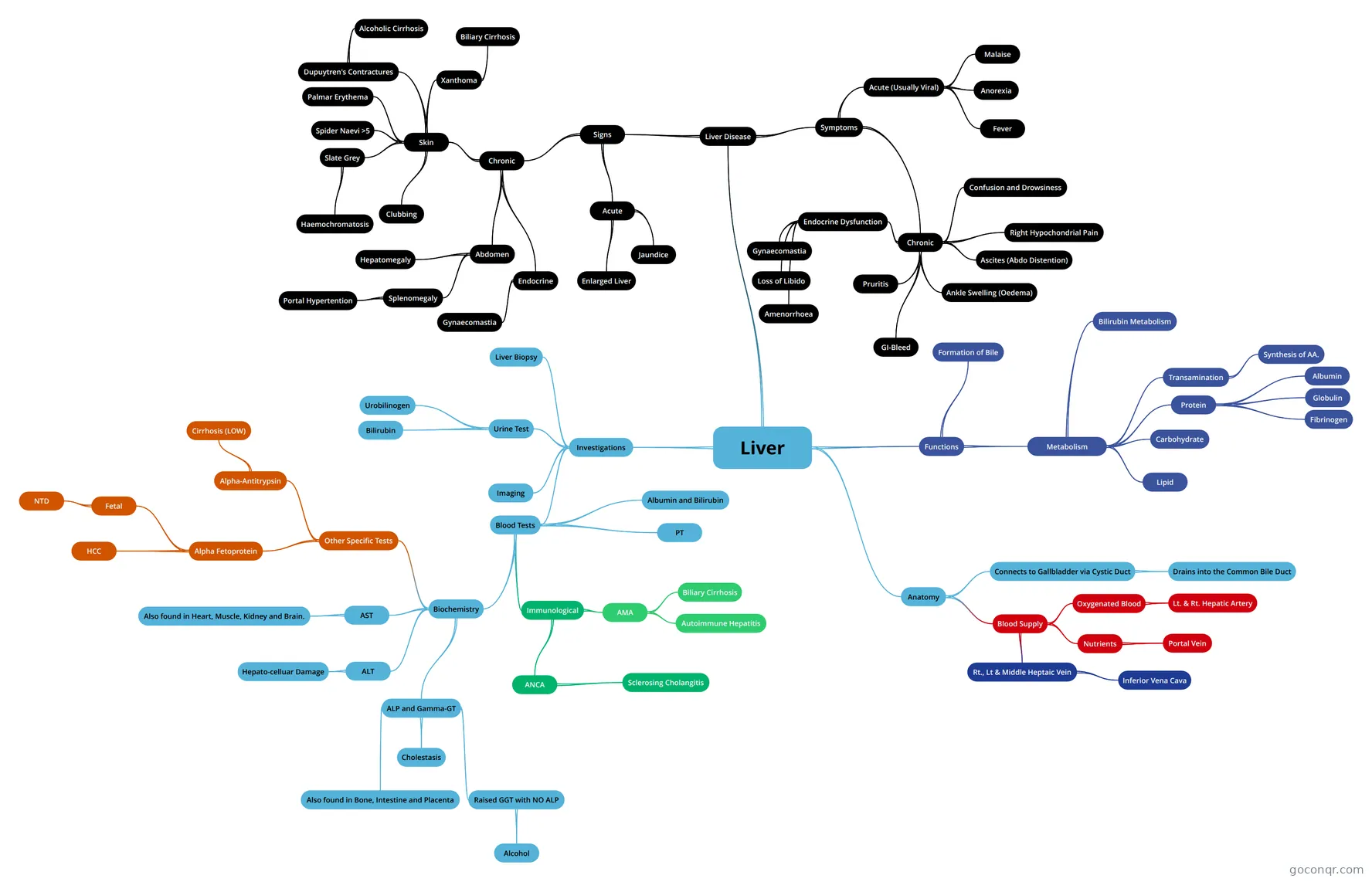
Liver material includes maps on impaired liver function, liver function tests and bile, plus a flowchart on how blood reaches the liver. Impaired Liver Function separates hepatocellular injury from cholestasis and lists some causes of each.
Where it sits
This unit belongs to the strand Digestion, Metabolism and Thermoregulation in Physiology. Teachers can pick out single maps or quizzes to set alongside their own lessons. Choose one topic today and see how much you remember.
Frequently asked questions
Which resource should I open first?
Start with the mind map GI Tract Overview. It covers the structure and function of the gut, the wall, electrical activity and nerve control. Then move to Chemical Digestion and Absorption of Nutreints, and finish the first pass with a quiz such as Digestive System Quiz.
What do the mind maps cover?
The maps run from the mouth and swallowing through gastric secretion, emptying, the small intestine and bile to the liver. Some are narrow, such as Gastrin Secretion and Vitamin B12. Others are broad, such as Digestion and absorption and Impaired Liver Function.
Is there anything on the liver?
Yes. You will find maps on impaired liver function, liver function tests and the functions of bile, a flowchart on liver blood delivery, a quiz on the liver in health and disease, and flashcards on liver structure and function.
Are the resources free, and who made them?
Every resource listed here is free to open, study and take, with no account needed. They were made by GoConqr users, not by GoConqr itself. If you want to save quiz scores or make your own sets, a free account lets you do that.
Who is this page for?
It is mainly for university students studying digestive physiology, who can use the quizzes to check recall and the maps to see how processes link. Teachers can use the ready-made quizzes, maps and flashcards as material to set or adapt.
What if I cannot find my topic?
Try a nearby title first. Topics are often grouped under broader maps, such as Motility, Digestion & Absorption. If a gap remains, you can build your own map, flashcards or quiz, since the page is made of community contributions.