
Cell Physiology and Membrane Transport
67 resources created by 59 users
This Cell Physiology and Membrane Transport page on GoConqr gathers community-made quizzes, mind maps, flashcards, notes and slide sets, from body fluid compartments and the phospholipid bilayer to ion pumps, vesicular transport and apoptosis. It's built for university students revising a topic and teachers after ready-made material. There are over 300 resources here, including more than 90 quizzes, over 80 mind maps and more than 170 flashcards, all at university level. Pick a topic, try a quiz to find your gaps, then make your own revision sets.
Top Cell Physiology and Membrane Transport resources
-
27 questionsSession 1 - Body Fluid Compartments Why does isobutene not dissolve in water?
-
139 cardsCells: Living Units Cell functions
-
60 questionsCell Physiology and General Physiology of Excitable Tissues- Physiology PMU 2nd Year Cell Physiology and General Physiology of Excitable Tissues- Physiology PMU 2nd Year
-
54 questionsKNES 259 - Lecture Midterm Practice Exam Practice Exam for Kinesiology 259 Physiology Section
-
36 cardsCellular Physiology I A patient with a body w of 65kg was injected with 10ml of a 1% (w/v) solution of Evans blue. After 10min, t...
-
50 questionsMidterm Practice The rate of Ca+ diffusion across a membrane is dependent on -
-
29 questionsPHY2011 - topic 1 and 2 In which part of the body is the most water found?
-
20 cardsA&P CH 3 The clear, structureless gel in a cell is its
Quizzes
See all 29 quizzes-
27 questionsSession 1 - Body Fluid Compartments Why does isobutene not dissolve in water?
-
60 questionsCell Physiology and General Physiology of Excitable Tissues- Physiology PMU 2nd Year Cell Physiology and General Physiology of Excitable Tissues- Physiology PMU 2nd Year
-
54 questionsKNES 259 - Lecture Midterm Practice Exam Practice Exam for Kinesiology 259 Physiology Section
-
50 questionsMidterm Practice The rate of Ca+ diffusion across a membrane is dependent on -
-
29 questionsPHY2011 - topic 1 and 2 In which part of the body is the most water found?
-
243 questionsScience Questions Attached are the solute concentrations for a normal mammalian cell under resting conditions. Which value wi...
-
63 questionsCh 3 The Cell Check all that apply to the Cell Theory.
-
29 questions2020 cycle 1 final corrective Which of following statements properly describe characteristics of facilitated diffusion?
Mind maps
-
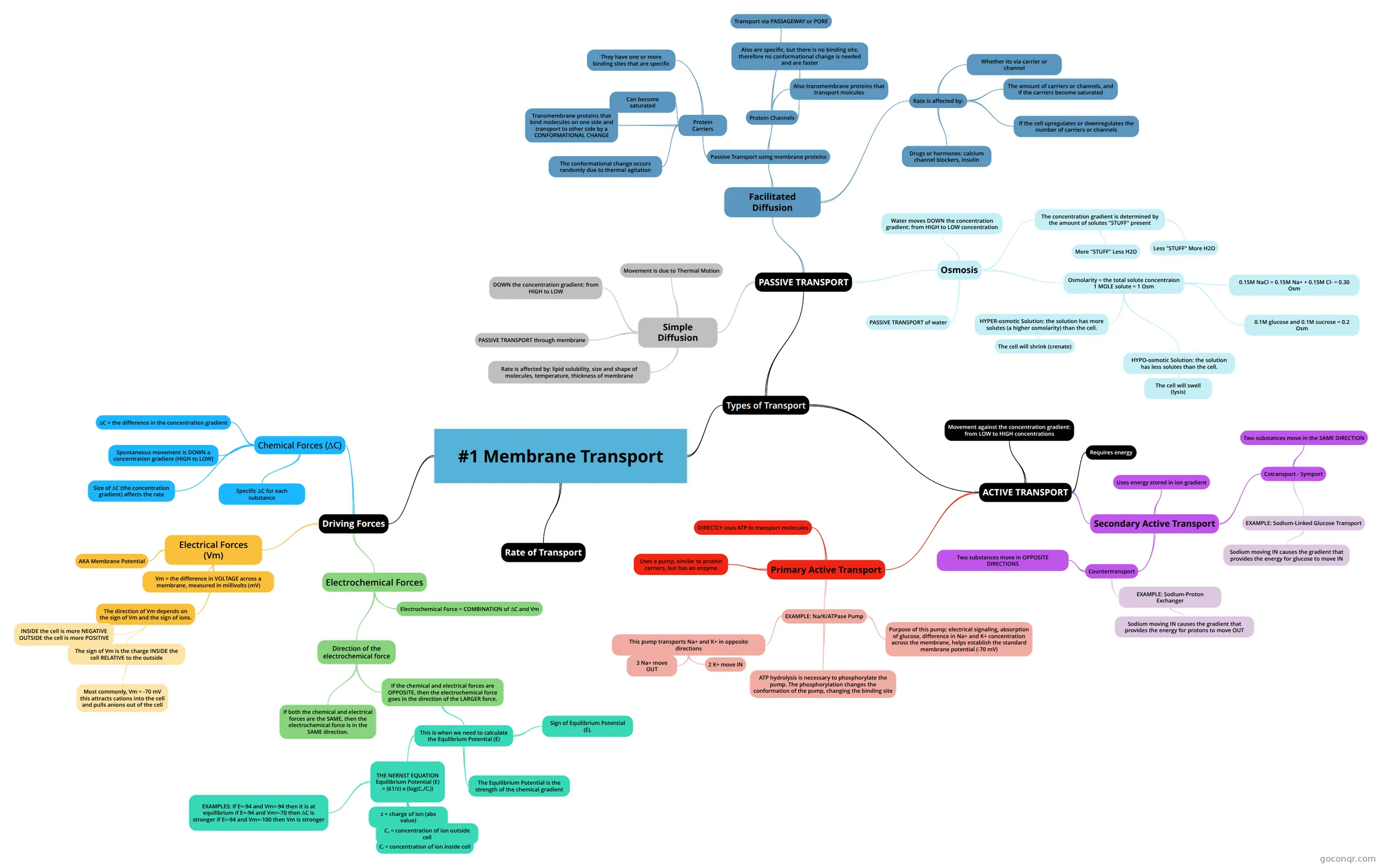 #1 Membrane Transport Membrane Transport
-
 TRANSPORT Includes: - Transport routes - Membrane channels
-
Ion Channel Receptors
-
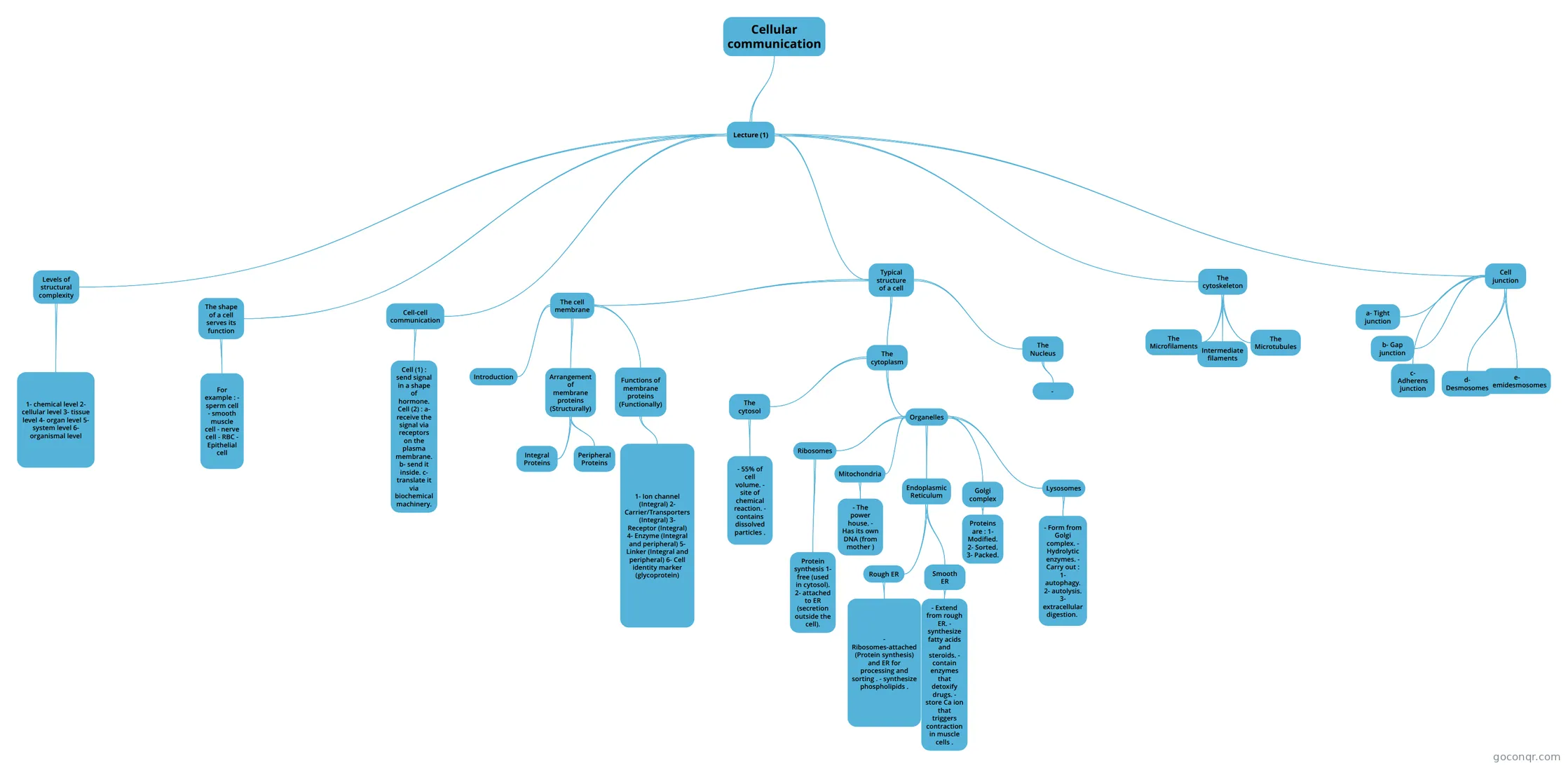 Lecture (1) Mind Map on Cellular communication, created by Hamza Al Salmi on 30/10/2017.
-
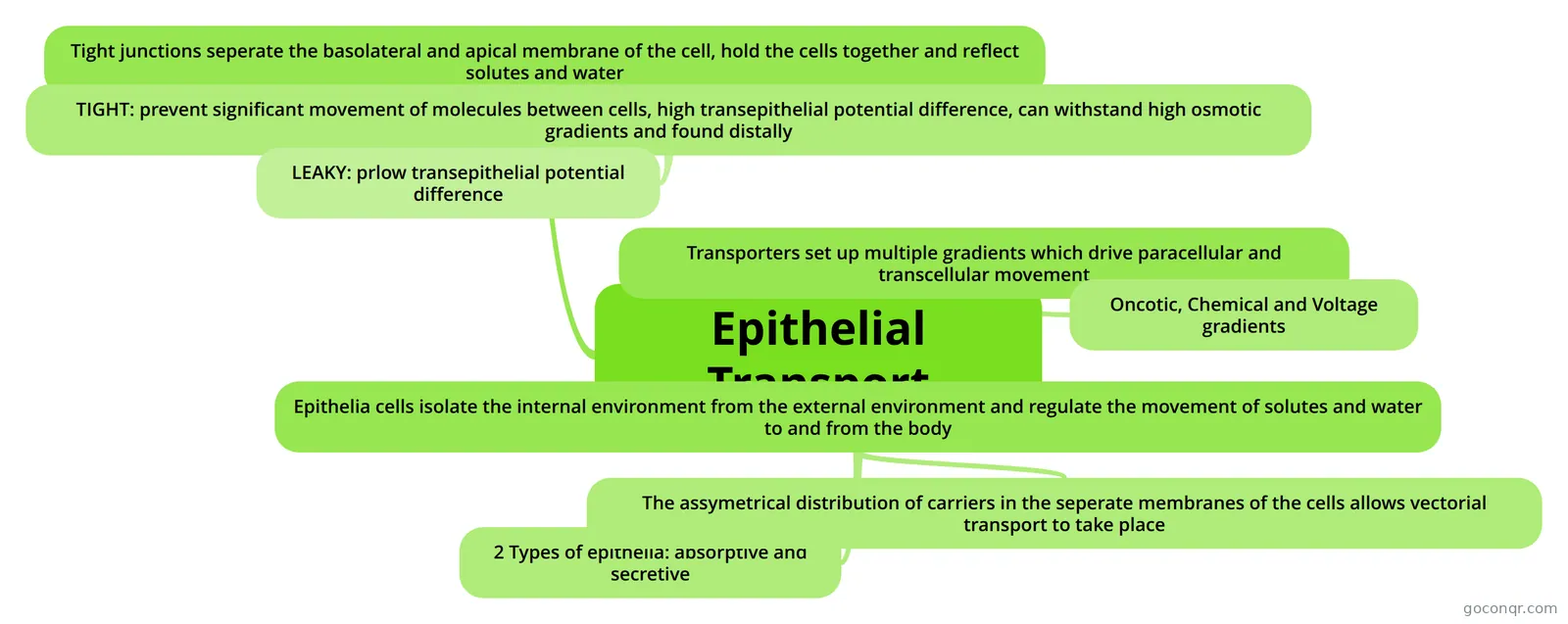 Epithelial Transport
-
Cellular Transport Mechanisms
-
Cell Processes
-
Transport systems Mecanismos de transporte al interior de la membrana plasmática
Flashcards
See all 27 flashcards-
139 cardsCells: Living Units Cell functions
-
36 cardsCellular Physiology I A patient with a body w of 65kg was injected with 10ml of a 1% (w/v) solution of Evans blue. After 10min, t...
-
20 cardsA&P CH 3 The clear, structureless gel in a cell is its
-
7 cardsVesicle mediated transport Vesicle Mediated Transport
-
63 cardsHomeostasis, Citology, Histology Characteristics of life
-
39 cardsLecture 7- Plasma Membrane and Transport What model best explains the plasma membrane?
-
15 cardsWeek 1 What maintains gradients of ions across cell membranes?
-
21 cardsTransport accross a cell membrane Passive, random movement of uncharged particles from regions of high to regions of low concentration.
Notes
-
Calcium Entry Calcium levels must be maintained within certain limits in cells. Calcium is often considered a life or death signal in that, use of Calcium can be the difference between cell survival or cell death.Extracellular Calc...
-
Physiology Test 1 Review The Cell Important Things to Know: In the human body, 40% of our body weight comes from intracellular fluid (ICF), or 24 liters. 16% of our body weight comes from interstitial fluid (IF). Plasma (blood) makes up only ...
Slides
More Physiology topics
About Cell Physiology and Membrane Transport
GoConqr OriginalWhat this unit covers
The resources here follow the cell from the outside in. Early material looks at body fluid compartments: where water sits in the body, and how plasma, interstitial fluid and intracellular fluid differ. From there the focus moves to the plasma membrane, its lipids and proteins, and what can or cannot cross the phospholipid bilayer.
Transport and excitable cells
Many listed items deal with diffusion, osmolarity, tonicity, passive and active transport, and vesicle-mediated transport such as endocytosis. Others go deeper into the Na+-K+ pump, voltage activated K+ channels, glucose transport, epithelial transport and calcium handling. Some quizzes, such as the one on cell physiology and general physiology of excitable tissues, extend into membrane potential and the action potential.
Where to start
- Open the quiz on Body Fluid Compartments to see what you already know about water, membranes and the bilayer.
- Read a mind map such as Membrane proteins or Passive Processes to see how the ideas connect.
- Work through flashcards like Vesicle mediated transport or Transport accross a cell membrane to fix the key terms.
- Return to a quiz, for example Mechanisms of Membrane Transport or Passive Transport, Osmosis, and Tonicity, and check what has stuck.
Using quizzes and maps together
Use a quiz first to spot weak points, then pick the mind map that matches the topic you missed. Flashcards suit short, repeated recall. If you want worked calculations, the Cellular Physiology I deck includes a dye-dilution problem on plasma volume. Teachers can use the quizzes, flowcharts and slide sets as ready-made material for a class.
Where it sits
This unit belongs to the Foundations of Physiology strand in the subject Physiology. It gives the cell-level base that later topics build on.
Choose one resource that matches what you are studying this week and give it a try.
Frequently asked questions
Which quiz should I try first?
Start with the quiz on Body Fluid Compartments. It asks why isobutene does not dissolve in water, what is not true of the phospholipid bilayer and what can pass through it. That makes it a good check of the basics before you move on to transport and excitable tissues.
What do the mind maps cover?
The mind maps cover membrane proteins, passive processes, vesicular transport, glucose transport, epithelial transport, ion channel receptors, membrane potentials, apoptosis and the regulation of internal calcium. Several are simply titled Membrane Transport, so you can compare how different authors organise the same topic.
Are the resources free to use?
Yes. Every resource listed here is free to open, study and take, with no account needed. They were made by GoConqr users, not by GoConqr itself. A free account also saves your quiz scores and lets you make your own quizzes, mind maps, flashcards and notes.
Who are these resources for?
They are written at university level, so they suit university students revising cell physiology and membrane transport. Teachers can also use the quizzes, flowcharts, slide sets and notes as ready-made material, for example to set practice questions or to show how transport processes link.
Is there anything on excitable cells?
Yes. The quiz on cell physiology and general physiology of excitable tissues asks about action potentials, local potentials and homeostasis. There is also a quiz titled EXCITABLE CELLS, a mind map on Membrane Potentials (P1) and a flashcard deck called Intro to Membrane Potential.
What if my topic is not listed?
Look at related titles first, since many resources cover several topics at once. For example, calcium pumps and calcium entry have their own notes, and the Cytoskeleton has both flashcards and a mind map. Anything still missing is a chance to make your own set.