
Introduction to Physiology and Homeostasis
51 resources created by 45 users
This Introduction to Physiology and Homeostasis page on GoConqr gathers community-made quizzes, mind maps, flashcards and notes, from feedback loops and body fluid compartments to thermoregulation and the major organ systems. It's built for university students revising a topic or filling gaps, and for teachers after ready-made material. There are over 360 resources here, including more than 110 quizzes, over 80 mind maps and more than 140 flashcard sets or decks. Pick a resource, try a quiz to find your gaps, then make your own.
Top Introduction to Physiology and Homeostasis resources
-
18 questionsAnatomy and Physiology (SLT) What system is responsible for force of movement, temperature regulation, expression, breathing and posture?
-
12 questionsWeek 1 Pre-Quiz All of the chemical operations underway in the body refer to
-
7 cardsHomeostasis
-
14 questionsPhysio - Cycle I Find right sentences concerning transportation of CO2 in blood: (more than 1 was right)
-
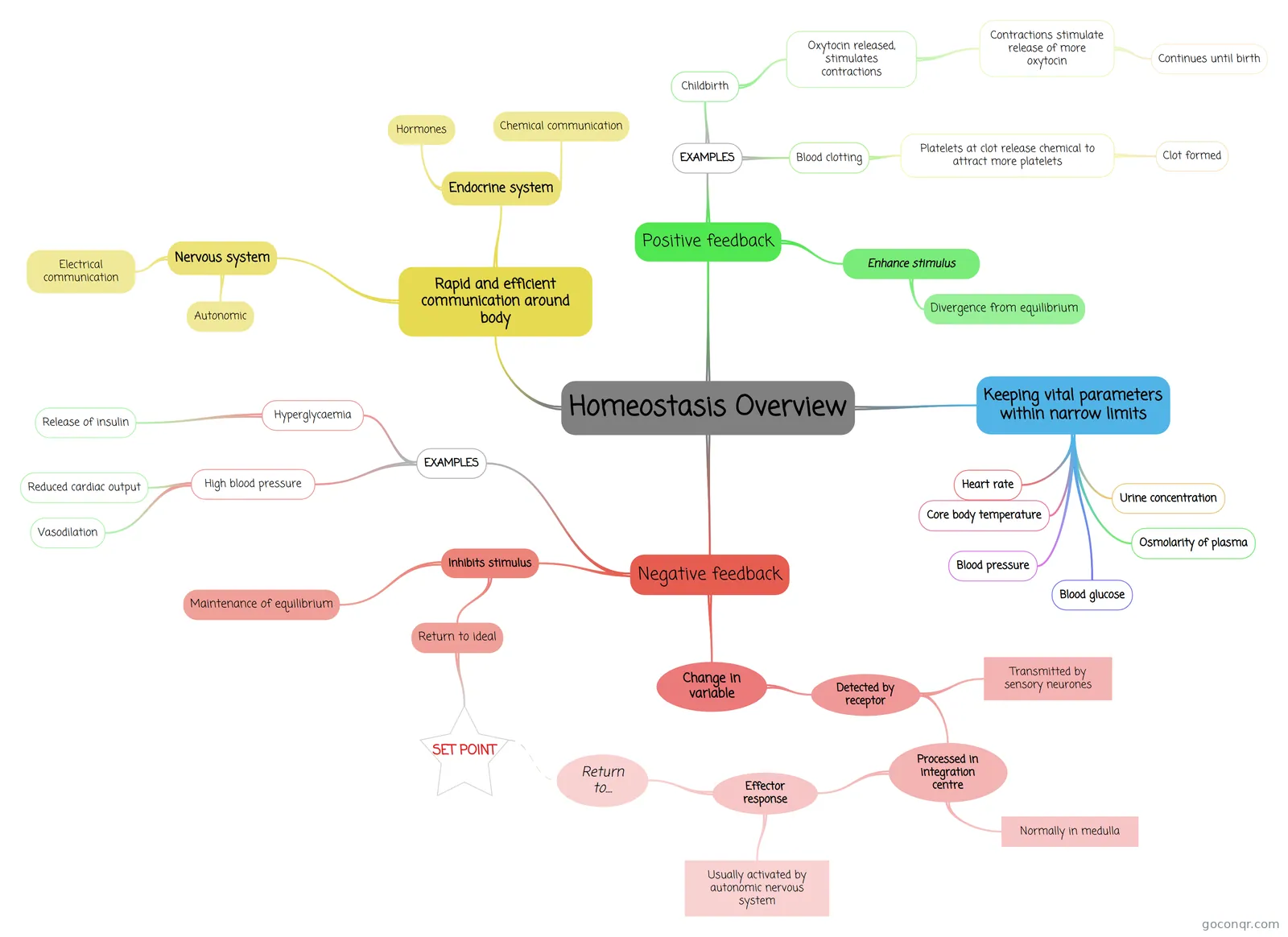
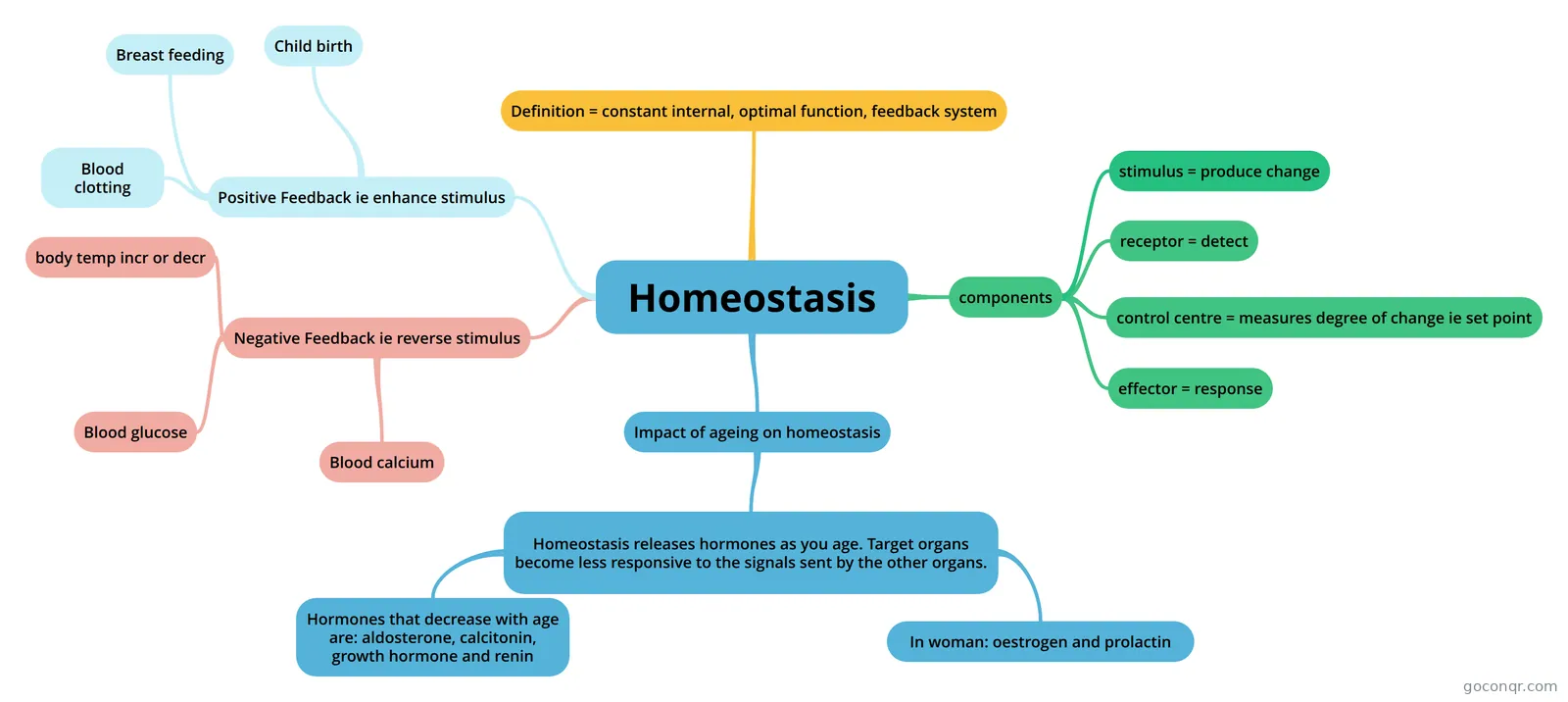
Mind map Homeostasis A&P
-
7 questionsHomeostasis Negative Feedback is a Physiological Response which Reverses a Change in a Controlled Condition.
-
339 cardsHuman Physiology Final The average human has how much water in their body?
-
30 questionsUnit 1 What happens to the International Normalised Ratio (INR) with liver disease?
Quizzes
See all 25 quizzes-
18 questionsAnatomy and Physiology (SLT) What system is responsible for force of movement, temperature regulation, expression, breathing and posture?
-
12 questionsWeek 1 Pre-Quiz All of the chemical operations underway in the body refer to
-
14 questionsPhysio - Cycle I Find right sentences concerning transportation of CO2 in blood: (more than 1 was right)
-
7 questionsHomeostasis Negative Feedback is a Physiological Response which Reverses a Change in a Controlled Condition.
-
30 questionsUnit 1 What happens to the International Normalised Ratio (INR) with liver disease?
-
127 questionsPhysio cycle 1 (part 2) Vasopressin is released when
-
61 questionsPhysio Exam 1 Which of the following is responsible in a feedback system for comparing the rate of activity or the level ...
-
116 questionsFinal prep 2 The supporting cells in the central nervous system phagocytize bacterial cells and cellular debris are:
Mind maps

Flashcards
See all 16 flashcards-
7 cardsHomeostasis
-
339 cardsHuman Physiology Final The average human has how much water in their body?
-
26 cardsHomeostasis Of Blood Sugar & Gas Concentration Regulation of Blood Sugar
-
62 cardsBioscience flashcards What are the three general processes of urine formation?
-
37 cardsPhysiology Exam 1 : Homeostasis The dynamic constansy of the internal environment of the human body.
-
31 cardsPrinciples of Physiology Basics of physiology including homeostasis, body structure, thermoregulation, and metabolism.
-
53 cardsEEOB 2520 Exam 1 Cards
-
12 cardsMechanical Efficiency of the Cycling Human Are the processes transforming one energy source to another (e.g. glucose to ATP) and the mechanisms by whi...
Notes
-
Pulse Pressure Wave Velocity (07/10/13 prac) Pulse Pressure Wave Velocity (07/10/13 prac) The pulse pressure wave is the wave of pressure/volume changes that occurs down an elastic arterial blood vessel to maintain blood pressure and flow during diastole. Comple...
-
Galvanic Skin Response (21/10/13 lab) The Galvanic Skin Response (21/10/13 prac) The electrical properties of the surface tissues (skin and connective tissue) are influenced by the amount of blood flow in the tissue and also the activity of the sweat glan...
-
Signal Transduction Signal Transduction 1. Norepinephrine/epinephrine bind to the g-protein (alpha-2) receptor resulting in a confirmational change. 2. This change causes the alpha subunit of the recep...
-
Intro / Homeostasis Physiology: Study of the human body and how they work together.Function: Answers "Why?" using a Teleological approach.Process or Mechanism: Answers "How?" Using Mechanistic approach. Homeostasis: Keep body environment...
More Physiology topics
About Introduction to Physiology and Homeostasis
GoConqr OriginalWhat this unit covers
This unit sits in the Foundations of Physiology strand of the Physiology subject. Its centre is homeostasis: how the body keeps conditions steady. The listed resources also reach into body fluid compartments, temperature control, cell signalling and the main organ systems.
Where to start
Begin with the flashcard deck Homeostasis. It asks you to define homeostasis, name the three parts of a homeostatic mechanism (receptor, control centre, effectors) and tell negative feedback from positive feedback. Once those terms feel familiar, move on.
- Read a mind map such as Homeostasis Overview to see how the ideas connect.
- Take the quiz Homeostasis, which asks whether negative feedback reverses a change in a controlled condition.
- Try Week 1 Pre-Quiz for the basics, such as the difference between the study of function and the study of form.
Using quizzes and maps together
Maps show the whole picture; quizzes show what you have not yet absorbed. Read a map first, then take a quiz on the same topic. When you miss a question, go back to the branch of the map that covers it. The mind map Weeks 1-5 is useful here, as it breaks the body down into fluid compartments and other parts.
Going wider
When the core ideas are secure, try the quizzes Anatomy and Physiology (SLT) and A & P 2 Final Review. They bring in the nervous and endocrine systems working together. The deck Human Physiology Final covers water distribution in the body. There are also notes, including Homeostasis & Feedback Loops and temperature control responses.
Teachers can pick out a map or quiz to set alongside a lesson. Everything here was made by GoConqr users, so check it against your own course. Choose one resource today and see where it takes you.
Frequently asked questions
Which resource should I open first?
Start with the flashcard deck Homeostasis. It covers the definition of homeostasis, receptors, control centres, effectors and the two kinds of feedback. After that, take the quiz Homeostasis to check what stuck, then read a mind map to see how the ideas link together.
What do the mind maps on this page cover?
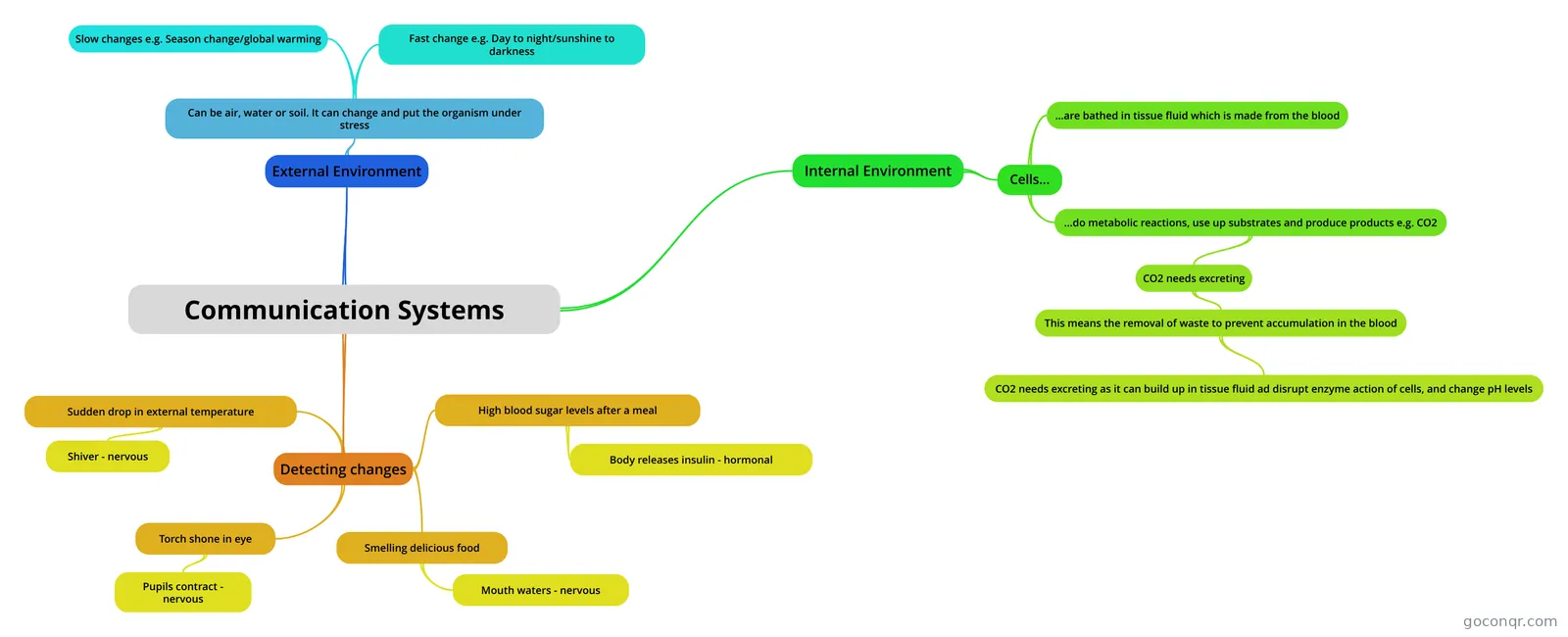
The mind maps cover homeostasis from several angles, including overviews, thermoregulation, body fluid compartments, the endocrine system, and gaseous exchange and circulation. Others look at body systems and general concepts. Open a few to compare how different students have organised the same ideas.
Are the resources free to use?
Yes. Every resource listed here is free to open, study and take, with no account needed. A free account also saves your quiz scores and lets you make your own quizzes, mind maps, flashcards and notes.
Who made these resources?
They were made by GoConqr users, not by GoConqr itself. Because of that, styles and depth vary from one resource to the next. Compare a few on the same topic and check anything important against your own course material.
Which levels is this page suited to?
Nearly all the resources here are at university level, so the page suits university students most. Teachers can also use the quizzes, maps and flashcards as ready-made material for classes in physiology and anatomy.
What if I cannot find the topic I need?
Try nearby titles first. Topics such as thermoregulation, the respiratory system and the renal system appear in several resources under different names. If nothing fits, you can make your own map or flashcards with a free account.