
Cardiovascular System and Cardiac Function
1,712 resources created by 1,132 users
This Cardiovascular System and Cardiac Function page on GoConqr gathers community-made quizzes, mind maps, flashcards and notes, from the ECG and cardiac output to hypertension, heart failure and blood pressure control. It's built for university students and professional candidates practising physiology recall and interpretation, and for teachers after ready-made material. There are over 1,600 resources here, including more than 300 quizzes, over 500 mind maps and more than 700 flashcards. Pick a topic, try a quiz to find your gaps, then build your own maps and flashcards.
Select topic
- Blood Composition and Function88
- Heart Anatomy and Function119
- Cardiac Muscle and Contraction22
- Cardiac Conduction and ECG78
- Cardiac Cycle and Heart Sounds87
- Cardiac Output and Stroke Volume51
- Blood Vessels and Circulation57
- Hemodynamics and Blood Pressure38
- Blood Pressure Regulation44
- Cardiovascular Responses to Exercise and Diving11
- Cardiac Arrhythmias15
- Heart Valve Disease and Murmurs21
- Hypertension36
- Heart Failure35
- Atherosclerosis and Coronary Artery Disease5
Top Cardiovascular System and Cardiac Function resources
-
34 questionsLectures 3-6 Cardiac Physiology Which of the following statements are TRUE regarding cardiac myocytes?
-
230 questionsCardiac System The cardiovascular system is made up of
-
146 questionsCardiovascular System- Physiology PMU- 2nd Year 2nd Sem The pacemaker of the heart is normally the:
-
191 cardsHeart Impaired cardiac function → unable for the cardiac muscles to contract → unable to propel the blood to the ...
-
64 questionsQuiz - Cardiology #1 (Practice Quiz) According to current estimates, how many Americans have some form of cardiovascular disease (CVD)?
-
59 questionsECG Label the ECG Wave.
-
56 cardsCardiac Physiology PA School
-
45 cardsThe Vascular Tree What is the function of the cardiovascular system?
Quizzes
See all 365 quizzes-
34 questionsLectures 3-6 Cardiac Physiology Which of the following statements are TRUE regarding cardiac myocytes?
-
230 questionsCardiac System The cardiovascular system is made up of
-
146 questionsCardiovascular System- Physiology PMU- 2nd Year 2nd Sem The pacemaker of the heart is normally the:
-
64 questionsQuiz - Cardiology #1 (Practice Quiz) According to current estimates, how many Americans have some form of cardiovascular disease (CVD)?
-
59 questionsECG Label the ECG Wave.
-
23 questionsA&P CARDIO Name the parts of the heart structure:
-
31 questionsChapter 14 What causes the self-excitation (spontaneous generation of action potentials) of the cells of the sinoatria...
-
29 questionsTopic 20 - Cardiovascular Physiology A blood vessel that takes blood away from the heart is called a/an
Mind maps
See all 519 mind maps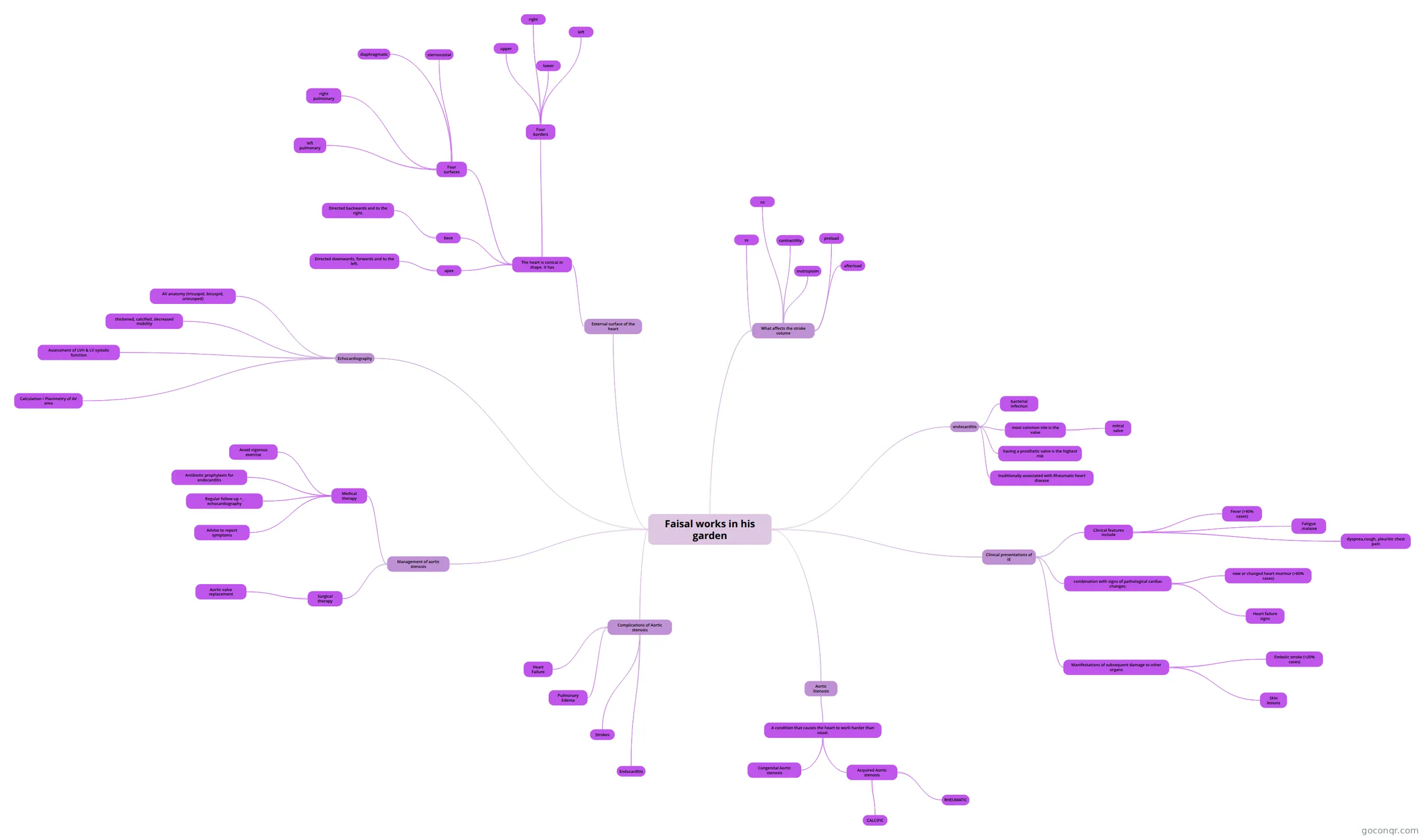
Flashcards
See all 713 flashcards-
191 cardsHeart Impaired cardiac function → unable for the cardiac muscles to contract → unable to propel the blood to the ...
-
56 cardsCardiac Physiology PA School
-
45 cardsThe Vascular Tree What is the function of the cardiovascular system?
-
33 cardsMicrocirculation and oedema 1. Draw a labelled diagram showing the anatomy of the microcirculation. 2. Describe the three types of capi...
-
53 cardsBRS Flashcards Cardiovascular Physiology blood flows from the lungs to the left atrium via the
-
40 cardsHaemodynamics
-
35 cardsCardiac Cycle Intro to the physiology of the cardiac cycle
-
27 cardsHypertension
Flowcharts
See all 30 flowchartsNotes
See all 70 notes-
ECG and Mean Cardiac Vector 1 2 3
-
Cardiovascular Physiology Functions of the cardiovascular SystemTransport and exchange of gas Carries oxygen for aerobic respiration from lungs to tissue Picks up CO2 from tissues and releases it in the lungs Transport nutrients from digestive...
-
RAAS Renin-Angiotensin-Aldosterone System (RAAS) Supports SNA - boost NA release, stimulates aldosterone secretion and Na and water excretion *renin controls how active the system is (produced by juxtaglomerular cell...
-
The Heart The Route of an Action Potential Step 1:SA node activation(Time = 0msec ) Step 2:Spread across atrial surfaces(Time = 50msec )
-
Movement of blood PART 1 The Heart is 2 pumps Right side drives pulmonary circulation Left side drives systemic circulation Same volume of blood is handled by each side Pressure in left side of heart is greater than the right...
-
Exam #2 Prep
-
Valves and vessels Valves structure and function Ensure blood flows in the right direction - prevent back flow of blood. Cusps of valves are continuous in their attachment but free towards the centre of the opening. Bicuspid valve ...
-
2330 Module 2: Cardiac Output (CO) (Work in Progress) Afterload - Resistance to ejection of blood from ventricles -Diastolic number on B/P cuff Atrial Systole - - Isovolumetric Contraction - Contractio...
Slides
See all 15 slidesTopics in Cardiovascular System and Cardiac Function
More Physiology topics
About Cardiovascular System and Cardiac Function
GoConqr OriginalWhat this unit covers
This page brings together material on how the heart works and how blood is moved and controlled. The resources were made by GoConqr users and cover cardiac muscle, the cardiac cycle, the ECG, cardiac output, blood pressure and common conditions such as hypertension and heart failure.
Where to start
Begin with the big picture. The mind map called Cardiovascular system and the flashcard deck The Cardiovascular System give a broad overview. Then move to the flashcard decks Cardiac Cycle and Cardiac Muscle, which are useful for the sequence of events in each heartbeat.
Building up the detail
- The ECG mind map explains the main deflections, including how the QRS complex represents ventricular depolarisation and what the PR interval measures.
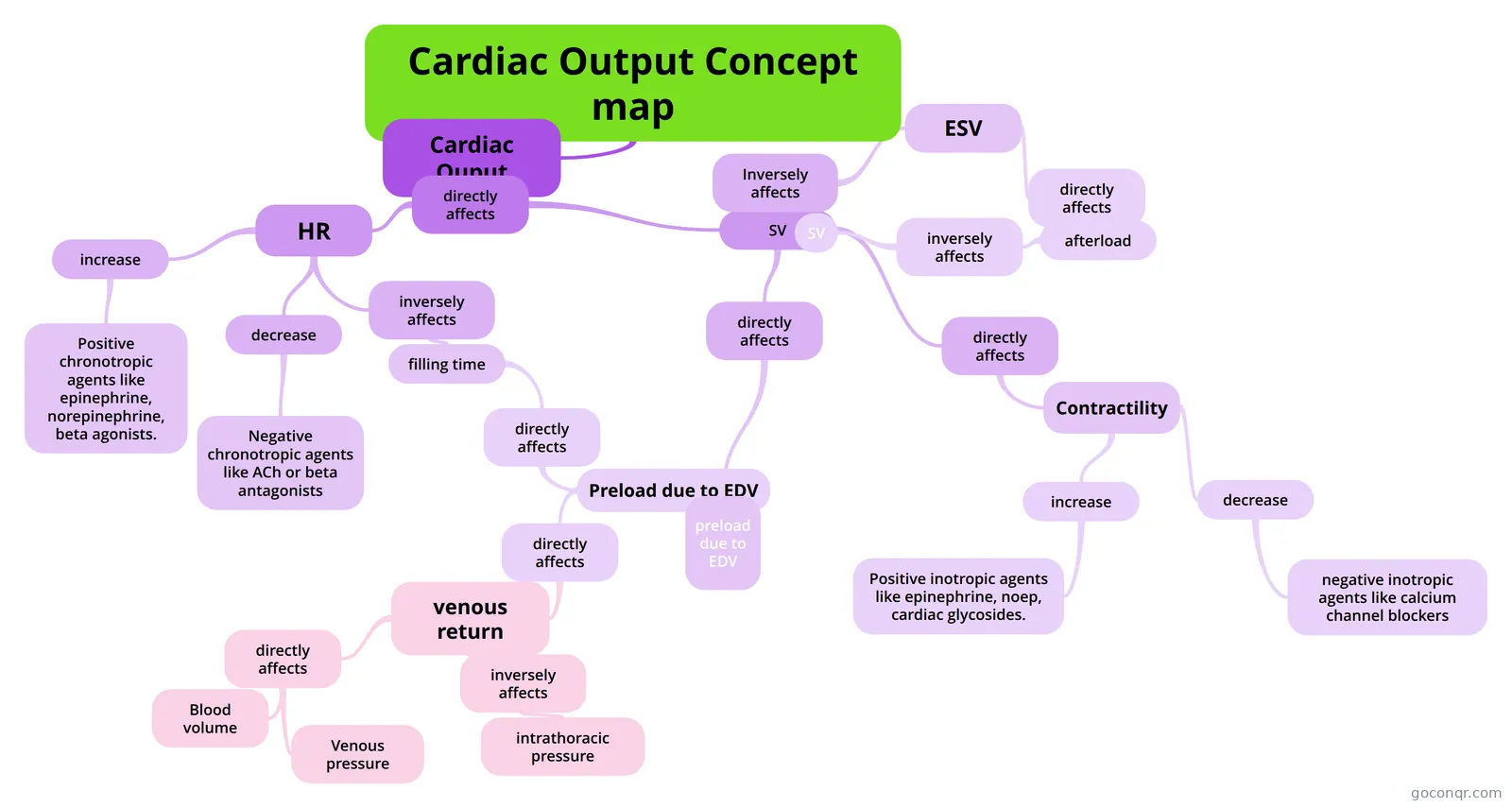
- The Cardiac Output mind map links heart rate, stroke volume, preload, afterload and contractility.
- The Cardiac Output Concept map adds the effect of agents that raise or lower heart rate.
- The ECG and Mean Cardiac Vector note connects excitation-contraction coupling to why the ECG matters.
Using quizzes and maps together
Read a map first, then test yourself. The quiz Lectures 3-6 Cardiac Physiology asks which statements about cardiac myocytes are true, for example the role of the Na+/K+ ATPase in the resting membrane potential. The quiz ELECTRICAL CONDUCTIVITY OF THE HEART asks you to drag labels onto a diagram. Wrong answers show you which map to reopen.
Later, move on to clinical topics such as the mind maps on hypertension, syncope and hypertrophic cardiomyopathy, and the notes on RAAS. Several resources mention ACSM-CPT, so they may suit fitness professionals too.
Where it sits
This unit belongs to the Cardiovascular System strand of Physiology. Work through it in the order above, then try a quiz and make your own flashcards from the gaps you find.
Frequently asked questions
Which resource should I open first?
Start with the Cardiovascular system mind map or The Cardiovascular System flashcard deck for an overview. Once the layout of the heart and circulation feels familiar, move to the Cardiac Cycle flashcards and then the ECG mind map for more detail.
What do the mind maps on this page cover?
They cover the ECG and its main deflections, cardiac output and its components, hypertrophic cardiomyopathy, syncope, congestive heart failure, hypertension, the RAAS, cardiac action potentials and arrhythmias. Several others give broad overviews of the cardiovascular system and blood.
Are the resources free to use?
Yes. Every resource listed here is free to open, study and take, with no account needed. They were made by GoConqr users, not by GoConqr itself. A free account also saves your quiz scores and lets you create your own quizzes, mind maps, flashcards and notes.
Who are these resources suited to?
Almost all of them are at university level, so they suit university students and professional candidates. Teachers can use the quizzes, slide sets and notes as ready-made material. Some resources mention ACSM-CPT, which may help those preparing for that certification.
Is there a quiz on the ECG?
Yes. There are quizzes titled ECG and ECG and the Cardiac Cycle. Pair them with the ECG mind map, which covers the main deflections, the QRS complex and the PR interval, so you can check what you recall afterwards.
What if the topic I need is missing?
Try a nearby topic, such as haemodynamics, blood pressure control or the vascular tree, as these overlap with many questions. You can also build your own mind map or flashcards to fill the gap, and keep them with your other revision.