
Fluid, Electrolyte and Acid-Base Balance
102 resources created by 71 users
This GoConqr page gathers over 100 community-made resources on Fluid, Electrolyte and Acid-Base Balance: quizzes, mind maps, flashcards and notes to revise and practise with.
Top Fluid, Electrolyte and Acid-Base Balance resources
-
 Mind map Sodium
-
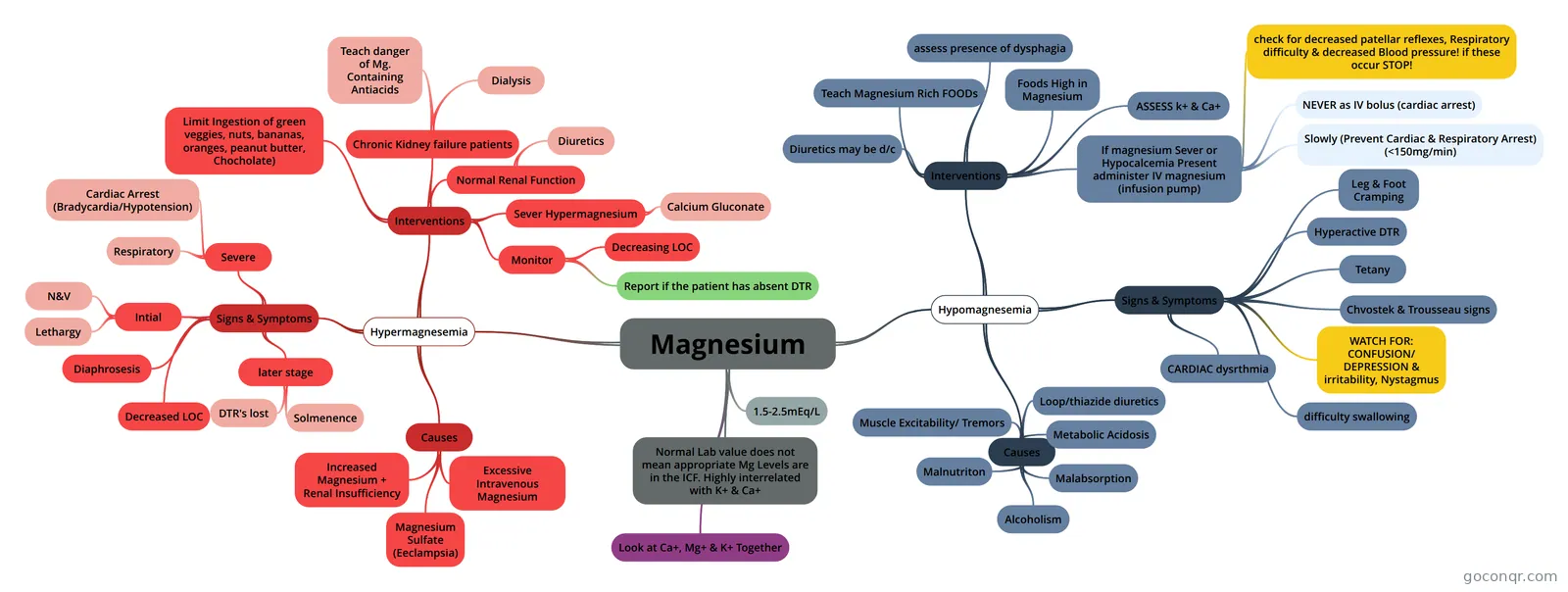 Mind map Magnesium Hypomagnesium & Hypermagnesium
-
14 questionsFluid Balances, Electrolytes, and pH A nurse is admitting a client who reports nausea, vomiting, and weakness. Upon assessment, the client has d...
-
11 questionsFluid & Electrolyte Balance Quiz 1 Why do older adults generally have less total body water than younger adults?
-
20 cardsHypovolemia Fluid Loss risk factors
-
Mind map Hypocalcemia Fkuids and Electrolyte Imbalances
-
 Mind map Expected Ranges for ABG (Arterial Blood Gases)
-
49 cardsFluid electrolyte and acid base imbalances The nurse is caring for a client with a massive burn and possible hypovolemia. Which assessment data will b...
Quizzes
See all 20 quizzes-
14 questionsFluid Balances, Electrolytes, and pH A nurse is admitting a client who reports nausea, vomiting, and weakness. Upon assessment, the client has d...
-
11 questionsFluid & Electrolyte Balance Quiz 1 Why do older adults generally have less total body water than younger adults?
-
194 questions1st Exam The RN is providing care for a pt diagnosed with dehydration and hypovolemic shock. Which of the following ...
-
200 questionsAcute and Chronic Midterm If a patient presents with third spacing due to the accumulation of extracellular fluid, what does this rep...
-
14 questionsFluid & Electrolyte questions from NCLEX 36. The nurse is caring for a client with heart failure. On assessment, the nurse notes that the client is ...
-
26 questionsExemplars 1.1-1.4: Acid-Base Balance Which of the following describes the correct lab values for metabolic acidosis?
-
100 questionsVIH 4 QUIZ 1 What is an acceptable daily fluid intake and output for a healthy adult?
-
11 questionsAcid-Base Balance from NCLEX 53. The nurse reviews the arterial blood gas results of a client and notes the following: pH 7.45, Paco2 of...
Mind maps
See all 48 mind maps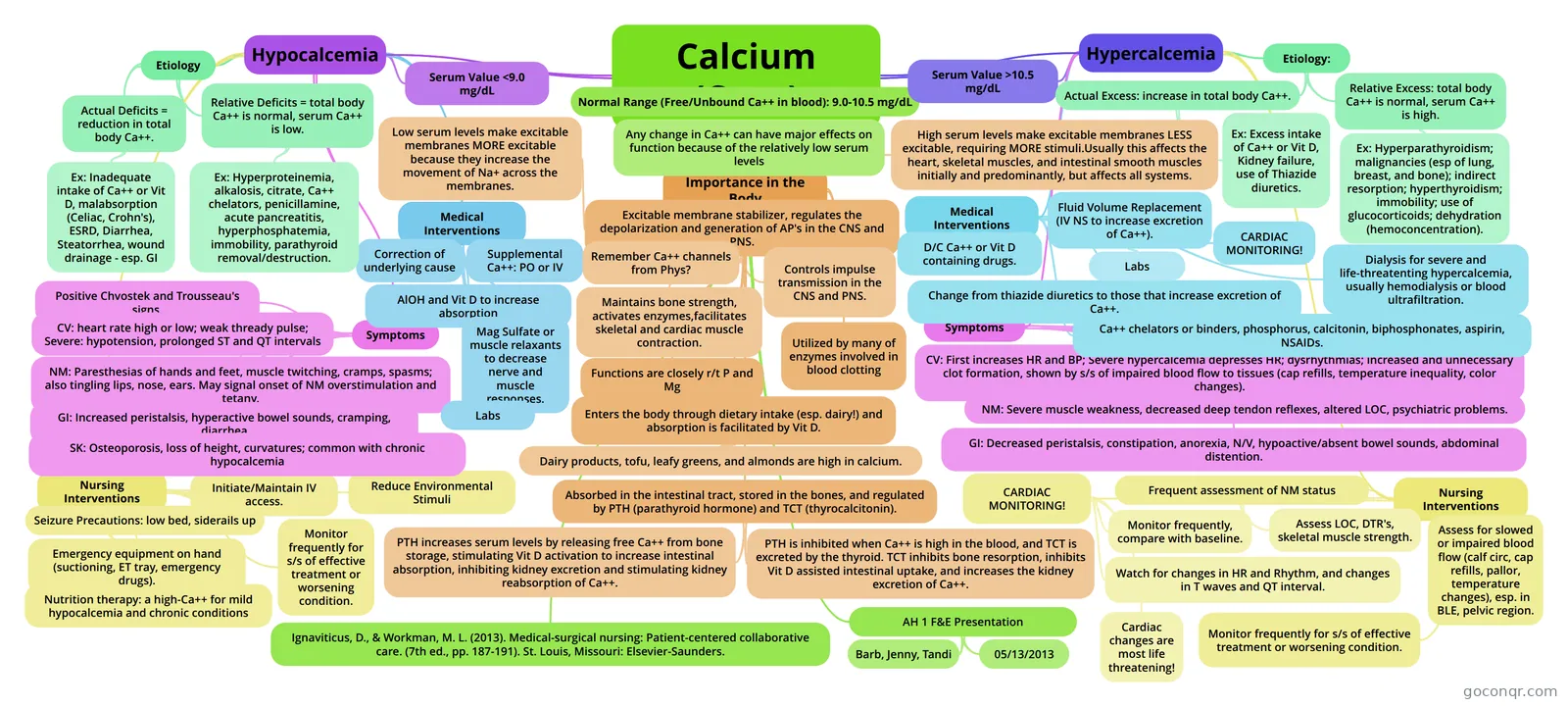
Flashcards
See all 30 flashcards-
20 cardsHypovolemia Fluid Loss risk factors
-
49 cardsFluid electrolyte and acid base imbalances The nurse is caring for a client with a massive burn and possible hypovolemia. Which assessment data will b...
-
75 cardsFluid and Electrolytes Phosphate Normal Levels
-
85 cardsNursing- Fluid and Electrolytes
-
18 cardsICU Review - Electrolytes Normal Level of potassium and it's function
-
88 cardsExam 3 study guide level II Fluid and electrolytes Tell me four things we need to know for our fluid and electrolyte test?
-
114 cardsSpring 2019 Fluids and electrolytes 1). What five fluid electrolytes are responsible for maintaining homeostasis function?
-
25 cardsTestbank Fluid & Electrolytes 1. A nurse teaches clients at a community center about risks for dehydration. Which client is at greatest r...
Notes
-
Fluid and Electrolytes Fluid/Electrolyte Distribution Body fluid is water containing chemical compounds called electrolytes plus blood cells and other soluble molecules. Body monitors and controls two aspects of body fluid balance: The volu...
-
Fluids and Electrolytes interstitial fluid: acts as the microenvironment that allows the movement of ions, proteins, and nutrients across the barrier intravascular fluid: the main fluid here (for blood) 3rd spacing: when increased amounts of...
-
All This Fluid! - created from Mind Map emesis at home K = 2.9, Na = 130, creat & BUN are up ER inserted an NG tube
-
CATION - created from Mind Map POTASSIUM MAGNESIUM SODIUM
Topics in Fluid, Electrolyte and Acid-Base Balance
More Nursing topics
About Fluid, Electrolyte and Acid-Base Balance
GoConqr OriginalWhat this unit covers
The resources follow three threads: fluid volume, individual electrolytes and acid-base balance. On fluids, you will find maps and decks on hypovolemia, fluid overload, dehydration and isotonic dehydration. On electrolytes, there are separate maps for sodium, potassium, calcium and magnesium. For acid-base work, look at blood gas analysis, alkalosis and ABG practice.
Where to start
- Begin with the notes titled Fluid and Electrolytes for how body fluid and electrolytes are distributed.
- Move to the Sodium and Magnesium mind maps. They set out normal ranges, causes, signs and symptoms, interventions and critical values, such as sodium below 120 or above 160 mEq/L.
- Open the Hypocalcemia mind map for Trousseau's sign and the risk of seizures.
- Use the Expected Ranges for ABG (Arterial Blood Gases) map to learn pH and PCO2 ranges, with an ATI example of metabolic acidosis.
Using quizzes and maps together
Read a map, then test yourself straight away. The quiz Fluid Balances, Electrolytes, and pH opens with a patient who has nausea, vomiting, weakness and dry mucous membranes, so you practise reading a presentation rather than reciting a list. Fluid & Electrolyte Balance Quiz 1 asks about hyperkalemia, including select-all-that-apply items. For exam practice, there are quizzes built from NCLEX-style questions on acid-base balance and on fluids and electrolytes. When you miss a question, go back to the matching map and read that branch again.
Flashcards suit quick recall. The Hypovolemia deck covers risk factors and assessment findings by body system, while the Fluid and Electrolytes deck covers phosphate and the vitamin involved in its absorption.
Where it sits
This unit belongs to the Pharmacology and Therapeutic Interventions strand of Nursing. Its IV therapy and electrolyte content links naturally to that focus.
Pick one electrolyte, work through its map and a quiz, then make your own flashcards from what you got wrong.
Frequently asked questions
Which resource should I open first?
Start with the notes called Fluid and Electrolytes, which explain how body fluid and electrolytes are distributed. Then try the Sodium mind map, which sets out the normal range, causes, signs and symptoms and interventions for high and low levels in one place.
What do the mind maps cover?
There are over 40 mind maps. They cover sodium, potassium, calcium and magnesium imbalances, plus fluid volume deficit, fluid overload, dehydration, hypovolemia, alkalosis and blood gas analysis. Many list normal ranges, signs and symptoms, causes and interventions, so they work well as quick revision sheets.
Are these resources free to use?
Yes. Every resource listed here is free to open, study and take, with no account needed. They were made by GoConqr users, not by GoConqr. A free account also saves your quiz scores and lets you make your own quizzes, mind maps, flashcards and notes.
Do any resources mention exams?
Yes. Some resources refer to ATI and NCLEX. One mind map gives an ATI example of metabolic acidosis, and there are quizzes titled Acid-Base Balance from NCLEX and Fluid & Electrolyte questions from NCLEX. They suit university students and professional candidates.
Which quizzes help with acid-base balance?
Try Acid-Base Balance from NCLEX, the ABGs quiz and Exemplars 1.1-1.4: Acid-Base Balance. Pair them with the Expected Ranges for ABG mind map, which lists the normal pH and PCO2 ranges, so you can check your answers against the values.
What if I cannot find a topic I need?
Check the related flashcard decks and maps, as topics such as phosphate, IV therapy and serum electrolyte values sit in different formats. If something is still missing, you can build your own mind map, flashcards or quiz from your course material.