
Hinduism
330 resources created by 236 users
This Hinduism page on GoConqr gathers community-made quizzes, mind maps, flashcards and notes, from Bhagavad Gita chapter quizzes to maps on Shiva, Krishna and life after death. It's built for school students revising GCSE and A-level Religious Studies topics, and for teachers after ready-made material. There are over 300 resources here, including more than 20 quizzes, over 160 mind maps and more than 90 flashcard decks, with a little for university students too. Pick a quiz to find your gaps, then build your own revision sets.
Select topic
- Origins and History of Hinduism13
- Hindu Beliefs45
- Brahman, Atman and Ultimate Reality14
- Hindu Gods and Goddesses33
- Hindu Scriptures and the Ramayana11
- Bhagavad Gita17
- Karma, Reincarnation and Moksha15
- Dharma, Aims and Stages of Life13
- Hindu Caste System12
- Paths of Yoga6
- Hindu Worship and Puja23
- Hindu Festivals8
- Hindu Family Life and Rites of Passage5
Top Hinduism resources
-
26 questionsHinduism Quiz
-
67 cardsHinduism What is Brahman?
-
10 questionsBG Quiz (Chapter 4 & 5) Before delivering it to Arjuna, to whom did Lord Krishna impart this divine knowledge of Bhagavad Gita?
-
10 questionsDHYANA YOGA - CHAPTER 6 {BG} The mind is the best of friends for whom?
-
10 questionsBhagavad Gita - Chapter 15 In the beginning of chapter 15, Lord Krishna speaks of an imperishable banyan tree that has roots going dow...
-
10 questionsChapter 16- Bhagavad Gita Quiz Among the following what shouldn't be considered as a transcendental quality that belongs to godly men endo...
-
10 questionsBhagavag Gita Chapter 13 What is knowledge according to Lord Krishna?
-
10 questionsChapter Nine: The Most Confidential Knowledge Lord Krishna imparts this most confidential knowledge and realization to Arjuna because he was not envious o...
Quizzes
See all 34 quizzes-
26 questionsHinduism Quiz
-
10 questionsBG Quiz (Chapter 4 & 5) Before delivering it to Arjuna, to whom did Lord Krishna impart this divine knowledge of Bhagavad Gita?
-
10 questionsDHYANA YOGA - CHAPTER 6 {BG} The mind is the best of friends for whom?
-
10 questionsBhagavad Gita - Chapter 15 In the beginning of chapter 15, Lord Krishna speaks of an imperishable banyan tree that has roots going dow...
-
10 questionsChapter 16- Bhagavad Gita Quiz Among the following what shouldn't be considered as a transcendental quality that belongs to godly men endo...
-
10 questionsBhagavag Gita Chapter 13 What is knowledge according to Lord Krishna?
-
10 questionsChapter Nine: The Most Confidential Knowledge Lord Krishna imparts this most confidential knowledge and realization to Arjuna because he was not envious o...
-
10 questionsBHAGAVAD GITA CHAPTER 17 According to Lord Krishna ones faith can be of how many kinds? (BG 17.2)
Mind maps
See all 174 mind maps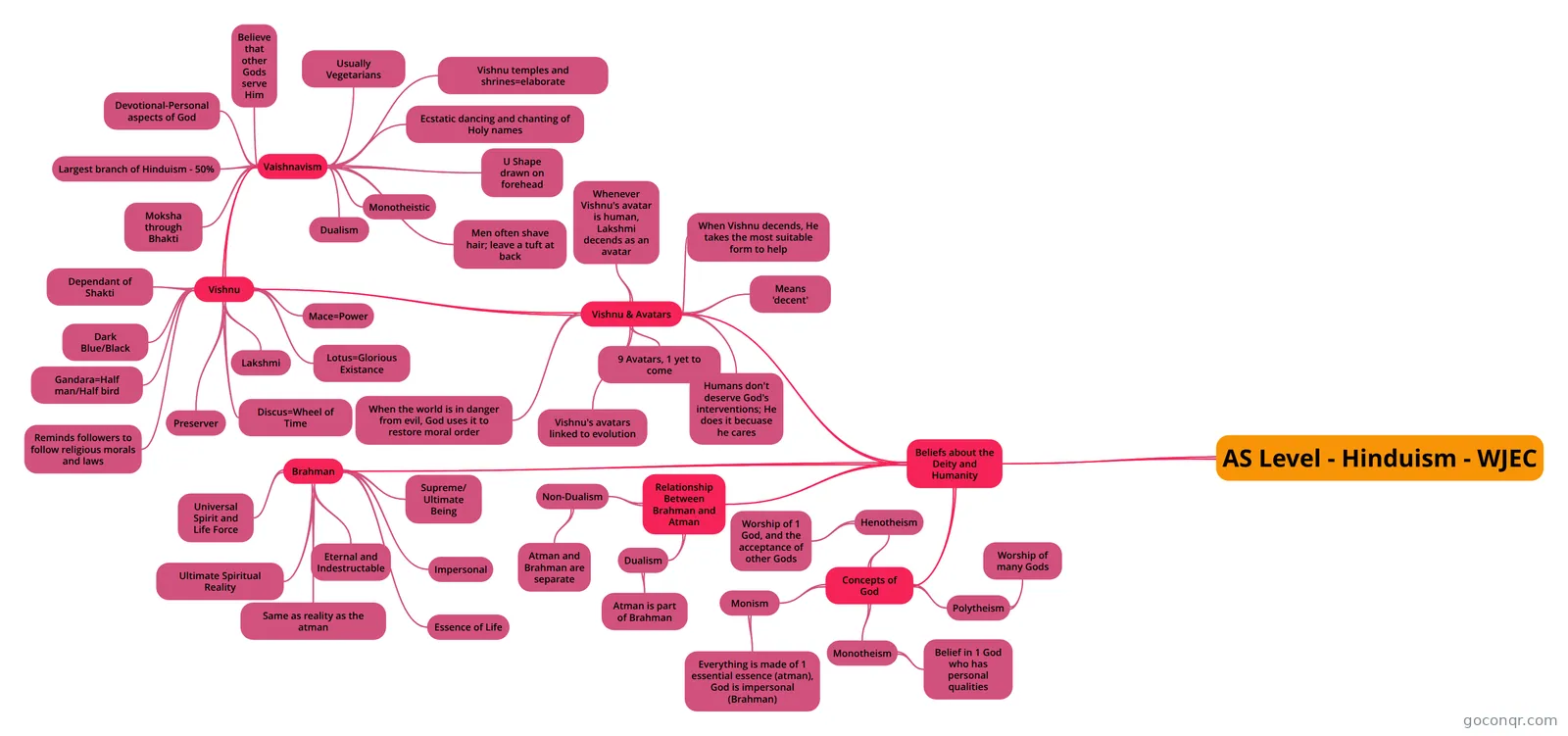
Flashcards
See all 100 flashcards-
67 cardsHinduism What is Brahman?
-
8 cardsHinduism GCSE R.E Flashcards AHIMSA Is non-injury to living things; the doctrine of non-violence
-
15 cards6. Gnana Yoga The basis of Gnana yoga
-
21 cardsHinduism What are the Atman and Samsara beliefs that influences a Hindus life?
-
147 cardsIntroduction to vedanta_1_2 1.What is the meaning of Purushartha ?
-
91 cardsSadhana 56.What is Varnashrama dharma.
-
146 cardshinduism keyterms - AS
-
46 cardsH2P Final SLO
Notes
See all 19 notes-
Hinduism 1. advaita non-dualism 2. Agni god of fire. transports sacrificial offerings to other gods. (Vedic deitites are mainly male and are personified powers of nature.3. ahimsanon-violence4. anandabliss5. aratifl...
-
Hinduism -Hinduism is the name of an assortment of beliefs and practices-the majority of Hindus live on the Indian subcontinent (c.800 million)-Nepal is another country with a majority Hindu population (considered the last Hin...
-
Hinduism 2 Hinduism: an umbrella term for a wide range of religious beliefs and practices- an individual Hindu's practices generally reflect their family tradition, but influences may cause an individual's beliefs and practices ...
-
Karma Karma Karma is an action Strengths of character is translated into willpower All through a person's life, karma helps build a person's character Nature of the character depends on nature of actions&n...
-
pb hindu beliefs revision Atman means ‘eternal self’ and is a very important concept in Hinduism. When a Hindu refers to the atman, they are referring to the immortal part of their self. This part of an individual is the part of them tha...
-
Caste System The Caste System Social System Four castes to which every Hindu can belong to: Brahmins, Kshatriyas, Vaisyas and Sudras "Harijans" exist outside of the caste system All people are born into a caste, which ...
-
Samsara Cycle Samsara Cycle Hindus believe that there's an intimate connection between Brahman and Hindus - the atman Hinduism teaches that the ultimate goal for all Hindus is to reach Moksha Hindu's goal is to live a m...
-
Purusharthas
Slides
Topics in Hinduism
More Religion and theology topics
About Hinduism
GoConqr OriginalWhat this unit covers
The page mixes several kinds of material. The quizzes work through the Bhagavad Gita chapter by chapter, for example Bhagavad Gita Chapter 2, which asks how Arjuna resolves his confusion about whether to fight, and Bhagavad Gita - Chapter 15, which begins with the imperishable banyan tree. Others look at faith, knowledge and divine qualities in the later chapters.
Beliefs and practice in the mind maps
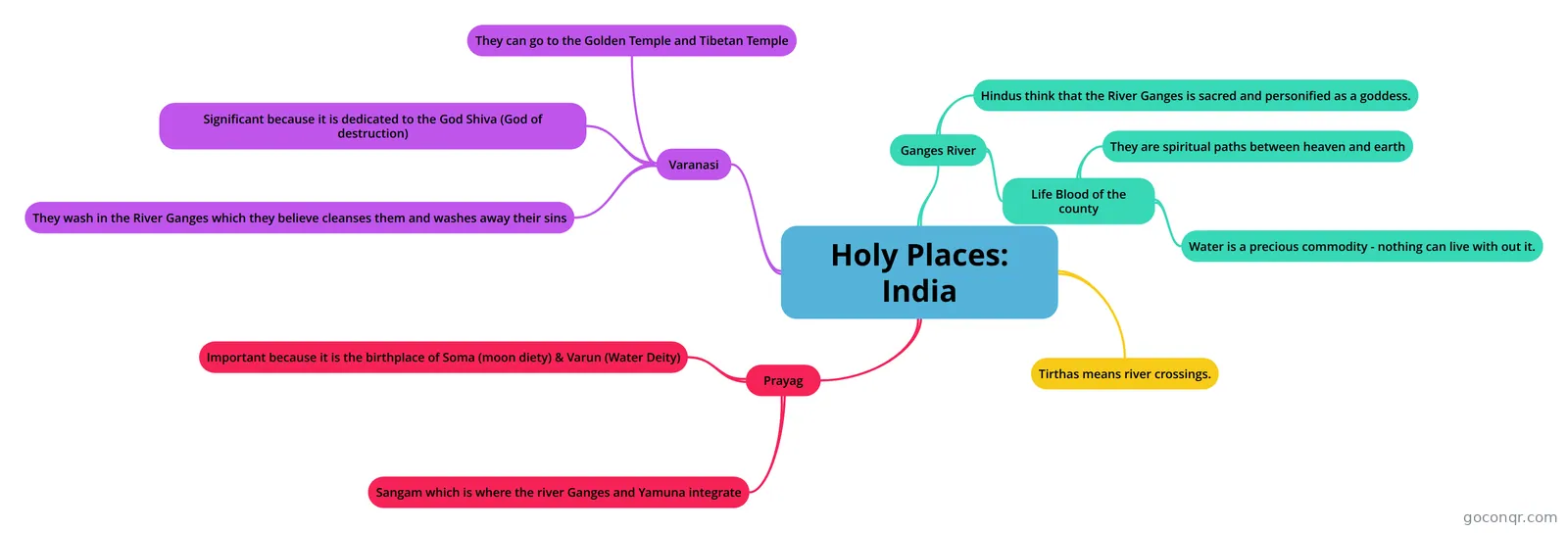
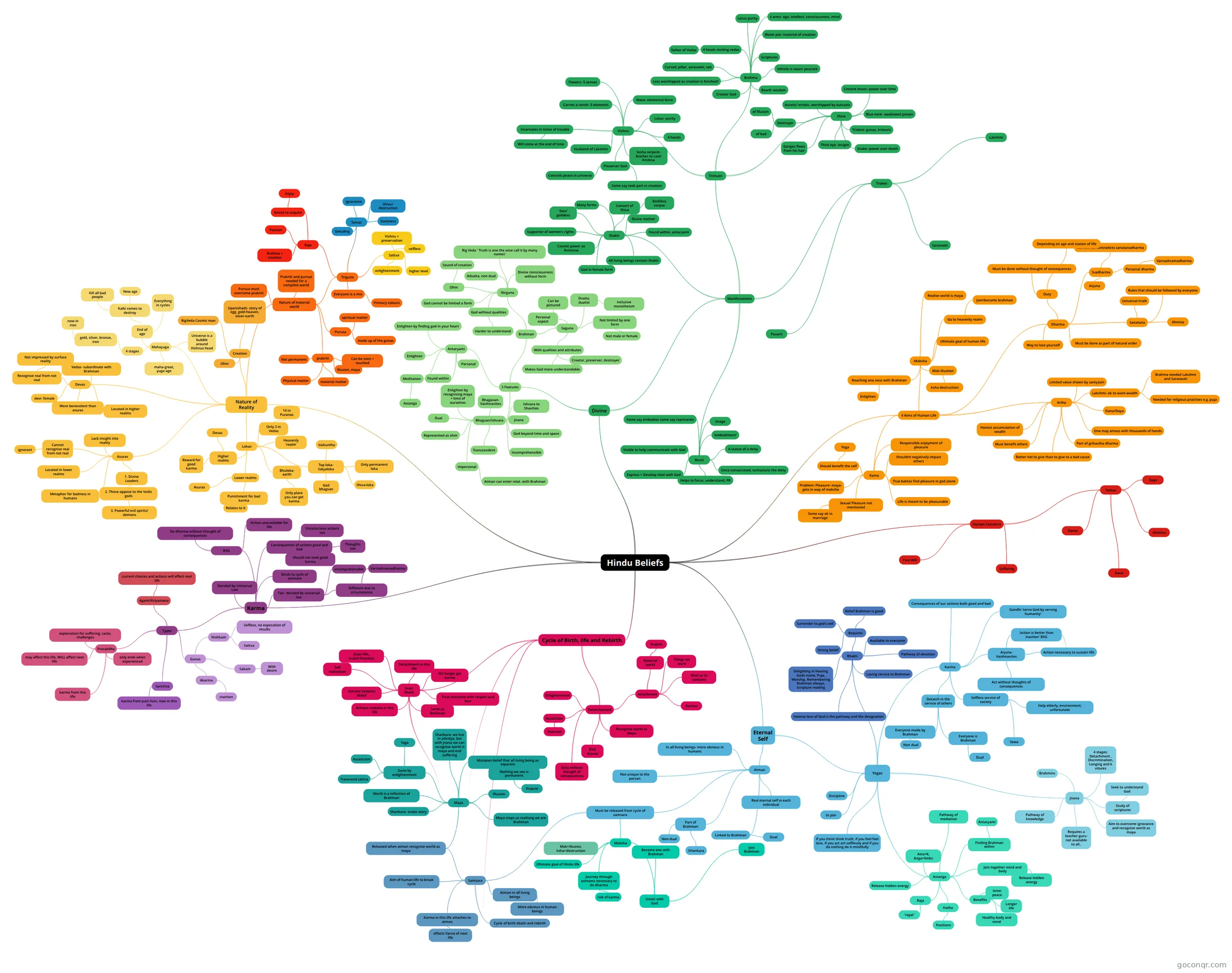
The mind maps are the largest group. Hinduism - Year 9 introduces Brahman as the Supreme Spirit seen in many forms, often shown by the symbol of Om. AS Level - Hinduism - WJEC compares henotheism, monotheism, monism and polytheism. Further maps cover Shiva, Krishna, Rama, Shakti, Devi Durga, rites of passage, worship, holy places in India and several on end of life and life after death.
Where to start
- Try the Hinduism Quiz, which opens with the meaning of Sanatana dharma.
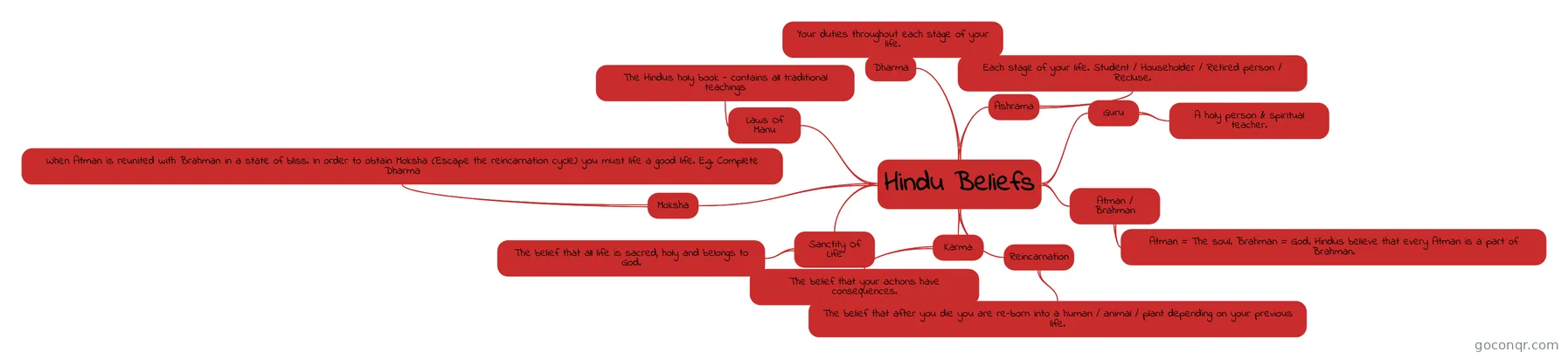
- Read a broad map such as Hindu Beliefs.
- Use the notes on karma, samsara, ahimsa and the ashramas to fill gaps.
- Move to the Gita chapter quizzes for closer reading of the text.
- Finish with flashcards such as Hinduism GCSE R.E Flashcards and the slide set on key beliefs exam questions.
Using quizzes and maps together
Read a map first, then take a quiz on the same idea. Any question you miss shows what to revisit. Flashcards suit key terms, such as the decks of Hinduism keywords and definitions, and are quick to repeat. The resources mention GCSE Religious Studies, A-level Religious Studies and GCSE Religious Education, so check which one matches your course.
Where it fits
This unit sits in the Other World Faiths strand of Religion and theology. Open a resource, try a quiz, and then make a map or deck of your own to keep your revision in one place.
Frequently asked questions
Which resource should I start with?
Start with the Hinduism Quiz, which begins with what Sanatana dharma means. Then look at the Hindu Beliefs mind map for the main ideas. If you are revising for GCSE, the Hinduism GCSE R.E Flashcards deck is a quick way to check key terms.
What do the mind maps cover?
They cover beliefs about God and Brahman, deities such as Shiva, Krishna, Rama, Shakti and Devi Durga, worship, rites of passage and holy places in India. Several also deal with end of life, body and soul, and life after death.
Are there Bhagavad Gita quizzes?
Yes. There are quizzes for many Gita chapters, including chapters 2, 4 and 5, 9, 13, 15, 16 and 17, plus a Dhyana Yoga quiz on chapter 6. They quote verses from the text alongside each question, so you can check answers against the passage.
Which exams do these resources suit?
The listed resources mention GCSE Religious Studies, A-level Religious Studies and GCSE Religious Education. Most of the material is aimed at secondary students, so it suits school revision well. Check your own specification to see which topics you need.
Are the resources free, and who made them?
Every resource here is free to open, study and take, with no account needed. They were made by GoConqr users, not by GoConqr itself. A free account also saves your quiz scores and lets you create your own quizzes, maps, flashcards and notes.
What if I can't find a topic I need?
Try the notes on karma, samsara, caste, ahimsa, the purusharthas, the gunas and the ashramas, or search the flashcard decks on Vedanta and yoga. If a topic is still missing, you can make your own mind map or flashcards for it.