
Home and Housing
890 resources created by 788 users
This Home and Housing page on GoConqr gathers community-made quizzes, mind maps, flashcards and slides on English topic vocabulary, from parts of the house and furniture to house chores and kinds of home. It's built for school students and primary pupils practising everyday words, and for teachers after ready-made material. There are over 550 resources here, including more than 30 quizzes, over 250 mind maps and over 240 flashcard decks. Try a quiz first, then pick a deck to revise.
Top Home and Housing resources
-
5 questionsThe House The House (A1) Mr. and Mrs. Smith have one son and one daughter. The son's name is John. The daughter's nam...
-
 Flowchart SPIDERGRAM-PARTS OF THE HOUSE
-
25 cardsTHE HOUSE PARTS
-
39 cardsmy house
-
3 questionsIdentifying what furniture goes in each room of the house What pieces of furniture can you find in the dining room?
-
Mind map HOUSE FURNITURE MENTAL MAP OF FURNITURE OF THE HOUSE
-
7 questionsParts of the house What Is this?
-
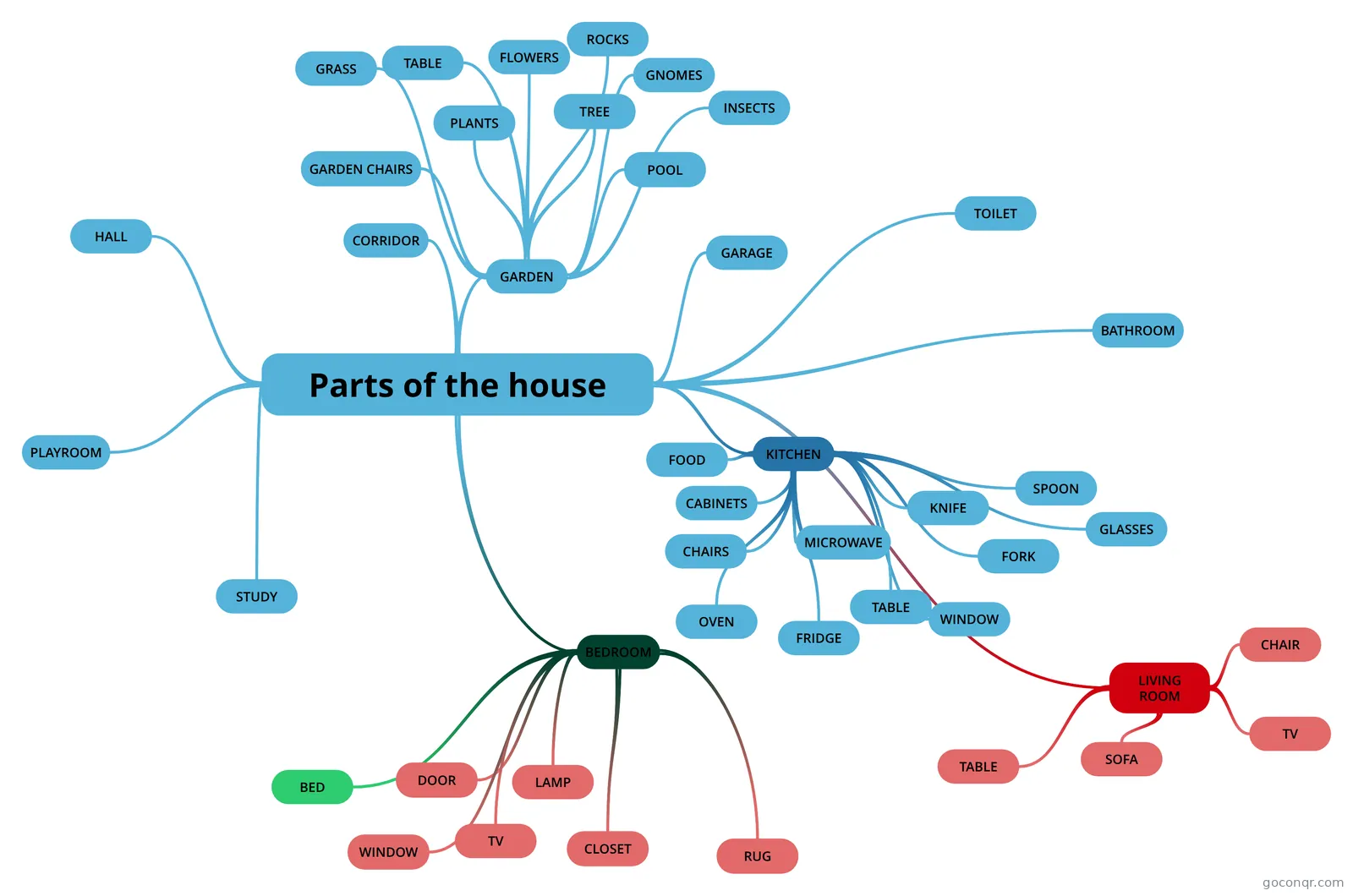 Mind map Parts of the house Initial brainstorming Learning situation 2
Quizzes
See all 55 quizzes-
5 questionsThe House The House (A1) Mr. and Mrs. Smith have one son and one daughter. The son's name is John. The daughter's nam...
-
3 questionsIdentifying what furniture goes in each room of the house What pieces of furniture can you find in the dining room?
-
7 questionsParts of the house What Is this?
-
6 questionsFurniture of the house The fridge goes in?
-
4 questionsParts of the House Quiz The bed is in the...
-
2 questionsParlour room Find THREE musical instruments you can see in this room
-
25 questions6th grade. Unit 3. Final Test 1
-
1 questions02_R_Bank of Mum and Dad is now paying the rent, too Bank of Mum and Dad is now paying the rent, too
Mind maps
See all 423 mind maps-
HOUSE FURNITURE MENTAL MAP OF FURNITURE OF THE HOUSE
-
Parts of the house Initial brainstorming Learning situation 2
-
HOUSE CHORES House Chores
-
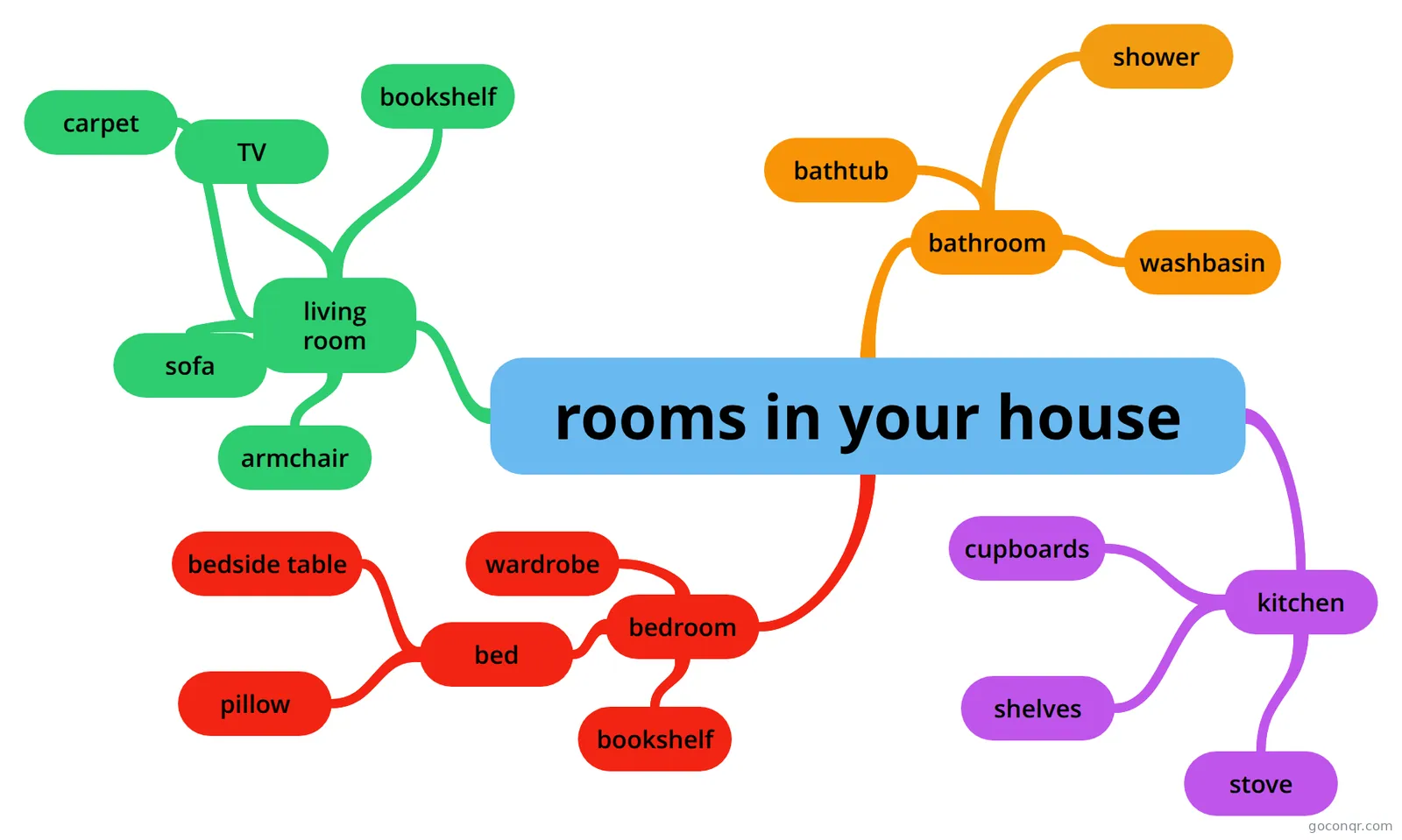 rooms in your house rooms and furniture
-
MY HOUSE - Describing my house, using "There are ... in my house
-
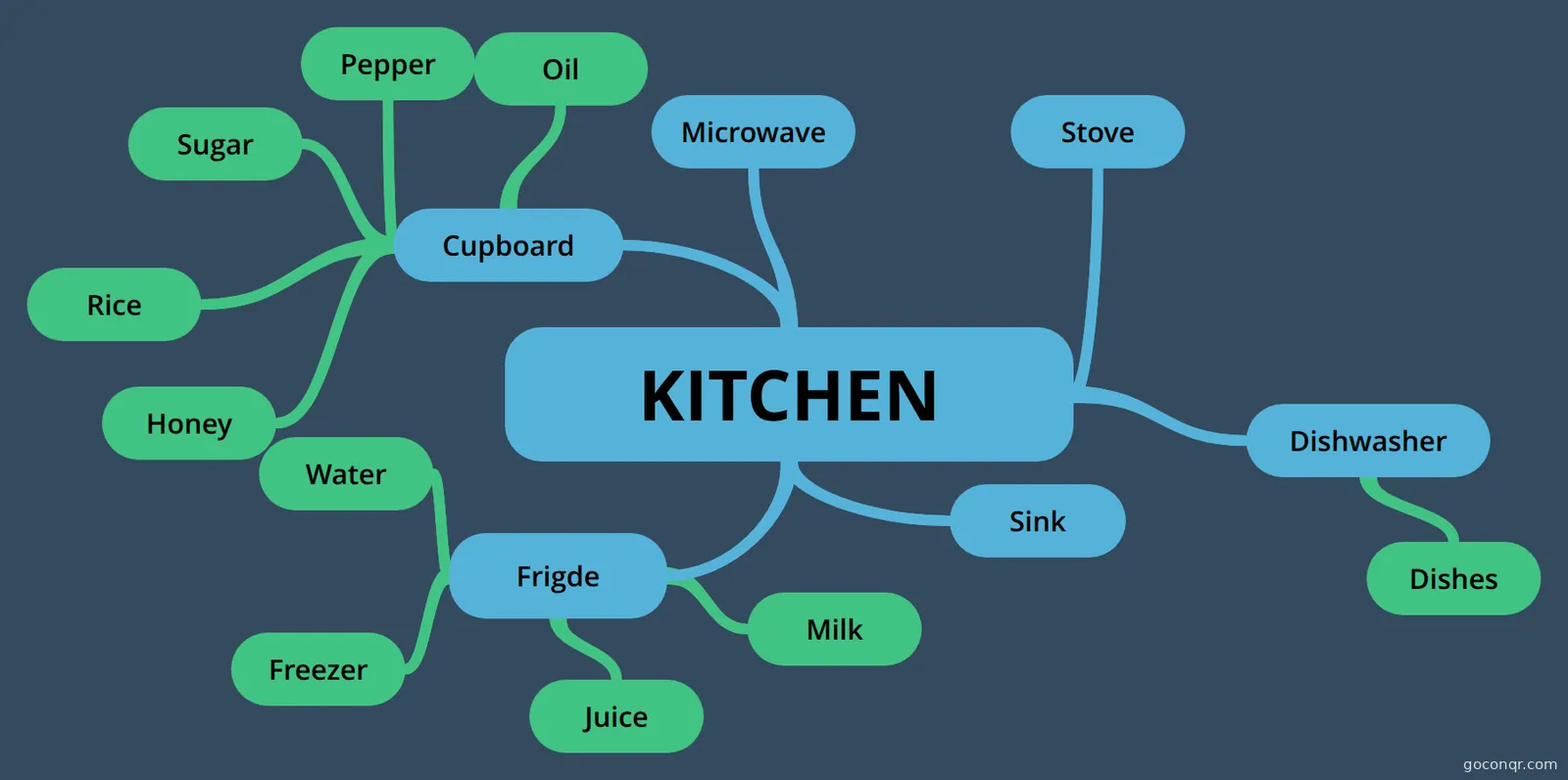 KITCHEN part of kitchen
-
home
-
 HOUSING in GB/Slovakia A good home must be made, not bought
Flashcards
See all 374 flashcards-
25 cardsTHE HOUSE PARTS
-
39 cardsmy house
-
19 cardsHouse- furniture
-
17 cardsHome Sweet Home flash Cards Flashcards from CH. 2 Home Sweet Home
-
13 cardsParts of the house 22nd, july
-
13 cardsFurniture Furniture in the house for first graders
-
11 cardsIn the Living Room Learn and practice things in the living room.
-
12 cardsVocabulary : furniture and other household items Furniture and other household items
Flowcharts
See all 14 flowchartsNotes
-
All in the family Lesson 2 CLASSIFIEDS Nice family looking for a dog friendly house to rent We are looking to RENT a house with ample privacy and a responsible landlord. A fence in backyard would be ideal (but not necessary) for our dog (boxer)...
-
Unit 2 "This is my people" Lesson 2 1. Look at the Greenfield's family house. There are different objects in the living room. 2. There are more objects in different rooms of the house: 3. Here are some positions the objects can have in the rooms! (prepo...
-
Activity 7 bedroom description In my room the troursers are on the bed, the bed is next to the window, the window is in front of wardrobe, the wardrobe is next to the door, the door is in front of ...
-
ACTIVITY 7: BEDROOM DESCRIPTION the room of fer This is my room. My room is very messy, the bed is next to the trunk, in front of the trunk is the sofa green. The window on my room is next to the cross, in front of my bed is the clo...
-
HOUSE VOCABULARY - creado desde un Mapa Mental BEDROOMTHERE IS ONE BEDROOM IM MY FAVORITE HOUSE HOW MANY BEDROOM OBJECT ARE THERE ? THERE IS A BEDSIDE TABLE THERE ARE TWO PILLOW KITCHEN
-
IN MY BEDROOM IN MY BEDROOM THERE ARE A window
-
PARTS OF THE HOUSE - creado desde un Mapa Mental
Slides
See all 17 slidesTopics in Home and Housing
More English language topics
About Home and Housing
GoConqr OriginalWhat this unit covers
This unit sits in the Topic Vocabulary strand of English language. It focuses on the words we use for where we live. Most resources deal with rooms and furniture, but some go further into chores, kinds of home and housing.
- Rooms: kitchen, bedroom, bathroom, living room, dining room and garage.
- Furniture and objects: sofa, armchair, wardrobe, fridge, cooker, sink and lamp.
- Places to live: flat, village, town, city, tree house, castle and log cabin.
Where to start
Begin with the Parts of the House Quiz. It asks where a bed, a shower or a car belongs, and it asks you to write the room names. Then try Furniture of the house, which asks which room the fridge, sofa, wardrobe or tub goes in.
If the words feel new, look at the flashcards first. The my house deck groups words by room, such as carpet, sofa and television under living room, and kettle, fridge and oven under kitchen. House- furniture adds items like a mirror, a shelf and a dishwasher.
Using quizzes and maps together
Mind maps help you see how words link up. The rooms in your house map places the sofa, TV and carpet in the living room, and the bathtub and shower in the bathroom. Read a map, cover it, then take a quiz to see what stuck.
- Read a mind map such as HOUSE CHORES to see jobs sorted by room.
- Go through a flashcard deck, for example Home Sweet Home flash Cards, for kinds of home.
- Take a quiz to check the words.
- Return to any deck or map where you hesitated.
For teachers
Teachers can use the quizzes and decks as ready-made starters or revision tasks. The mix is mainly secondary and primary, so there is plenty for younger learners as well as older ones. The resources were made by GoConqr users, so check that a set suits your class before you share it.
Next step
Choose one room, work through its words, and then see how many you can place without help.
Frequently asked questions
Which resource should I start with?
Start with the Parts of the House Quiz. It uses simple prompts such as where the bed, the shower and the car belong, and it asks you to write the room names. It is a quick way to see which rooms and objects you already know.
What do the mind maps cover?
The mind maps cover rooms, furniture and household jobs. The rooms in your house map lists items for the living room, kitchen, bathroom and bedroom. HOUSE CHORES sorts jobs by place, such as washing the car in the garage. Others look at apartments and houses.
Are the resources free to use?
Yes. Every resource on this page is free to open, study and take, with no account needed. They were made by GoConqr users, not by GoConqr itself, so you will find different styles and approaches from one set to the next.
Which levels are these resources for?
The mix is mainly secondary, with a little under half aimed at primary pupils and a small share for general learners. So the page suits school students and primary pupils, and teachers looking for material to use with them.
Is there anything beyond rooms and furniture?
Yes. Home Sweet Home flash Cards covers kinds of home, from flat and village to castle and tiny house. There are also decks and maps on housework, kitchen utensils and housing, so you can move on once the basic room words feel secure.
What can I do with a free account?
A free account saves your quiz scores. It also lets you make your own quizzes, mind maps, flashcards and notes. That is handy if you want a custom deck of the house words you find hardest, or a set to share with a class.