
Pronunciation and Phonetics
210 resources created by 153 users
This Pronunciation and Phonetics page on GoConqr gathers community-made quizzes, mind maps, flashcards, slides and notes, from the International Phonetic Alphabet and minimal pairs to word stress, intonation and connected speech. It's built for university students and professional candidates, school students, and teachers after ready-made material. There are over 1,500 resources here, including more than 100 quizzes and over 1,000 mind maps, so you can practise sounds, symbols and stress patterns. Pick a topic, try a quiz to find your gaps, then revisit the maps.
Top Pronunciation and Phonetics resources
-
Mind map Production of Segmentals: Consonants and Vowels
-
16 questionsEnglish Diction Prep Quiz Use this quiz as a study tool for the English Diction exam. This, in addition to your notes, as well as rev...
-
10 questionsTest long vowels, dipthongs and tripthongs. What is the definition of long vowels?
-
Mind map The description of speech sounds We can find some descriptions of speech sounds.
-
Mind map CONNECTED SPEECH ELEMENTS HOW TO TEACH PRONUNCIATION
-
Mind map Consonant Sounds Characteristics Eric M. Gálvez B.
-
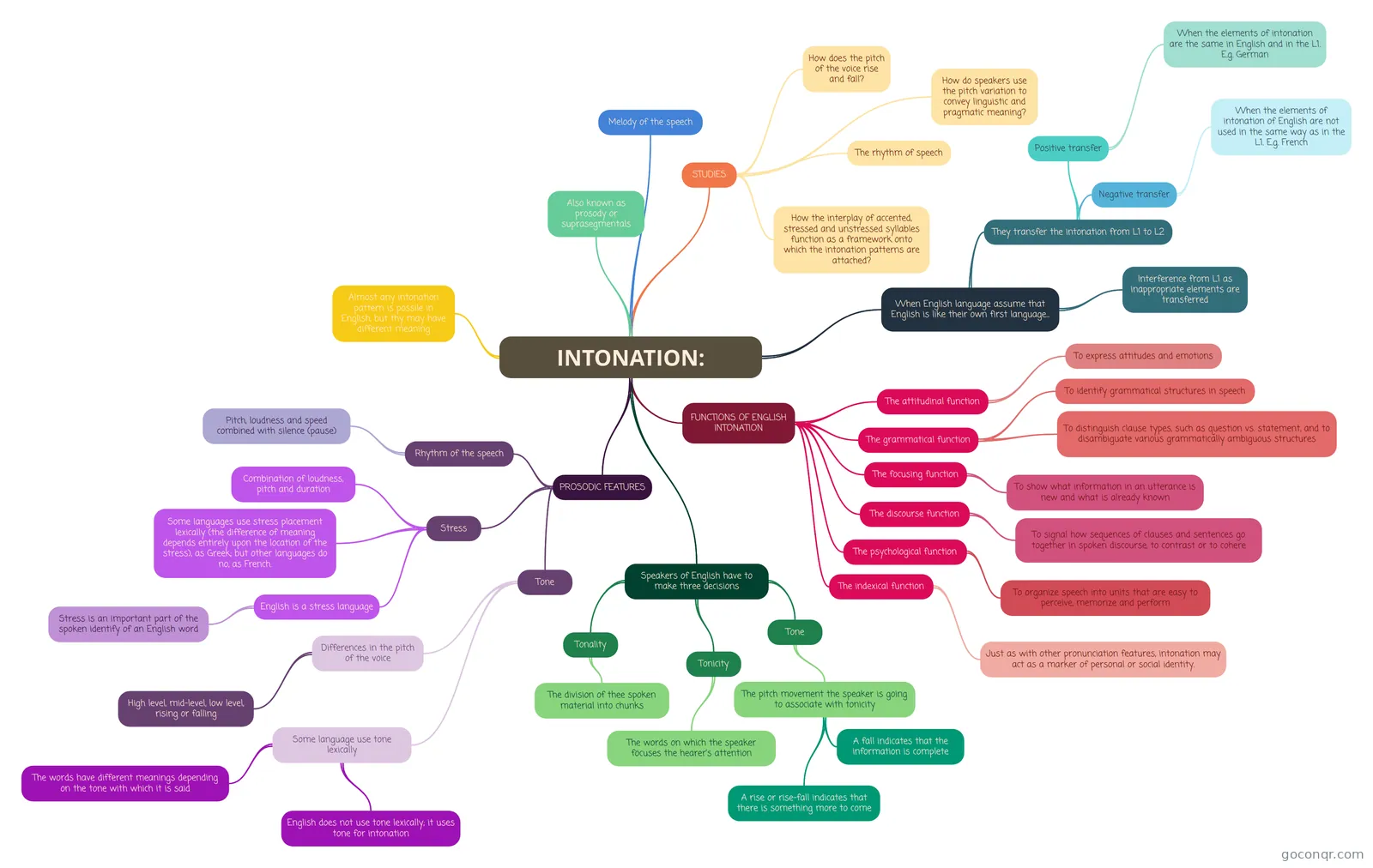 Mind map INTONATION: Chapter 1 from Well's book
-
14 questionsPractice Exam for Phonetics Final The soft palate is typically raised during production of vowels
Quizzes
See all 49 quizzes-
16 questionsEnglish Diction Prep Quiz Use this quiz as a study tool for the English Diction exam. This, in addition to your notes, as well as rev...
-
10 questionsTest long vowels, dipthongs and tripthongs. What is the definition of long vowels?
-
14 questionsPractice Exam for Phonetics Final The soft palate is typically raised during production of vowels
-
14 questionsEnglish vowels Near front close position. Lips spread, tongue tense, with side rims making a firm contact with the upper m...
-
27 questionsEnglish IPA: Consonant Quiz What sound is this?
-
15 questionsCommon English pronunciation mistakes for Spanish Speakers Listen to the track. Decide which of the two words below is being said.
-
10 questionsQuiz: Vowel sounds The oo sound and the ou sound in English
-
10 questionsBasic pronunciation /æ/ - /ɑ:/ - /ʌ/ Look at the phonetic transcription and choose the correct word
Mind maps
See all 72 mind maps-
Production of Segmentals: Consonants and Vowels
-
The description of speech sounds We can find some descriptions of speech sounds.
-
CONNECTED SPEECH ELEMENTS HOW TO TEACH PRONUNCIATION
-
Consonant Sounds Characteristics Eric M. Gálvez B.
-
INTONATION: Chapter 1 from Well's book
-
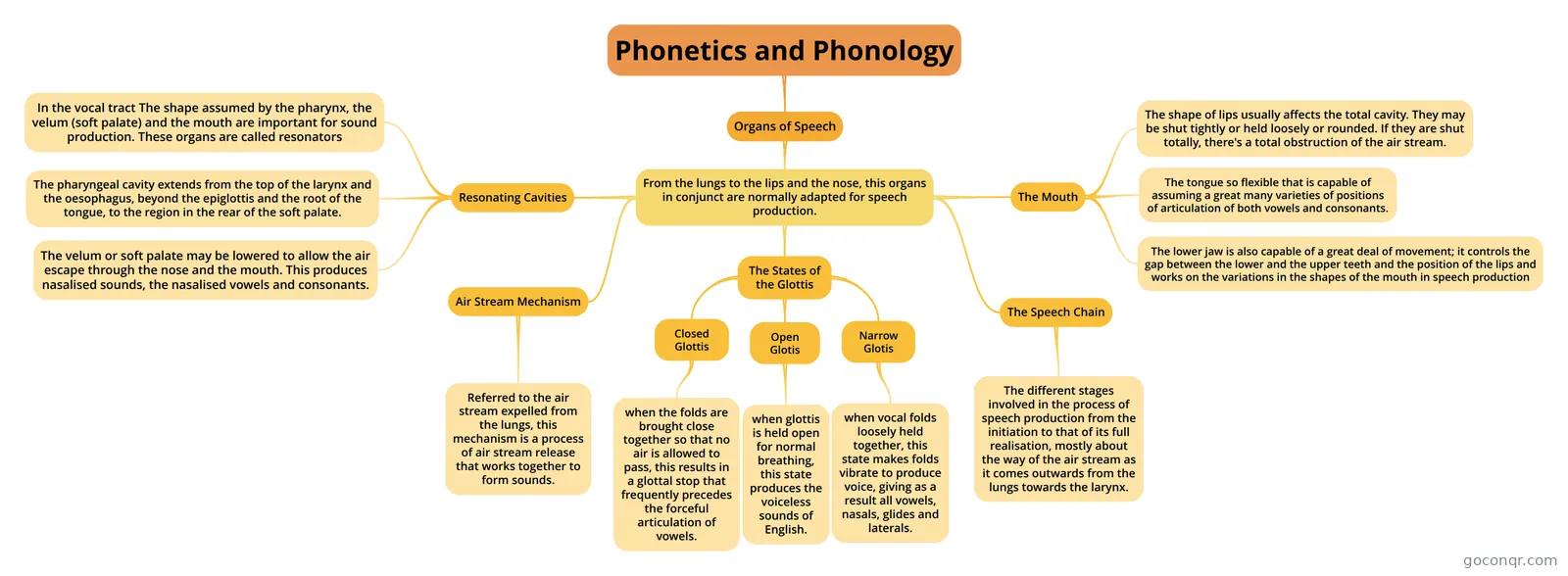 Phonetics and Phonology Conceptual Map about the Mechanism of Speech Sounds, (Organs of Speech). for the course of Phonetics and Ph...
-
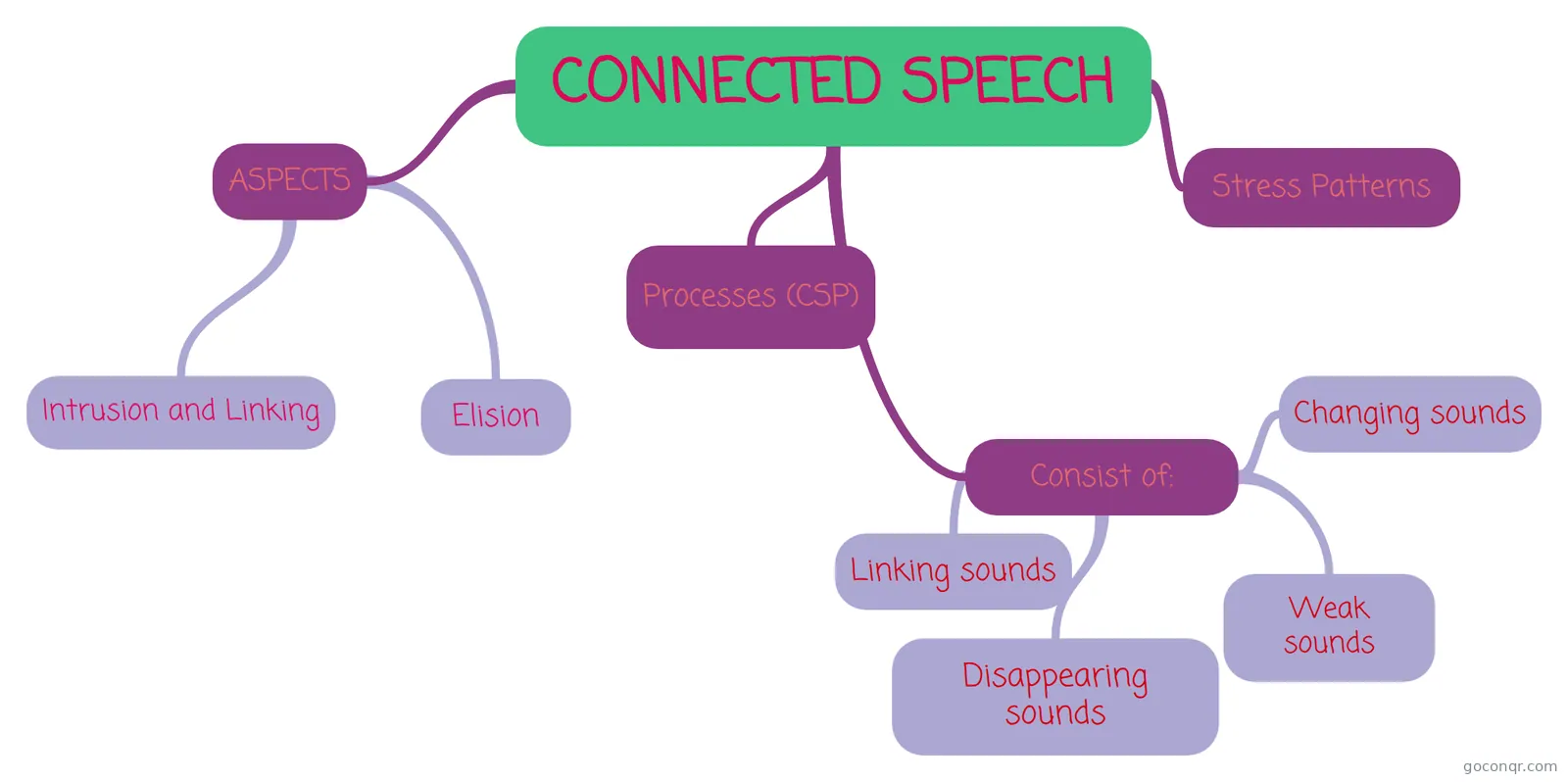 CONNECTED SPEECH 24th of August, 2016. Teacher Mirian Freitas
-
Segmental vs. Suprasegmental Segmental vs. Suprasegmental
Flashcards
See all 77 flashcards-
17 cardsBasics: Phonetics and Phonology
-
13 cardsVOWELS WORK IN PROGRESS
-
24 cardsPhonetics
-
14 cardsEnglish IPA: Vowel Sounds These are flashcards for the vowels (and diphthongs) of American English. For best results, shuffle the deck.
-
20 cardsMinimal pairs: ð vs z English minimal pairs for two consonant sounds: /ð/ vs /z/. Listen and guess the sound. For best results, s...
-
20 cardsMinimal Pairs: ɑ vs ʌ English minimal pairs for two vowel sounds: /ɑ/ vs /ʌ/. Listen and guess the sound. For best results, shuff...
-
20 cardsMinimal Pairs: t vs d initial sounds English minimal pairs for two consonant sounds: /t/ vs /d/ (the initial version). Listen and guess the soun...
-
20 cardsMinimal Pairs: ɛ vs ɪ English minimal pairs for two vowel sounds: /ɛ/ vs /ɪ/. Listen and guess the sound. For best results, shuff...
Flowcharts
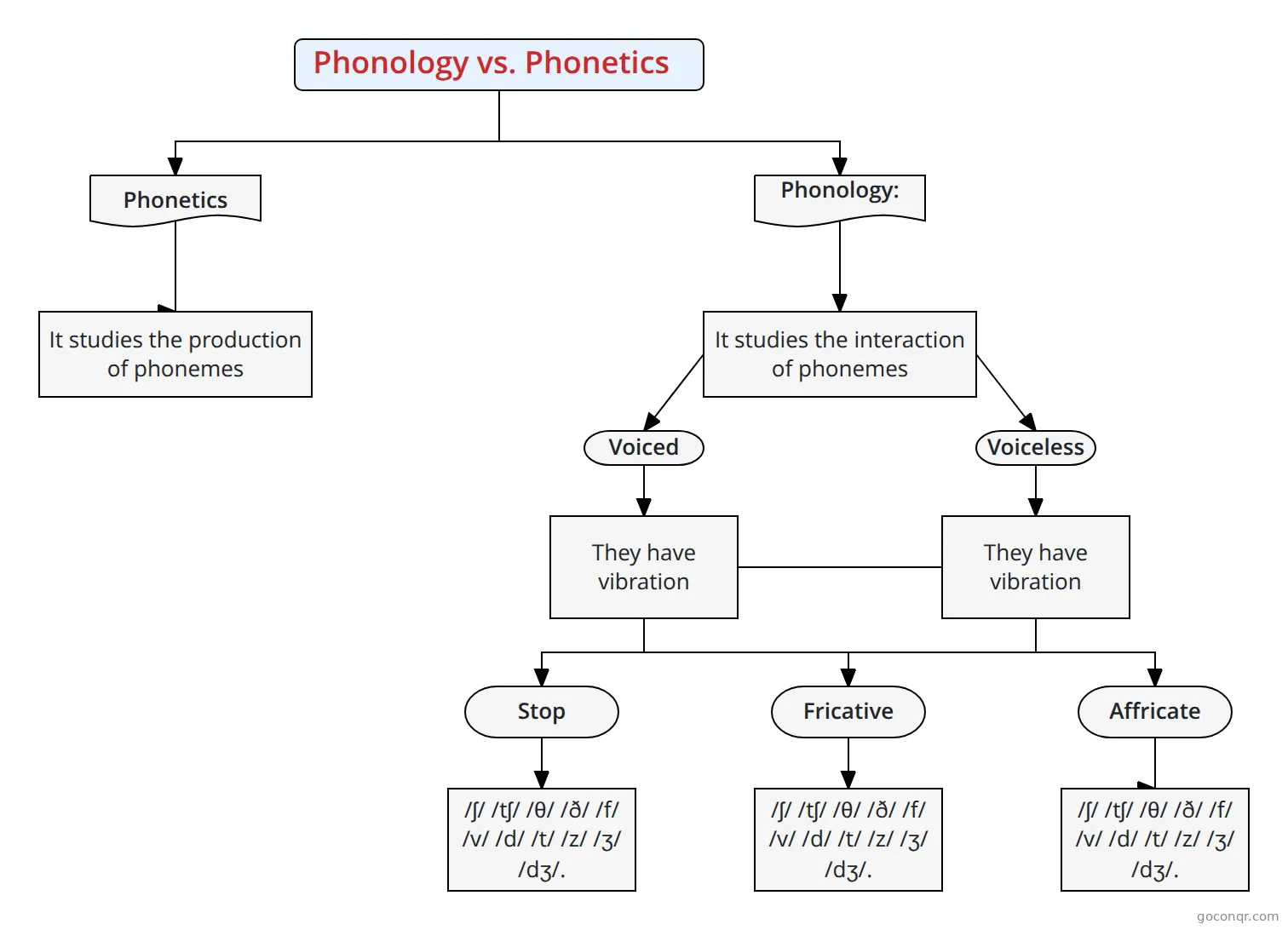
Notes
Slides
See all 10 slidesMore English language topics
About Pronunciation and Phonetics
GoConqr OriginalWhat the unit covers
This unit sits in the Foundations and Sounds strand of English language. It moves from single sounds to whole stretches of speech. The IPA material includes the slide set International Phonetic Alphabet (IPA), which defines phonetic, vowel, diphthong and consonant before introducing the symbols. Other resources describe where and how sounds are made, with mind maps on place and manner of articulation and a flowchart on the organs of speech.
Where to start
- Begin with the basics: the mind maps Phonetics and Phonetic Transcription, and the flashcards English IPA: Vowel Sounds.
- Move to the quiz English IPA: Consonant Quiz, which asks you to name the sound you are shown.
- Sharpen similar vowels with minimal pair decks such as Minimal Pairs: ɑ vs ʌ and Minimal Pairs: ð vs z. The ʊ, u and ʌ deck pairs look, Luke and luck, and stood, stewed and stud.
Beyond single sounds
Once symbols feel familiar, look at the larger patterns. The mind maps Word stress Mental map and CONNECTED SPEECH ELEMENTS cover stress rules, assimilation, elision, intrusion and linking. The intonation map treats pitch as the melody of speech. There are also resources on weak and strong forms, syllables, and the pronunciation of -ed and -s endings.
Using quizzes and maps together
Read a mind map first, then take a quiz on the same topic. Where you miss a question, go back to the map branch or flashcard deck that explains it. The Practice Exam for Phonetics Final works well near the end, because it mixes questions on vowels, rounding and the soft palate. Some resources are in Spanish or aimed at teaching pronunciation, which suits those preparing for oposiciones.
Next step
Choose one sound group, work through its quiz, and see what you can recall without looking.
Frequently asked questions
Which resource should I open first?
Start with the mind maps Phonetics and Phonetic Transcription, or the slide set International Phonetic Alphabet (IPA), which explains the key terms before the symbols. Then try English IPA: Consonant Quiz to see how well you can name sounds from their symbols.
What do the mind maps cover?
There are over 1,000 of them. They cover articulation by place and manner, vowels and consonants, syllables, word stress, weak forms, intonation and connected speech. Some also look at allophones, segmental against suprasegmental features, and how pronunciation is taught.
Are the resources free to use?
Yes. Every resource listed here is free to open, study and take, with no account needed. They were made by GoConqr users, not by GoConqr itself, so styles and depth vary from one resource to the next.
Who are these resources for?
Most suit university students and professional candidates, and a good share suit school students. Teachers can use them as ready-made material. At least one resource mentions oposiciones, and some notes cover teaching pronunciation.
Is there practice on minimal pairs?
Yes. Several flashcard decks pair similar sounds, including ʊ against u against ʌ, ɑ against ʌ, ɛ against ɪ, æ against ɛ, and t against d at the start of words. Each lists example words with their transcriptions.
What if I can't find the topic I need?
Try a neighbouring topic, such as the mind maps on place of articulation or connected speech. A free account lets you save quiz scores and make your own quizzes, mind maps, flashcards and notes to fill the gap.