
Word Formation, Prefixes and Suffixes
1,474 resources created by 1,080 users
This Word Formation, Prefixes and Suffixes page on GoConqr gathers community-made quizzes, mind maps, flashcards and notes, from negative prefixes and noun suffixes to Latin roots and compounding. It's built for school students practising word-building tasks, and for teachers after ready-made material. There are over 1,300 resources here, including more than 150 quizzes, over 600 mind maps and more than 500 flashcard decks, mostly at secondary level. Start with a quiz to find your gaps, then browse the maps.
Top Word Formation, Prefixes and Suffixes resources
-
16 questionsWord Formation 2019 + RT There's agreat singing competition on TV at the moment, with girls who want to be the star of a musical in ...
-
14 questionsWord Formation 2018 + RT Many people enjoy spending their holidays hiking or climbing in the mountains. Their reasons vary. Some lik...
-
10 questionsWord Formation 2014
-
10 questionsWord Formation 2017 For 11th grade
-
10 questionsWord Formation 2015 + RT TIGHT, ENTHUSIAST, YEAR, PSYCHOLOGY Summer is in the air and it's only natural for people to feel good and ...
-
25 questionsPrefixes, Suffixes, & Root Words Quiz Which words contain the suffix "-ian"? (select 2 correct answers)
-
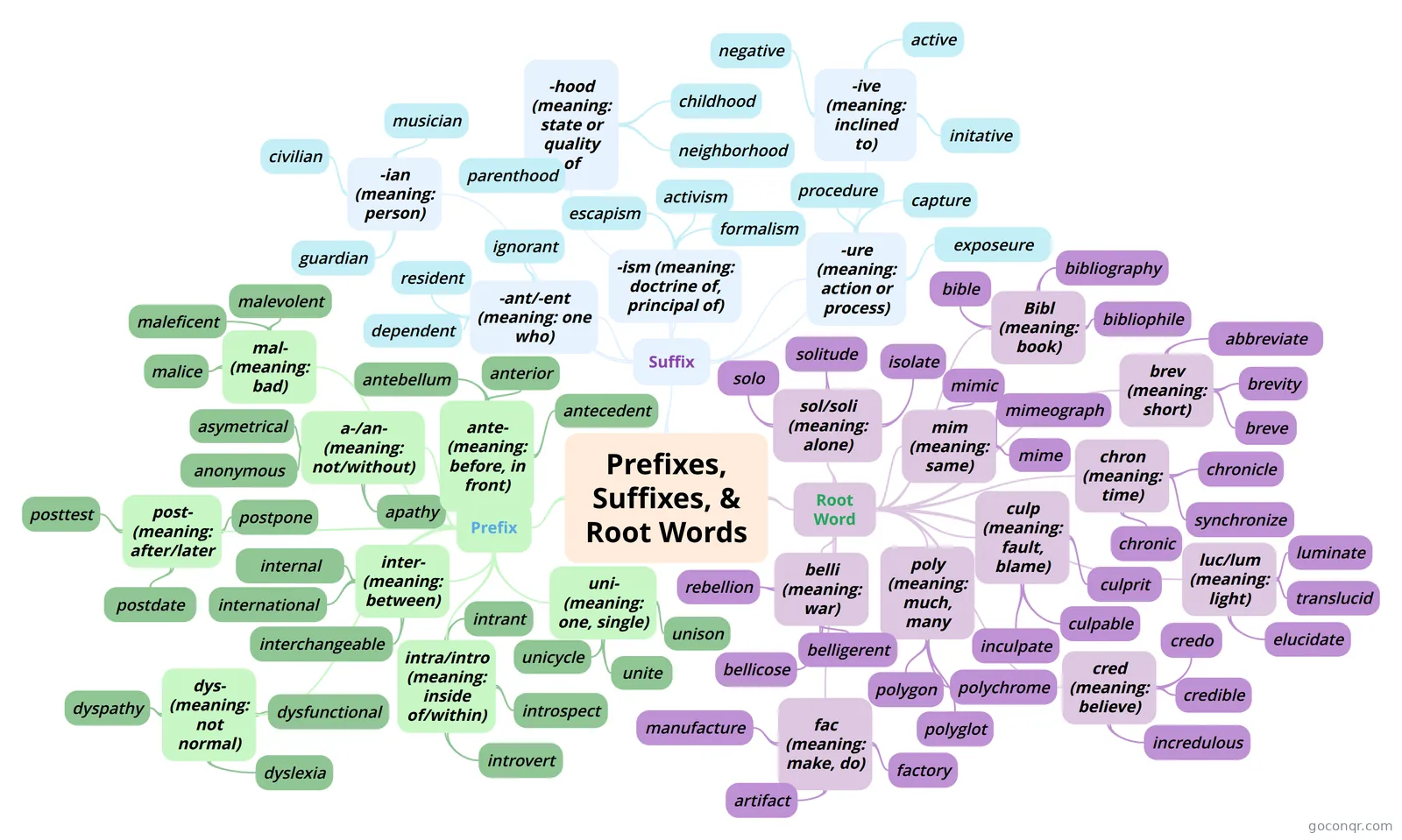 Mind map Prefixes, Suffixes, & Root Words prefix, suffix and root word mind map
-
10 cardsSpelling Apr./21 Flashcards Bake + ery A place where bread and cakes are made or sold.
Quizzes
See all 185 quizzes-
16 questionsWord Formation 2019 + RT There's agreat singing competition on TV at the moment, with girls who want to be the star of a musical in ...
-
14 questionsWord Formation 2018 + RT Many people enjoy spending their holidays hiking or climbing in the mountains. Their reasons vary. Some lik...
-
10 questionsWord Formation 2014
-
10 questionsWord Formation 2017 For 11th grade
-
10 questionsWord Formation 2015 + RT TIGHT, ENTHUSIAST, YEAR, PSYCHOLOGY Summer is in the air and it's only natural for people to feel good and ...
-
25 questionsPrefixes, Suffixes, & Root Words Quiz Which words contain the suffix "-ian"? (select 2 correct answers)
-
10 questionsPrefixation The quiz has total 15 questions. Choose a prefix for the word in parentheses to create a word that makes se...
-
33 questionsb 1 4 nivel
Mind maps
See all 693 mind maps-
Prefixes, Suffixes, & Root Words prefix, suffix and root word mind map
-
PREFIXES AND SUFFIXES WHICH ADD MEANING This lesson will help you widen your vocabulary as you will learn how to transform certain root words to tu...
-
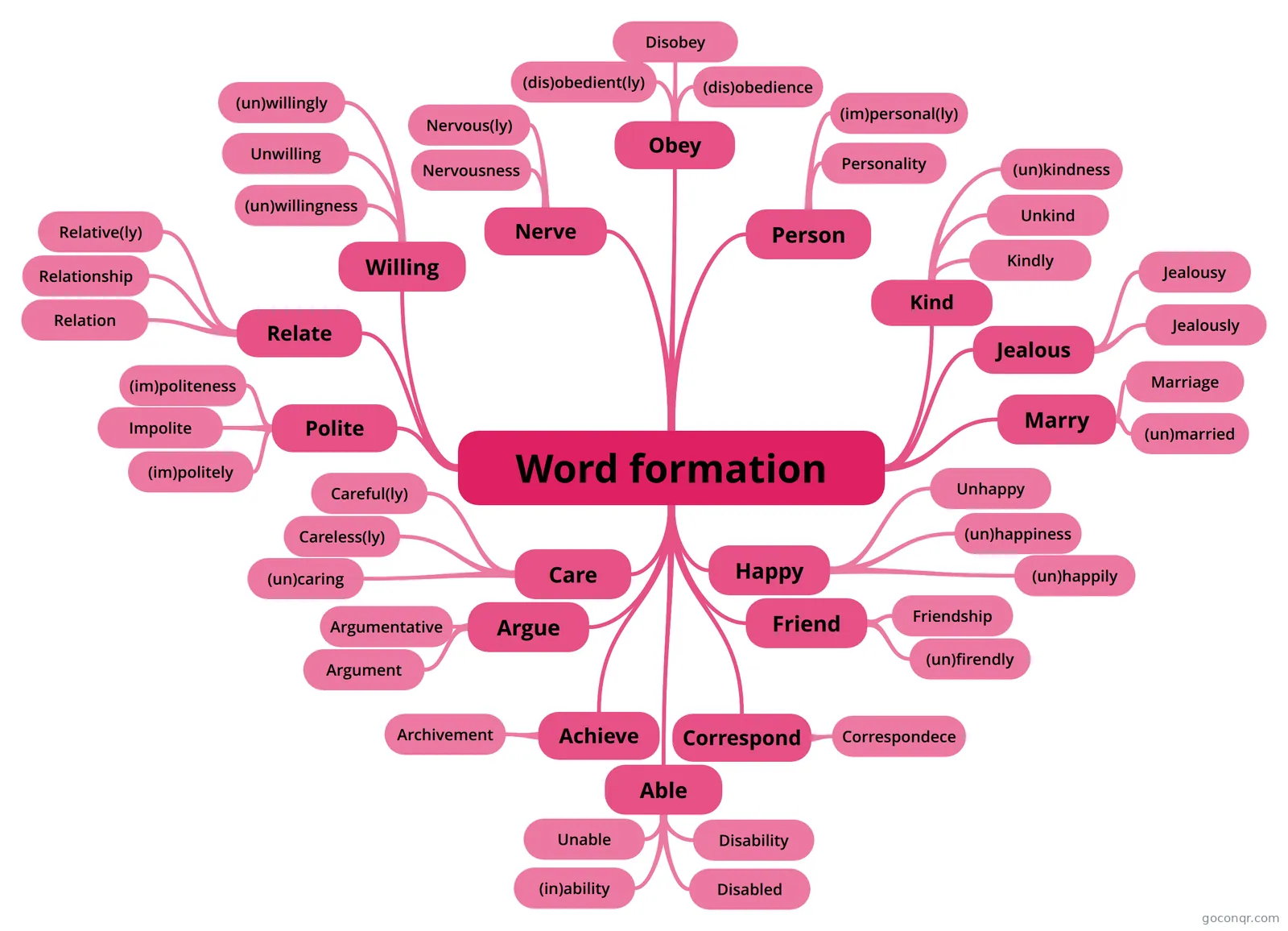 Word formation
-
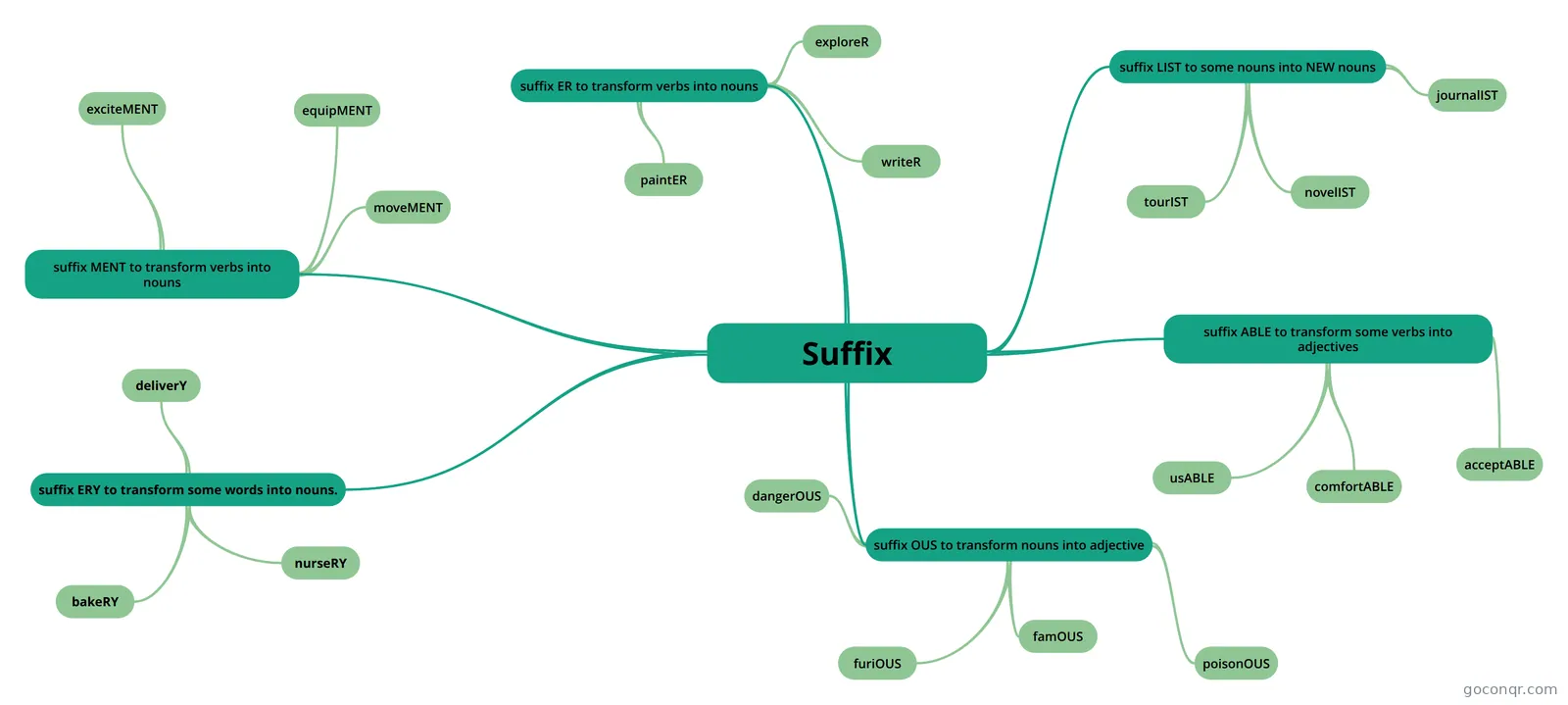 Suffix ment, ous, able, ist.
-
Negative prefixes Este mapa mental explica el uso de seis prefijos negativos en inglés.
-
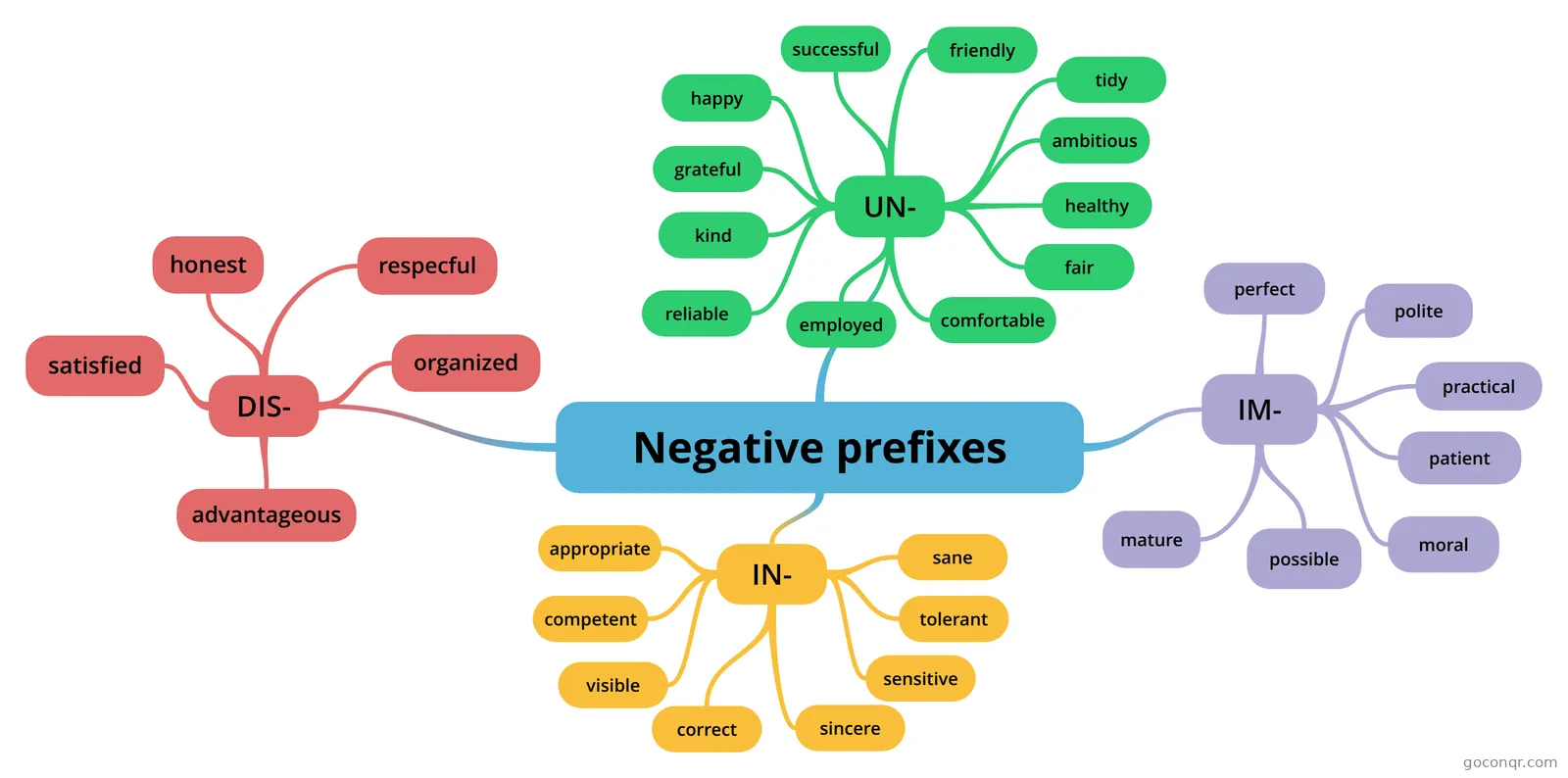 Negative prefixes
-
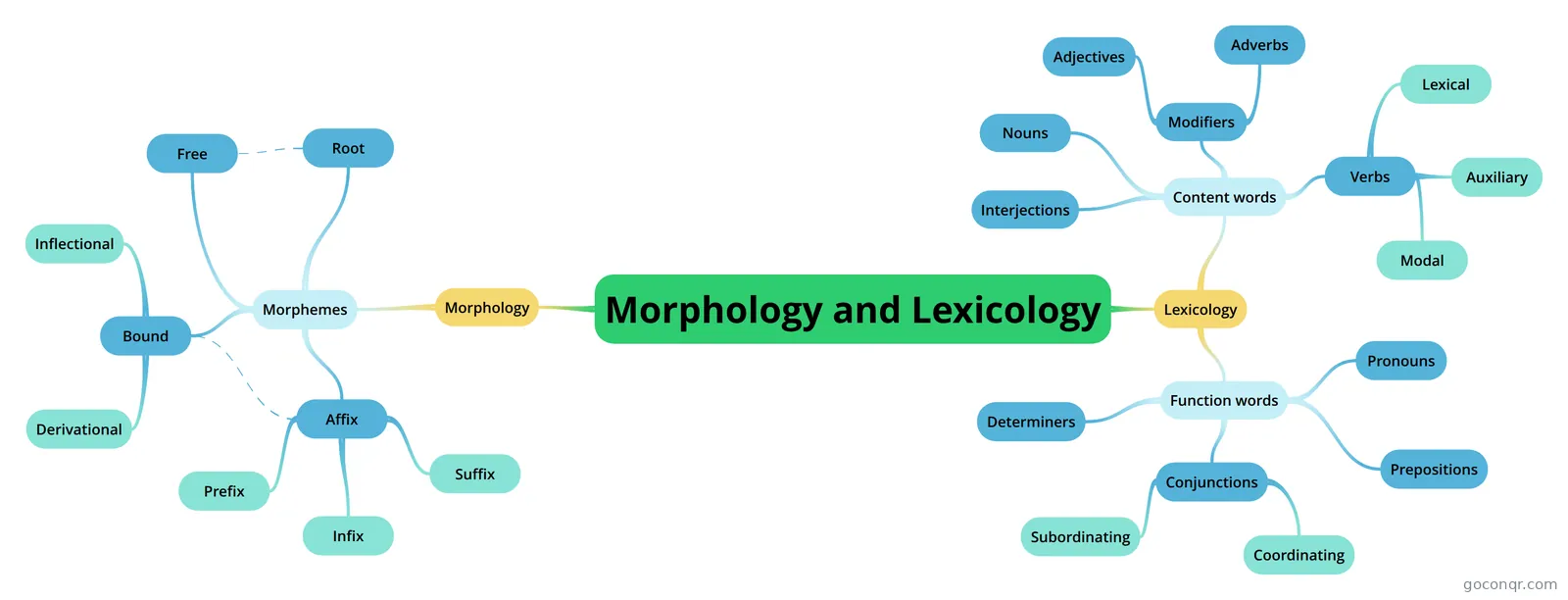 Morphology and Lexicology Morphology and lexicology
-
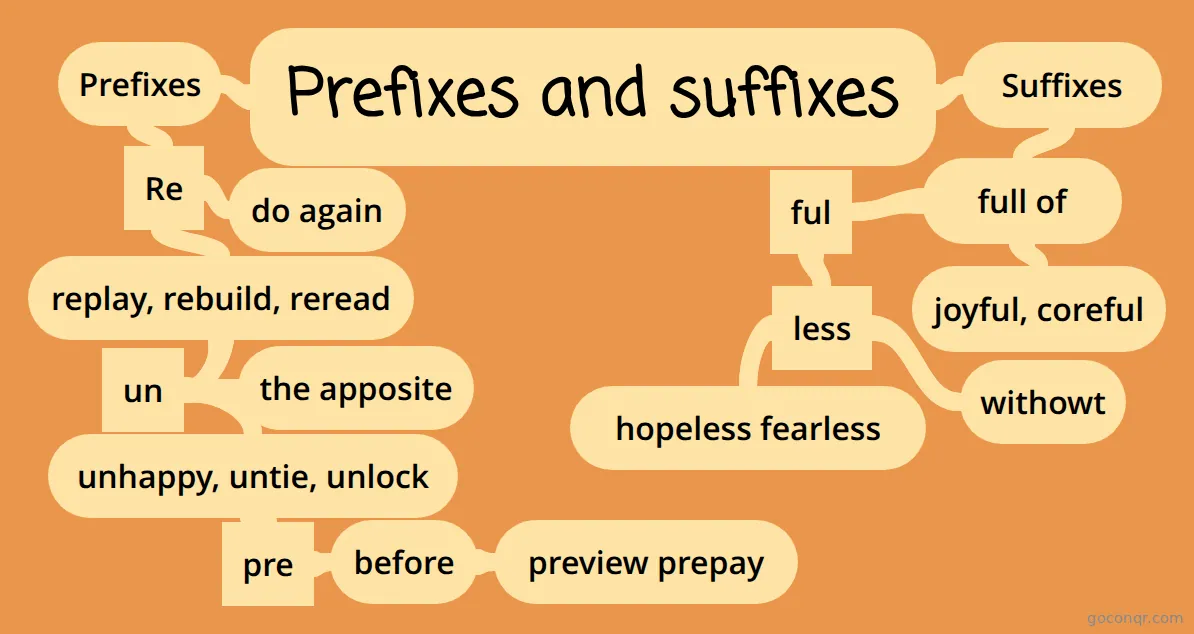 Prefixes and suffixes prefixes and suffixes
Flashcards
See all 563 flashcards-
10 cardsSpelling Apr./21 Flashcards Bake + ery A place where bread and cakes are made or sold.
-
24 cardsLatin Roots Lesson 2
-
8 cardsVCE Unit 2 English Language word formation processes with examples a selection of word formation processes
-
7 cardsWord Formation VERB - NOUN - ADJ Accept - ? - (un)acceptable
-
40 cardsGreek and Latin roots and affixes 1-20
-
22 cardsPrefixes and Suffixes PREFIXES AND SUFFIXES Alejandro Aguilar Licel 2018
-
25 cardsPrefix/suffix/and root words study cards for prefixes, suffixes and root words.
-
25 cards25 Choice Words 1
Flowcharts
See all 12 flowcharts
Notes
See all 13 notesSlides
More English language topics
About Word Formation, Prefixes and Suffixes
GoConqr OriginalWhat the page covers
The resources look at how words are built. Some work on prefixes and suffixes, some on root words, and some on the wider processes that create new words, such as compounding, blends and shortening.
- Gap-fill quizzes: the Word Formation quizzes for 2014, 2015, 2017, 2018 and 2019 give a short text and a prompt word, and you turn it into the right form. Answers such as enthusiastic, extremely and undoubtedly show the pattern.
- Prefix and suffix maps: the Prefixes, Suffixes, & Root Words Mind Map covers meanings such as a-/an- for not or without, and -ant/-ent for one who.
- Flashcards: decks on Latin roots, negative prefixes, morphographs and SSAT roots, prefixes and suffixes.
Where to start
Begin with the Prefixes, Suffixes, & Root Words Mind Map to see the main building blocks. Then take the Prefixes, Suffixes, & Root Words Quiz, which asks what suffixes such as -ism mean and what the root belli means.
Next, try the Prefixation quiz. It shows why im- suits possible while dis-, un- and re- do not.
Using quizzes and maps together
- Read a map first, such as PREFIXES AND SUFFIXES WHICH ADD MEANING, which separates beginnings from endings and shows nouns formed from verbs and adjectives.
- Take a quiz straight afterwards and note which answers slipped.
- Go back to the map or a flashcard deck for those gaps.
- Move on to the longer Word Formation quizzes, which use full passages, once the basics feel steady.
Learners meeting FCE-style tasks will find the passage quizzes familiar, while the SSAT deck suits those working on roots and affixes.
Where it sits
This unit belongs to the Vocabulary and Word Study strand of English language. For wider study of how words form and change, the VCE-style deck on word formation processes lists neologism, acronyms, initialisms, compounding, affixation and blends.
Pick one quiz today, then make a few flashcards of your own from the words you got wrong.
Frequently asked questions
Which resource should I open first?
Try the Prefixes, Suffixes, & Root Words Mind Map first. It sets out prefixes, suffixes and root words with examples such as resident and dependent. After that, take the Prefixes, Suffixes, & Root Words Quiz to check what stuck, then move on to the passage-based Word Formation quizzes.
Are the resources free to use?
Yes. Every resource listed here is free to open, study and take, with no account needed. The resources were made by GoConqr users, not by GoConqr itself, so you can browse quizzes, maps, flashcards and notes straight away.
What do the Word Formation quizzes by year look like?
They are gap-fill passages. Each gives a short text with a prompt word, such as ENTHUSIAST or POPULAR, and you type the correct form. There are versions labelled 2014, 2015, 2017, 2018 and 2019, so you can practise on several different texts.
Which exams do these resources suit?
The listed resources mention FCE, Cambridge B2 First, SSAT and A-level English Language. Most of the material is at secondary level, so it suits school students preparing for tasks like these, and teachers looking for ready-made practice.
Can I save my scores or make my own materials?
A free account saves your quiz scores and lets you make your own quizzes, mind maps, flashcards and notes. It is optional. You could build a deck of negative prefixes or a map of noun suffixes from the words you find hardest.
What if I cannot find the topic I need?
Browse the other formats on the page, since a topic may appear as a map, deck or note rather than a quiz. Searching within roots, negative prefixes or noun suffixes can help. You can also make your own resource on the gap.