
Microbial Pathogenesis and Host-Pathogen Interactions
231 resources created by 178 users
This Microbial Pathogenesis and Host-Pathogen Interactions page on GoConqr gathers community-made quizzes, mind maps, flashcards and notes, from bacterial adhesion and secretion systems to toxins, immune evasion and the skin microbiome. It's built for university students working through infection and disease, and for teachers after ready-made material. There are over 220 resources here, including more than 30 quizzes, over 60 mind maps and more than 110 flashcards. Pick a topic, try a quiz to find your gaps, then build your own sets.
Select topic
- Infectious Disease Terminology5
- Types and Structure of Infectious Agents8
- Normal Microbiota and Opportunistic Infections14
- Infection Transmission and Portals of Entry10
- Microbial Adhesion, Colonization and Invasion15
- Bacterial Virulence Factors40
- Bacterial Toxins16
- Host Defenses Against Infection11
- Pathogen Immune Evasion10
- Bacterial Pathogens and Diseases8
Top Microbial Pathogenesis and Host-Pathogen Interactions resources
-
80 questionsBHCS001 Basic Immunity, bacterial & viral structure (1-3) Mark the common feature between eukaryotes and prokaryotes
-
84 cardsMicrobiology Exam Three Chapters 14, 15, 16, 17, and 18 Discuss the development of normal flora in humans.
-
17 questionsSecretion and Adhesion System Questions Cholera toxin is secreted by a mechanism that mimics what process
-
9 questionsSuper-Antigens & Toxins What is MHC?
-
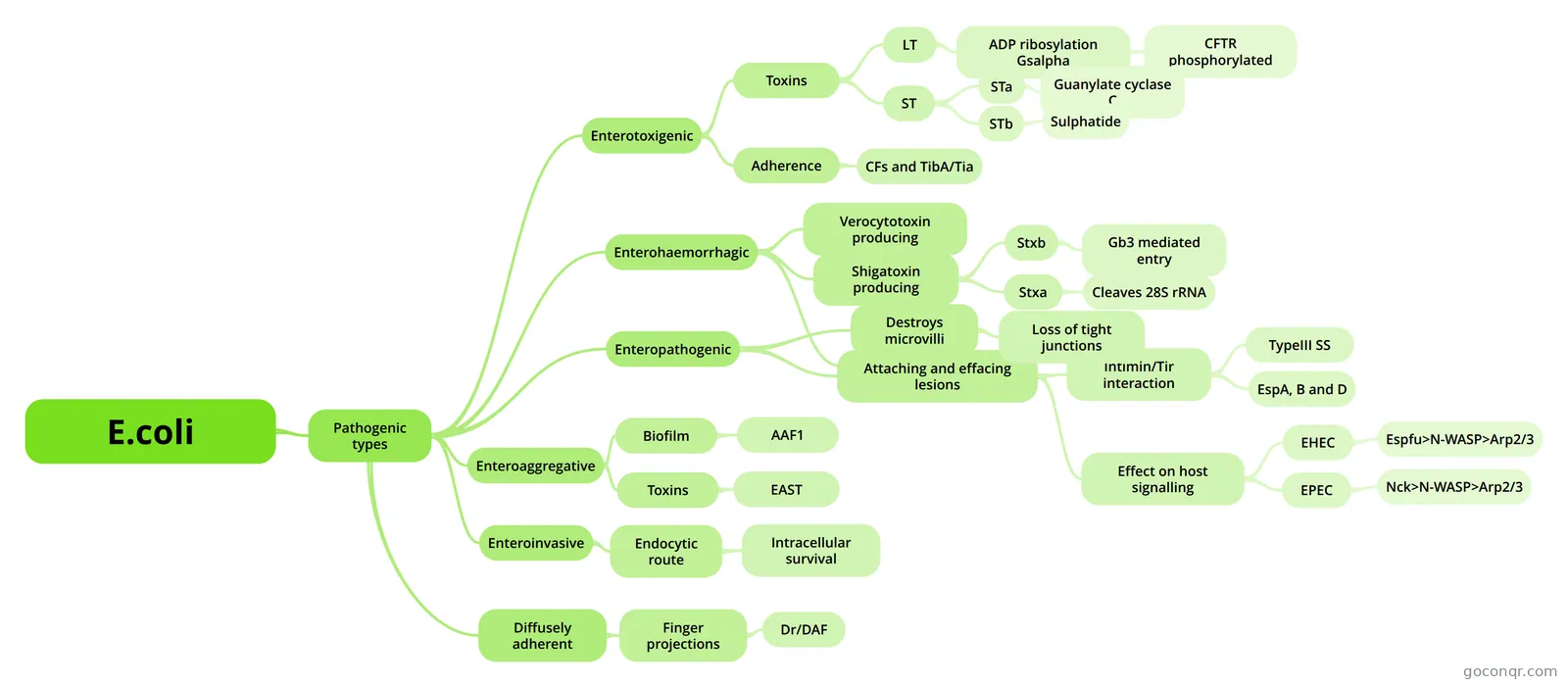 Mind map E.coli
-
2 questionshuman biology where does superficial fungal mycoses occur?
-
200 cardsInfection and Immunity I (1) The four fundamental concepts of infectiou disease
-
48 cardsIdentifying bacterial virulence factors
Quizzes
See all 36 quizzes-
80 questionsBHCS001 Basic Immunity, bacterial & viral structure (1-3) Mark the common feature between eukaryotes and prokaryotes
-
17 questionsSecretion and Adhesion System Questions Cholera toxin is secreted by a mechanism that mimics what process
-
9 questionsSuper-Antigens & Toxins What is MHC?
-
2 questionshuman biology where does superficial fungal mycoses occur?
-
37 questionsMicrobiology Week 6: Host-Microbe Interactions and Principles of Disease During the prodromal phase of a disease:
-
74 questionsInfection and immunity Which has snails involved in its life cycle
-
10 questionsMicrobial Pathogenesis
-
100 questionsP&P1 Revision Tri1 2018 Part 2 Which of the following is a systemic sign of infection?
Mind maps
See all 66 mind maps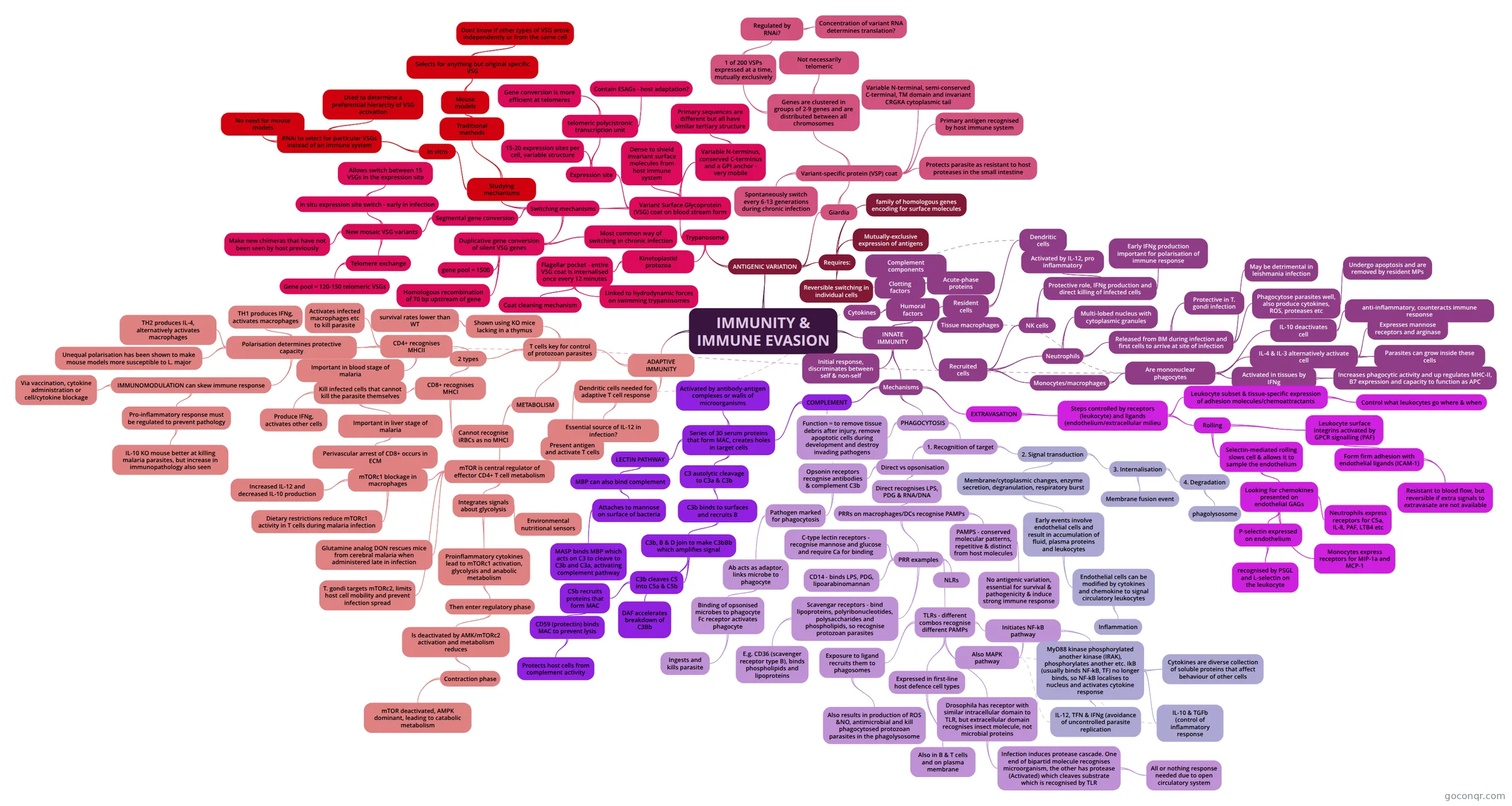
Flashcards
See all 115 flashcards-
84 cardsMicrobiology Exam Three Chapters 14, 15, 16, 17, and 18 Discuss the development of normal flora in humans.
-
200 cardsInfection and Immunity I (1) The four fundamental concepts of infectiou disease
-
48 cardsIdentifying bacterial virulence factors
-
91 cardsMicrobes & Disease _ Lecture 6 What is a virulence factor?
-
81 cardsBacterial Survival Strategies Define survival strategies
-
64 cardsMBOD - Bacterial mechanisms of adhesion + invasion Prions are the smallest infectious agent. How do bacteria compare to this
-
144 cardsClostridium difficile pathogenesis
-
34 cardsBacterial Colonisation and Virulence Factors What are the two essential initial steps in infection by any pathogen?
Flowcharts
Notes
See all 10 notes-
Infection and Disease Relationships Between Hosts and Microorganisms:Mutualistic: both partners benefiti.e. gut microflora → bacteria receive warm nutrient rich habitat, synthesize vitamin K for the hostCommensal: neither host nor microbe ...
-
Bacterial pathogenesis Bacteria and disease Terminology Pathogen- a microbe that harms the host/causes diseases Commensal- a microbe that dent cause harm and is typically considered part of the normal flora Saprophyte- feeds and decomposes ...
-
Anthrax Virulence - created from Mind Map Multicomponent anthrax toxin: consists of 3 distinct antigenic componenet Edema Factor (EF) Lethal Factor (LF) Protective Antigen (PA) mediates toxigenic stage production mediated by temperature-sensitive plasmid, pXO...
-
Discuss why exposure to some microorganisms, but not to others, results in pathology Pathogenicity is an outcome of microbe-host interaction and depends as much on the host as on the microorganism. Microorganisms enter the human body through the mouth, eyes, nose, urogential openings or through open w...
-
1_Discuss why exposure to some microorganisms, but not to others, results in pathology Pathogenicity is an outcome of microbe-host interaction and depends as much on the host as on the microorganism. Microorganisms enter the human body through the mouth, eyes, nose, urogential openings or through open w...
-
IDI Cholera - AB5 toxinB sub unit binds to GM1 receptor of epithelial celltoxin enters by cell endocytosisa sub unit cleaves from b subunita subunit is an ezyme called ADP-ribosyl transferasea sub unit transfers ADP-ribos...
-
Toxins Toxin: a specific chemical product of microbes, plants, and some animals that is poisonous to other organisms Neurotoxins = NeurosystemEnterotoxins = Intestines Hemotoxins = BloodNephrotoxins = Kidneys Exotoxin: extre...
-
3_skin microbiome - created from Mind Map ecosystem interactions disease
Slides
Topics in Microbial Pathogenesis and Host-Pathogen Interactions
More Microbiology and immunology topics
About Microbial Pathogenesis and Host-Pathogen Interactions
GoConqr OriginalWhat this unit covers
This page sits in the Infection and Disease strand of Microbiology and immunology. Most resources look at how microbes cause harm and how the host responds. You will find bacterial colonisation, adhesion, invasion, toxins, virulence factors and immune evasion, plus some material on viruses, fungi and parasites.
Where to start
Begin with broad overviews. The mind map Biological agents as causes of disease sorts pathogens into obligate, facultative and opportunistic types. The flashcard deck Session 8 - Infectious Diseases defines infection and asks about its sources and the factors that lower host resistance. The notes Infection and Disease make a handy companion.
Going deeper into mechanisms
Next, move to how bacteria attach and get inside cells. Bacterial Colonisation and Virulence Factors and Type III Secretion System are good flashcard decks. The quiz Secretion and Adhesion System Questions asks which system uses a needle complex to inject toxins into a host cell. For toxins, try Super-Antigens & Toxins, which runs through MHC, T cell receptors and how superantigens work.
Specific pathogens
Several mind maps follow single organisms. The E.coli map branches into enteropathogenic, enterohaemorrhagic, enterotoxigenic, enteroinvasive, enteroaggregative and diffusely adherent types. Others cover Legionella effectors, Anthrax Virulence, Campylobacter and Listeria monocytogenes Pathogenicity. They are useful for comparing how different bacteria solve the same problems.
Using quizzes and maps together
- Read a mind map to see how the ideas connect.
- Take a quiz on the same topic and note what you missed.
- Go back to the map or a flashcard deck to fix those gaps.
- Retry the quiz a few days later.
Teachers can use the quizzes and maps as ready-made starting points for tutorials. Choose one topic today and open its quiz to see where you stand.
Frequently asked questions
Which resource should I open first?
Start with the mind map Biological agents as causes of disease for a quick overview of pathogen types. Then try the flashcard deck Session 8 - Infectious Diseases, which covers what infection is, where it comes from and what lowers host resistance. After that, move on to the more specific topics.
What do the mind maps cover?
The mind maps cover both general ideas and single pathogens. General ones include Virulence factors, Evasion of Immunity and Host-Microbe Relationships. Pathogen maps include E.coli, Campylobacter, Legionella effectors, Anthrax Virulence and Streptococcus pneumoniae I. There is also one on antigenic variation in Trypanosoma brucei.
Are there quizzes on toxins and secretion?
Yes. Secretion and Adhesion System Questions asks about cholera toxin secretion and the needle complex used to inject toxins. Super-Antigens & Toxins covers MHC, T cell receptors and superantigens. There are also quizzes called Toxins Quiz and Bacterial Toxin quiz for extra practice.
Are these resources free, and who made them?
Every resource on this page is free to open, study and take, with no account needed. They were made by GoConqr users, not by GoConqr itself. A free account lets you save quiz scores and create your own quizzes, mind maps, flashcards and notes.
Who is this page for?
It is aimed mainly at university students studying infection and disease, who will find lecture-based flashcards, chapter quizzes and detailed maps. Teachers can also use the quizzes, maps and notes as ready-made material to adapt for their own sessions or tutorials.
What if I can't find the topic I need?
Browse the related titles on this page first, as many topics appear under lecture or chapter names, such as Lecture 6 or Chapter 15. If your topic is still missing, you can build your own mind map, flashcard deck or quiz and keep it for revision.