
Migration
12 resources created by 12 users
This Migration page on GoConqr gathers community-made mind maps, quizzes, flashcards, slides and notes, from push and pull factors and migration theories to refugees, asylum and integration policy. It's built for school students, university students and professional candidates, plus teachers after ready-made material, and it suits anyone practising A-level Sociology topics or filling gaps in theory. There are over 250 resources here, including more than 200 mind maps, 8 quizzes and 16 flashcards. Try a quiz to find your gaps, then explore the maps.
Top Migration resources
-
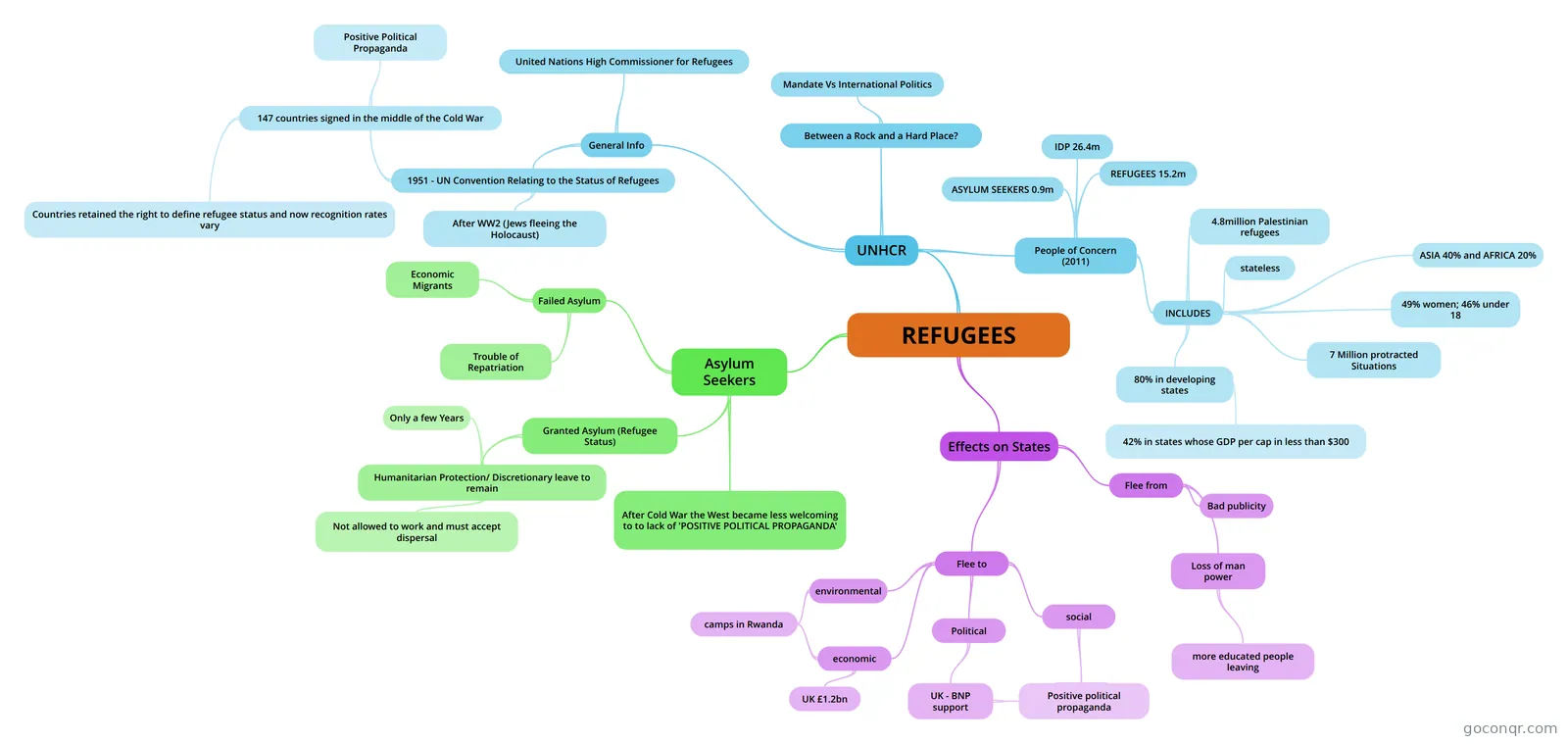 Mind map REFUGEES
-
10 questionsRefugees and Asylum Seekers: Facts and Myths An asylum seeker is someone who has been forced to flee their country due to persecution.
-
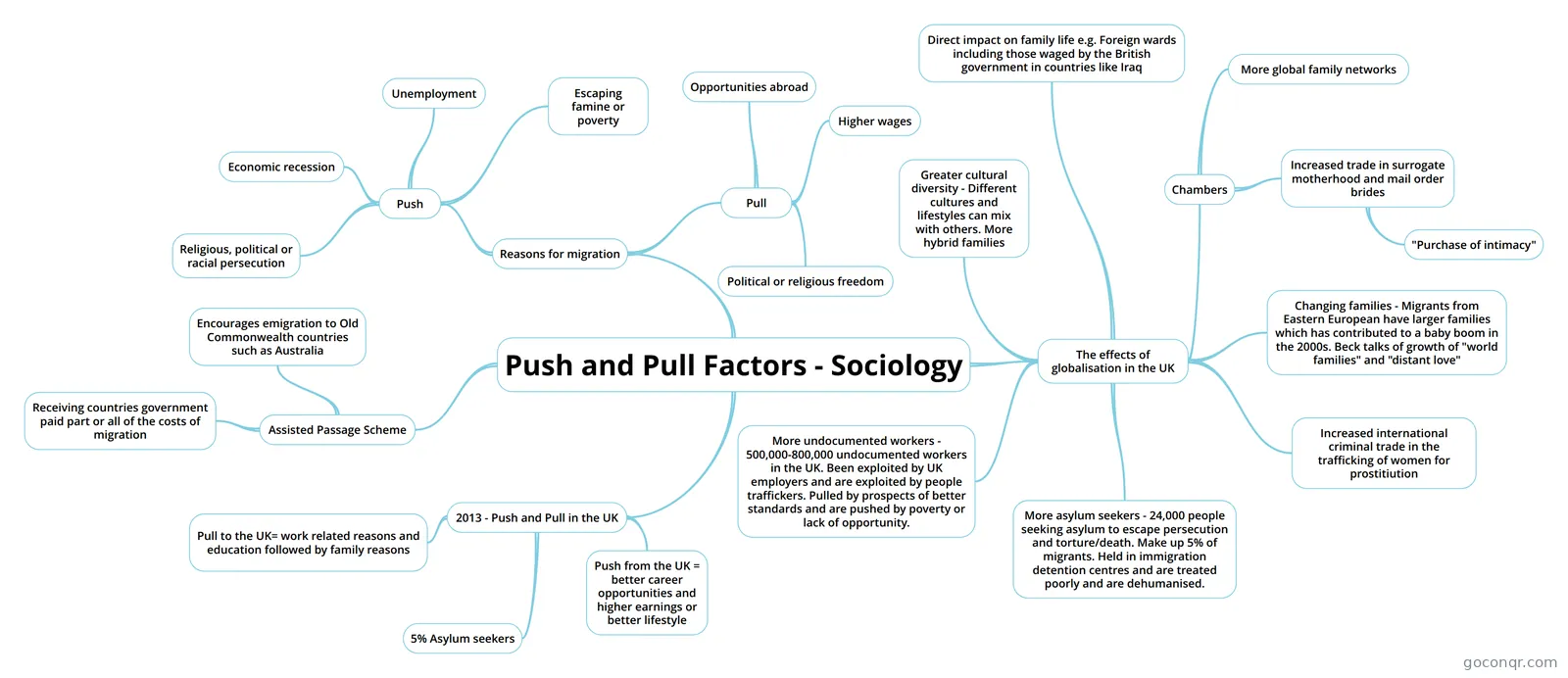 Mind map Push and Pull Factors - Sociology
-
Mind map France VS Singapore immigrationpolicies
-
2 questionsINAR Project - Facts and Myths about Immigration There has never been as much immigration and the host countries cannot cope
-
 Mind map Benefits Of Immigration - Possible 12 mark question
-
58 questionsEthnic studies Quiz on Ethnic studies, created by Zoei Kooiker on 02/28/2018.
-
Mind map ROOT CAUSES OF GLOBAL MIGRATION
Quizzes
-
10 questionsRefugees and Asylum Seekers: Facts and Myths An asylum seeker is someone who has been forced to flee their country due to persecution.
-
2 questionsINAR Project - Facts and Myths about Immigration There has never been as much immigration and the host countries cannot cope
-
58 questionsEthnic studies Quiz on Ethnic studies, created by Zoei Kooiker on 02/28/2018.
Mind maps
More Sociology topics
About Migration
GoConqr OriginalWhat this unit covers
The Migration unit sits in the Global Society and Social Change strand of Sociology. Most of what it lists is mind maps, and they range widely. Some cover the basics, such as the map that defines immigration, emigration and net migration, or the one setting out push and pull factors. Others go into theory and policy, including the Migration theories map, which opens with neoclassical economic theory, and the maps on Migration Policies and UK Migration Policy.
Where to start
Begin with the core definitions. The Sociology of Migration asks who counts as a migrant and touches on globalisation, economic migrants, refugees and deportation. Then move to Push and Pull Factors - Sociology for the causes of movement.
- Read a general Migration map for the key terms.
- Work through Migration theories and Historical-Structural Theories.
- Move on to policy, integration and public attitudes.
Refugees, trafficking and integration
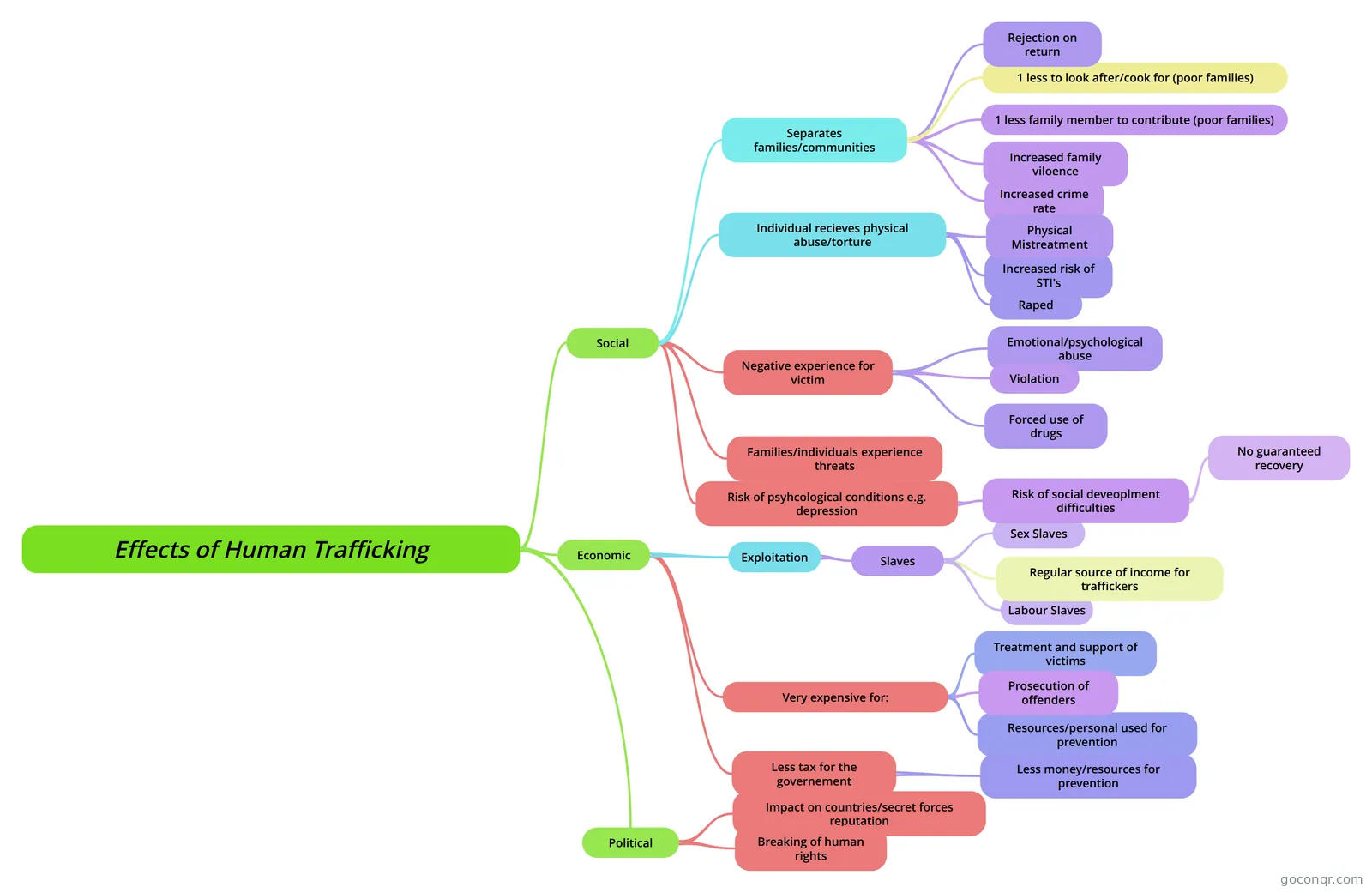
The REFUGEES map covers the United Nations High Commissioner for Refugees and the 1951 UN Convention Relating to the Status of Refugees. Case-based maps look at Syrian refugees in Turkey and the integration of Venezuelans in Colombia. Another map looks at women trafficked for sex, with causes such as lack of employment and high demand. For assimilation, see Contemporany Approaches to Assimilation, which includes segmented assimilation.
Using quizzes and maps together
Read a map first, then test yourself. The quiz Refugees and Asylum Seekers: Facts and Myths is a good check on definitions, and Migration and Refugees Quiz gives you another go. Where a quiz catches you out, go back to the matching map. The Benefits Of Immigration - Possible 12 mark question map is useful for planning longer written answers.
Flashcard decks such as Migration Terms and Definitions help you fix vocabulary. When you are ready, pick a map, take a quiz and then make your own flashcards from what you missed.
Frequently asked questions
Which resource should I open first?
Start with a general map such as The Sociology of Migration, which asks who counts as a migrant and links to globalisation, refugees and deportation. Then open Push and Pull Factors - Sociology. Once you know the terms, the theory and policy maps will be easier to follow.
What do the mind maps cover?
They cover definitions, push and pull factors, migration theories, assimilation, policy and public attitudes. Several look at refugees, including the 1951 UN Convention. Others are case studies, such as Syrian refugees in Turkey and Venezuelans in Colombia, plus maps on gender, diaspora and trafficking.
Are the resources free to use?
Yes. Every resource on this page is free to open, study and take, with no account needed. They were made by GoConqr users, not by GoConqr itself, so styles and depth vary from one map or deck to the next.
Which quizzes can I try?
There are more than 7 quizzes. Options include Refugees and Asylum Seekers: Facts and Myths, Migration and Refugees Quiz, In Defense of the Assimilation Model and a quiz on facts and myths about immigration. One is an exam-style quiz on migration and citizenship.
Is there anything for A-level Sociology?
Some listed resources mention A-level Sociology. One example is the Benefits Of Immigration map, framed around a possible 12 mark question. School students can pair it with the theory and policy maps, while university students can use the same material to fill gaps.
What if I can't find what I need?
Use the related maps and decks as a starting point, then make your own. A free account lets you save quiz scores and build your own quizzes, mind maps, flashcards and notes, so you can fill any gap in your own words.